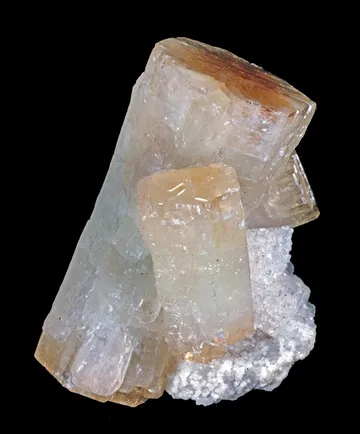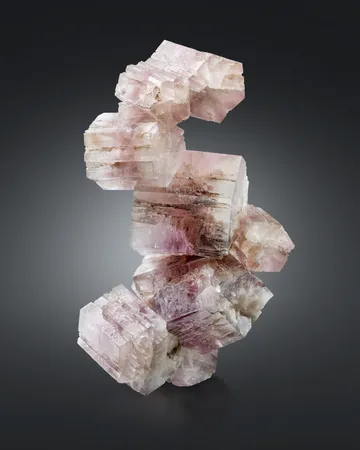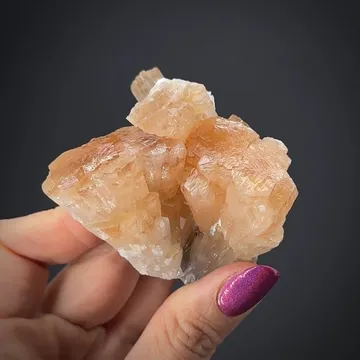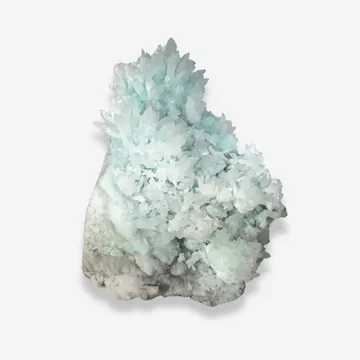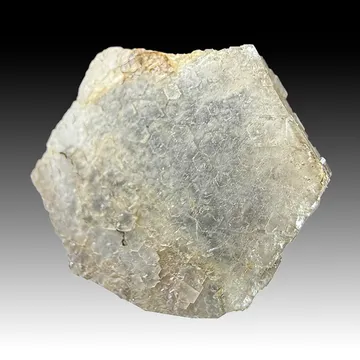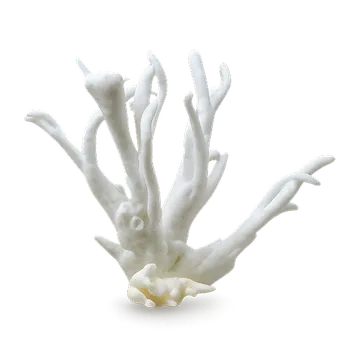
Styrian Erzberg aragonite, Austria — the iconic iron-flower flos ferri with coral-like, delicate white blooms; a famed European locality prized by collectors.
Key facts
Styrian Erzberg aragonite is the classic “iron flower” material: white to off-white CaCO3 grown not as ordinary prismatic crystals, but as twisting, branching, coral-like flos ferri. Good specimens look almost biological—thickets of wormy stems, sprays, curls, and fine needles that seem to have wandered through open space rather than crystallized on a flat wall. The locality’s best pieces are valued for delicacy, sculptural balance, intact terminations, and the unmistakable snowy presence that made Erzberg one of the benchmark names for flos ferri in European mineral collecting.

Photo: Dr. Bernd Gross / Wikimedia Commons
The mineralogical setting is part of the appeal. Erzberg is not a small cave locality but a great iron mountain: an active, terraced, open-pit siderite mine above Eisenerz in Styria, long famous as one of Europe’s major iron-ore districts. The ore body is dominated by carbonate minerals—chiefly siderite with ankerite, iron-bearing dolomite, calcite, and related carbonate assemblages. In clefts, fractures, and young carbonate vein systems, calcium carbonate precipitated as aragonite and calcite, sometimes producing the laminated aragonite-calcite rock known as erzbergite and, in more open cavities, the freestanding flos ferri that collectors prize.
The reason Erzberg aragonite feels different from ordinary aragonite localities is that its fame is inseparable from mining history. “Eisenblüte,” literally “iron blossom,” is a miner’s name as much as a mineralogical one. These aragonites were found in siderite clefts during work on one of the great iron deposits of the Alps, and large examples entered the old European museum and private-collection tradition. The Naturhistorisches Museum Wien displays a spectacular 40 x 32 cm Erzberg iron flower, inventory A.a. 7339, a scale rarely encountered in private hands.

Photo: Ra'ike / Wikimedia Commons
For collectors, the ideal Erzberg aragonite is light but not flimsy, intricate but not chaotic, and clean white without distracting iron staining unless the color enhances the form. Old-label examples are especially desirable. A fine piece should survive inspection from all sides: flos ferri is often a 360-degree specimen, and the best examples carry their twisting branches through the entire mass rather than presenting only one good face.
Search for specimens: View all aragonite specimens from Styrian Erzberg, Austria
Styrian Erzberg is at Eisenerz in the Leoben District of Styria, Austria, in the Eastern Alps. The name means “ore mountain,” and it is one of the defining mineral localities of the Austrian iron tradition. The modern locality is a huge stepped open-pit mine, positioned in the Paleozoic Grauwacke Zone of the Noric Nappe, where rocks include phyllitic schists, metamorphosed volcanic rocks, limestones and marbles, greywackes, and quartzites. In the Eisenerz-Leoben area the Grauwacke Zone broadens conspicuously, and Erzberg sits within this iron-rich belt between the Northern Calcareous Alps and the Central Alps.
The deposit is fundamentally a carbonate iron-ore deposit. The ore consists mainly of siderite, FeCO3, intimately intergrown with ankerite and accompanied by iron-bearing dolomite, magnesite, and calcite. Sulphides and accessory minerals—pyrite, marcasite, chalcopyrite, cinnabar, bismuthinite, galena, tetrahedrite-group minerals, quartz, rutile, baryte, chlorite, muscovite, and others—give the locality a broad mineral list, but the collecting fame of aragonite is tied specifically to carbonate-filled cavities and fractures in the siderite-dominant mountain.
Modern research has sharpened the picture of Erzberg aragonite. The laminated aragonite-calcite veins called erzbergite occur in vertical fractures, from narrow centimetre-scale fillings to broader zones, and many are geologically young. Isotopic and U-Th studies indicate that some sampled vein material formed after the Last Glacial Maximum, with aragonite precipitating from cool, meteoric waters in an alpine fracture system. That is a striking result for a collector locality: some aragonite here is not simply an old hydrothermal relic, but part of a cold, dynamic, water-rock system moving through a fissured carbonate iron deposit.
Mining history at Erzberg is long and central to Austrian industrial culture. The exact beginning is not secure, but iron production in the Eisenerz region is generally placed between about the 8th century and the medieval period, with documented extraction by at least the 11th century. By the 13th century the mountain was divided into the Vordernberg and Innerberg districts, separated by the Ebenhöhe at 1186 m elevation. Early mining followed richer ore underground; open-pit mining gradually took over from around 1870 and became the exclusive mining method in 1986.
The mine remains active. Public access is through the organized Abenteuer Erzberg visitor program, not through casual collecting. The tourist operation offers Hauly rides through the open pit, show-mine tours, an open-air exhibition at Oswaldirücken, and scheduled blasting demonstrations; these are visitor experiences in an active industrial site, not mineral-collecting permission. Serious collecting at Erzberg has historically depended on mine work, authorized visits, and controlled access. A 2017 mineralogical excursion led by university and company personnel recorded the opportunity to collect siderite, ankerite, calcite, aragonite in iron-flower, needle, and rosette forms, cinnabar, and “tiger ore,” but that setting was an arranged professional visit inside the operating mine.
Notable finds include large siderite-cleft iron flowers now held in major museum collections. The Naturhistorisches Museum Wien’s 40 x 32 cm aragonite “Iron Flower” is the public benchmark: a large, bizarre, branching mass from the Steirischer Erzberg, preserved as a showpiece of the Austrian mineral kingdom. Such pieces explain why even relatively modest old Erzberg flos ferri specimens are treated seriously by collectors.
Erzberg aragonite is best known as flos ferri: helictitic, stalactitic, coral-like, arborescent, or filiform aggregates of CaCO3. The forms range from dense tangled mats of short worm-like branches to airy sprays of thin, needle-like extensions. Some pieces show rounded bulbous tips, clustered “flowers,” or divergent stalks, and the most attractive specimens have a natural all-around architecture rather than a flat crust.
Color is usually white, snow-white, ivory, or cream. Subtle tan or ochre staining may appear where iron oxides or limonite touched the carbonate growths, and laminated aragonite-calcite vein material may show pale white, grey, cream, tan, or faint bluish tones depending on translucency, calcite content, and included iron-rich particles. The familiar collector image, however, is bright white flos ferri with a matte to silky luster.
The locality also produces aragonite in needle-like and rosette-like habits. These forms were specifically recorded during a mineralogical excursion in the active mine, alongside the iron-flower habit. The rosettes and acicular aggregates are generally less iconic than the coral-like masses but can be important for a locality suite because they show the range of aragonite growth in the fracture system.
Size ranges vary widely. Miniatures and small cabinet specimens are the most realistic acquisitions for most collectors, commonly a few centimetres to around 10 cm across. Cabinet-size old pieces in the 10–13 cm range appear periodically in major dealer and auction archives and can be excellent. Large, open, clean flos ferri masses are far less common, and museum-scale examples such as the 40 x 32 cm Vienna specimen are exceptional.
Associated minerals depend on whether the piece is an open-cavity flos ferri specimen, a vein specimen, or an ore-suite specimen. Siderite is the essential host context. Calcite is the most important mineralogical partner, especially in erzbergite veins where aragonite and calcite form laminated sequences. Ankerite and iron-bearing dolomite are part of the ore-carbonate association. Other locality minerals that may accompany broader Erzberg suites include pyrite, marcasite, quartz, baryte, gypsum, goethite, hematite, magnetite, cinnabar, malachite, azurite, chalcopyrite, and various sulphides, though these are not typical aesthetic companions on the cleanest flos ferri specimens.
Quality in Erzberg aragonite is judged by form first. Collectors look for branching that is lively, three-dimensional, and undamaged; a dense white tangle can be beautiful, but the finest examples retain negative space and individual curling stems. Completeness is crucial. Broken tips, flattened display sides, rubbed high points, and dusty grey bruising all matter because the material’s magic lies in the illusion of fragile growth suspended in air. Provenance is the second great quality factor: old Austrian, Vienna, or European collection labels can elevate a specimen, particularly when the piece has the classic snow-white flos ferri habit.
Erzberg flos ferri should be handled as a fragile historic carbonate specimen, not as a durable cabinet rock. The branches are brittle, commonly thin, and easily snapped by a sleeve, a label, or careless packing. Even a visually solid mass may have delicate outer tendrils that are the first features to break. For storage, a custom acrylic base or a deep, foam-lined box is safer than repeated free handling.
Condition is the central authenticity issue. Many specimens have old breaks, contacted areas, or naturally incomplete stems; that is normal. What matters is whether the damage is visually disruptive and whether any repairs are disclosed. On flos ferri, check junctions where branches meet the main mass for glossy glue lines, unusually straight seams, mismatched color, or a branch that changes texture abruptly. Because the aggregate itself is irregular, not every suspicious-looking junction is artificial, but high-value pieces deserve magnification.
No well-established, locality-specific treatment industry is associated with Styrian Erzberg aragonite in the way that some colorful minerals are routinely dyed or enhanced. The risks are more practical: repaired branches, cleaned or whitened surfaces, vague Austrian locality labels, and ordinary cave aragonite from another district being sold under the more famous Erzberg name. A correct Erzberg specimen should match the known habit and color range and, ideally, carry older documentation or a credible chain of custody.
Do not rely on fluorescence as proof of origin. Some Erzberg flos ferri has been described with soft blue-white, greenish, or ghostly fluorescence, but fluorescence in aragonite is variable and not diagnostic by itself. Habit, provenance, and consistency with known locality material are more important.
Rarity is selective. Small, somewhat tangled Erzberg flos ferri specimens are available from time to time, especially through European dealers and old collection dispersals. Fine cabinet specimens with clean white color, undamaged tips, strong three-dimensional form, and good old labels are much scarcer. Recent auction records show ordinary but attractive small-cabinet examples selling in the low hundreds of dollars, while a 12.8 x 8.2 x 5.0 cm old-label cabinet specimen with late-19th- to early-20th-century Vienna provenance brought just over $3,000 in 2024. The market strongly rewards old provenance, scale, sculptural form, and survival.
For display, keep the specimen out of high-traffic cases where vibration and handling are likely. Avoid acid cleaning: aragonite effervesces in acid and can be etched rapidly. Dry dusting is risky; use only a very soft air bulb if needed, and never a stiff brush on fine branches. The safest Erzberg aragonites are the ones that are admired more than handled.
The old iron flowers of Erzberg have a romance that belongs partly to mineralogy and partly to labor history. Before modern blasting and mechanized mining changed what could be recovered intact, miners encountered finely branched, snow-white aragonite in siderite clefts. The pieces were so fragile that they were never ordinary ore by-products; they were curiosities, burdens, and prizes. A Naturhistorisches Museum Wien educational text preserves the memorable detail that delicate Erzberg iron flowers were carried from Eisenerz to Vienna on Buckelkraxn—back-carrier frames—into the 20th century. It is a wonderfully physical image: not crates of ore or sacks of concentrate, but pale mineral “flowers” from an iron mountain traveling overland on human backs.
The Vienna museum specimen gives the story a body. At 40 x 32 cm, it is not merely a large aragonite; it is a scale-model forest of white carbonate branches, preserved from siderite clefts at the Steirischer Erzberg and displayed among the great mineral pieces of Austria. The museum emphasizes how attractive the bizarre form is in a collection, but for collectors the more important point is rarity. A flos ferri aggregate of that size has survived the mine, transport, storage, display, and time—every stage a hazard for a mineral that can lose its finest tips from a careless touch.
A more recent field scene comes from a mineralogical excursion on Saturday, June 10, 2017. The group met in Leoben and traveled by two minibuses along the Styrian Iron Road toward the Erzberg, passing the voestalpine Stahl Donawitz works, where ultra-long rails up to 120 m were being produced. At the mine, VA Erzberg company geologist Hannes Pluch guided the visitors to exposures in the operating area. The trip was not a casual collecting jaunt; it was a structured visit to an active mine, with the geology and genesis of the deposit under discussion. At the exposures, participants had the chance to collect siderite, ankerite, calcite, aragonite as iron flower and as needle-like and rosette-like forms, cinnabar, and tiger ore, the layered intergrowth of siderite and ankerite.
That excursion account also preserves the industrial scale behind the mineral specimens. The dark Zwischenschiefer, visible in the active open pit, divides the ore body into lower and upper slices. The same mountain that yields mineral cabinet pieces must be managed as a modern ore operation, where iron content, manganese, sulfur, phosphorus, and mercury are not abstract chemistry but daily mining and processing variables. In that context, a good aragonite specimen is a small, improbable survivor from a mine designed to move millions of tonnes of rock.
The cultural story extends down the valley to Vordernberg and its Radwerke, the waterwheel-powered ironworks that processed Erzberg ore. By the late medieval period, the industry had become organized enough that the Innerberg district supplied northern Europe while the Vordernberg district served southern and southeastern markets. Vordernberg had 14 Radwerke, numbered from north to south along the stream; Innerberg had as many as 19. A Radwerk was not merely a furnace. It included shares in mining, forests for charcoal, ore and charcoal storage, workers’ housing, and the household of the Radmeister. The aragonite that collectors know as an airy white “flower” came from a mountain embedded in a complete iron economy of miners, charcoal burners, horse carts, waterwheels, furnaces, and trade routes.