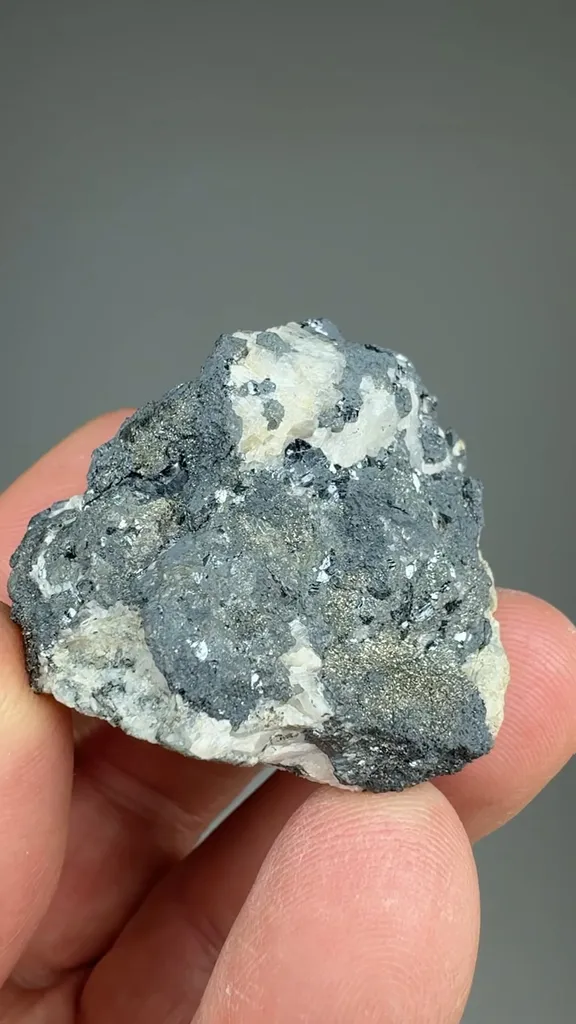
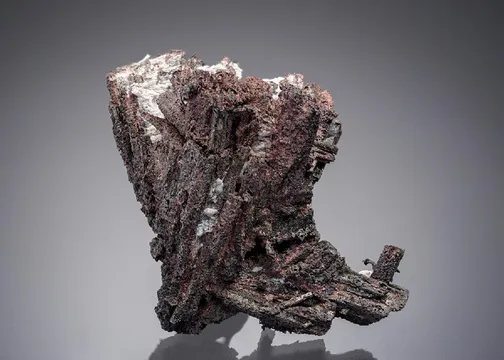
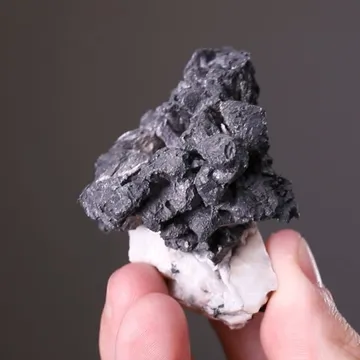
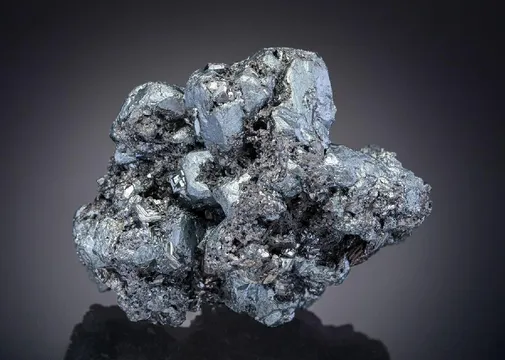
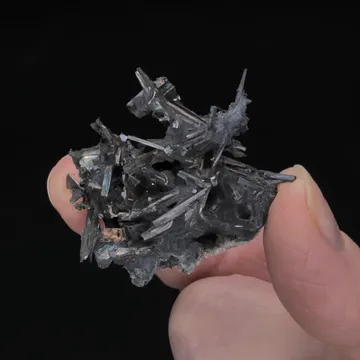
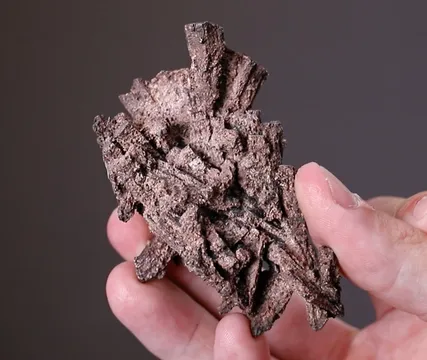
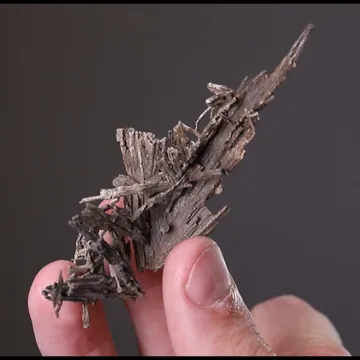
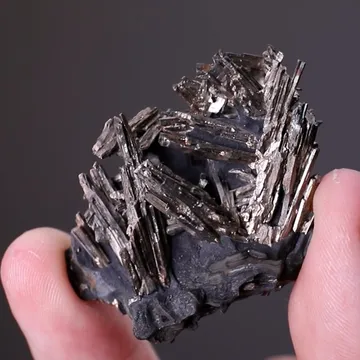
Fine old German classic masses of dyscrasite throughout this matrix.St. Andreasberg, located in the Harz Mountains of Lower Saxony, Germany, is a historic mining district renowned for its silver-rich hydrothermal vein deposits. Geologically, the area features a complex system of calcite and quartz veins hosted within Devonian and Carboniferous sedimentary rocks, formed during the Variscan orogeny. The district is a classic locality for dyscrasite, a silver antimonide mineral that typically occurs as metallic, silver-white to lead-gray grains or massive aggregates, often exhibiting a distinctive yellow tarnish and frequently found in association with native silver and arsenic. Historically, mining and quarrying activities began in the late 15th century, with the first recorded boom occurring around 1520. The mines were famous for their extreme depth and technical innovations in water management, reaching their peak productivity during the 16th and 18th centuries. While primary industrial operations officially concluded in 1910 due to the exhaustion of profitable ore bodies, the district has been preserved as a cultural heritage site and remains a subject of geological and mineralogical study through 2026.



 Ships from USA
Comments