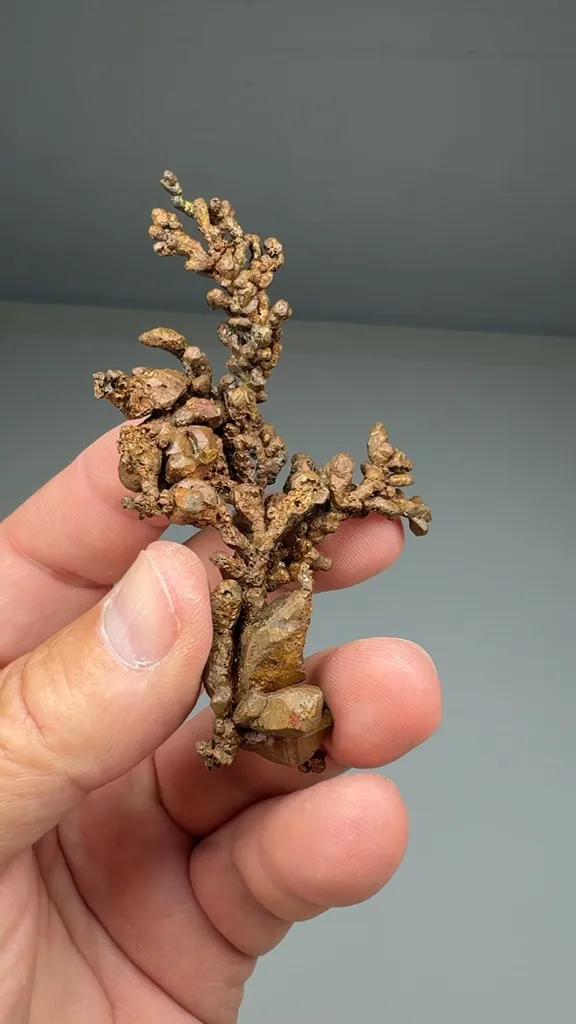
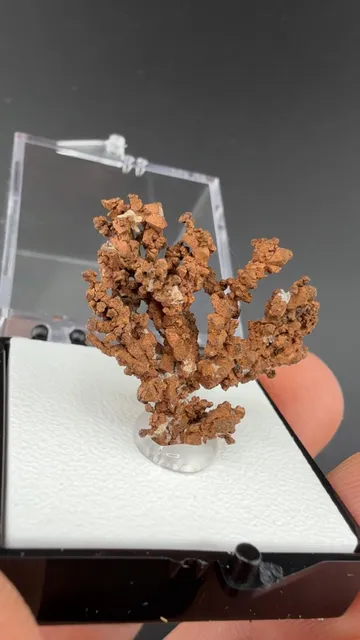
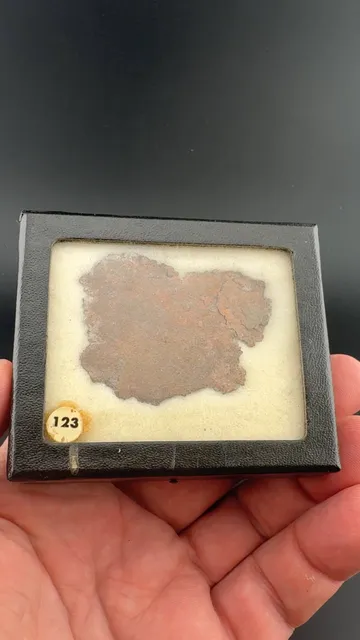
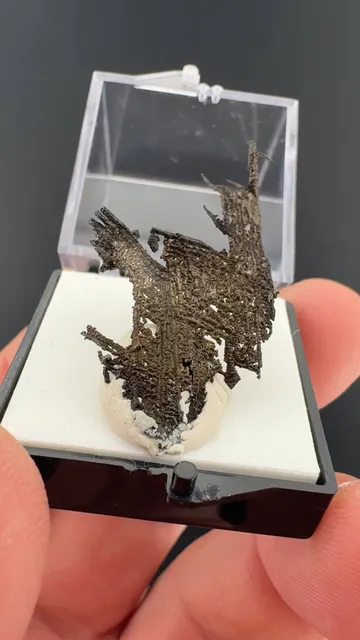
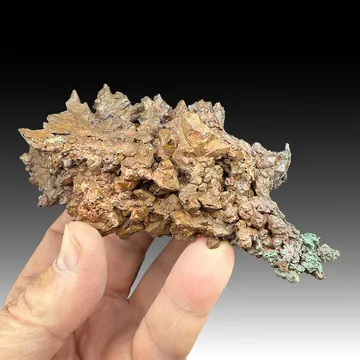
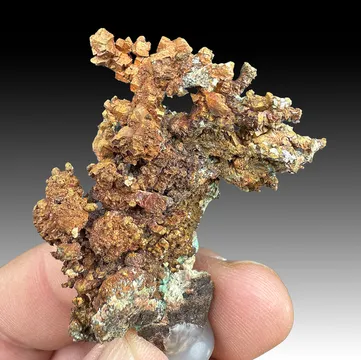
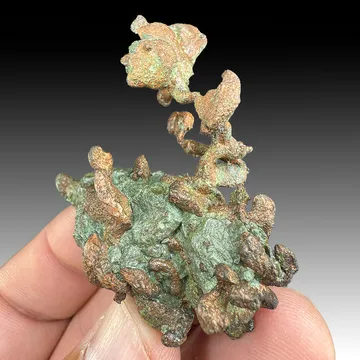
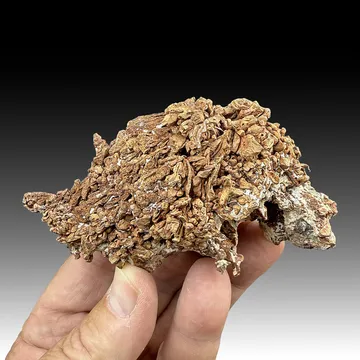
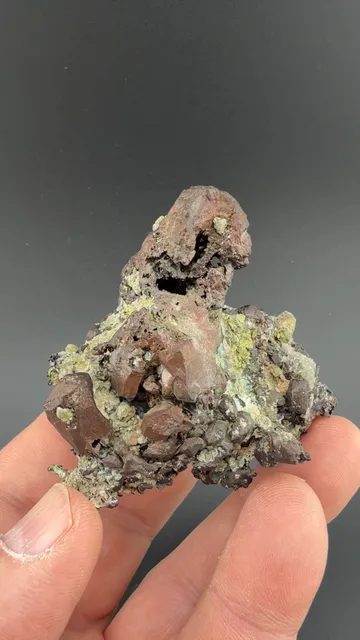
An aesthetic branching grouping of sharply formed native copper crystals. Complete all around, this is in super condition. By Michigan classic.
Copper mining in Keweenaw County, Michigan, represents a major historical component of the Lake Superior native copper district, characterized by the extraction of elemental copper rather than sulfide ores. Geologically, the deposits are hosted within the Mesoproterozoic Portage Lake Volcanics, a thick sequence of basaltic lava flows interbedded with conglomerate rocks that filled the Midcontinent Rift system. Hydrothermal fluids migrating through the rift basin deposited native copper and silver within the porous, vesicular tops of the basalt flows (amygdaloids) and the matrices of the conglomerates, often associated with minerals like calcite, epidote, and pumpellyite. Industrial mining in the county commenced in 1944 with the opening of the Cliff mine, which proved the economic viability of the district's massive fissure veins. This discovery triggered a major mining boom, leading to the development of major underground operations by companies such as the Central Mining Company, Allouez Mining Company, and the Ahmeek Mining Company. Commercial extraction peaked during the late nineteenth and early twentieth centuries, but steadily declined due to depletion and deep operational costs, with primary production in the county drawing to a close by the late 1960s when Calumet and Hecla permanently ceased its regional operations.



 Ships from USA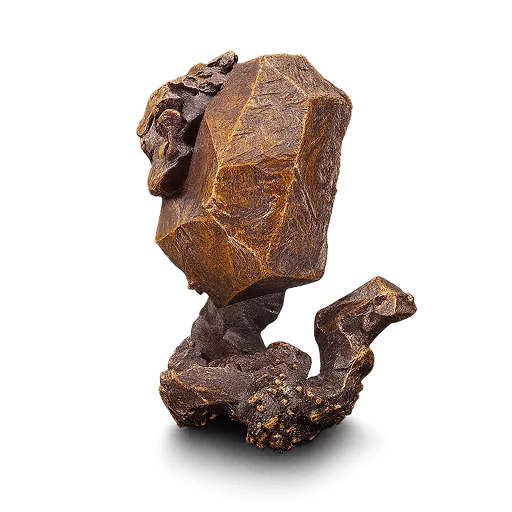
Comments