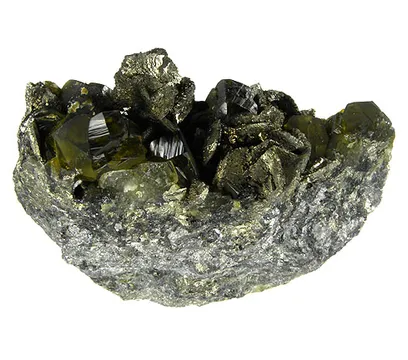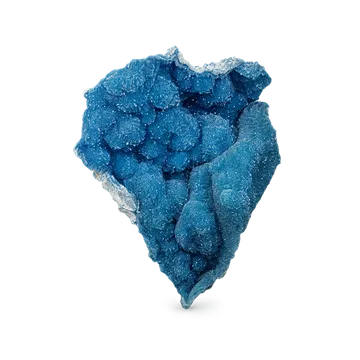
Vauxite from Siglo Veinte Mine, Bolivia: rare blue phosphate crystals in radiating aggregates, Bolivian type locality prized for rarity and provenance.
Key facts
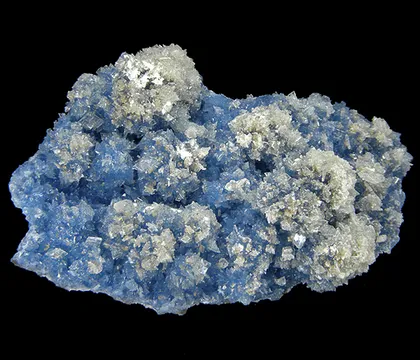
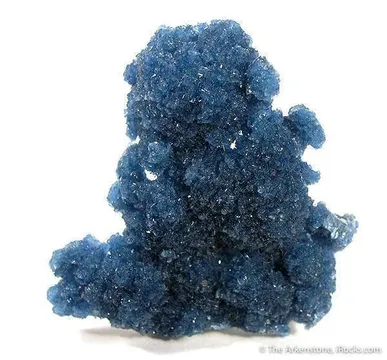
Vauxite from the Siglo Veinte Mine is one of the classic blue phosphates of the Bolivian tin belt: a mineral whose best specimens are not large in the usual cabinet-mineral sense, but are instantly recognizable by their powdery to sparkling sky-blue or deep-blue radiating aggregates. The finest pieces show small bladed crystals packed into rounded tufts, crusts, and nodular clusters, often with the color set against pale paravauxite, colorless to whitish metavauxite, wavellite, quartz, and altered porphyry matrix.

Photo: Wikimedia Commons / Rob Lavinsky, iRocks.com
The Siglo Veinte Mine, also written Siglo XX, is part of the Llallagua mining district in Rafael Bustillo Province, Potosí Department. For ore geologists, Llallagua is a giant tin porphyry and vein system in the Bolivian Tin Belt. For mineral collectors, it is a name with a different resonance: a locality that produced not only cassiterite, stannite, vivianite, wavellite, fluorapatite, greenockite, monazite-(Ce), and tin sulfosalts, but also a family of rare hydrated iron-aluminum phosphates that made the district famous in systematic collections.
Vauxite, Fe2+Al2(PO4)2(OH)2·6H2O, was first described from Llallagua material and the Siglo Veinte Mine remains the type locality. It belongs to that small cluster of Bolivian phosphate species whose names collectors tend to learn together: vauxite, paravauxite, metavauxite, sigloite, and later ferrivauxite. Good vauxite from Siglo Veinte is admired because it combines rarity, locality importance, and color. The best examples are not merely “representative”; they are locality documents, often showing the actual late-stage phosphate assemblage that formed in the hydrothermal tin-vein environment.
Collectors look for strong blue color, sparkling intact aggregates, and credible Siglo Veinte provenance. Three-dimensional miniatures are especially prized because many vauxite specimens are thin plates or delicate crusts. Pieces showing vauxite with paravauxite and metavauxite are more desirable still, and the rare specimens from the 2006 and 2009 finds on sturdier quartz-diorite porphyry or associated clay matrix have become modern reference points for the species.
Search for specimens: View all vauxite specimens from Siglo Veinte Mine, Bolivia
The Siglo Veinte Mine lies at Llallagua, a few minutes’ walk southwest of the city center, in Rafael Bustillo Province, Potosí Department, Bolivia. Historical and collector labels may also read Siglo XX Mine, Llallagua Mine, or Catavi. The mine’s name means “Twentieth Century,” a reference to the beginning of serious tin mining there in 1901.
Geologically, the locality belongs to the Llallagua tin porphyry deposit, one of the great hard-rock tin deposits of the world and part of the Bolivian Tin Belt. The deposit is centered on a hydrothermally altered subvolcanic porphyry stock of intermediate dacitic to rhyodacitic composition, cut by tin-bearing veins and veinlets. The exploited commodities at the locality include tin, tungsten, and bismuth; cassiterite was the principal ore mineral. The rare phosphate minerals, including vauxite, belong to the later, low-temperature part of the vein history, tied to phosphate-bearing alteration and the breakdown or reworking of earlier phosphate phases such as apatite.
Mining history at Siglo Veinte is inseparable from Bolivia’s twentieth-century tin economy. Simón Iturri Patiño acquired the operation in the 1910s, and the mine became part of the industrial power base that made him known as the “King of Tin.” After the Bolivian National Revolution of 1952, Siglo Veinte and other mines were nationalized under COMIBOL, the state mining corporation. In 1987, during economic restructuring, the government shut down production at Siglo XX; subsequent work has been carried out by mining cooperatives operating independently or in small groups.
For collectors, that history matters because most vauxite specimens reaching the market today are not the product of open tourist collecting. The mine is a real working and historical mining area, not a casual fee-dig locality. Specimens circulate mainly from old collections, dealer stock, cooperative-recovered material, and the occasional documented find. Good labels are important: “Siglo Veinte,” “Siglo XX,” “Llallagua,” and “Catavi” can all occur on legitimate historical labels, but the most precise modern designation is Siglo Veinte Mine, Llallagua, Rafael Bustillo Province, Potosí, Bolivia.
The most important documented modern vauxite episodes are the 2006 and 2009 finds. The 2006 material produced unusually large vauxite-bearing specimens with paravauxite, metavauxite, wavellite, and quartz on a firm quartz-diorite porphyry matrix rather than the more fragile clay-rich matrix seen on some older material. The 2009 material included blue vauxite with pale greenish paravauxite on minor clay, probably decomposed allophane. These finds did not make vauxite common, but they refreshed the market with specimens that collectors could compare directly against the classic older Siglo Veinte material.
Siglo Veinte vauxite is most often seen as small bladed crystals aggregated into radiating sprays, rounded sparkling tufts, nodules, and crusts. Individual crystals are generally minute, so the collector’s eye reads the specimen as texture and color rather than as isolated large crystals. The best aggregates show a velvety to glittering surface under magnification, with the blue intensified where crystals are closely packed.
Color is the locality’s great attraction. Good specimens range from pale sky blue through saturated blue to darker blue, sometimes with slight gray or greenish overtones. Blue vauxite against pale paravauxite is a particularly attractive combination: the paravauxite commonly appears whitish, pale greenish, or colorless to translucent, while vauxite supplies the stronger blue. Metavauxite may appear as colorless to whitish fibrous or microcrystalline material, and wavellite may occur as small whitish spheres or aggregates.
Typical collector pieces are thumbnails and miniatures, often only a few centimeters across. A miniature around 4 to 5 cm with rich blue coverage is already a serious specimen. Rounded aggregates to about 1 cm across have been described on high-quality auction material, and the exceptional 2006 specimens reached cabinet-scale dimensions while still carrying only small vauxite crystal aggregates. This is a species where specimen scale and crystal scale are very different: a large piece may be large because it preserves a broad vauxite-bearing matrix surface, not because it carries large individual crystals.
Common and important associates at Siglo Veinte include paravauxite, childrenite, metavauxite, quartz, sigloite, wavellite or fluorwavellite, pyrite, franckeite, greenockite, cassiterite, and other phosphate or ore minerals of the Llallagua assemblage. The most desirable combinations for vauxite collectors are vauxite with paravauxite, vauxite with both paravauxite and metavauxite, and the richer 2006-style assemblages that add wavellite and quartz on competent porphyry matrix.
Quality is judged by several linked factors. First is color: fresh-looking blue, whether sky-blue or deep-blue, is preferable to dull gray-blue crusts. Second is coverage: isolated flecks are less desirable than continuous fields of radiating aggregates. Third is integrity: the mineral is delicate, and crushed, rubbed, or abraded surfaces lose much of the sparkle that makes vauxite beautiful. Fourth is matrix: firm quartz-diorite porphyry matrix is especially valued because it supports the phosphate assemblage better than crumbly clay or decomposed allophane. Finally, association matters: specimens showing two or three of the “vauxite family” phosphates together carry greater mineralogical interest than isolated blue crusts.
Published mineralogical references and collector-market records do not indicate a recurring, well-documented treatment or fabrication problem specific to Siglo Veinte vauxite. The main authenticity concern is provenance, not artificial enhancement. Because Siglo Veinte is the classic and type locality, a vague “Bolivia” label is less desirable than a label naming Siglo Veinte, Siglo XX, Llallagua, or Catavi, ideally with a prior collection or dealer history.
The most common confusion is not a sophisticated fake but a naming problem. Vauxite is easily confused in casual writing with bauxite, which is an entirely different aluminum ore rock. Within the Siglo Veinte phosphate suite, vauxite can also be confused with paravauxite and metavauxite on mixed specimens if the blue, pale greenish, and colorless phases are not carefully distinguished. For valuable pieces, especially those sold as multi-species specimens, analytical confirmation or a trustworthy source is worthwhile.
Condition is crucial. Vauxite aggregates are small, delicate, and easily dulled by abrasion. Edges of crusts may be rubbed, granular aggregates can shed, and clay-rich matrix can undercut or crumble. Specimens on decomposed allophane or soft clay need particularly gentle handling. Avoid washing aggressively, avoid ultrasonic cleaning, and do not assume that a specimen can tolerate the sort of mechanical cleaning used on quartz or cassiterite. Store pieces in a stable, dry environment and protect exposed blue aggregates from contact with lids, cotton pressure, or adjacent specimens.
Rarity is real but nuanced. Vauxite is known beyond Siglo Veinte, including Bolivian occurrence data outside the type locality, but the Siglo Veinte material is the historical standard and the source of the specimens collectors most want. Fine miniatures and attractive matrix pieces appear only intermittently. Many good examples are old-collection pieces, and when strong blue, three-dimensional Siglo Veinte specimens appear at auction they can bring serious prices. A documented 2023 miniature with blue rounded aggregates closed at $880 in a benefit auction; a Marin Mineral miniature measuring 4.5 x 3.2 x 1.5 cm was listed at $900; and dealer descriptions of top-quality vauxite often emphasize how rarely good examples now come out of collections.
The safest buying strategy is to favor specimens with clear photographs under magnification, precise locality, and association notes. Strong specimens should show natural, irregular crystal texture rather than paint-like color. Look closely for rubbed high points, loose crumbly matrix, and whether the blue mineral is truly crystallized rather than a powdery coating. A fine Siglo Veinte vauxite does not need to be large to be important; it needs to be blue, intact, well documented, and recognizably part of the Llallagua phosphate story.
The story of vauxite begins with an expedition, not a mine sale. In 1921 Samuel George Gordon set out on the Vaux-Academy Andean Expedition, collecting in Ecuador, Bolivia, Chile, and Peru for the Academy of Natural Sciences of Philadelphia. The expedition yielded vauxite and paravauxite, both new to science. Vauxite was named for George Vaux Jr., the Philadelphia attorney, mineral collector, and patron whose support helped make the work possible. In collector terms, that means a good Siglo Veinte vauxite is not just a blue phosphate: it is tied to one of the great early twentieth-century collecting-and-description episodes in South American mineralogy.
The most dramatic modern collecting chapter came much later. A 2006 find at Siglo Veinte produced specimens described at the time as among the most significant discoveries ever made at the locality, with the observation that nothing comparable had been seen since the days of World War II. What made the find memorable was not merely the blue color, but the whole mineralogical arrangement: bladed blue vauxite in radiating aggregates, micro-fibrous colorless metavauxite, tabular paravauxite, whitish wavellite spheres, and scattered quartz crystals. Even better, much of the material sat on firm quartz-diorite porphyry rather than on soft, crumbly clay. For a rare phosphate suite famous for fragility, that matrix difference mattered enormously.
The 2006 pieces also gave collectors a rare chance to own multiple Llallagua type-locality phosphates on a single specimen. A documented example measured 8.7 x 7.5 x 2.1 cm and carried vauxite, paravauxite, metavauxite, wavellite, and quartz. Another large auctioned specimen from the same find measured 13.5 x 4.0 x 2.1 cm, an elongated ridge of quartz-diorite porphyry with sky-blue vauxite tufts, lustrous quartz crystals, and scattered yellow-green paravauxite. For vauxite, those are large, showy dimensions.
The 2009 find added a second modern chapter. Its pieces showed small bladed blue vauxite aggregates hosting pale greenish paravauxite on minor clay, probably decomposed allophane. Those specimens lacked the same broad, sturdy porphyry story of the 2006 material, but they offered something collectors love: two related rare species, visually distinct, from their classic locality, in a form that made the relationship easy to see.
Siglo Veinte’s human history is far heavier than the specimen labels suggest. The mine was a center of labor organization and political conflict, and on June 24, 1967, troops under General René Barrientos moved on the mine. Victor Montoya, a witness who later went into exile, put the toll at twenty killed and seventy wounded. The event became the basis for Jorge Sanjinés’s 1971 film The Courage of the People. That history does not diminish the beauty of a vauxite specimen, but it does deepen the label: “Siglo XX” names not only a mineral locality, but one of Bolivia’s defining mining communities.