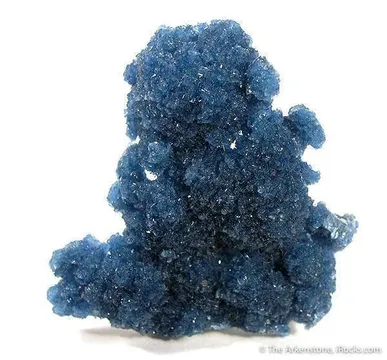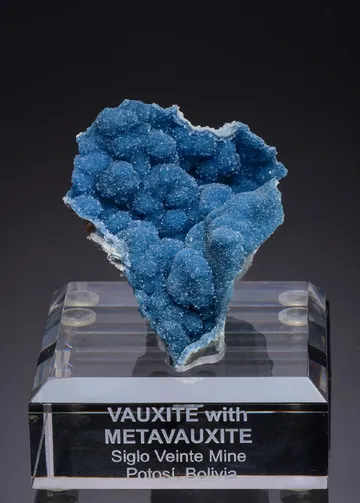
Vauxite — a rare hydrated iron–aluminum phosphate with sky-to-cornflower-blue rosettes and delicate micaceous laths; Bolivian localities mark its rarity.
Key facts
Vauxite is a rare hydrated iron–aluminum phosphate, Fe2+Al2(PO4)2(OH)2·6H2O, famed among collectors for its vivid sky- to cornflower-blue color and delicate, micaceous laths that form rosettes, fans, and crusts. The crystals are typically thin, flexible-looking laminae with pearly to silky luster, often perched on quartz or limonitic matrix. Vauxite is part of a trio with paravauxite and metavauxite; all are closely related by hydration and structure, and may occur together in the same pocket. The type locality is the Siglo Veinte Mine, Llallagua, Bolivia, which set the standard decades ago for superb blue rosette specimens. Because vauxite is uncommon and fragile, fine pieces are scarce and strongly coveted.
Although vauxite is not a “mainstream” showstopper like tourmaline or fluorite, it is iconic in the world of rare phosphates—especially for aficionados of Bolivian classics. The brilliant blue color is unusual among phosphates and stands out instantly in a drawer. Production was always sporadic and largely historical, making the finest older pieces increasingly hard to obtain. Miniatures and small cabinets with richly crystallized rosettes on contrasting matrix are most admired; truly top pieces with large, pristine clusters are rare. Because of its rarity, color, and association with famous phosphate pockets in Bolivia, vauxite remains a hallmark species for advanced systematic and Bolivian-focused collections.
While vauxite has been reported from several localities, a handful produced the specimens that define the species for collectors. The best-known sources are in Bolivia’s tin–phosphate systems, where secondary phosphates formed in old mine workings and pockets.
Type locality and the benchmark for the species. Siglo Veinte produced the classic bright blue rosettes and radial sprays of vauxite, commonly intergrown with paravauxite and metavauxite. Aesthetic pieces show dense beds of micaceous, pearly blades perched on quartz or limonitic matrix, with superb color saturation and contrast. Many of the most famous vauxite specimens in museums and old collections trace to this mine, often with provenance to specific pockets in the mid-20th century. Pristine, richly covered matrix pieces from Siglo Veinte command a premium and set the visual standard collectors compare others against.
A classic Oruro tin mine known for phosphate-rich pockets. Vauxite here is usually in delicate, pale- to medium-blue micro-rosettes and sprays scattered over drusy quartz or limonite. Individual laths can be very fine, giving a soft, silky look. While less abundant than the Siglo Veinte material, fine Huanuni pieces with crisp, undamaged rosettes remain desirable, especially when paired with contrasting matrix and companion phosphates.
Vauxite is a hydrated phosphate and is more delicate than it looks. Sensible care will preserve color and integrity.
By focusing on saturated blue color, crisp pearly laths, undamaged rosette rims, and classic Bolivian provenance—especially Siglo Veinte and the Phosphate Stope—you can build a top-quality vauxite suite that anchors any phosphate or Bolivia-themed collection.