






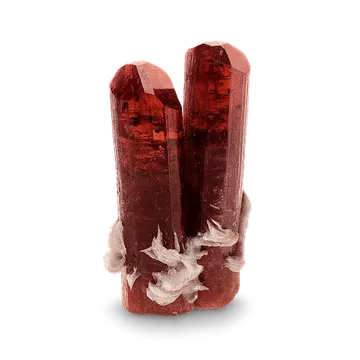
Chumar Bakhoor, Pakistan — pale aquamarine beryl on mica blades in gem pegmatites; prized for crystal-to-matrix aesthetics, luster, and collector appeal.
Key facts
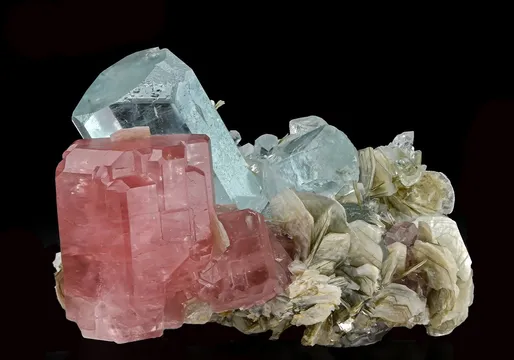
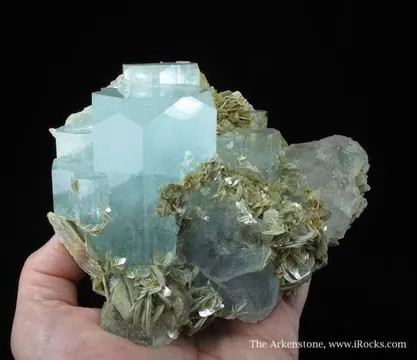
Chumar Bakhoor is one of the defining modern localities for Pakistani aquamarine specimens: pale, icy-blue to nearly colorless beryl crystals standing on bright, bladed muscovite from high pegmatites above the Sumayar Valley of Nagar, Gilgit-Baltistan. Its best pieces have a very particular look—thick hexagonal aquamarine prisms, often glassy and lightly veiled, set into golden-brown to silvery mica “flowers,” with occasional fluorite, fluorapatite, quartz, feldspar, or schorl completing the assemblage.

Photo: Wikimedia Commons
The locality is not simply another Karakoram aquamarine source. Chumar Bakhoor specimens are prized for their matrix aesthetics: stout beryl crystals sitting naturally among mica blades rather than isolated gem rough or loose crystals. Many classic examples show soft sky-blue aquamarine with flat to modified pinacoidal terminations; others grade toward goshenite, especially where color is very weak. The light tone is part of the locality’s identity. Collectors who know Chumar Bakhoor generally do not expect deep Santa Maria blue; they look instead for luster, transparency, sharpness, undisturbed crystal-to-matrix contacts, and a convincing muscovite setting.
Geologically, the deposit belongs to a gem-bearing granitic pegmatite field related to the Sumayar leucogranite system. Modern geochemical work places the Chumar Bakhoor pegmatites in and near calc-silicate rocks and amphibolite of the southern Karakoram Metamorphic Complex, with pegmatite bodies occurring as patches, pods, lenses, and dykes. The gem pockets are miarolitic and productive, enriched in beryllium, boron, fluorine, chlorine, and water-bearing fluids—exactly the chemical environment one expects for beryl, schorl, fluorite, fluorapatite, and related pocket minerals.

Photo: Wikimedia Commons
Historically, Chumar Bakhoor became famous during the late twentieth-century rise of Pakistani pegmatite minerals in the international specimen trade. The mines have now been active for roughly four decades, and the locality’s name has become nearly synonymous with Nagar aquamarine on muscovite. Among collectors, a fine Chumar Bakhoor beryl is judged less by color saturation than by architectural balance: a clean, terminated crystal or crystal group, enough transparency to glow, a stable mica matrix, and no questionable glue line hiding where the beryl meets the muscovite.
Search for specimens: View all beryl specimens from Chumar Bakhoor, Pakistan
Chumar Bakhoor lies in the Sumayar Valley of Nagar District, Gilgit-Baltistan, Pakistan, in the high mountains of the Karakoram. The collecting and mining area is reached from the village area below by a steep mountain approach, with the pegmatites cropping out high on the slopes above 4,000 meters and mine workings commonly described around the 4,600–4,800 meter range. This altitude controls everything about production: access, season length, transport, risk, and the small-scale character of the work.
The deposit is a field of granitic pegmatites associated with the Sumayar pluton and the southern Karakoram Metamorphic Complex. The gem-bearing bodies are not large industrial ore bodies; they are pocket-bearing pegmatites and mica-lined fissures worked for specimen-quality crystals. Geological studies describe the pegmatites as unzoned, miarolitic, and productive, with two important field groupings: muscovite-schorl pegmatites and quartz-muscovite-feldspar pegmatites. The mineralizing system is beryllium- and fluorine-rich, explaining the repeated association of beryl with fluorite, fluorapatite, schorl, feldspar, and mica.
The mining history is artisanal and village-based rather than corporate. A widely cited account attributes discovery of the gemstone deposits to local hunter Muhammad Shah in 1984, and by the mid-1980s Chumar Bakhoor material had begun moving into the mineral trade. Later field reporting described the pegmatites as controlled through a miners’ association in Sumayar, with groups of local miners allowed to work the deposits and revenue benefiting the village. Because the workings sit so high, the practical season is short—roughly late July into October in many accounts—before snow and weather close the mountain.
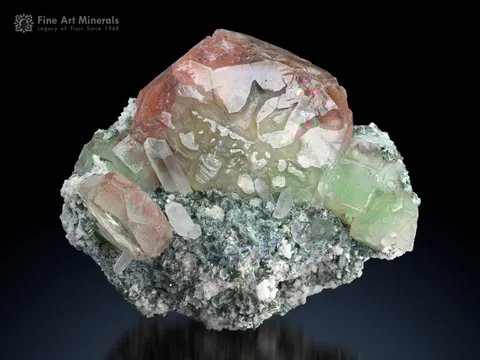
Production has been irregular but important. Chumar Bakhoor has yielded large numbers of aquamarine-on-muscovite specimens, loose beryl crystals suitable for cutting or carving, cabochon and bead material, and notable associated fluorite and fluorapatite. The finest finds are cabinet-sized display specimens in which aquamarine, fluorite, and/or fluorapatite share a muscovite matrix. The best pockets are remembered not merely for gem rough, but for complete natural compositions: blue beryl prisms emerging from mica, sometimes with pink or green fluorite, rosy fluorapatite, quartz points, feldspar, or black schorl.
Collecting access should be treated as mining access, not casual recreational collecting. The workings are high, steep, seasonally accessible, and locally controlled. Specimens seen in the market usually pass through miners, Pakistani dealers, Peshawar or Gilgit trade networks, international mineral dealers, and auction platforms rather than being collected by visiting hobbyists.
The classic Chumar Bakhoor beryl crystal is aquamarine: pale blue, glassy, hexagonal, and commonly prismatic, with flat or slightly modified terminations. Some crystals are nearly water-clear and are better described visually as goshenite or very pale aquamarine. Others show a soft “ice-blue” body color with internal veils, healed fractures, or faint zoning. In strong examples, the crystal has a stout, blocky presence rather than a long needlelike habit.
Crystal sizes range widely. Small cabinet specimens may carry individual beryl crystals of roughly 3–5 cm; many attractive matrix pieces fall into the 5–12 cm overall range. Larger cabinet and small-museum pieces are known, including doubly terminated or “cannon”-shaped aquamarine crystals around 14 cm on muscovite matrix, and large matrix clusters in the 15–18 cm overall range. Very large, clean crystals are much less common than modest matrix pieces, and the larger the crystal, the more likely it is to show internal veiling, healed cracks, contacts, or slight edge wear.
The most characteristic matrix is muscovite. Chumar Bakhoor muscovite occurs as pearly, bladed to rosette-like aggregates, typically golden brown, bronze, silvery brown, or silvery gray. It can form an elegant pedestal for aquamarine, but it is also soft and mechanically delicate; mica blades bruise, bend, and shed more easily than the beryl itself. Albite, pericline, microcline, quartz, fluorite, fluorapatite, schorl, and calcite are documented from the locality, with bavenite and questionable herderite-group reports also appearing in locality records. In the specimen trade, the most desirable companions are fluorite and fluorapatite: pink to green fluorite and pink fluorapatite can turn a good aquamarine into a true combination piece.

Photo: Wikimedia Commons
Quality in Chumar Bakhoor beryl is a balance of five factors. First is natural crystal placement: the aquamarine should look grown from the mica, not merely parked on it. Second is luster, which should be glassy on prism faces and bright on termination faces. Third is transparency; even a pale crystal can be superb if it is gemmy enough to transmit light. Fourth is completeness: terminations, side faces, and rear contacts matter. Fifth is matrix integrity, because a battered muscovite base can undermine an otherwise fine crystal.
One especially unusual documented specimen from Chumar Bakhoor contained visible white octahedral fluorite inclusions inside aquamarine. The crystal weighed 1418 ct, measured about 77 × 55 × 45 mm, and contained twelve fluorite crystals ranging from 5 to 10 mm across. That occurrence is exceptional rather than typical; most Chumar Bakhoor fluorite is external on matrix, not enclosed as eye-visible octahedra within beryl.
The main collecting concern for Chumar Bakhoor aquamarine is not whether the beryl species is real; it usually is. The concern is whether the specimen is naturally assembled. Pakistani aquamarine on muscovite has a long and well-known problem with repairs, reattachments, and outright manufactured matrix pieces. Broken crystals may be glued back into their original positions, which many collectors will accept if disclosed and well done. More problematic are specimens made by inserting loose aquamarines into carved or disturbed muscovite, sometimes with added fluorite or apatite to increase value.
Examine the contact zone first. On a natural Chumar Bakhoor piece, mica blades, quartz, feldspar, or other pocket minerals should meet the beryl in a way that looks grown-in, not excavated. Look for interrupted muscovite texture, suspicious white filler, unnatural gaps, glossy glue films, resin pools, crushed mica paste, or a crystal that appears too perfectly centered in a socket. Ultraviolet light can reveal some adhesives, but not all; absence of fluorescence is not proof of authenticity. A microscope, acetone testing by a qualified conservator, and comparison with known natural matrix textures are more useful than casual inspection alone.
Color should also be judged realistically. Chumar Bakhoor aquamarine is typically pale blue to near colorless. Deep, saturated, inky, or unusually uniform blue crystals sold cheaply on mica deserve caution. Aquamarine gems are commonly heat treated in the jewelry trade, and beryl can also be irradiated; for natural matrix specimens, such treatment is less expected but cannot be dismissed. Matrix pieces with exaggerated blue color, polished faces without disclosure, oily-looking fractures, or suspiciously “wet” surfaces should be approached carefully.
Condition issues are common and often acceptable when honestly described. Muscovite blades chip and peel. Aquamarine terminations may show small edge bruises. Larger crystals can have internal veils, tectonic cracks, healed fractures, or old pocket contacts. On fine specimens, a single clean repair may be preferable to an apparently pristine but suspiciously cheap “floater” on mica. Documentation from a respected dealer is especially important for expensive cabinet specimens.
Rarity is tiered. Small pale aquamarine-on-muscovite pieces are available with some regularity. Sharp, gemmy, unrepaired crystals over 5 cm on attractive natural matrix are much scarcer. Large, transparent, doubly terminated crystals on muscovite are rare and expensive. True combination specimens with undisturbed aquamarine plus pink fluorite or pink fluorapatite in balanced composition are the premium tier, especially when the associations are natural and the matrix has not been rebuilt.
Market availability remains active. Chumar Bakhoor aquamarines appear through Pakistani dealers, specialist mineral dealers, online marketplaces, and auction platforms. Recent offerings range from affordable small cabinet specimens to multi-thousand-dollar cabinet pieces. Price should track naturalness, aesthetics, crystal size, transparency, condition, and provenance—not simply the word “Pakistan” or “Nagar” on a label.
The Chumar Bakhoor story begins, as many Karakoram mineral stories do, with the mountain rather than the market. The pegmatites sit high above Sumayar, on slopes where the working season is measured in weeks, not months. Field accounts describe an organized system in the village: the Chumar Bakhoor pegmatites belonged to a miners’ association in Sumayar, with 55 groups of six men each allowed to work the deposits. That is 330 miners tied to a locality whose usable season runs roughly from late July into October, when altitude finally yields a short window for work.
The altitude gives the specimens part of their character. Aquamarine-on-muscovite pieces from Chumar Bakhoor are not the products of a lowland quarry with heavy machinery and year-round benches. They come from steep, high pegmatite pockets where the prize might be a pocket lined with mica blades, beryl prisms, fluorite, and apatite—or nothing more than barren pegmatite after days of effort. The best specimens carry that pocket architecture intact: not merely a crystal, but a slice of the high mountain cavity in which it grew.
The discovery story most often repeated in the literature gives the credit to Muhammad Shah, a local hunter, in 1984. Whether told in a village, at a mineral show, or in the pages of a specialist publication, the account fits the broader pattern of northern Pakistan gem discoveries: a local eye catches something unusual in impossible terrain, small crews begin testing pockets, and the best pieces travel quietly through regional trade before the locality name becomes known internationally.
One of the most memorable modern records is not a giant pocket but a single crystal with an internal surprise. A light-blue Chumar Bakhoor aquamarine weighing 1418 ct and measuring about 77 × 55 × 45 mm was documented with twelve white octahedral fluorite crystals visible inside it. The inclusions ranged from 5 to 10 mm across. Chumar Bakhoor is famous for aquamarine with external fluorite on mica, but fluorite crystals sealed inside the aquamarine are another matter entirely. After four decades of mining, that specimen was described as surprisingly one-of-a-kind.
There is also a less romantic but equally important story: the afterlife of broken crystals. Chumar Bakhoor’s mica matrices are beautiful but fragile, and aquamarine crystals can detach during mining, transport, or trimming. Some are honestly repaired. Others have been inserted into mica where they never grew. Collectors have spent years learning the difference—following the mica blades into the contact, looking for bored-out sockets, checking for glue under UV, and asking whether a specimen is a repaired survivor or a constructed fantasy. In this locality, connoisseurship is not just about beauty; it is about reading the physical history of the specimen.

_1.JPG)
.jpg)
