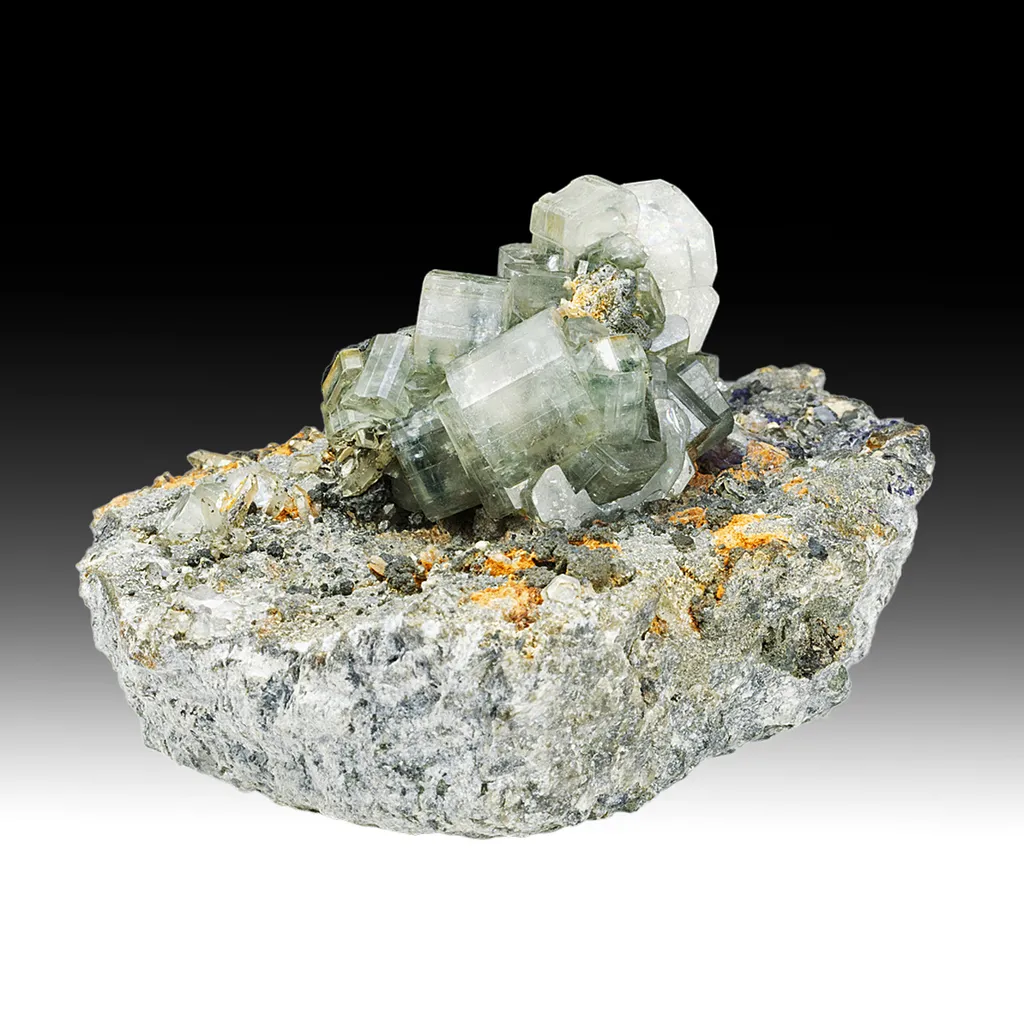
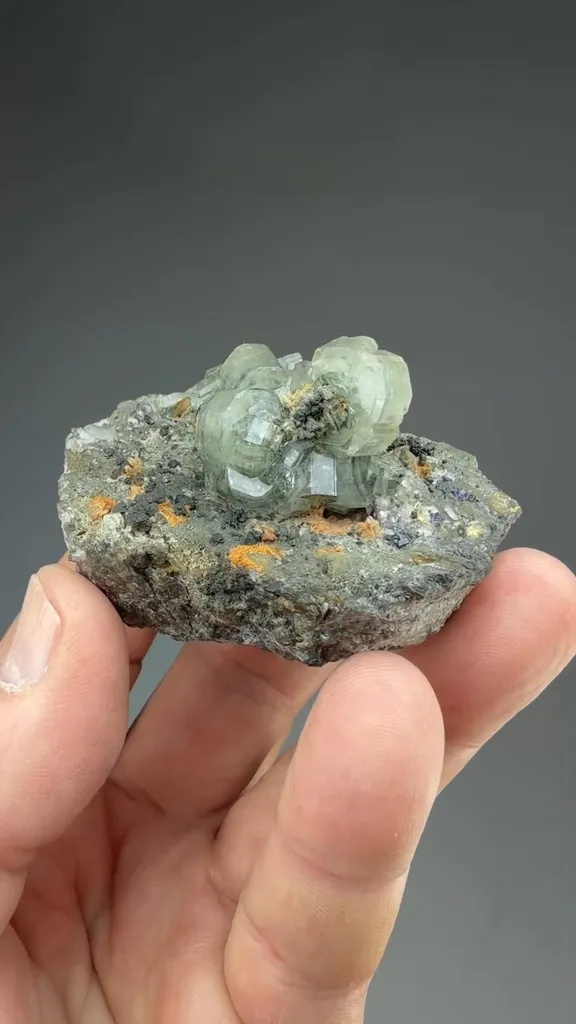
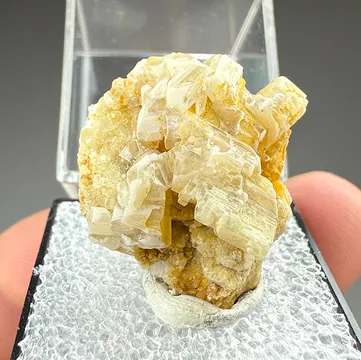
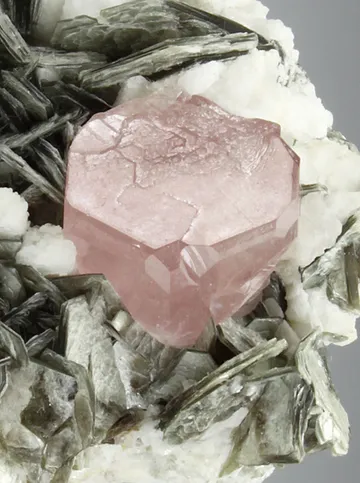
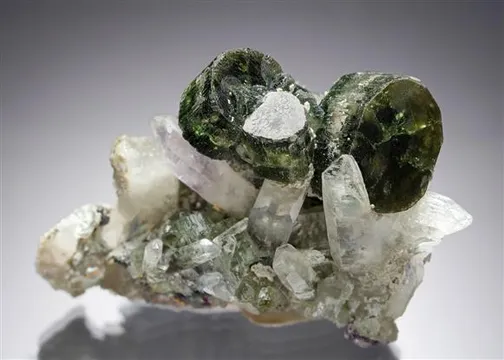
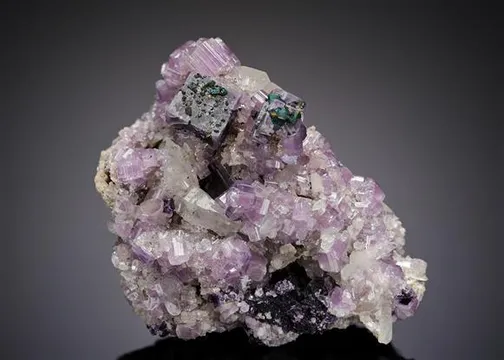
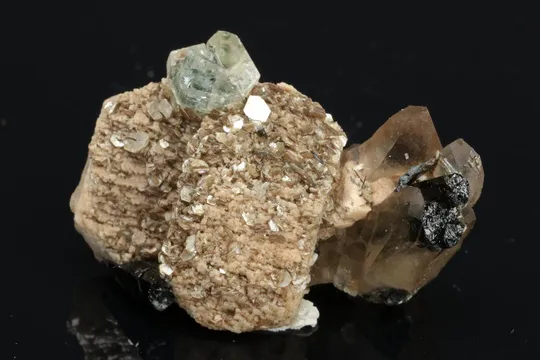
A cluster of translucent lustrous tabular green fluorapatite crystals measuring to 1.3 cm in size stacked nicely on top of this matrix. This is in excellent condition all around. The specimen comes with an antique label as shown at the end of the video. Wonderful for this old classic locality.
The Ehrenfriedersdorf mining district, located on the Sauberg mountain within the Erzgebirge region of Saxony, Germany, is a historic metal deposit heavily worked for tin and silver. Geologically, the locality is characterized by late Paleozoic Variscan granitic stocks and specialized granite cupolas that intruded into older gneissic and schistose basement rocks. Hydrothermal and metasomatic fluids associated with these granitic intrusions created extensive network veins and greisen zones rich in cassiterite, arsenopyrite, and silver-bearing sulfides. Placer mining for tin began in the area around 1230, which quickly transitioned into underground shaft sinkings and tunnel networks as primary ore veins were discovered on the Sauberg. The site became renowned for its historical water-pumping innovations during the sixteenth century and maintained nearly continuous production through various periods of geopolitical conflict. Modern operations were expanded during the mid-twentieth century under state control to supply domestic industrial needs, until the depletion of profitable ore bodies and shifting economic conditions led to the final closure of all active mining operations on October 3, 1990.



 Ships from USA
Comments