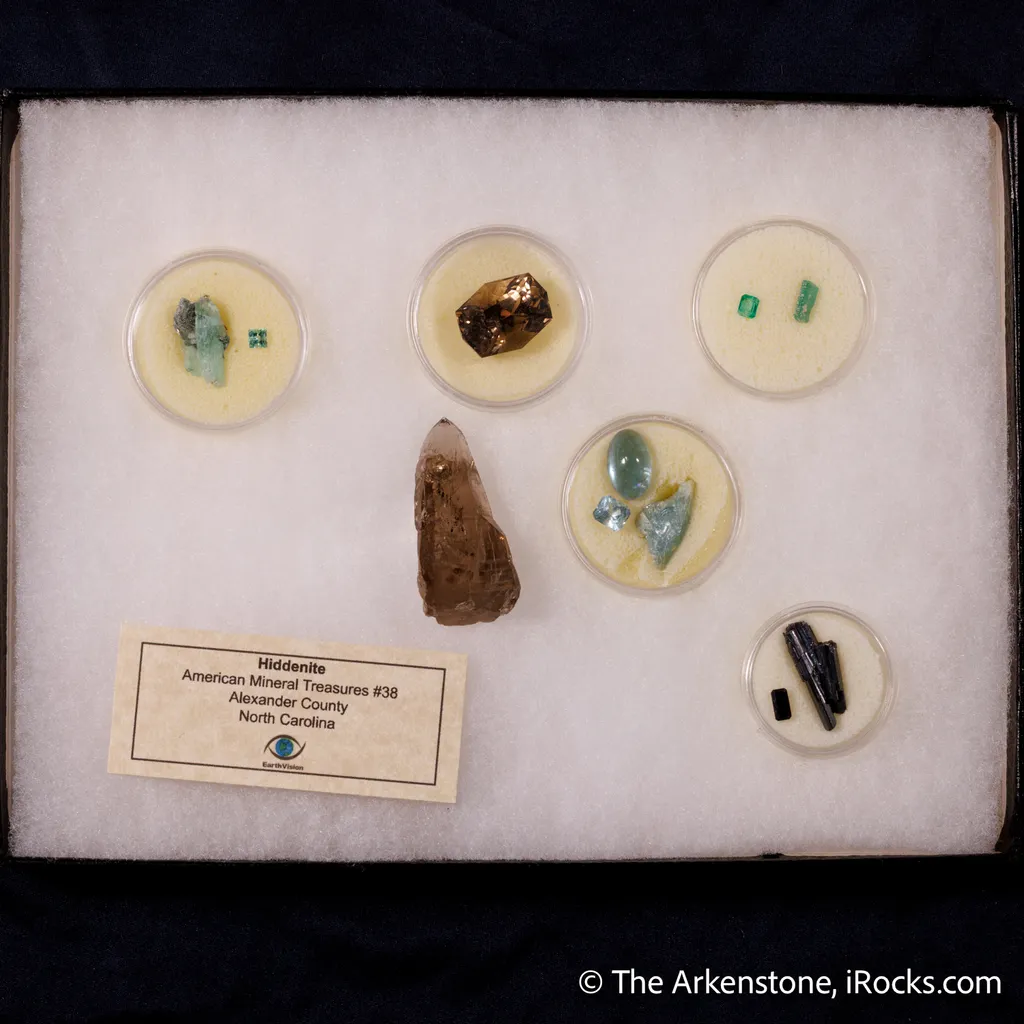
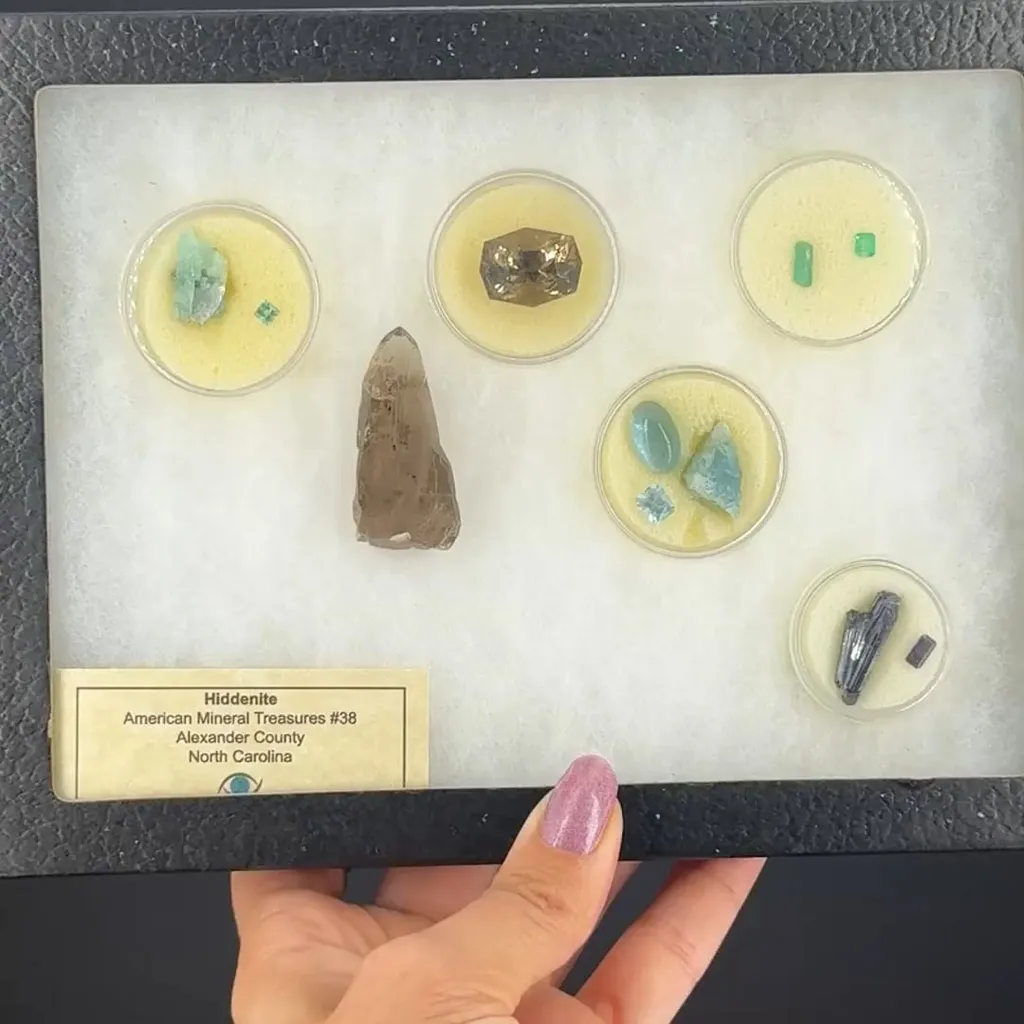
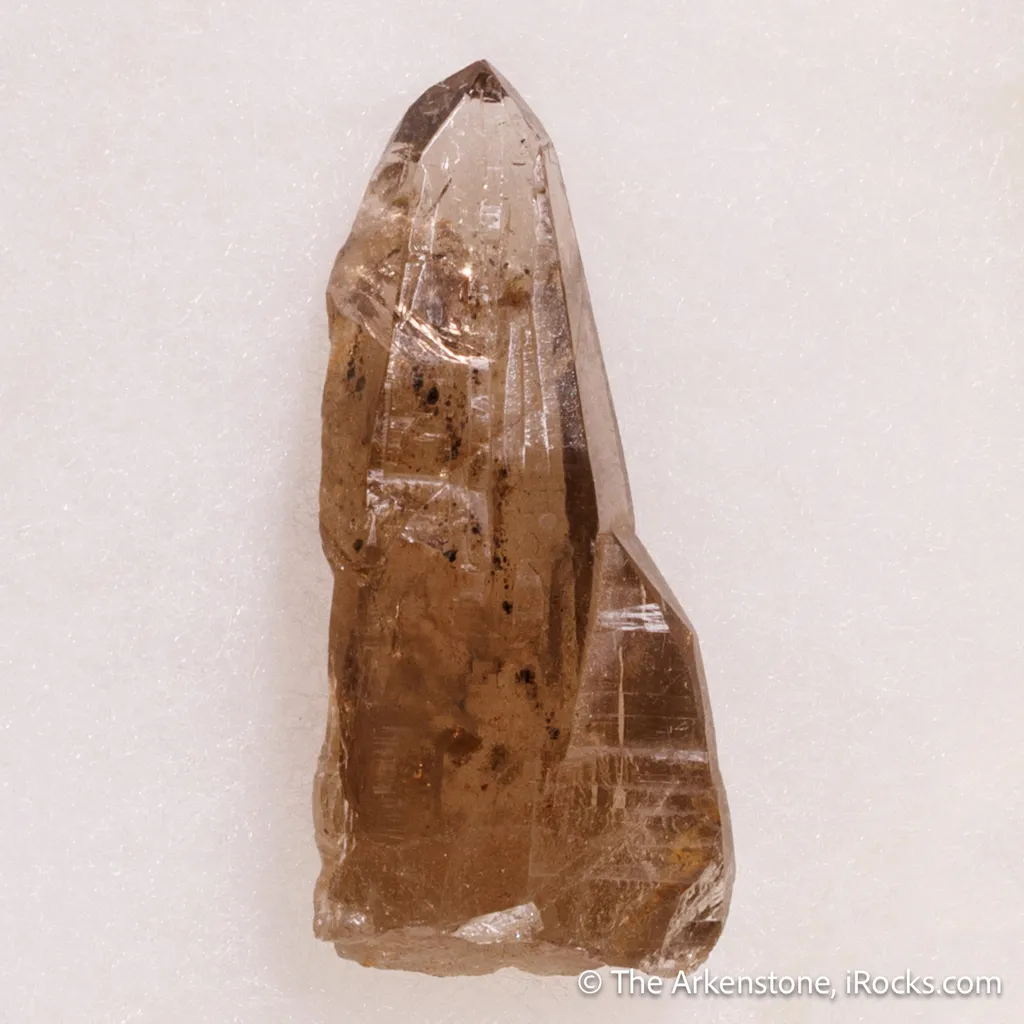
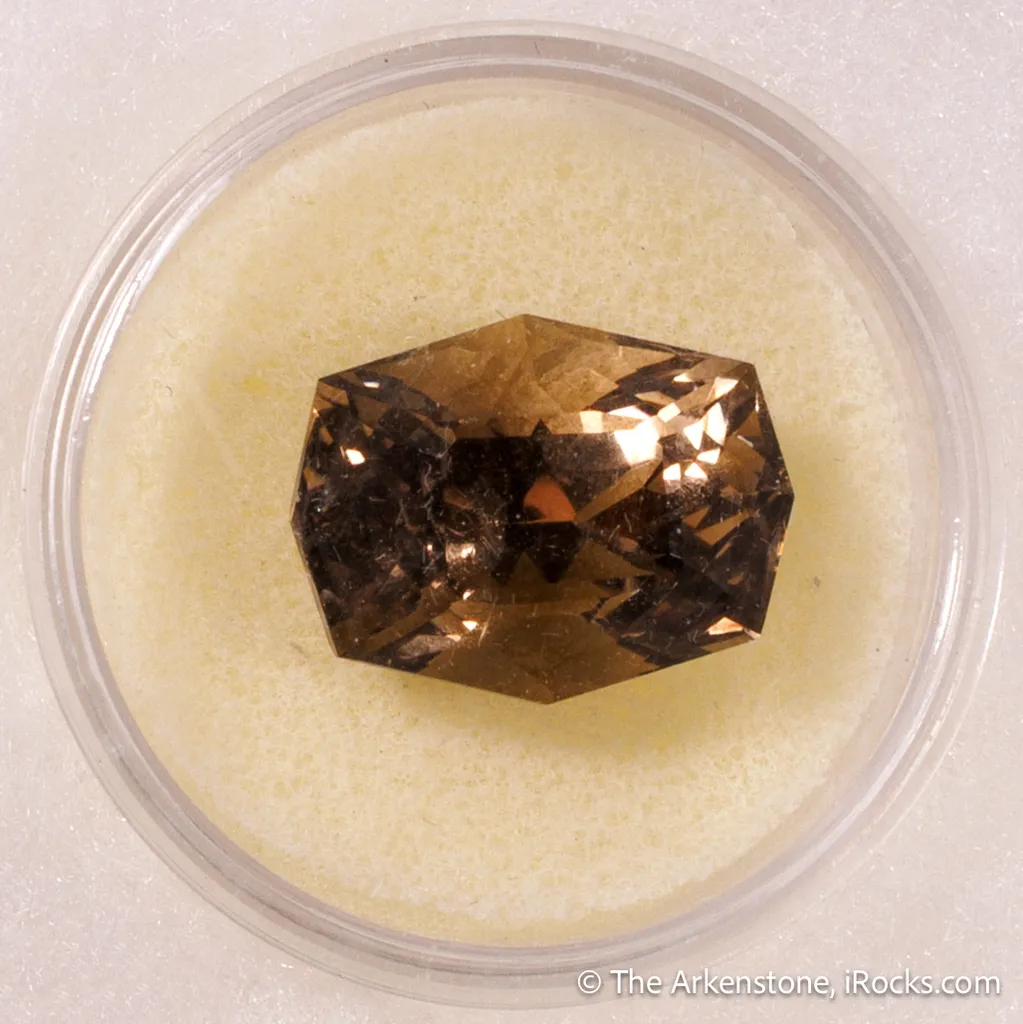
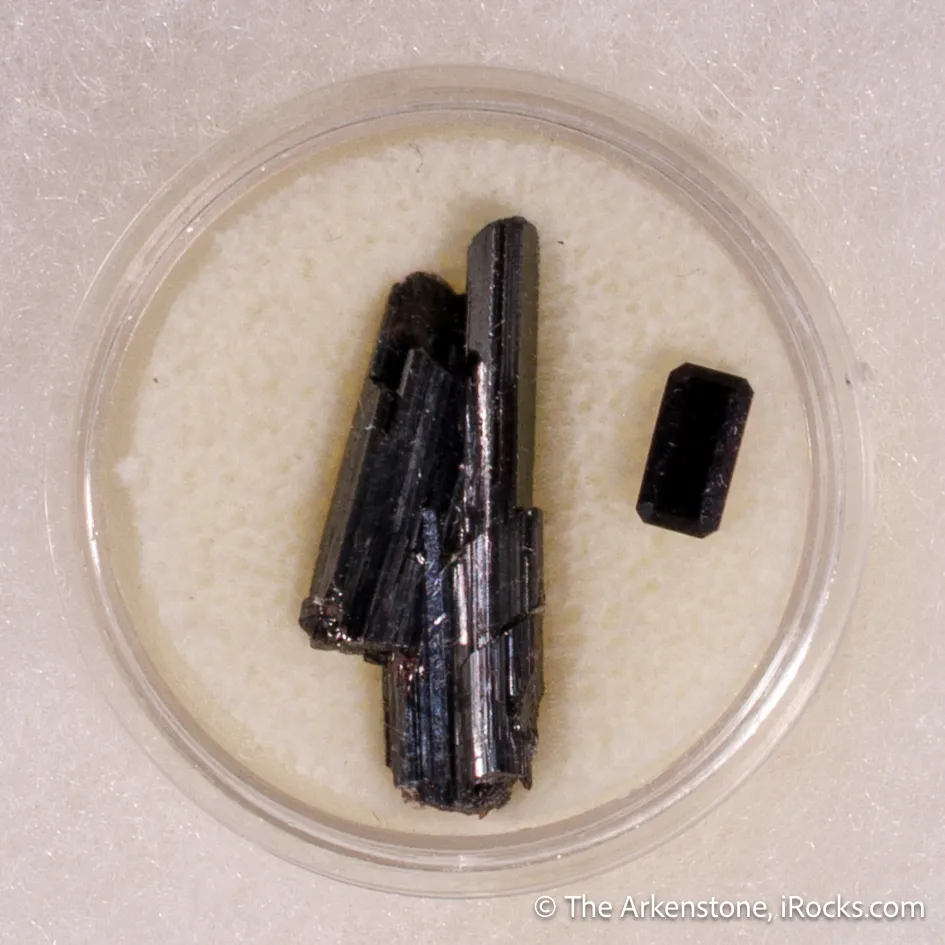
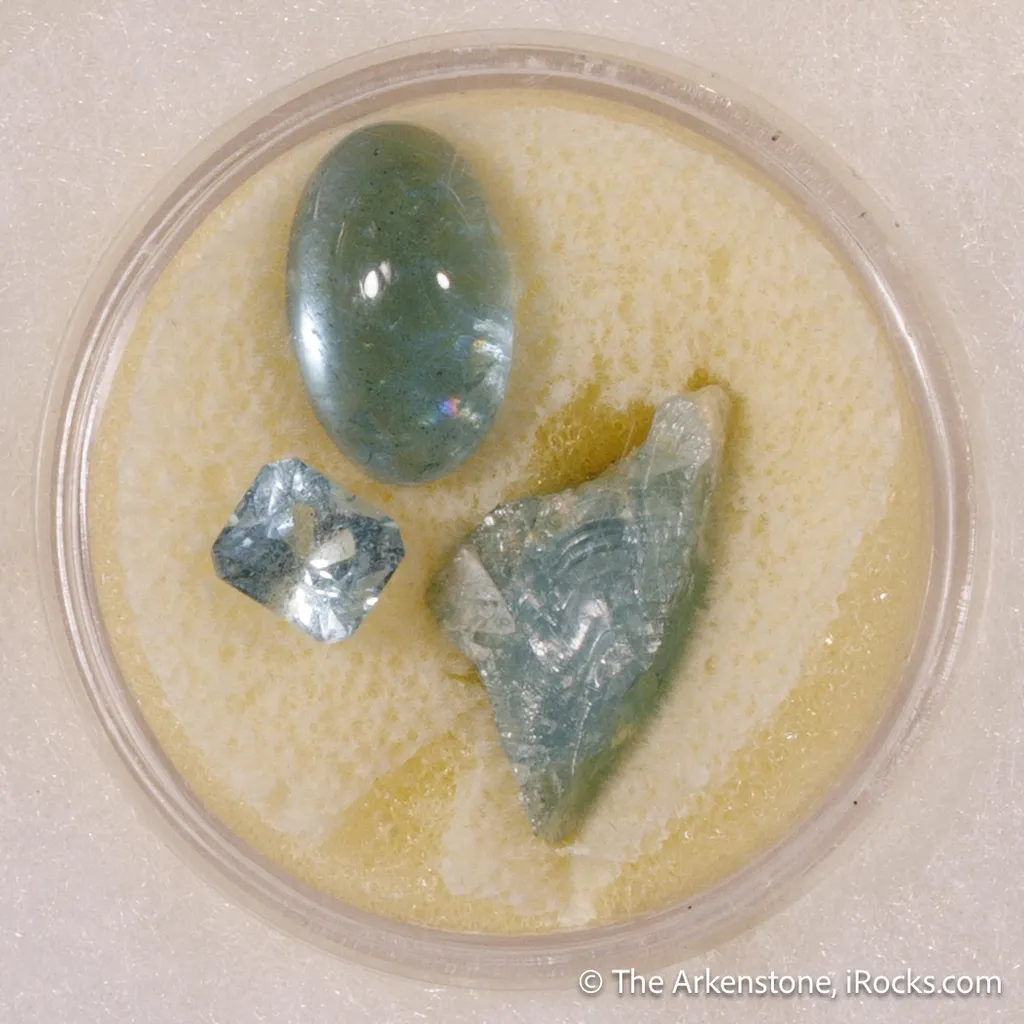
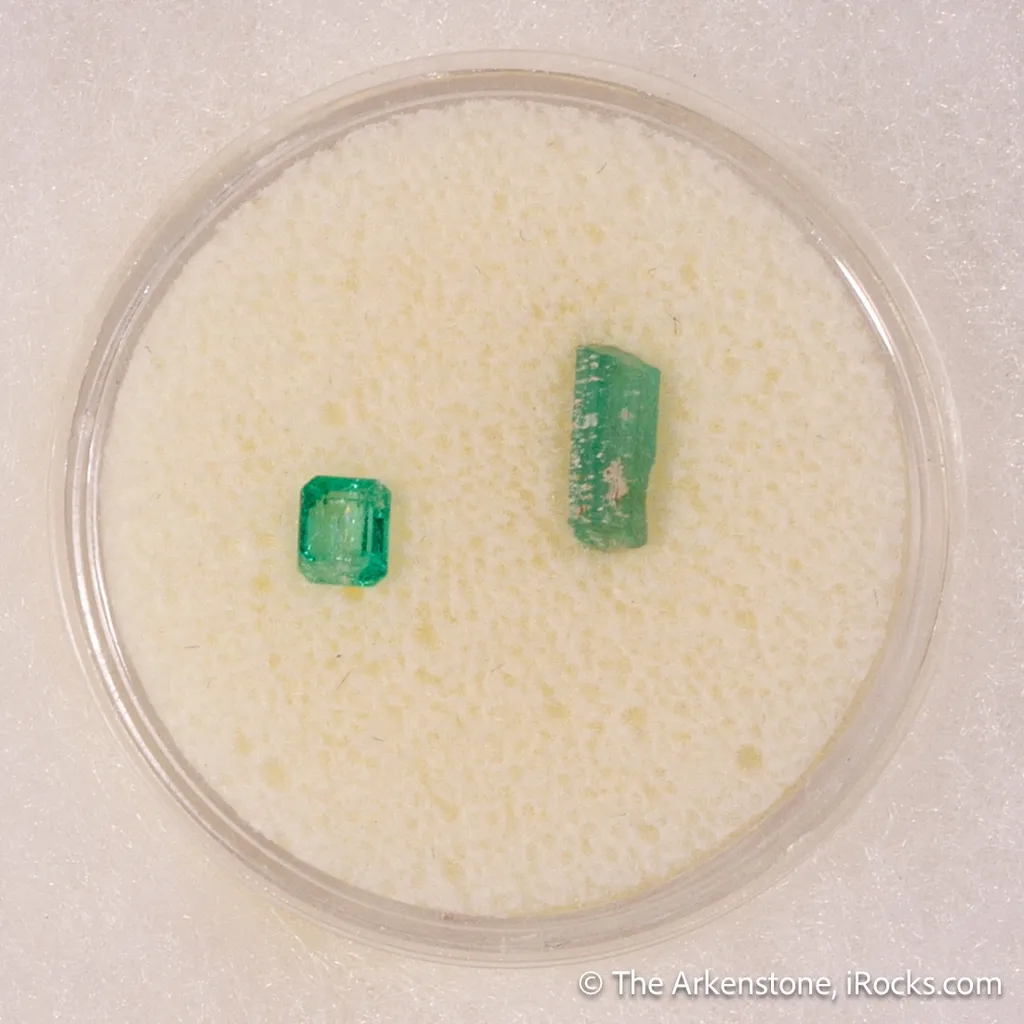
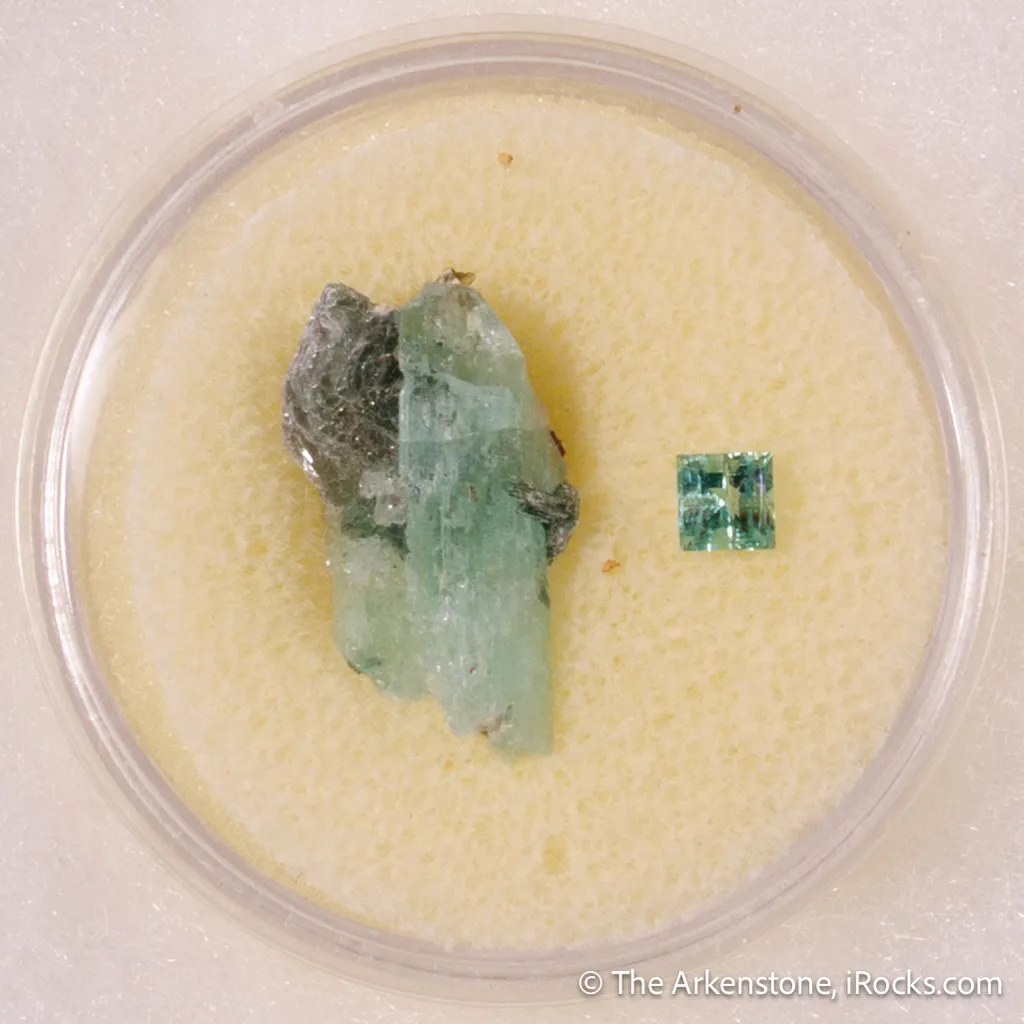
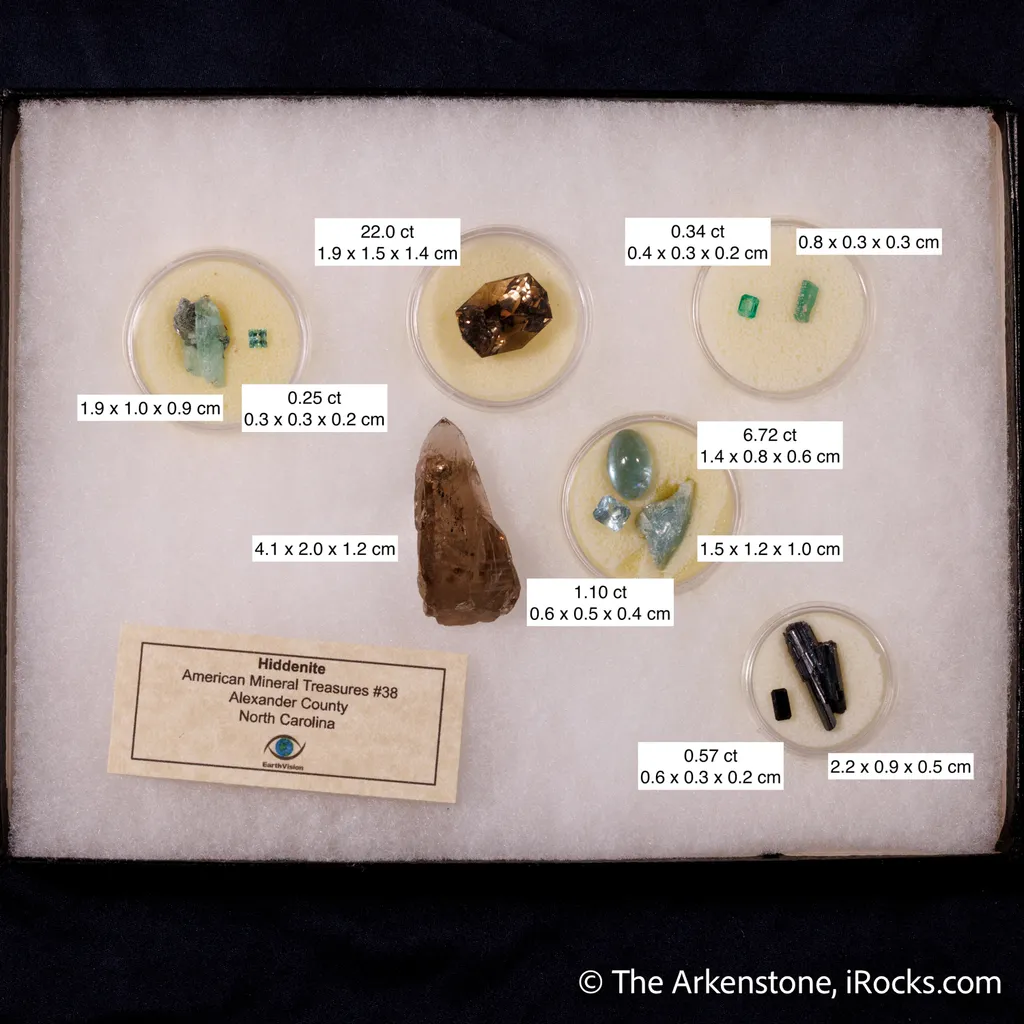
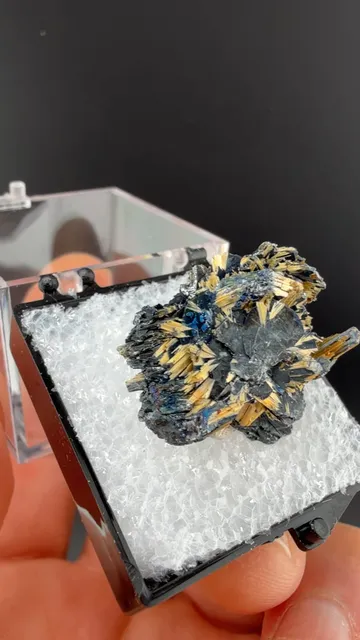
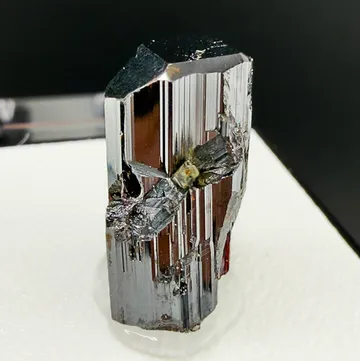
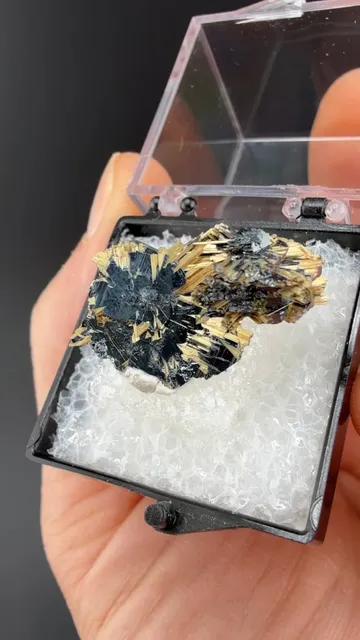
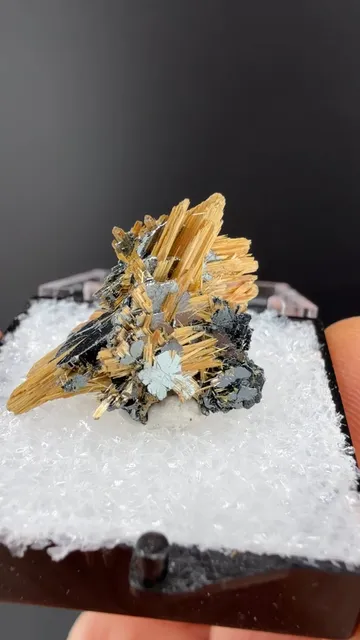
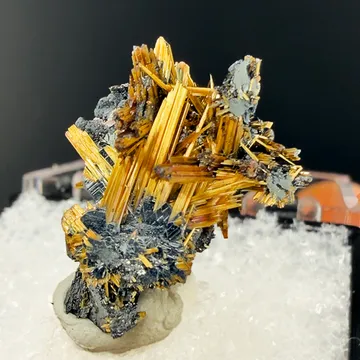
During the golden era of American mining, the United States actively produced world-class mineral specimens—a chapter of history that has since slowed to a near-halt across most domestic localities. Today, these historic American locales have earned a legendary, timeless status amongst collectors as all-time favorites. Hiddenite in Alexander County has gained popularity as one of the only locales known to produce spodumene var. hiddenite, along with a variety of other minerals. This set is a nice step back into American history, showcasing some of the various species that come from Hiddenite. On the left, we have a case housing two emeralds together: one is a square-cut gem with a nice mint color, paired with a thumbnail specimen. The thumbnail also displays a greenish-blue color with a sidecar of muscovite joined at the hip. Following to the right, we have a cut smoky quartz and a smoky specimen. Both display the most desirable smoky color—not too dark, not too faint, but a true smoky gray. In the next case, we have housed a trio of aquamarines, starting with the rough specimen to various cut gem styles, a hefty cabochon, and an emerald-cut aquamarine. All have nice luster and an admirable sky-blue color to them. Following along at the very end of the assembly line (on the top far right), we have another case housing two more emeralds. These two both displaying THE most desirable color when it comes to emerald,—let alone American emeralds, which tend to run on the milkier, paler side when compared to Colombian specimens, for example. Both are vitreous and have nice gemminess. The cut stone has been fracture-filled, but this is a very common treatment and widely accepted in the gem industry. And as if this curated set didn’t have enough to offer in terms of species, we will finish off strong here with a species not usually seen in gem form with another: a case housing a rutile thumbnail and a rutile gem. Although on first glance they appear a mysterious black color, when you hit them with light, they come alive and reveal a gem red-brown tone to them (which our quick photos do not reflect well). The rutile specimen elegantly stands tall with several sidecar crystals, all displaying a sub-adamantine luster. The rutile gem displays a very handsome sub-adamantine merlot red when met with the right light, a hidden treat in plain sight. This is a unique assortment of the different species found in Hiddenite, North Carolina, and would make a great educational addition for a mineral collection. Emerald cut (emerald) 0.34 ct, 4.4 x 3.7 x 2.6 mm. Smoky quartz gem: 22.00 ct, 19.4 x 15.0 x 14.1 mm. Emerald cut (aquamarine): 1.10 ct, 6.6 x 5.6 x 4.5 mm. Cabochon (aquamarine): 6.72 ct, 14.5 x 8.8 x 6.6 mm. Baguette cut (rutile): 0.57 ct, 6.3 x 3.3 x 2.3 mm. Square cut (emerald): 0.25 ct, 3.6 x 3.6 x 2.8 mm.
From the collection of Eric Fritz of Tucson, Arizona. Eric has a diploma from Gem-A in Great Britain, worked as a technical advisor for the Gemological Institute of America, along with being a managing director for the University of Arizona museum. He assembled a wonderful worldwide representative collection of crystals and cut stones, emphasizing famous USA locations featured in the American Mineral Treasures book that produced both crystals and gem material.



Comments