Shipping & Handling
A specimen survived millions of years underground — the last 3,000 miles are on you. Here's how to pack and ship so it arrives exactly as it left.
Last updated
From sold to shipped
- 1
Review the order
An order arrives already paid and ready to ship. If you're traveling or the specimen needs checking, tell the buyer right away — silence is what worries people.
- 2
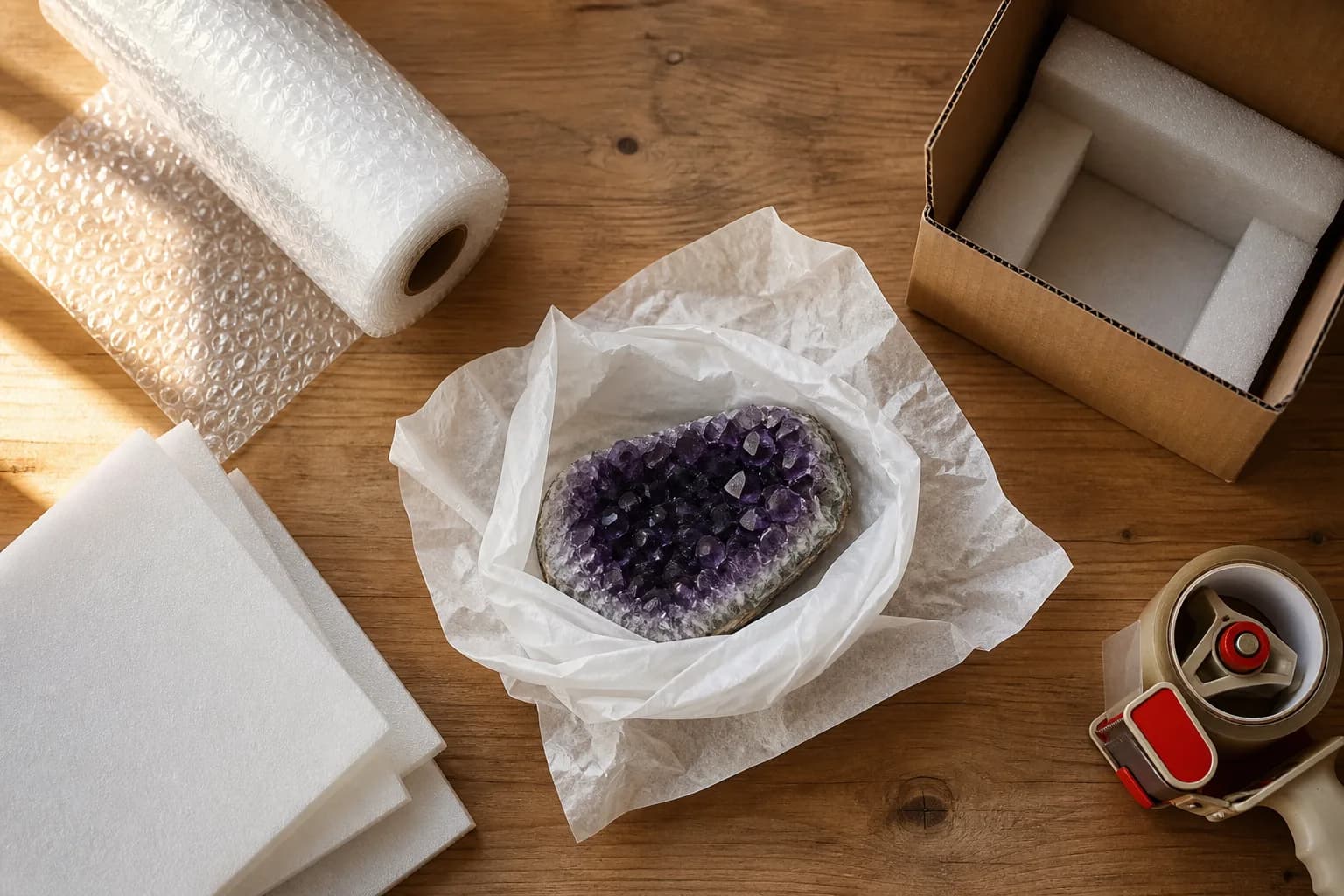
Pack it like it's going to a museum
Because to someone, it is. Work through the five layers below. Budget more time than you think: a well-packed specimen takes 15–20 minutes.
- 3
Ship and add tracking
Ship within your stated processing time — 3 days by default. Use a reliable carrier, always get a tracking number, and enter it on the order the moment you have it. The buyer is emailed automatically.
- 4
Wait for delivery and reviews
When the parcel arrives, the buyer confirms delivery and the order moves to History. Open it to read the buyer's review and leave one for them. Reviews appear on profiles once a moderator approves them.
Wondering what the buyer sees at each point? The whole flow is in How a Sale Works.
Setting your shipping rates
What you charge for shipping is set once in Seller Policies and reused by every listing. Two modes cover every shop.
- 1
Choose where you ship from
In Seller Policies, pick your Ships from country first. Your domestic rate is priced against it, and buyers see it on every listing.
- 2
Simple: two prices
Domestic is what buyers in your own country pay; International covers everyone else. Leave a price at $0 for free shipping. Most shops need nothing more.
- 3
Advanced: a rate per country
Start from one price for everywhere else, then add a rate for each country that costs you more or less. A buyer pays the rate that matches their address; everyone else pays the base price.
- 4
Policies are defaults, listings can differ
Every new listing starts with your policy rates. Open the shipping block on the listing form to change them for that specimen alone — a heavy piece, a bargain, a local-only sale.
Switching modes
The form opens in whichever mode fits your saved rates. If you already have per-country rates, it opens in Advanced and tells you how many of them switching to Simple would remove.
The five layers
Every safe package is the same package: a protected specimen floating inside a box, floating inside another box. Damage happens when a layer is skipped.
- 1
Tissue paper
Wrap the specimen first in soft, acid-free tissue. It protects delicate crystal faces from abrasion before anything else touches them.
- 2
Bubble wrap
Several generous layers, taped so they can't unravel. Fragile terminations get extra padding before the full wrap.
- 3
Inner box
A snug box with foam inserts holds the wrapped specimen. It should not rattle when you shake it gently.
- 4
Void fill
Foam peanuts, air pillows, or crumpled paper fill every empty space between the inner box and the outer box.
- 5
Outer box
A sturdy double-walled box, well taped, labeled FRAGILE. The inner box should float in the middle, never touching a wall.
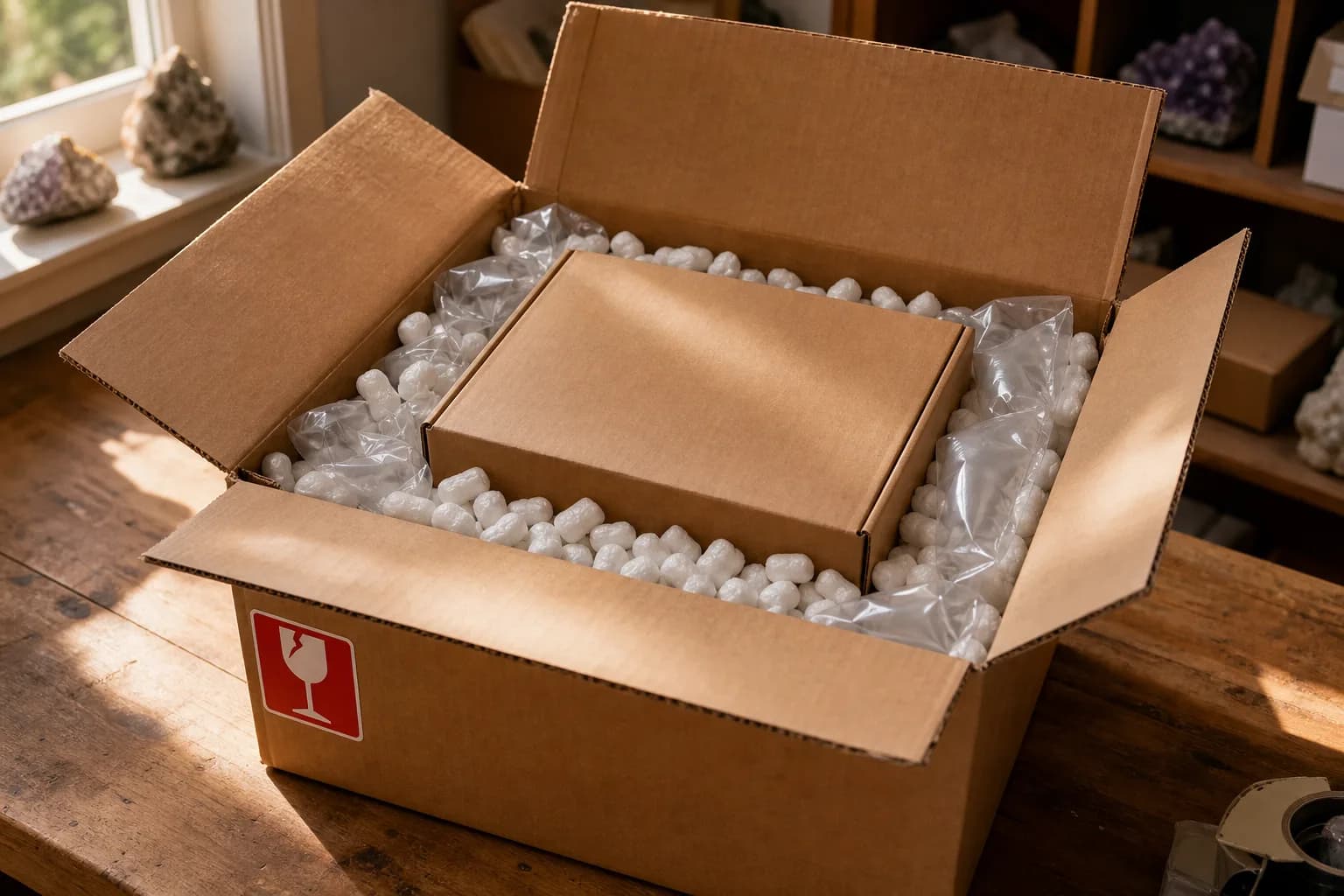
The shake test
Before sealing, gently shake the package. If you hear or feel anything move, open it back up and add fill. A silent box is a safe box.
Keep on hand
- Acid-free tissue paper and bubble wrap
- Foam inserts, packing peanuts, or air pillows
- FRAGILE and THIS SIDE UP labels
- Quality packing tape and a thank-you note
Insurance
Insurance is optional, but cheap relative to what it protects. Photograph the specimen and the packed box before shipping — that documentation is what makes a claim painless.
$100+
Worth considering. Weigh the premium against the headache of a lost package.
$500+
Always insure. Factor the cost into your pricing rather than skipping it.
Packing do's and don'ts
Do
- Double-box anything fragile or heavy
- Tape bubble wrap so it can't unravel in transit
- Support delicate terminations with extra foam
- Include a thank-you note or care instructions
- Photograph the specimen and the packed box
Don't
- Let the specimen touch any box wall
- Reuse crushed or soft boxes
- Ship loose specimens together in one wrap
- Rely on newspaper alone for padding
- Wait to enter tracking until “later”
Common questions
How do I pack a mineral specimen for safe shipping?
Wrap the specimen in tissue paper, then bubble wrap, place it in a snug inner box with foam, and float that box inside a larger outer box with void fill on all sides. The specimen should not move when the box is shaken gently. Mark fragile specimens accordingly with FRAGILE labels.
How long do I have to ship a specimen after an order comes in?
Ship within the processing time stated on your listing — 3 days by default, up to 21. An order is paid and ready to ship as soon as it arrives. Contact support if you need extra time, prepare materials in advance, and update tracking information on the platform immediately once shipped.
When should I insure a mineral specimen shipment?
Consider insurance for items over $100; specimens valued over $500 should always be insured. Document condition with photos before shipping, factor insurance costs into your pricing, and keep records of coverage for any future claims.
What materials do I need for safe specimen shipping?
Acid-free tissue paper, bubble wrap in several sizes, foam inserts, and packing peanuts or air pillows for protection; two sturdy boxes for double-boxing, quality packing tape, FRAGILE and directional labels, and shipping documentation.
Can I charge different shipping for different countries?
Yes. In Seller Policies, or on a single listing, switch the shipping block to Advanced: set a price for everywhere else, then add a rate for each country you want to price separately. A buyer pays the rate that matches their shipping address, or the everywhere-else price when none does. If you only need a domestic and an international price, Simple does that with two fields.