Understanding Specimen Ownership and Provenance
Two identical crystals can differ in price by a factor of ten. The difference is rarely the mineral — it's the paper trail behind it.
Last updated
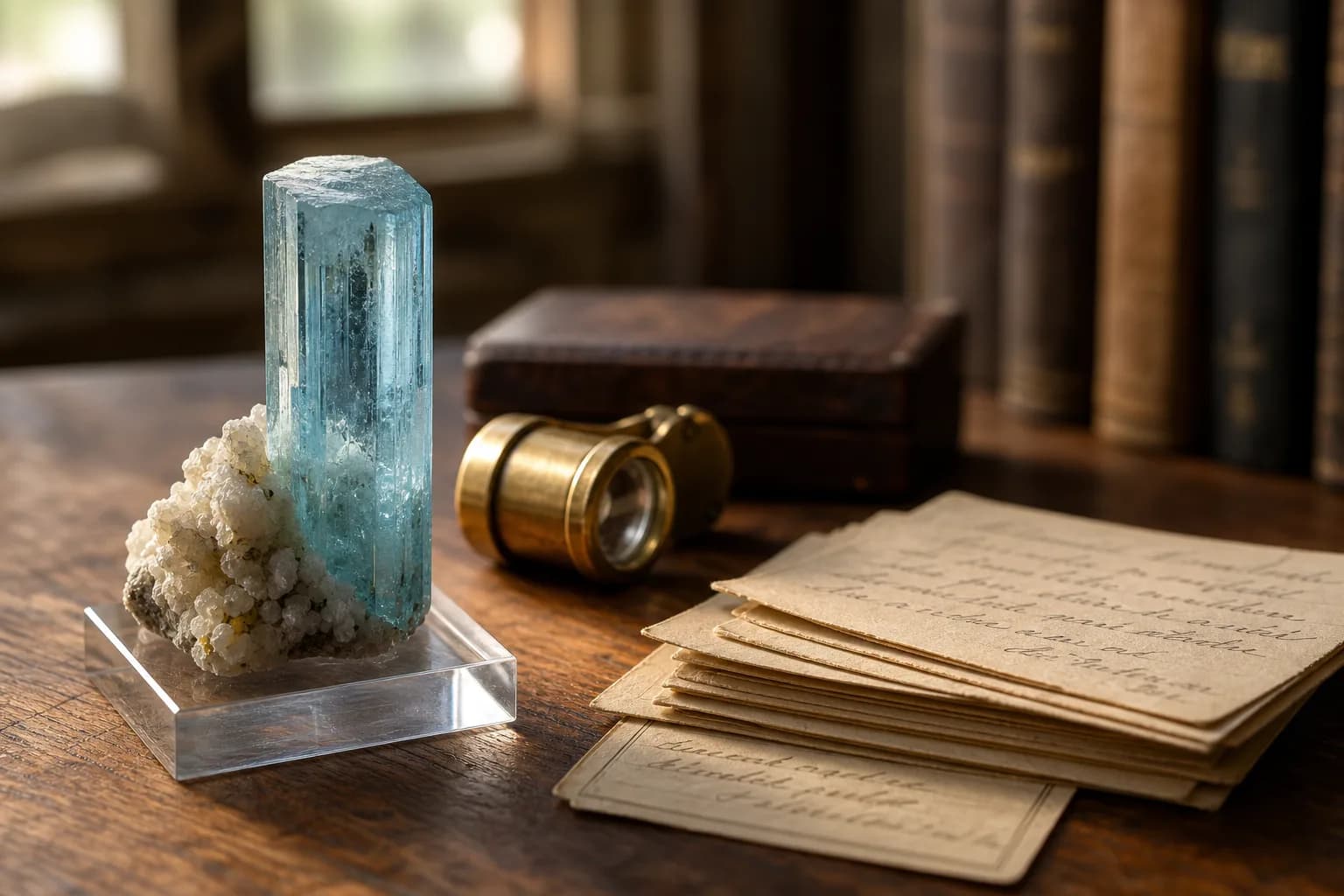
Why the story matters
Authenticity
A documented chain back to the mine is the strongest evidence a specimen is what the label claims — and that treatments and repairs were disclosed along the way.
Value
Well-documented specimens command higher prices and resell with confidence. A connection to a notable collection can multiply what a piece is worth.
History
Labels and ledgers preserve the collecting history of important pieces — the discovery, the collectors, the institutions. Lose the paper, lose the story.
An ownership ledger, read aloud
Here's the provenance of one fluorite, as a chain. Every link answers a question a careful buyer would ask.
Nigel Petronia
June 2018
Field collected, Erongo Mountains
Private collection
August 2020
Purchased at the Munich Show · $7,500
Alex Zapelenko
March 2025
Purchased on EarthWonders · $10,000
On EarthWonders, the ledger writes itself
When a sale completes, ownership transfers on the specimen's page automatically — locality, photos, and history travel with the piece to its next collector. Owners choose what's public.
What complete documentation includes
Origin
- Locality to the specific mine or pocket
- Date of collection or discovery
- Original collector's name
- Treatments, repairs, or modifications
Ownership chain
- Each owner and acquisition date
- How it changed hands — sale, trade, gift
- Prices where disclosed
- Exhibitions or publications
Supporting evidence
- Original collector labels and tags
- Dealer or institutional certificates
- Historical photographs
- Appraisals and insurance valuations
Missing paper isn't disqualifying — it's a discount
Plenty of fine specimens lost their labels decades ago. Just price accordingly, scrutinize the seller's story, and be wary of grand claims — famous previous owners, historic finds — offered without evidence.
Common questions
What is provenance in mineral collecting?
Provenance is the documented history of a specimen's ownership, origin, and any modifications since its discovery. It includes where the specimen was found, who has owned it, and how it has been treated or enhanced over time — like a biography of the specimen.
Why does provenance affect a specimen's value?
Well-documented specimens command higher prices because provenance confirms authenticity, supports insurance valuations, builds collector confidence, and preserves historical significance. A connection to notable previous owners or institutions can substantially increase value.
What documentation should accompany a valuable specimen?
Specific locality (mine, quarry, or collecting site), date of collection, original collector's name, geological context, any treatments performed, ownership chain with acquisition dates, original collector labels, and any institutional or dealer certificates.
Is a specimen without provenance documentation suspicious?
It warrants extra scrutiny. While not all undocumented specimens are problematic, recent acquisitions without supporting documentation, claims of famous previous ownership without evidence, or inconsistent stories about origin are red flags worth investigating before purchase.