Verifying Specimen Authenticity and Quality
You can't hold the specimen before you buy it — but a listing leaks the truth everywhere: in the locality, the photos, and how the seller answers questions.
Last updated
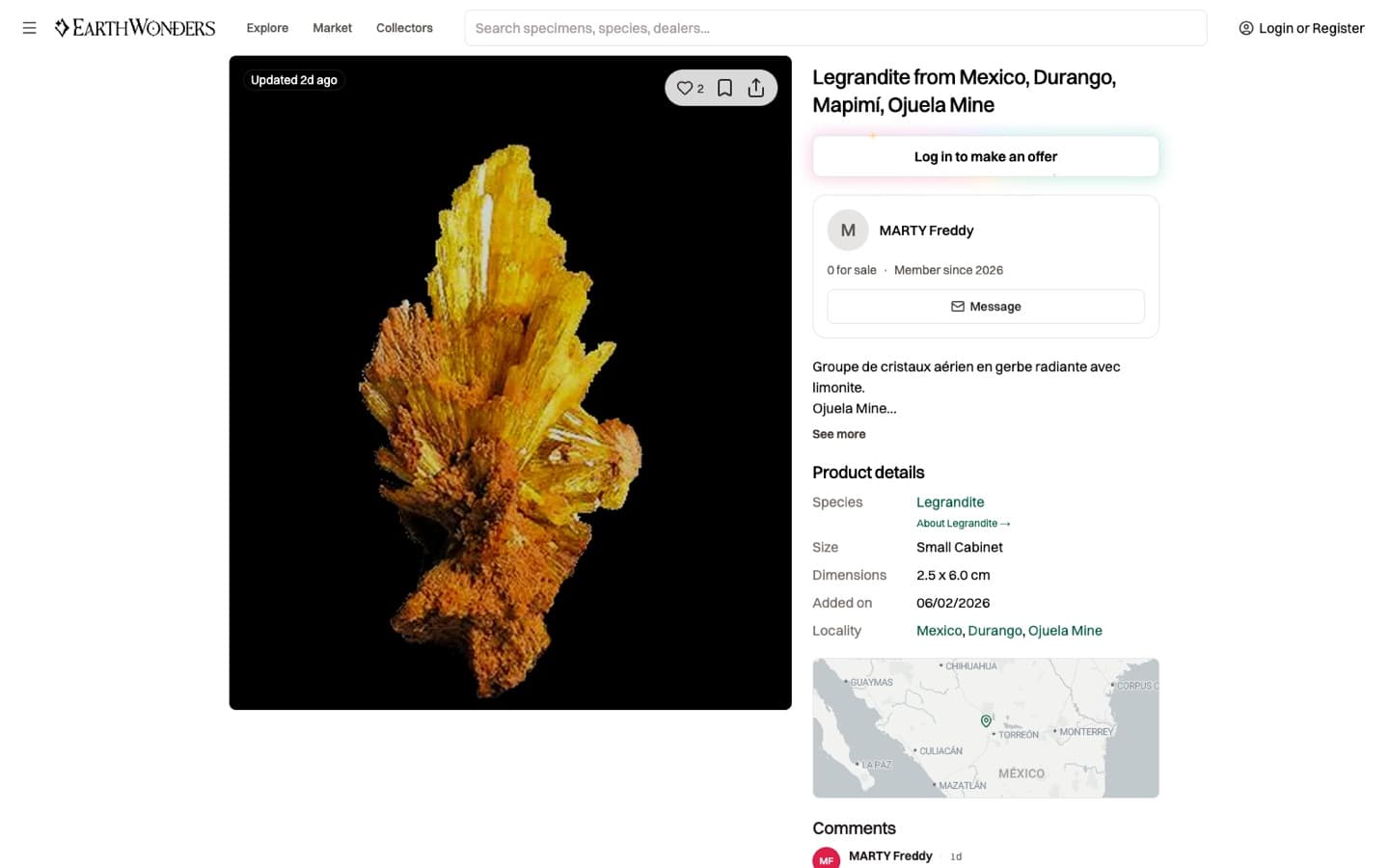
Three signals of a trustworthy listing
Documentation that commits
Specific locality down to the mine, accurate measurements and weight, disclosed treatments and repairs, and provenance where it exists. Vagueness is a choice — good sellers choose precision.
Photos with nothing to hide
Multiple angles in honest light, close-ups of crystal faces and any damage, scale references, ideally video. If a listing shows one flattering angle, ask why.
A seller who answers
Knowledgeable, prompt, specific replies; clear return policy; a track record of positive feedback. How a seller handles questions predicts how they'll handle problems.
Green flags vs. red flags
Reassuring
- Locality named to the specific mine
- Damage and repairs disclosed up front
- Scale reference and video included
- Provenance and previous owners listed
- Clear return policy on the listing
Investigate first
- “From Brazil” and nothing more specific
- One photo, dark and heavily filtered
- Price far below every comparable piece
- Evasive answers to direct questions
- Claims too remarkable for the evidence
How to verify before you buy
Ten minutes of checking beats thirty days of regret. In order of effort:
- 1
Cross-check the locality
Is the claimed mine actually known to produce this species, in this habit, at this quality? Geological databases and comparable listings answer this in minutes.
- 2
Compare prices
Find similar specimens from the same locality and grade. A price dramatically below the cluster isn't a bargain signal — it's a verification task.
- 3
Interview the seller
Ask about condition, treatments, and where the piece came from. Request extra photos of anything unclear. Specific questions get specific answers — or they don't, which also tells you something.
- 4
Start small with new sellers
Build trust with modest purchases before committing to high-value pieces, and get a second opinion from experienced collectors when in doubt.
Knowledge is the real protection
The more mineralogy you absorb, the faster doubtful listings announce themselves. Until then: ask questions, compare widely, and trust the instinct that something is off — it usually is.
Common questions
How do I know if a mineral specimen is authentic?
Look for complete documentation including specific locality information, multiple high-resolution photos from different angles, and honest disclosure of any treatments or repairs. Authentic listings have detailed locality, accurate measurements, and a transparent seller willing to answer detailed questions about the specimen's history and condition.
What are red flags when buying mineral specimens online?
Vague descriptions lacking specific geological information, poor photos that obscure details, prices that seem unrealistically low for the claimed quality or rarity, missing locality details ('from Brazil' instead of a specific mine), no disclosure of treatments or repairs, sellers who avoid direct questions, and no return policy.
Should I buy specimens without complete documentation?
Be cautious. While not all undocumented specimens are problematic, missing documentation makes it harder to verify authenticity, locality, and previous treatments. Start with smaller purchases from new sellers, and require detailed information for any high-value specimens.
How can I verify the locality of a mineral specimen?
Cross-reference the claimed locality with geological databases, confirm whether that locality is known to produce the claimed species, compare with similar specimens from the same source, and ask the seller for collection details. Established sellers with documented provenance chains provide the strongest verification.