Care and Storage of Geological Specimens
A mineral survived geologic time; the dangers now are sunlight, humidity, and enthusiastic cleaning. A few habits keep your collection exactly as it arrived.
Last updated
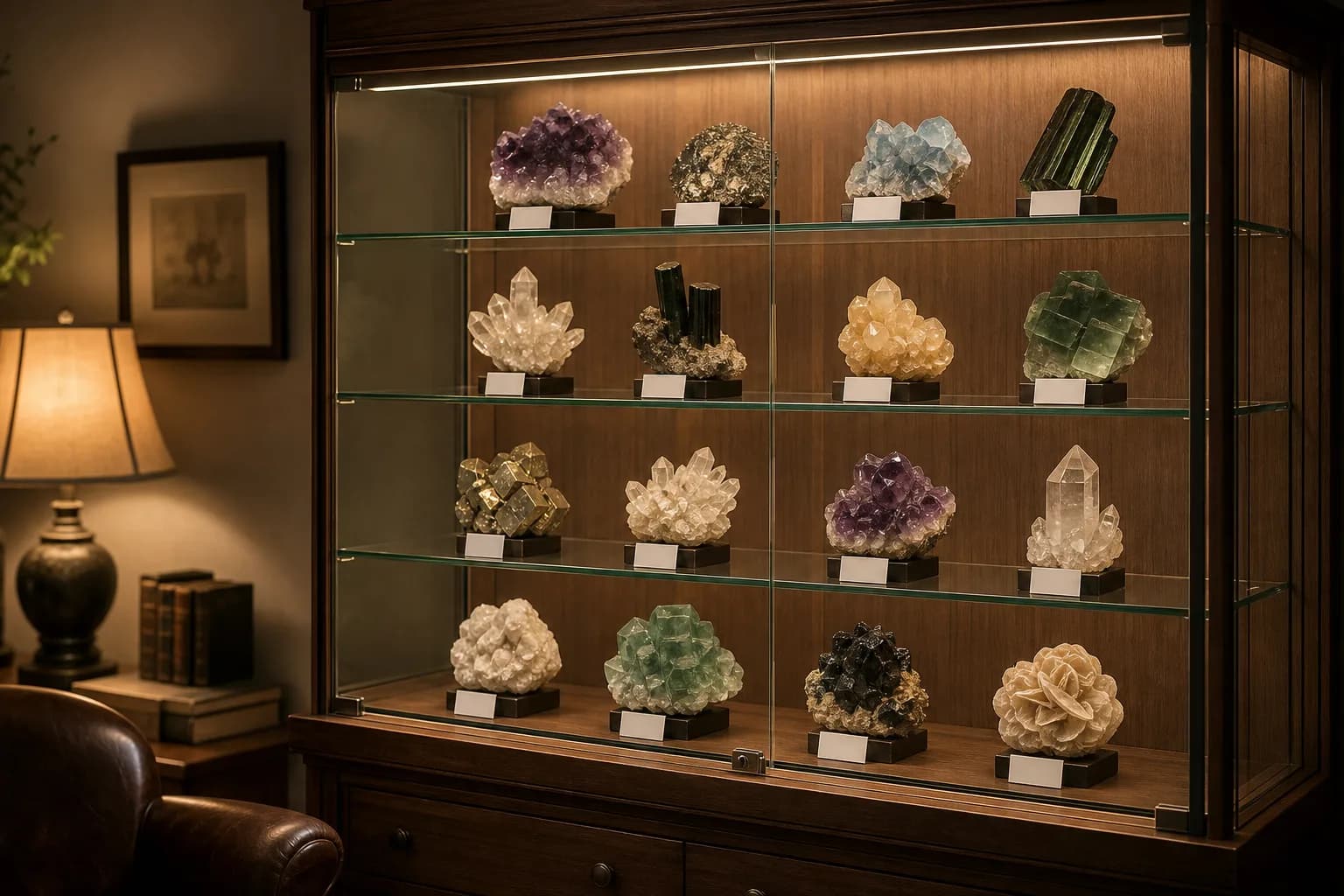
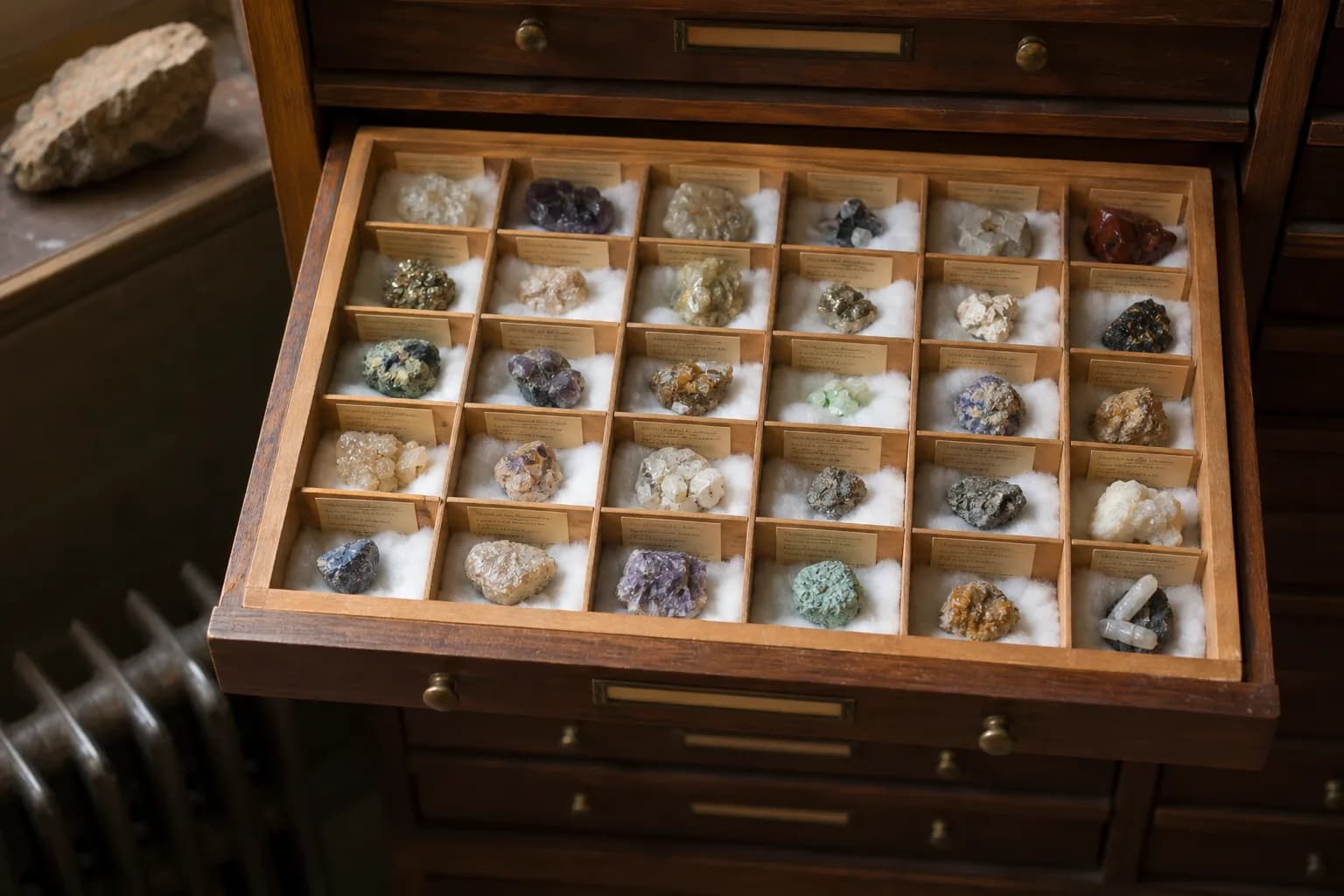
The four habits
Out of direct sun
UV fades amethyst, smoky quartz, fluorite, and many more. Display away from windows, and prefer LED lighting — it runs cool and emits almost no UV.
Stable temperature and humidity
Swings crack crystals and feed chemical decay. Skip attics, basements, and bathroom shelves; aim for ordinary living-room conditions year-round.
One specimen, one compartment
Stored pieces get individual boxes or padded compartments — minerals grinding against each other in a shared drawer is self-inflicted damage.
Label everything
Locality, acquisition date, price, and care notes. Your memory will fail before your collection does — and an unlabeled specimen loses real value.
Minerals that need special handling
Most specimens are forgiving. These four groups are not — know which of your pieces belong to one before cleaning or rehousing them.
Group
Examples
Rule
Water-soluble
Halite, gypsum, some sulfates
Never touch water — dry methods only
Light-sensitive
Amethyst, smoky quartz, realgar, some fluorite
Store dark, display away from sun and UV
Fragile habits
Acicular sprays, delicate clusters, orpiment
Handle by the matrix, support fully when moving
Reactive
Pyrite, marcasite, some copper minerals
Keep dry and ventilated; isolate from other specimens
Cleaning: gentle, then stop
Safe for almost everything
- Soft brushes — artist brushes, old toothbrushes
- Compressed air for dust in crevices
- Distilled water, only on known water-safe pieces
- Cotton swabs for detail work on stable minerals
Never
- Household cleaners, soap, or detergents
- Water on anything you haven't verified
- Abrasives — they scratch faster than you'd think
- Ultrasonic cleaners, except for proven-safe species
When in doubt, don't
Every mineral has its own chemistry. If you're not sure how a specimen will react, leave it alone and ask — the seller, or an experienced collector. No dust ever ruined a specimen; cleaning has ruined plenty.
Common questions
How should I store mineral specimens to prevent damage?
Maintain stable temperature and humidity, avoid direct sunlight, use individual boxes or compartments, wrap delicate specimens in tissue paper or soft cloth, and use acid-free materials when possible. Avoid extreme environments like basements or attics, and don't store incompatible mineral types in direct contact.
Can I clean mineral specimens with water?
Only if you know the specimen is water-safe. Water-soluble minerals like halite (salt), gypsum, and some sulfates dissolve or deteriorate in water. When in doubt, use only soft brushes or compressed air, and never use household cleaners, soap, or detergents on any mineral specimen.
Which minerals are sensitive to light exposure?
Amethyst, smoky quartz, realgar, orpiment, and some fluorites can fade or change color when exposed to strong light. Store photosensitive specimens away from windows and direct sunlight, and avoid prolonged display under bright halogen or UV-rich lighting.
What's the biggest care mistake new collectors make?
Using water on water-soluble minerals, cleaning specimens with unknown chemical treatments, exposing photosensitive minerals to strong light, and storing reactive specimens (like pyrite) with incompatible minerals. When unsure about a specimen's care requirements, leave it alone or consult an experienced collector.