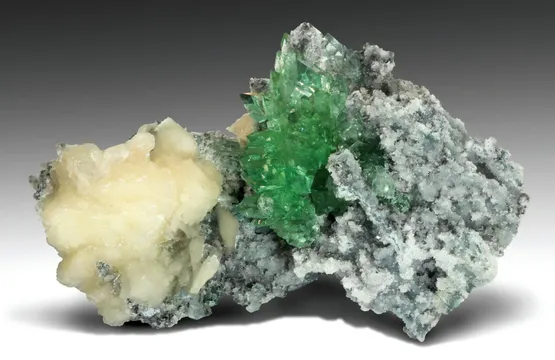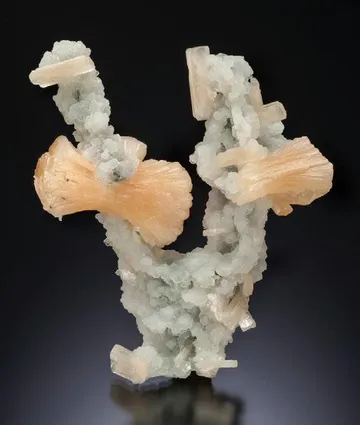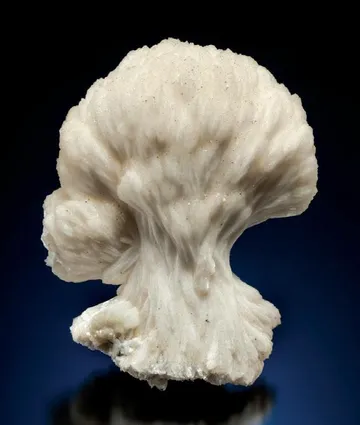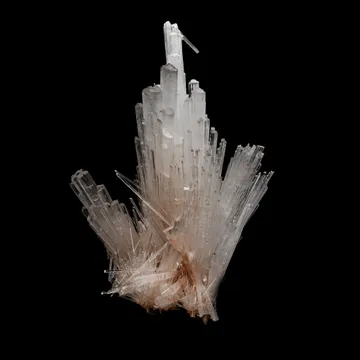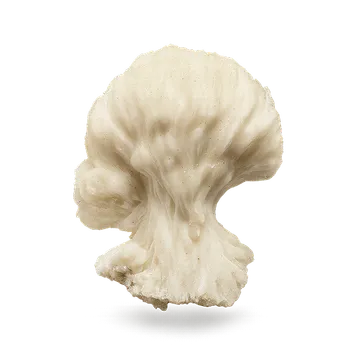
Stilbite — Jalgaon, India: pearly pastel blades in bow-ties and rosettes, set against basalt; famed for architectural beauty and strong collector appeal.
Key facts
Jalgaon District sits near the heart of the modern Indian zeolite story: basalt cavities opened for aggregate stone, then picked over by specimen miners for the pastel, pearly, delicately bladed minerals that made the Deccan Traps famous. In collector language, “Jalgaon stilbite” usually means stilbite-Ca, the calcium-dominant member of the stilbite series, although older labels and many dealer labels simply say “stilbite.” The classic look is instantly recognizable: salmon, peach, cream, ivory, or pale tan blades gathered into bow-ties, wheat-sheaves, rosettes, florets, and radiating sprays, often set against dark basalt, gray-white chalcedony, reddish heulandite, glassy apophyllite, or later calcite.

Photo: Wikimedia Commons
The best Jalgaon pieces are valued less for rarity of species than for architecture. A fine specimen should read clearly from across the room: a central bow-tie standing proud, a flower-like aggregate poised in an open vug, or a sculptural association where translucent stilbite softens the harder geometry of green or colorless fluorapophyllite-(K). This contrast—soft pearly stilbite beside glassy tetragonal apophyllite—is one of the locality’s defining visual signatures.
Geologically, the material is a secondary-cavity mineral assemblage in flood basalt of the Deccan Volcanic Province. At Savda, one of the key quarry complexes behind many “Jalgaon” labels, large cavities in the dense core zones of basalt flows preserved long, staged histories of alteration and mineral growth. Chalcedony, calcite, heulandite-Ca, stilbite-Ca, powellite, and apophyllite belong to a sequence that developed after the lava had cooled, as mineralizing fluids moved through open spaces and fractures. That long, episodic mineralization is why a single specimen may show several generations: chalcedony crusts, earlier heulandite, later stilbite blades, powellite perched on stilbite, and finally bright apophyllite or calcite.

Photo: Wikimedia Commons
Historically, Jalgaon became important as Western collectors began to recognize that Indian basalt quarries were not merely producing abundant zeolites, but producing world-class cabinet specimens in quantity and variety. The locality entered the trade through dealers, Indian miners, and collectors who learned to follow quarry openings pocket by pocket. Older examples with Rock Currier provenance, Berthold Ottens-era documentation, or early import labels are now collected not only as attractive Indian zeolites but as evidence of the period when the Deccan Traps transformed the global specimen market.
Search for specimens: View all stilbite specimens from Jalgaon District, India
The most important collecting name under the broad Jalgaon label is Savda, also encountered on labels as Savada or Sawda. Mindat places the Savda quarry at Sawade Pr Chandsar in Jalgaon District, Nashik Division, Maharashtra, India, at about 20°58′58″ N, 75°27′12″ E. The locality is recorded as a quarry, and the exploited commodities include aggregate stone and mineral specimens. The Savda quarry complex extends across Sawade Pr Chandsar; the often-quoted field note is that Sawda is a small hamlet about 4 km south of Paldi and about 10 km west of Jalgaon, and that the quarries near this hamlet are where many specimens simply labeled “Jalgaon” originated.
The deposit type is basalt-cavity mineralization in the Deccan Traps. The host rocks include basalt and tholeiitic basalt, and the collectable minerals occur in open cavities, amygdales, and cavity linings rather than in a vein mine for a metallic ore. Quarrying for stone exposes the pockets; specimen recovery depends on timing, access, and the skill of workers who can remove fragile zeolite groups from basalt without crushing the crystal terminations.
At Savda, the critical cavities are not just small vesicles. Published studies describe large cavities in the flow-core zone, commonly with free central space and irregular shapes; some reach about 50 cm, and the maximum width observed was about 100 cm. In the same quarry system, a basalt flow section about 7 m high shows the classic internal structure of a compound lava flow: vesicular and altered upper zones, denser core zones with larger cavities, and less-vesicular lower zones. For collectors, this matters because the finest display specimens usually come from the larger cavities where crystals had enough space to grow with complete terminations and three-dimensional separation.
Mining history here is inseparable from the stone-quarry industry. The quarries were not opened as specimen mines in the narrow sense; they are aggregate quarries that periodically reveal pockets. Since the 1970s, Indian zeolites have moved through an increasingly sophisticated trade network. Rock Currier and other early exporters helped bring the material into Western collections, while later workers, dealers, and researchers documented individual quarry complexes more carefully. Berthold Ottens wrote about Jalgaon as a new Deccan-Trap locality in 1996 and continued to publish on recent finds and mineralization in the region.
Production has never been a steady, mine-plan style output of identical material. It has come in pockets and episodes: older 1970s–1990s material; documented quarry observations from 1996 through 2016; studied Savda material collected in February 2013; fine pockets described in the trade around 2015 and late 2016; powellite-on-stilbite pockets around the end of 2019; and continued market offerings into the mid-2020s. The abundance of ordinary Jalgaon zeolite specimens should not be confused with abundance of top specimens. Unrepaired, well-composed cabinet pieces with sharp stilbite blades, good contrast, and notable associated minerals remain selectively scarce.
Collecting access should be treated as private industrial access, not open public collecting. These are working quarries, and any visit requires permission from the landholder, quarry operator, and mineral-rights holder, as well as local knowledge and safety precautions. The collector marketplace is therefore the realistic route for most serious collectors, with attention paid to whether the label says only “Jalgaon,” or whether it preserves a more specific locality such as Savda, Sawade Pr Chandsar, Paldhi, Jamner, Shendurni, or another Jalgaon District source.
Notable finds from the district include large stilbite bow-ties, stilbite on chalcedony or quartz stalactitic forms, stilbite with fine green fluorapophyllite-(K), calcite with stilbite and apophyllite, and rarer combinations such as powellite on stilbite. Jalgaon is also recorded for heulandite-Ca, mordenite, scolecite, epistilbite, thomsonite-subgroup minerals, celadonite, quartz var. chalcedony, calcite, hematite, and several uncommon accessory species. The great collecting strength of the district is not one species alone, but the aesthetic layering of several minerals in the same cavity.
Jalgaon stilbite is most admired in bladed aggregates. The typical crystal habit is the familiar stilbite sheaf or bow-tie: flattened blades arranged in opposing sprays, often slightly curved, with pearly faces and pointed to chisel-like terminations. Rosettes, flower-like florets, mounded clusters, and isolated upright crystals also occur. Some specimens show doubly terminated blades, especially where the stilbite grew freely into open pocket space rather than flat against a cavity wall.
Colors range from white and ivory through cream, pale peach, salmon-pink, tan, and occasionally warmer orange or reddish tones. The finest pieces are not necessarily the most saturated; Jalgaon material is often most elegant when soft peach or salmon stilbite is paired with mint-green apophyllite, gray-white chalcedony, or dark basalt. A delicate pearly luster on the stilbite faces is a major part of the locality’s appeal. Translucency is important: top blades glow at the edges and look layered rather than chalky.
Typical collectible crystals range from small blades of a few millimeters to cabinet-scale bow-ties several centimeters across. Published and dealer-documented Jalgaon specimens include stilbite florets around 3 cm wide, bow-ties over 3 cm, an 8 cm tall pastel salmon stilbite, flesh-colored stilbite blades to about 6 cm, and large cabinet specimens where a dominant stilbite bow-tie reaches roughly 10.5 cm across. Miniatures can be excellent when the bow-tie is complete and sharply placed; large cabinet pieces command attention when the stilbite has room, contrast, and no bruised tips.
The most important associates are fluorapophyllite-(K), quartz var. chalcedony, quartz, heulandite-Ca or heulandite-subgroup minerals, calcite, and basalt matrix. Powellite on stilbite is much less common and strongly sought when the powellite is large, lustrous, and well-positioned. Scolecite, mordenite, epistilbite, celadonite, thomsonite-subgroup minerals, hematite, and laumontite appear in the broader Jalgaon mineral suite but are less central to the classic stilbite display look.
Quality factors begin with form. Collectors want a clean bow-tie, a flower-like floret, or an upright blade group that is visually legible. The next factor is luster: pearly, lively stilbite is far preferable to dull or chalky material. Color matters, but color must be natural-looking and harmonious; gentle salmon, peach, and cream tones are more characteristic than loud artificial-looking hues. Completeness is critical because the thin blade edges chip easily. In Jalgaon material, a small amount of peripheral wear is common, but crushed spray tips, rubbed high points, and broken bow-tie lobes greatly reduce value.
Matrix can either make or break a specimen. Dark basalt gives strong contrast but adds weight and may be visually heavy. Chalcedony or drusy quartz can create a sparkling, snow-like stage for the stilbite. Heulandite may add warm red-brown color below the stilbite, while apophyllite introduces crisp green or colorless geometry. The best Jalgaon combinations look naturally composed, not crowded: each species has space, and the stilbite is neither hidden by apophyllite nor reduced to a minor accessory.
The main authenticity issue with Jalgaon stilbite is usually not synthetic stilbite. The risk is mislabeling, repair, assembly, and overly broad locality attribution. “Jalgaon” is widely used in the mineral trade, sometimes as a convenient umbrella for attractive Maharashtra zeolites. A specimen labeled only “India” or “Maharashtra” may well be from Jalgaon, but it may also be from Nashik, Pune, Aurangabad/Chhatrapati Sambhajinagar, or another Deccan-Trap district. Conversely, a dealer may assign a Savda label to a piece that merely resembles Savda material. Specific old labels, quarry notes, dated purchase history, and credible provenance add value.
Repairs are not unusual in Indian zeolites because stilbite blades, apophyllite crystals, and chalcedony-lined cavity pieces are brittle and often extracted from tough basalt. Reattachment is not automatically disqualifying if disclosed and skillfully done, but hidden repairs should be priced accordingly. Examine the bases of upright stilbite sprays and apophyllite crystals under magnification and UV light; glue may show as a meniscus, a glossy seam, fluorescence, trapped dust, or a line that interrupts natural crystal growth. Be especially cautious of “too perfect” floating groups with no convincing attachment logic.
Dyed zeolites and composites exist in the broader mineral market, and online discussions of Indian material specifically mention dyed or refitted apophyllite and glued “disco ball” style specimens. Routine dyeing of Jalgaon stilbite itself is not a well-established practice in the serious specimen trade, but unnatural red, hot orange, purple, or strongly uniform colors should be treated skeptically. Natural Jalgaon stilbite color is generally soft: cream, peach, salmon, tan, or pale brown. Color that pools in cracks, appears strongest on broken edges, or looks inconsistent with the associated matrix deserves scrutiny.
Condition problems are predictable. Stilbite has perfect cleavage and fragile blade edges, so edge chips, bruised terminations, rubbed high points, and broken spray tips are common. Pearly luster can be dulled by abrasive cleaning, acid exposure, or repeated handling. Apophyllite associates may have cleaved corners or etched-looking faces; calcite may show contact marks or cleavage nicks; chalcedony stalks can break where they are thin. On fine Jalgaon pieces, condition should be judged species by species: a pristine stilbite bow-tie with a minor peripheral basalt contact is very different from a central bow-tie with crushed tips.
Rarity must be understood at two levels. Jalgaon stilbite as a locality/species combination is common enough that modest examples remain broadly available. Fine specimens, however, are genuinely selective. Complete, unrepaired bow-ties on attractive matrix, large cabinet combinations with gemmy green apophyllite, and rare powellite-on-stilbite pieces are much harder to replace. The market in the 2020s still offers Jalgaon combinations from inexpensive miniatures to four-figure cabinet specimens, but the finest older pocket material and documented Currier-era examples now behave like classic locality specimens rather than ordinary stock Indian zeolites.
For buying, prioritize a specific and believable label, natural color, sharp blade edges, balanced association, and honest disclosure of repair. If the piece is sold as Savda, the habit should make sense for Savda: basalt or chalcedony matrix, stilbite-Ca in peach to salmon or ivory tones, frequent apophyllite or heulandite association, and an overall Deccan-Trap cavity aesthetic. If the label is older, preserve it. If the specimen has passed through a known dealer or collection, keep invoices, tags, and photographs; Jalgaon material is abundant enough that provenance is one of the ways better pieces separate themselves from anonymous trade stock.
One of the most vivid windows into Savda comes not from a show table but from the basalt wall itself. Researchers working in the quarry described a 7 m high wall of a single flow with its internal anatomy exposed: a weathered top, a vesicle-rich altered zone, a dense core zone, and a bottom with fewer cavities. The valuable specimens were not simply sprinkled at random. They occupied large cavities in the dense core, spaces made when gas bubbles in hot lava coalesced and later became lined with secondary minerals. In one characteristic Jalgaon/Savda cavity, about 40 cm wide, dark green filamentous fabrics clung to the ceiling and walls, hung downward in gravity-controlled forms, and were embedded in chalcedony at the bottom like moss agate. Later minerals—calcite, stilbite, heulandite, and apophyllite—turned those geological interiors into specimens.
The 2013 field season added a concrete date to the science. Two authors collected material in February 2013 from big, freshly opened cavities in the Savda quarry complex. Those specimens became part of a broader study built on observations from 1996 to 2016 and the examination of dozens of hand specimens. That is a striking span for a locality often encountered only as a dealer label: two decades of quarry observation, pocket recovery, thin sections, polished sections, isotopic work, and hand-specimen paragenesis behind the pastel zeolite groups in cabinets.
Rock Currier’s shadow also runs through Jalgaon. A Currier-collection stilbite on drusy quartz sold through MineralAuctions in 2022 carried a very particular kind of locality memory: pearly salmon-pink stilbite blades on sparkly translucent drusy quartz coating sculptural opaque stalactites, with the largest stilbite 3.2 cm. The description emphasized that stalactitic drusy quartz is known from Jalgaon, but that specimens with opaque interiors of unknown material are relatively rare in that combination quality. The piece closed at $216 after a long bidding sequence, modest in price but rich in history because Currier had been one of the early figures who recognized the scale of Indian zeolite potential and high-graded exceptional material from his dealer stock before it reached the broader market.
Another Currier-associated Jalgaon story comes from a Heritage Auctions lot sold on August 26, 2019. The specimen was fluorapophyllite and stilbite-Ca on quartz from the quarry at Savada, Dharangaon Taluka, Jalgaon District. Currier’s own note described “gemmy doubly terminated apophyllite crystals to about 2 inches” with lime-green centers growing on thin quartz stalactites, accompanied by smaller salmon-colored stilbite blades, and added that it had been bought in Poona from Dr. Bali. The auction text captured exactly why collectors keep returning to Indian zeolites: even in a field crowded with abundant specimens, a single pocket can produce something that feels new.
Recent pockets continue to punctuate the locality’s history. A 2024 MineralAuctions sale described a Savda specimen from a circa 2015 find: a 7.2 cm bi-colored fluorapophyllite crystal rising from ivory stilbite blades, with mint-green body color and colorless water-clear terminations. It closed at $1,811. That result is a useful snapshot of the current collector hierarchy: the stilbite matrix matters, but the strongest prices often go to combinations where stilbite provides the aesthetic stage for a superb apophyllite or rarer associated species.
The rare-mineral end of the Jalgaon suite is represented by powellite on stilbite. One EarthWonders-listed specimen from a pocket at the end of 2019 carried a 5 cm golden powellite crystal perched in ivory stilbite; the description noted that the pocket produced only a handful of specimens and that this was the largest crystal from it. That kind of association changes the role of stilbite: instead of being the headline species, it becomes the pale, textured nest that makes a rarer Deccan mineral look monumental.