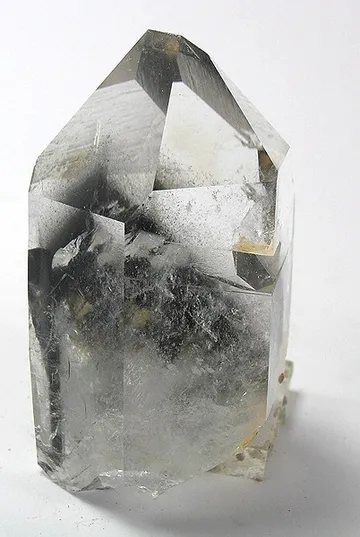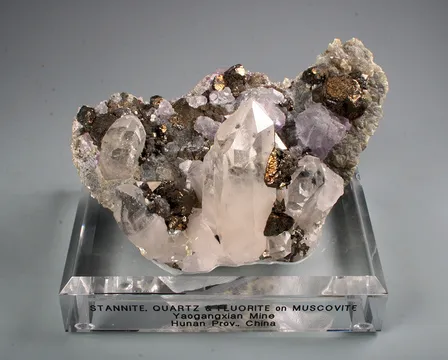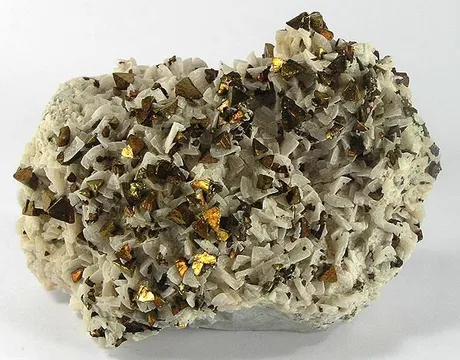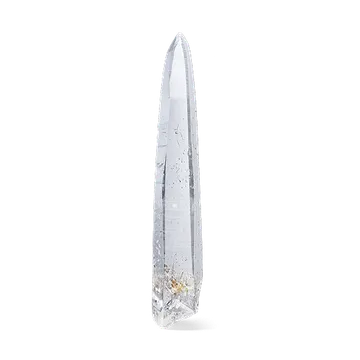
Quartz from Mount Ida Mountain Mine, Arkansas - classic, glassy rock crystals with sharp prisms and icy luster from a historic Ouachita pocket-rich locality.
Key facts
Quartz from the Mount Ida Mountain Mine is best understood as a classic but tightly defined slice of the Arkansas quartz story: rock crystal from a recorded mine on Mt Ida, Montgomery County, in the Crystal Mountains portion of the Ouachita quartz province. It is not just “Mount Ida quartz” in the broad trade sense; the named locality is a specific old quartz mine, recorded as having begun in 1928, about 3 miles north-northwest of Norman, Arkansas, with mineralization in quartz veins hosted by the Crystal Mountain Sandstone.
The collector appeal is the same quality that made the Ouachitas famous: bright, glassy quartz crystals formed in open fissures and pockets, often with simple hexagonal prisms and sharp terminal rhombohedra. The best Arkansas crystals have the icy transparency and wet-looking luster that dealers traditionally call rock crystal. At this particular locality, the verified mineral list is austere—quartz, including rock crystal, with dickite as the documented associated mineral—which helps distinguish it from the wider Mount Ida district where many other species and varieties are reported.
Geologically, the mine sits in one of the great North American quartz-crystal belts. The quartz deposits of western Arkansas occupy the deformed Paleozoic rocks of the Ouachita Mountains, where steep fractures associated with regional folding provided open space for silica-rich hydrothermal fluids. Sandstone-hosted deposits such as those in the Crystal Mountain Sandstone are especially important to collectors because, although they may contain less total quartz than massive shale-hosted veins, they can yield a higher proportion of well-formed clear crystals from pockets and cavities.
The historical significance of the locality lies in its place within Montgomery County’s long crystal-mining tradition. The Crystal Mountains were an early source for Arkansas quartz sold to visitors, collectors, and later to technical buyers. During World War II, Arkansas quartz acquired strategic value as a domestic source of optical and oscillator-grade material. The Mount Ida Mountain Mine itself is recorded as an older operation rather than a modern fee-dig attraction, so specimens with precise Mount Ida Mountain Mine labels deserve more scrutiny—and often more interest—than loosely labeled “Mt. Ida, Arkansas” pieces.
For serious collectors, the most desirable specimens are those with credible old labels or dealer documentation tying them specifically to Mount Ida Mountain Mine rather than merely to the Mount Ida area. Clean, undamaged rock crystal with sharp terminations, strong glassy luster, minimal iron staining, and an undisturbed clay or quartz matrix association is preferred. Smoky quartz labels require particular care: smoky material from this locality appears in the specimen record, but some marketed smoky quartz from Mount Ida Mountain Mine has been explicitly described as irradiated and heated.
Search for specimens: View all quartz specimens from Mount Ida Mountain Mine, Arkansas, USA
Mount Ida Mountain Mine is a recorded quartz mine on Mt Ida in Montgomery County, Arkansas, near Norman and southwest of the town of Mount Ida. The locality coordinates published for the mine are 34.49583, -93.64167. Its host unit is the Crystal Mountain Sandstone, an Ordovician sandstone formation named for the Crystal Mountains of Montgomery County and famous in the early geological literature for quartz-bearing fissures lined with crystal clusters.
The deposit type is a hydrothermal fissure-vein and pocket system. In the wider western Arkansas quartz district, crystal-bearing quartz occurs in steep fractures, sheeted zones, veins, and stockworks developed during deformation of the Ouachita Mountains. The most collectible crystals form where open cavities survived long enough for quartz to grow freely into space. In sandstone units such as the Crystal Mountain Sandstone, veins may pinch, branch, or terminate abruptly against more argillaceous beds; this is one reason productive pockets can be localized, irregular, and quickly exhausted.
The mine is recorded as having started in 1928. Unlike several modern Mount Ida-area operations that advertise fee digging, the Mount Ida Mountain Mine is best treated as a historical or private locality unless current permission from the landowner and mineral-rights holder is secured. Serious collectors should not assume access simply because the broader Mount Ida area contains public or commercial digging sites.
The verified mineralogy is concise. Quartz and quartz var. rock crystal are the core species; dickite is also recorded. A wavellite entry associated with the locality has been marked erroneous in the major locality database after knowledgeable Arkansas quartz and wavellite miners indicated that the wavellite photographs formerly connected with the mine were from Mauldin Mountain Quarries, not Mount Ida Mountain Mine. That correction matters: Mount Ida Mountain Mine should not be promoted as a wavellite locality.
No well-documented modern production run or famous named pocket from Mount Ida Mountain Mine emerged from the accessible records. The notable fact for collectors is therefore not a single legendary discovery, but the locality’s precise identity within a region where labels are often blurred. A specimen labeled “Mount Ida Mountain Mine” should be understood as an old-mine, specific-locality Arkansas quartz occurrence, not as a generic product of the tourist-dig economy around Mount Ida.
The characteristic material is quartz, SiO2, in rock-crystal form: colorless, vitreous, transparent to translucent, and commonly prismatic. The standard Arkansas habit is a hexagonal prism capped by rhombohedral terminations. The better pieces show bright faces, sharp edges, and clean internal transparency near the tips; lesser pieces may be milky, included, fractured, iron-stained, or etched.
The mine’s Crystal Mountain Sandstone setting favors vein and pocket growth rather than isolated alluvial crystals. Collectors should expect clusters, small plates, and individual points that once lined cavities in quartz veins or clay-rich openings. Verified published and database imagery for the locality includes small crystals on the order of a few centimeters and small thumbnail-to-miniature scale specimens; marketplace examples labeled from the mine include cabinet-size smoky quartz clusters around 11 cm across, though such smoky examples may be treated.
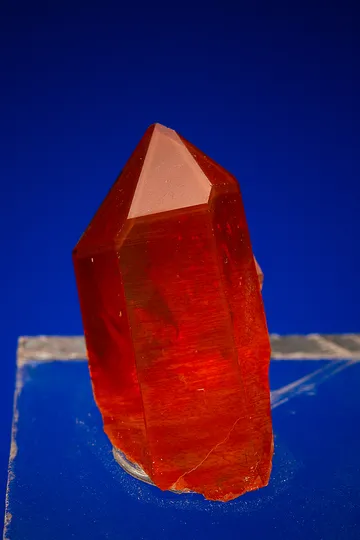
Colorless rock crystal is the most natural and expected presentation. Smoky quartz associated with the locality must be approached cautiously. Arkansas does produce natural smoky quartz in parts of the broader region, and smoky color can occur in quartz through lattice defects related to irradiation, but local trade material is often artificially irradiated; at least some smoky quartz marketed specifically as from Mount Ida Mountain Mine has been disclosed as irradiated and heated.
The documented associated mineral at the mine is dickite, Al2(Si2O5)(OH)4. In the broader Arkansas quartz district, clay minerals are common in cavities, and dickite is widespread. Clay can be more than dirt: it is often part of the pocket environment, and remnants of clean white clay in crevices may support an Arkansas vein-pocket origin. Iron oxide staining is also common in Arkansas quartz generally, though it is a condition and aesthetic factor rather than a defining species association for this specific mine.
Quality is judged by the same demanding standards used for fine Arkansas quartz: transparency, luster, completeness, sharpness, freedom from bruising, and balance of the cluster. A single pristine crystal with a glass-clear termination may be more desirable than a larger but bruised cluster. Points with clean prism faces, undamaged tips, and natural attachment textures are preferred over detached points with sawed, broken, or polished bases. For old Mount Ida Mountain Mine specimens, the label can be as important as the crystal: precise locality documentation elevates otherwise modest examples.
The central authenticity issue is locality precision. “Mt. Ida” and “Mount Ida area” labels are common in the quartz trade and may refer to many different mines in Montgomery County. “Mount Ida Mountain Mine” is a narrower claim. When buying, look for an old label, a reliable dealer history, a collection provenance, or a clear chain of custody. Without that, a specimen may still be genuine Arkansas quartz but not confidently assignable to this mine.
The most important documented locality correction concerns wavellite. The mine has been specifically described by Arkansas field people as only a quartz mine, with earlier wavellite imagery reassigned or rejected as erroneous. A specimen advertised as wavellite from Mount Ida Mountain Mine should be considered suspect unless accompanied by unusually strong documentation.
Treatment disclosure is especially important for smoky quartz. Arkansas rock crystal can be artificially irradiated to produce smoky color, and some smoky specimens labeled from Mount Ida Mountain Mine have been explicitly sold as irradiated and heated. That does not make them worthless, but it changes their category: treated decorative or collector quartz rather than naturally smoky quartz from the mine. For natural-color collectors, colorless rock crystal with credible provenance is the safer target.
Common condition issues include bruised terminations, edge chatter on prism faces, internal fractures, milky zones, clay-filled contacts, iron staining, and broken bases where crystals were extracted from vein pockets. Many Arkansas clusters were removed from clay or decomposed sandstone, and the extraction process can leave hidden contact damage. Inspect every termination under good light, especially on crowded clusters where broken tips can hide among smaller points.
In rarity terms, Arkansas quartz is abundant, but precisely labeled Mount Ida Mountain Mine quartz is not abundant in the modern market compared with generic Mount Ida specimens and material from active or well-promoted fee mines. The specific-locality label is the premium. Modest but well-documented examples can be more interesting to a locality specialist than larger, prettier pieces with only a broad “Arkansas” or “Mt. Ida” label.