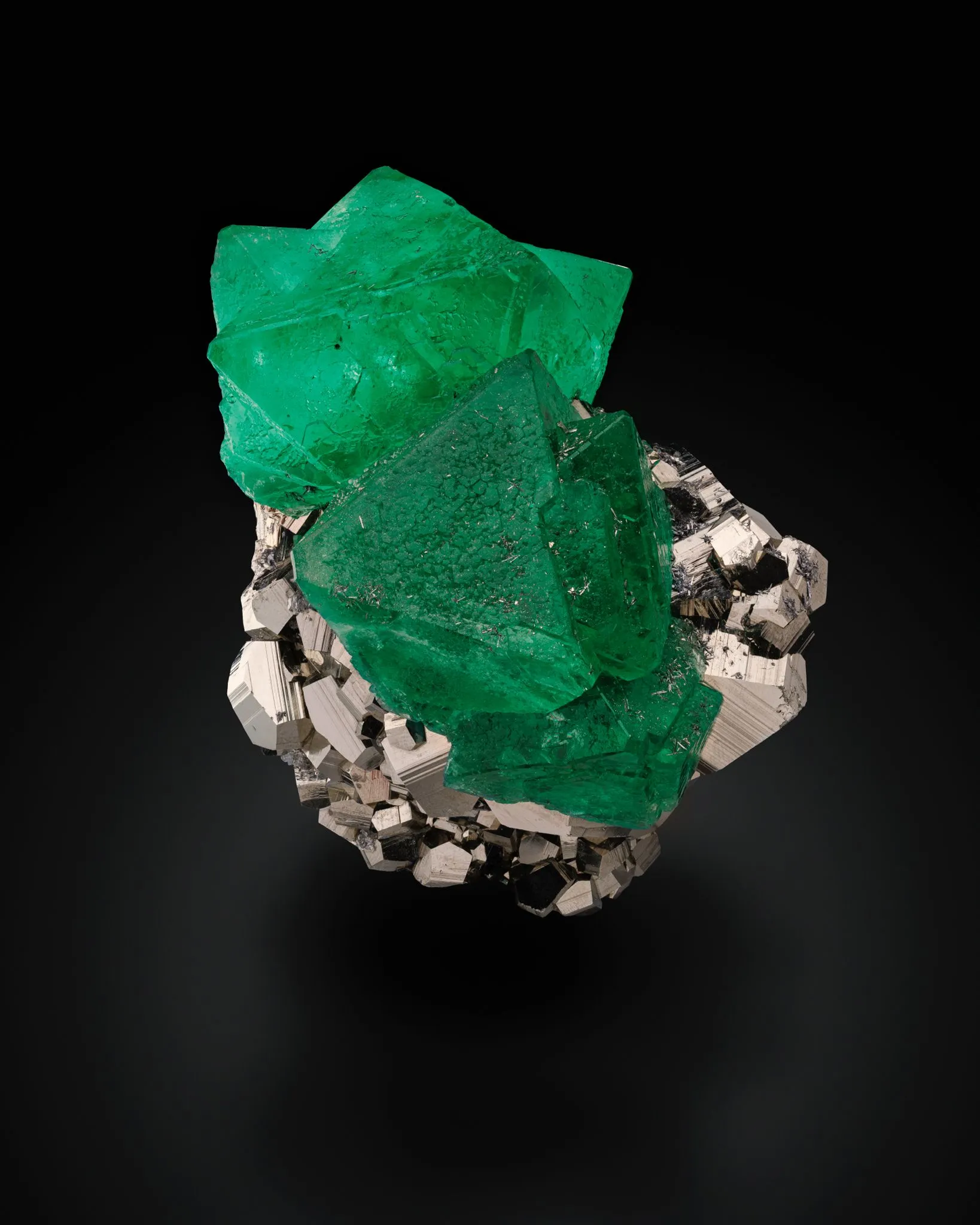
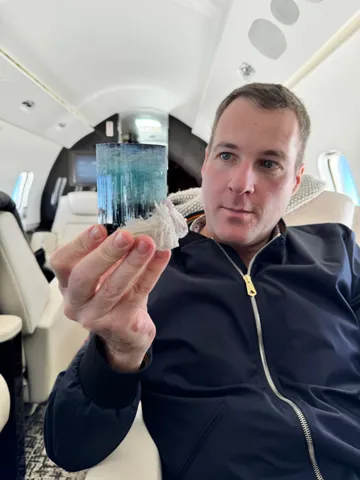
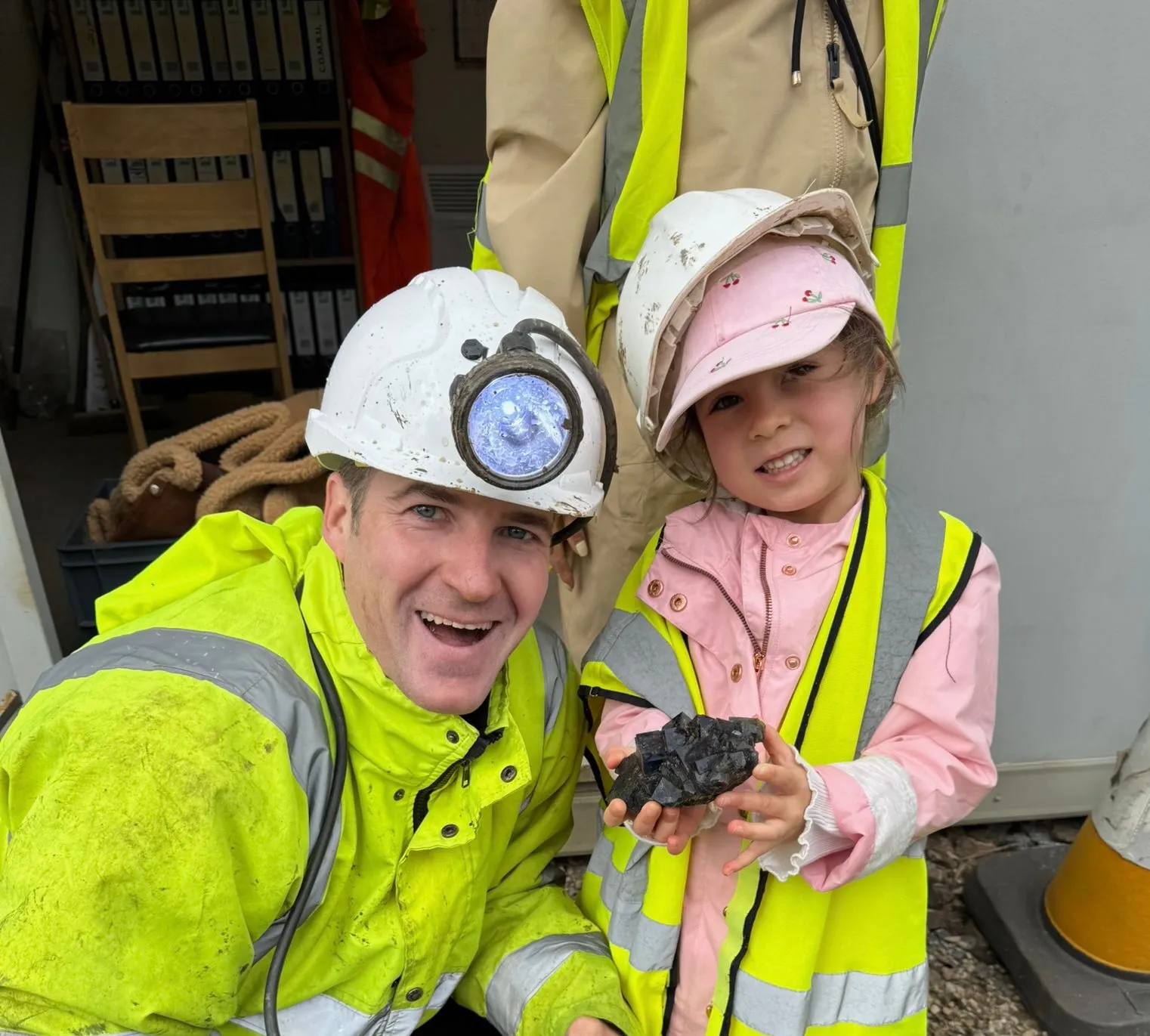
As a kid I had a small mineral collection — $5 and $10 pieces. On my 12th birthday, while my best pieces were on display at the public library, most of them were stolen, and I stopped collecting. Nearly thirty years later, I was moving my mom across the country to Florida, and she asked what I wanted to do with my old rock collection. I asked her to send me a photo.
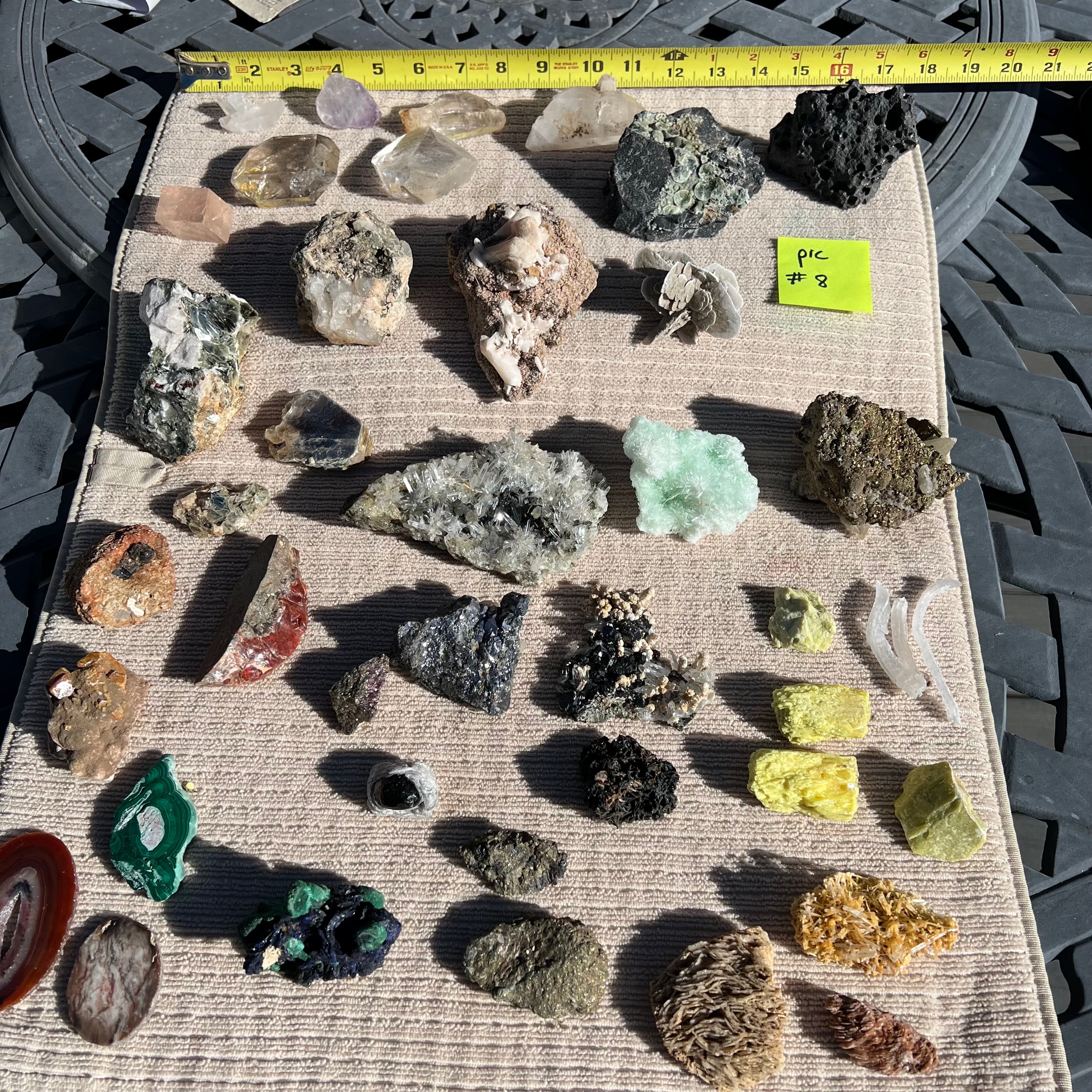
Seeing the photos brought it all back. I remembered the Del Mar Fair in 1994 and the incredible tourmalines priced around $10,000 — a staggering amount to a kid, completely outside reality. Now, after selling my software consultancy, it wasn't. I figured those pieces had probably inflated to $40–50k, maybe more, and I could buy one. I wasn't a collector and had no intention of becoming one. I just wanted one of these as a piece of art for my home. A customer, with a budget, ready to spend.
A buyer with money and nowhere to spend it
So I did what every buyer does in 2024: I searched. *"Tourmaline for sale." "Aquamarine for sale."* What came back was jewelry, cut stones, and tumbled junk. The high-quality natural crystals I knew existed were nearly impossible to find. I expected an online archive of the world's fine mineral specimens to exist. It didn't.
What I found instead were scattered individual dealer websites, most of them looking like they were built in 2003. I didn't want to browse one dealer's inventory at a time. I wanted to see hundreds of specimens side by side and filter by quality — the experience I take for granted on Blue Nile for diamonds or Chrono24 for watches. Instead, the entire burden was on me: find every dealer myself, shop every store separately, and build my own comparisons by hand.
Eventually I found a piece that captured my imagination: a wild aquamarine with spessartine garnet from the Shigar Valley in Pakistan — sky-blue crystals rising out of a field of deep red garnets, from a single pocket discovered in 2018.
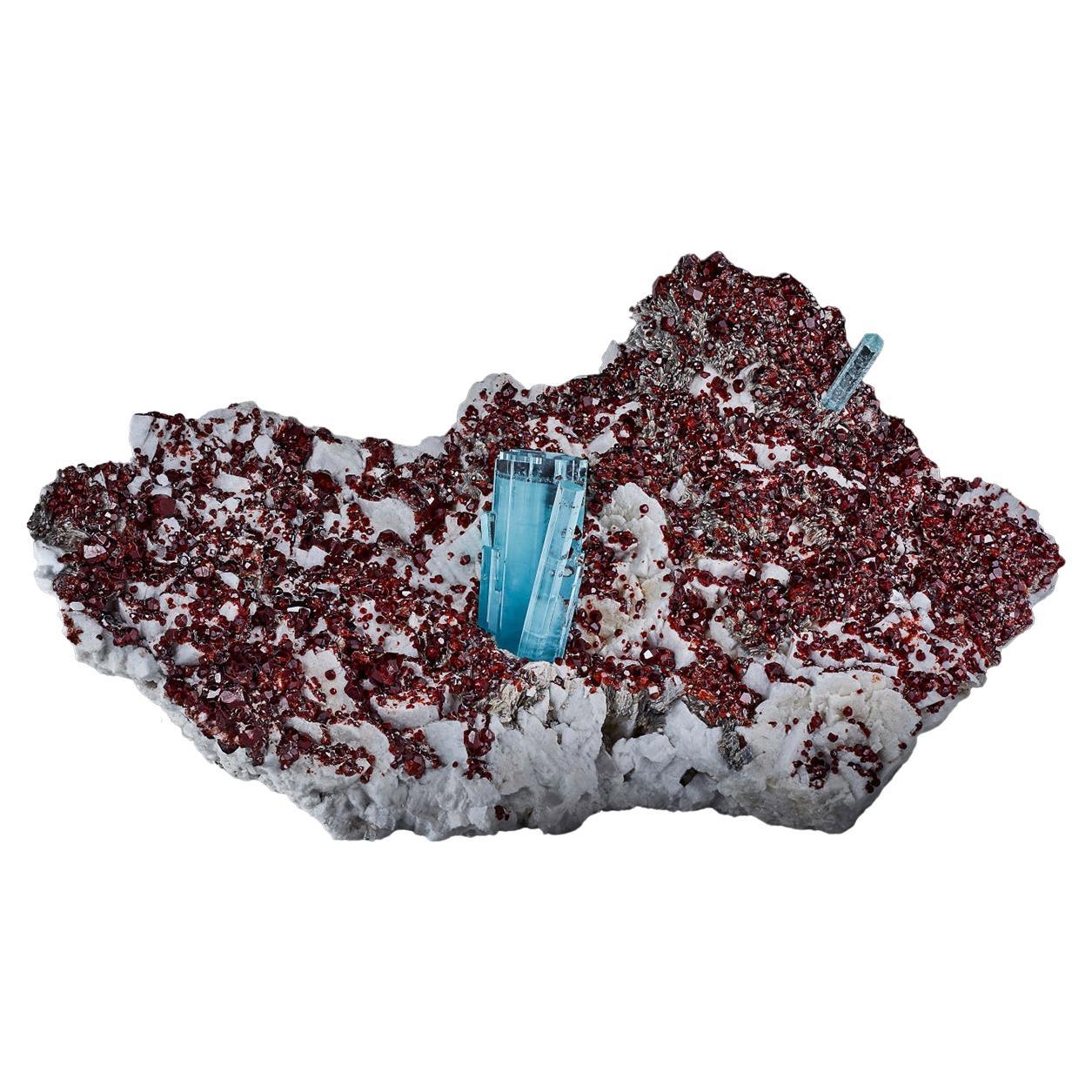
It was stunning. So was the price: $765,000. I genuinely could not tell if that number was real. A typo? A joke someone put on the internet and never bothered to correct? I didn't know the dealer was Wilensky or what that name meant. I was an outsider looking at this material for the first time, with no way to evaluate anything. So I went looking for the information any serious buyer needs. Where were the comparable aquamarines? Where were the auction records — some public ledger of what specimens like this actually sell for? Where were the independent experts who could speak to quality and authenticity?
I'd learn later that the price was real. The very top of this market does trade at those levels — but the buyers up there are so educated they're effectively dealers themselves, and no newcomer buys at that level without years of guidance. At the time, though, I had no way to know any of that, and no way to find out.
When you shop for high-end watches or speakers, an entire ecosystem exists to help you: YouTube reviewers, enthusiast forums, expert comparisons, deep-dive analysis of what separates a great piece from an overpriced one. That education is what gives a newcomer the confidence to spend real money. In fine minerals, there was nothing — just scattered descriptions from the same dealers trying to sell you the piece, with no third-party perspective anywhere. I couldn't even see what other collectors owned. Every photo online was a dealer trying to sell something — there was no way to see what people actually buy, or what a good collection even looks like.
Somewhere around peak frustration, it clicked: if someone who wants to spend money is struggling this hard to spend it, the problem isn't me — the problem is the market. But I didn't trust that conclusion yet. Maybe there was a reason no marketplace existed. Maybe something about these objects made it impossible. Maybe someone had tried and failed. The only way to find out was to talk to people — and I still wanted to buy something. So I booked a trip to the biggest mineral show on Earth: Tucson, January 2024.
Tucson
The minerals were everything I remembered — just as incredible in person thirty years later. The experience of buying them fell apart almost immediately.
There was too much, with no way to organize it. Thousands of specimens, hundreds of species — stibnite, stilbite, whatever-ite — all blurring together for someone with no mental database to compare against. To buy well I needed to compare every available specimen of a species against the others, so I narrowed to four: vanadinite, aquamarine, dioptase, stibnite. Then the real work started. I walked booth to booth, analyzed and photographed each piece (when photography was even allowed), and took notes on prices that weren't in the frame. At night I'd line the photos up side by side in Figma with their prices, building by hand the comparison tool the industry never built.
Pricing made no sense — and nobody could explain it to an outsider. Two specimens that looked nearly identical to my eye: one $5,000, one $35,000. Dealers would explain — bigger crystals, better aesthetics — but the explanations always came from the person selling the piece. When I asked how a newcomer was supposed to navigate this, I got the same advice more than once: *"Don't buy anything for a few years. Go look at thousands of minerals first, or you'll be the next excited new collector who gets sold overpriced junk."*
Fraud was treated as a fact of life. Dealers in Tucson told me about fakes so sophisticated that miners would manufacture a specimen, bury it back in the ground, and film themselves "extracting" it — fooling even veteran dealers. If dealers get defrauded, what chance did I have? So I asked the obvious question: who can I pay to authenticate a specimen before I buy it? I'd happily pay an expert to assess whether a piece was repaired, faked, or fairly priced. The answer: that doesn't exist, and couldn't exist. You have to learn to spot fakes yourself. In what other market for expensive objects is that an acceptable answer?
Information stayed inside the circle. Some dealers banned photography; expensive pieces often carried no price tags at all. At first this read as hostile to customers, but there are real reasons behind it. Every specimen is one of a kind, so prices are genuinely subjective. Dealers buy from each other and re-price pieces as they move up-market, and a price published once follows a specimen forever. Experienced collectors are often as knowledgeable as the dealers themselves — for them, asking prices and negotiating piece by piece is just how it's done. It's a system built on relationships and shared expertise, and for the people inside it, it works. For a newcomer it's a wall: every price requires a conversation you don't yet know how to have.
And there was no way back out. A fair price is what you can buy and sell an item for. But I was told minerals have no liquidity: buy only what you love, never plan to sell, and if you must, expect a 30–50% haircut selling back to a dealer. Then I got the number that framed the whole problem. I asked half a dozen dealers how many collectors in the world buy specimens above $50,000. They all gave the same range: 200 to 500 people. That's incredibly small — small enough that everyone at the top of this hobby can personally know everyone else. And the size wasn't a verdict on the objects. The hobby was small because it was so hard to get into. Lower the barriers, market the hobby to the world, and more people will come.
I left Tucson excited — and frustrated, confused, and empty-handed. Between the dealers' warnings, the stories of collectors who'd been burned and quit the hobby, and my own sense of self-preservation, I couldn't bring myself to buy anything. Sit with that: the world's biggest mineral show couldn't close a motivated buyer with money in his pocket. The honest, well-meaning advice this hobby had for a newcomer was don't engage for a few years. What kind of hobby is so hard to enter that the best advice is don't?
The realization
The people deepest in this hobby couldn't see how inaccessible it had become. They had spent decades building the knowledge, relationships, and instincts the market required, so they no longer noticed that the market required them. And once I started listing the barriers, they were everywhere: no central place to browse and compare, no pricing transparency, no education, no authentication, no liquidity. A newcomer in watches can buy safely on day one because the marketplace itself provides validation, price history, and authenticity services. A newcomer in minerals is told to spend years looking at rocks first.
And the tourmalines from the Del Mar Fair — the ones I figured had inflated to $40–50k? Pieces of that caliber now sell for millions, when they come up at all. The thing I'd come back to buy had become unpurchasable. But the hunt for it had dragged me through every corner of this wild-west market, and by the end I understood it well enough to see what was missing.
The industry wasn't failing. It was artificially constrained — and every constraint was a solvable software and trust problem. That happened to be my profession. My consultancy did large-scale transformation and innovation projects for Fortune 100 companies — strategy, product design, full-stack development — for household names like Apple and Microsoft, across healthcare, insurance, shipping, and energy. Our core skill was entering an industry we didn't know, learning it fast, and helping it move faster and innovate. Minerals were exactly that kind of problem — except this time I was also the customer, and I'd felt every broken piece of it myself.
I'd gone to Tucson asking why no marketplace existed. But laid out end to end, the barriers were bigger than buying and selling: nowhere to learn, nowhere to compare, nowhere to track what you own, nowhere to meet other collectors. The hobby didn't just need a marketplace. It needed a home.
So I started building https://earthwonders.com — the home of mineral collecting.
What we built
Every piece of EarthWonders traces directly back to a wall I hit:
- Collection tools — because the heart of this hobby isn't buying, it's collecting: cataloging what you own, organizing it, sharing it. Everything else grows out of that.
- A unified marketplace — because I needed to see hundreds of specimens side by side, from many sellers, with real filters, instead of rebuilding Figma comparison boards in a hotel room. And because collectors should be able to list their own pieces, creating the path *back out* of the hobby that gives every purchase real liquidity.
- Pricing insight and market data — because nobody should have to guess whether a price is fair, inflated, or a typo. Transparent listings and historical sales data turn folklore into information.
- Education — because everyone who sees a great specimen asks the same questions: *How did this form? How was it extracted? How is this natural?* The answers shouldn't be locked inside dealers' heads.
- Expert validation and authenticity — because "learn to spot fakes yourself" is not an acceptable answer in a market where fakes get buried and re-mined on camera. Trust has to be built into the platform, not earned over decades by each individual buyer.
- A real community — because the knowledge I found in Tucson was deep and generously shared, but it only existed in person, booth by booth — and finding other collectors on your own is nearly impossible. On EarthWonders you can browse other collectors' real collections, not just dealer inventory — see what people actually buy, learn the market from it, and talk to the collectors behind them.
As I write this — mid-2026, about two years in — EarthWonders has over 100,000 cataloged specimens, the largest active community of mineral collectors anywhere, and the largest marketplace focused on natural mineral crystals. The collection tools are completely free. And while the headlines of this hobby are six-figure aquamarines, our focus is where most collecting actually happens: the entry and mid level, $200 to $2,000 — the level where a newcomer should be able to buy with confidence on day one. The goal is simple: make mineral collecting accessible, trustworthy, and exciting for the next 200,000 collectors — not just the current few hundred.
If you're a dealer, you've spent decades building knowledge that newcomers desperately need — EarthWonders is where that expertise can reach thousands of new collectors instead of one booth at a time. If you're a collector, or someone who just found out these objects exist: you don't have to wait three years.
The mineral world is beautiful. It deserves a home that does it justice.