Carrollite
Unknown Owner
Help improve this recordNo owner is registered for this specimen yet. If it's yours or you know more about it, you can add the owner, provenance, publications and other details.
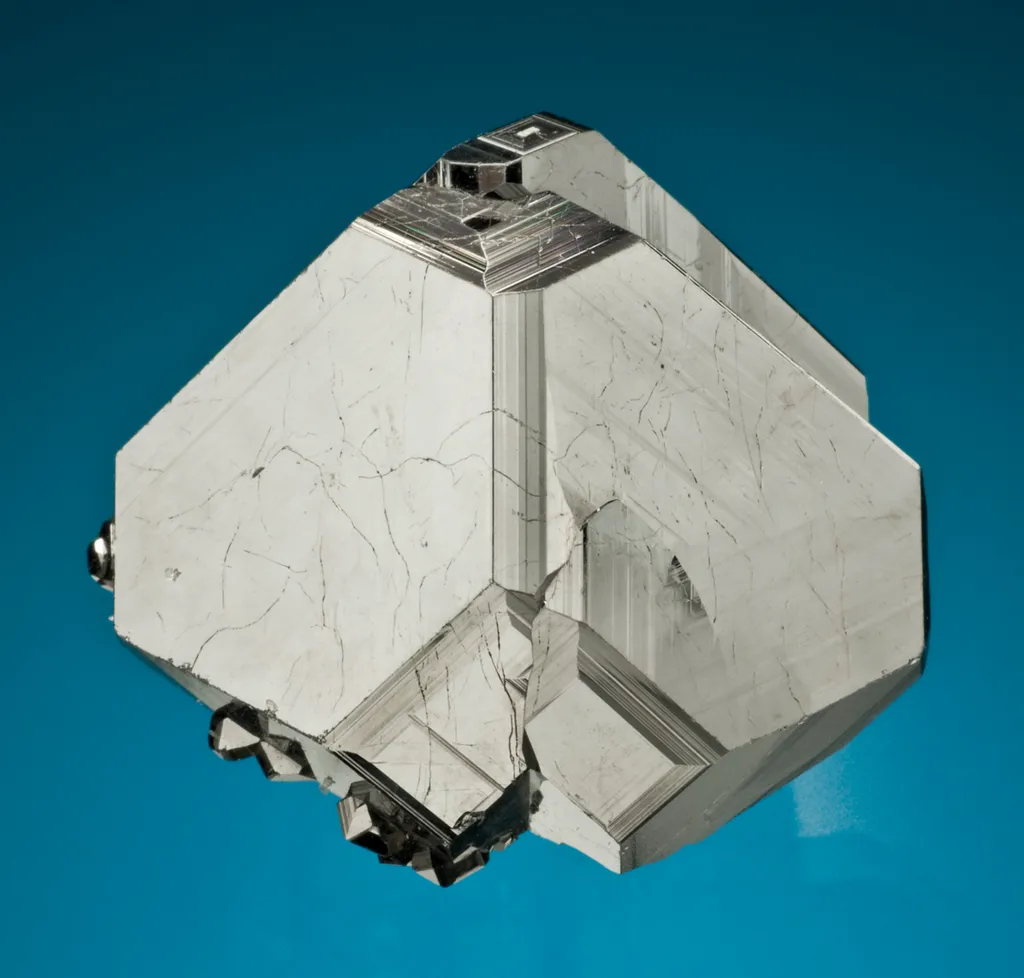
Killer metallic mirror-faced cuboctahedral xtl. From: Christophe Gobin (Dubai, UAE), February 6, 2018, at the Westward Look Fine Mineral Show. According to Christophe, of some 300 Carrollites he has seen over the years, including the best specimens found between 2001 and 2004, this was by far the finest TN specimen. This specimen came from one of the two pockets opened in September 2016 and February 2017, as well as small pockets discovered through the summer of 2017, after which no new finds were made (Ref: The Mineralogical Record, 2018; 49: 466). Any coating of mica and talc is where the xtl had made contact, after which it partially re-healed before the silicate coating formed. He referred to it as a “killer, killer”. Photo: Jeff Scovil (2018-02-0242). Featured in the masterclass book on thumbnail collecting, Refined Elegance (Mineralogical Record, Nov. 2022) on page 115.
Product details
SpeciesCarrollite
SizeMiniature
Dimensions2.7 x 2.5 x 2.0 cm
Added on10/23/2024
LocalityDR Congo, Haut-Katanga, Kamoya South II Mine
Publications
- Mineralogical Record Special Issue: Refined Elegance page 117
Known provenance
| Date | Collector | Acquisition price |
|---|---|---|
| 12/2024 | Unknown Owner | Not disclosed |
| — | The Arkenstone | Not disclosed |
Learn more
Mineral guide
Learn about Carrollite
cobalt-rich thiospinel with razor-sharp spinel-octahedral crystals, mirror luster, on contrasting carbonate matrices from the DRC and Bou Azzer.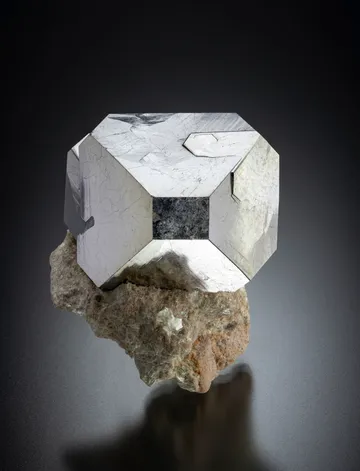
Regional guide
Comments