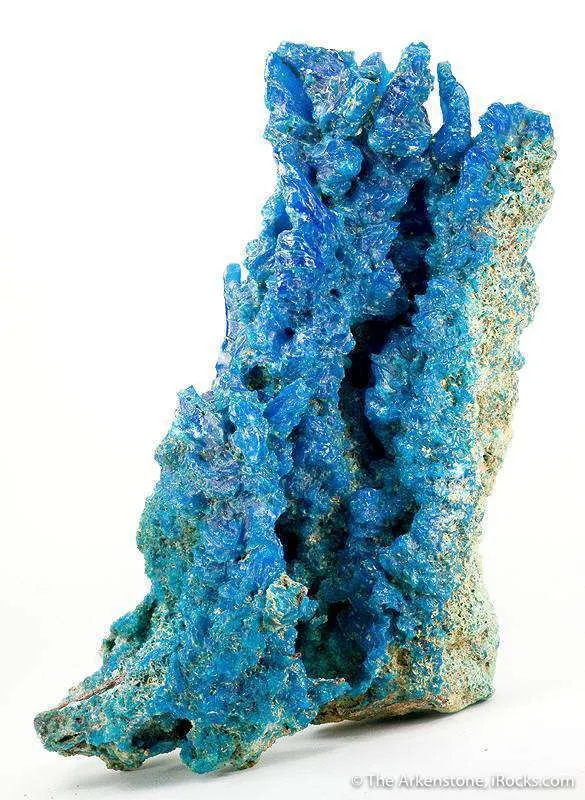
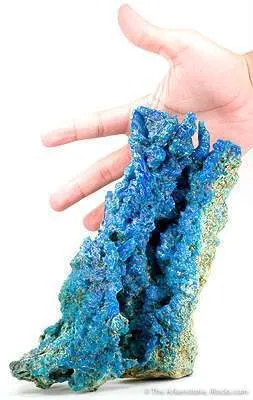
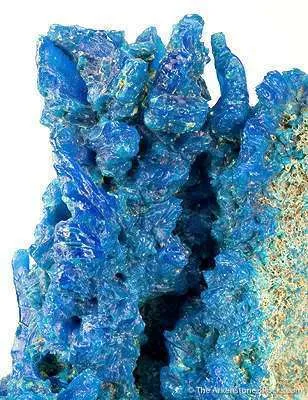
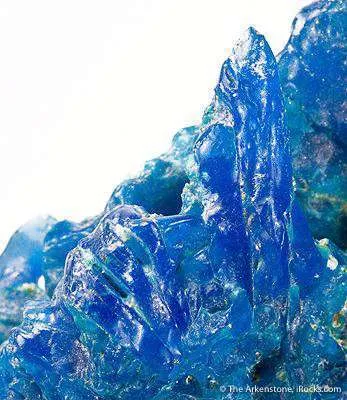
Chalcanthite With Copper Replacing Wood
Unknown Owner
Help improve this recordNo owner is registered for this specimen yet. If it's yours or you know more about it, you can add the owner, provenance, publications and other details.
The Rambler mine was in its heyday by 1900 or so, and continued for a number of years afterwards to dominate copper production in this region. This particular specimen is the only Chalcanthite of any kind that I have personally seen from the state (and this is the only listed locality likely to have produced such a piece, although the label accompanying just says "chalcanthite - wyoming - natural"). The specimen carries an old label from dealer Gary Hansen. Could it be formed from mine run-off? It DOES have the look of deposition from flowing solution, but this could have formed naturally, as the label says, during flow of water through the mine, completely unrelated to human mining. As with another musuem chalcanthite of large size in this collection, I am disinclined to think these to be manmade fakes - something I would be very suspicious of today from contemporary mining locations. So, which is it? The giveaway is the presence of COPPER-REPLACED wood, embedded in the chalcanthite at the bottom and rear of the specimen. No kidding, if you knock on it with a key or finger, the slender wood timber clinks like metal. The replacement is not 100% complete, as the wood is still somewhat malleable/bendable, but it is far enough along that you can say the copper has replaced much of the wood. So, we have a naturally formed example of chalcanthite, not made on a lab table - but formed postmining from the runoff of the copper-laden waters running over old mine timbers. In any case, it is a huge, beautiful, breathtakingly colorful display specimen!
Product details
Known provenance
| Date | Collector | Acquisition price |
|---|---|---|
| 08/2024 | Unknown Owner | Not disclosed |
| — | The Arkenstone | Not disclosed |
Learn more
Mineral guide
Learn about Copper
native copper with spinel-twinned crystals and arborescences; notable from Lake Superior, Itauz, Dongchuan, Corocoro, prized for color and localities.Regional guide
Comments