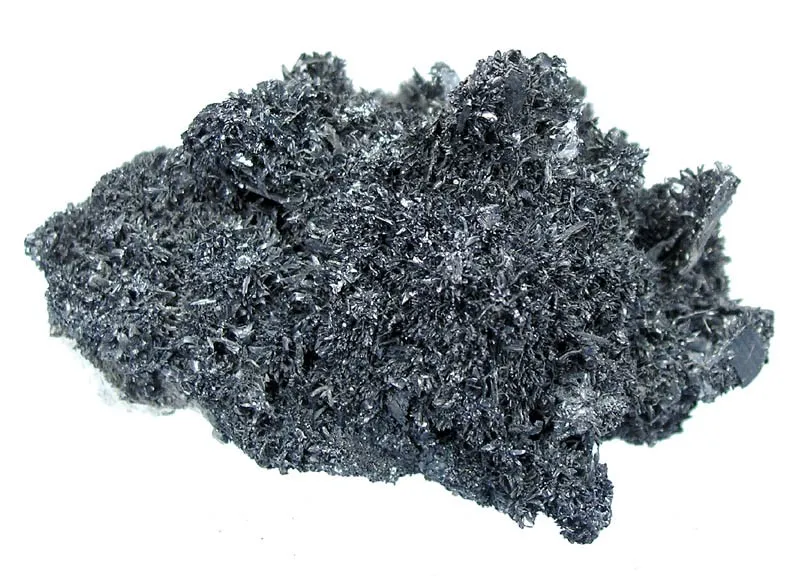
Franckeite (Var: Potosiite)
Unknown Owner
Help improve this recordNo owner is registered for this specimen yet. If it's yours or you know more about it, you can add the owner, provenance, publications and other details.
From the new find of 2004. A few highly lustrous, heavily striated, tabular blades of Potosiite measuring up to 8 mm sitting atop Franckeite. For those of you who are unaware, the crystals of Potosiite on this specimen are EXCEPTIONALLY LARGE for the species. Before these new specimens were discovered, some of the largest known crystals of Potosiite were massive, uncrystallized, granules less than 1 mm. in most cases. The Potosiite has been positively identified through X-ray Diffraction. This specimen is from a newly opened vein in this historic mine. 6.0 x 4.9 x 4.6cm
Product details
SpeciesFranckeite
SizeSmall Cabinet
Dimensions6.0 x 4.9 x 4.6 cm
Added on10/23/2024
LocalityBolivia, Potosí, San Jose Mine
Known provenance
| Date | Collector | Acquisition price |
|---|---|---|
| 08/2024 | Unknown Owner | Not disclosed |
| — | The Arkenstone | Not disclosed |
Learn more
Mineral guide
Learn about Franckeite
, a rare micaceous lead-tin-antimony sulfosalt, forms layered rosettes and curved plates; Bolivian origin and texture make it collectible.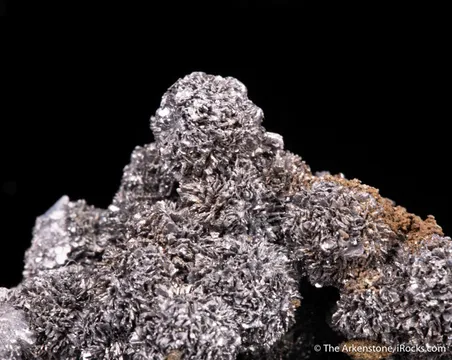
Regional guide
Comments