






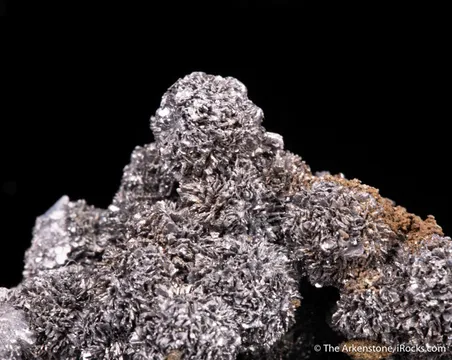
Franckeite, a rare micaceous lead-tin-antimony sulfosalt, forms layered rosettes and curved plates; Bolivian origin and texture make it collectible.
Key facts
Franckeite is a rare, complex lead–tin–antimony sulfosalt best known from Bolivia’s historic tin–silver belt. It typically forms as soft, micaceous to platy metallic aggregates in steel- to lead‑gray tones with a bright metallic to silky sheen. Classic specimens show stacked, foliated “fish-scale” laminae or radiating rosettes and fans; some develop striking curved plates and layered intergrowths that read as elegant metallic bouquets. Because it is sectile and very soft (about Mohs 2–2.5), pristine, sharply defined rosettes and undamaged edges are hard-won and highly prized.
In the pocket, franckeite often occurs with other sulfosalts and Sn-bearing minerals—cylindrite, teallite, andorite, zinkenite, boulangerite, stannite, cassiterite, sphalerite, and quartz are frequent companions. The species is quintessentially Bolivian: most of the world’s aesthetic, cabinet-grade pieces hail from venerable mines like Huanuni, Siglo Veinte (Llallagua), Colavi, and San José (Oruro). Fine matrix contrasts—dark metallic folia perched on white quartz, tan siderite, or pale dolomite—elevate the best pieces into showy, architectural specimens.
Although not a “color” mineral, franckeite enjoys steady popularity among connoisseurs of sulfosalts and Andean classics. Collectors seek it for:
Supply is limited and sporadic; most notable pockets are historical rather than ongoing. Prices span from affordable micromounts and small hand specimens to expensive cabinet display pieces with sharp rosettes, clean edges, and contrasting matrix. Because many examples show edge fray or handling nicks, top-condition matrix pieces are scarce and command premiums.
While franckeite occurs in several countries, Bolivia is the uncontested source of the world’s finest and most aesthetic specimens. The following localities are particularly esteemed by collectors.
In the heart of Oruro, the San José Mine has yielded attractive franckeite rosettes and foliated masses, often perched on white quartz for strong contrast. Finer specimens show tight, radiating leaves with reflective edges and minimal fraying—no small feat given the species’ softness. Teallite, zinkenite, and andorite are frequent associates. San José pieces appeal for their display impact and classic “Oruro look”: crisp metallic geometry against bright gangue.
Franckeite is delicate. Good stewardship preserves sharp edges and original luster.
Handling:
Environment:
Cleaning:
Display:
Following these guidelines will help preserve the crisp edges, metallic sheen, and historic character that make Bolivian franckeite a distinctive and rewarding addition to any mineral collection.