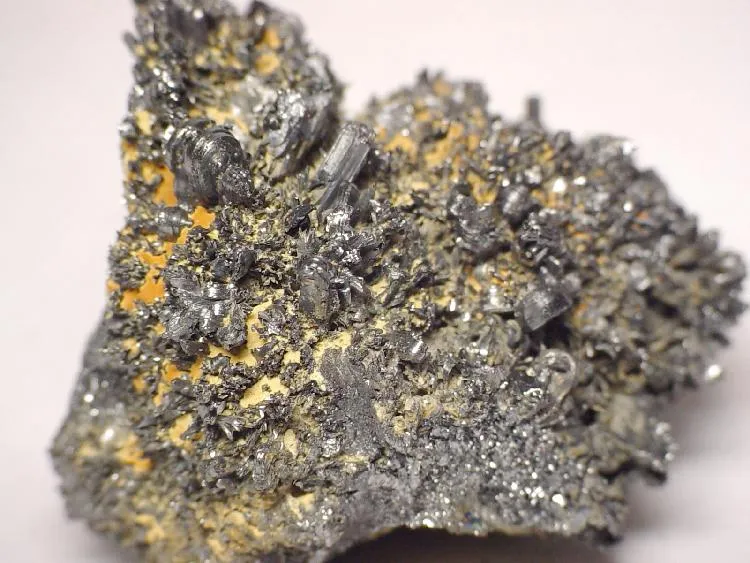
Franckeite (Var: Potosiite), Franckeite
Unknown Owner
Help improve this recordNo owner is registered for this specimen yet. If it's yours or you know more about it, you can add the owner, provenance, publications and other details.
Sharp crystals of several habits, to 6mm! This is a relatively new occurrence for the species. So far as I am aware from my sources, there were only a handful of these extracted (though it is possible many were simply thrown in the garbage and not recognized for what they were!), and none have been found since the indentity was reported to the Bolivian miners working the San Jose. From what I can gather, previously reported samples were under 2 mm and somewhat granular, indistinct crystals. These occur as both straight crystals to 6 mm on this specimen and as very large, distinct, highly lustrous, curved crystals (in appearance as if one were to curl their finger). I am told that there is only one group of minerals in the world that exhibit a non-commensurate layered crystalline structure and are found with curved crystals, and this is a textbook example of such crystals. 4 x 3.5 x 3 cm
Product details
SpeciesFranckeite
SizeMiniature
Dimensions4.0 x 3.5 x 3.0 cm
Added on10/23/2024
LocalityBolivia, Potosí, San Jose Mine
Known provenance
| Date | Collector | Acquisition price |
|---|---|---|
| 08/2024 | Unknown Owner | Not disclosed |
| — | The Arkenstone | Not disclosed |
Learn more
Mineral guide
Learn about Franckeite
, a rare micaceous lead-tin-antimony sulfosalt, forms layered rosettes and curved plates; Bolivian origin and texture make it collectible.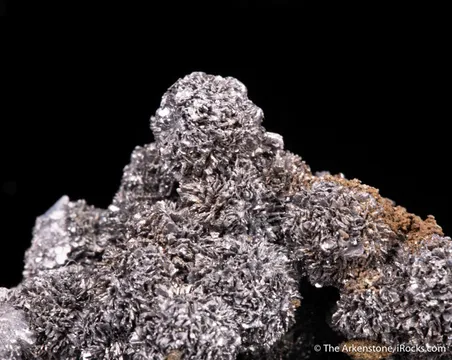
Regional guide
Comments