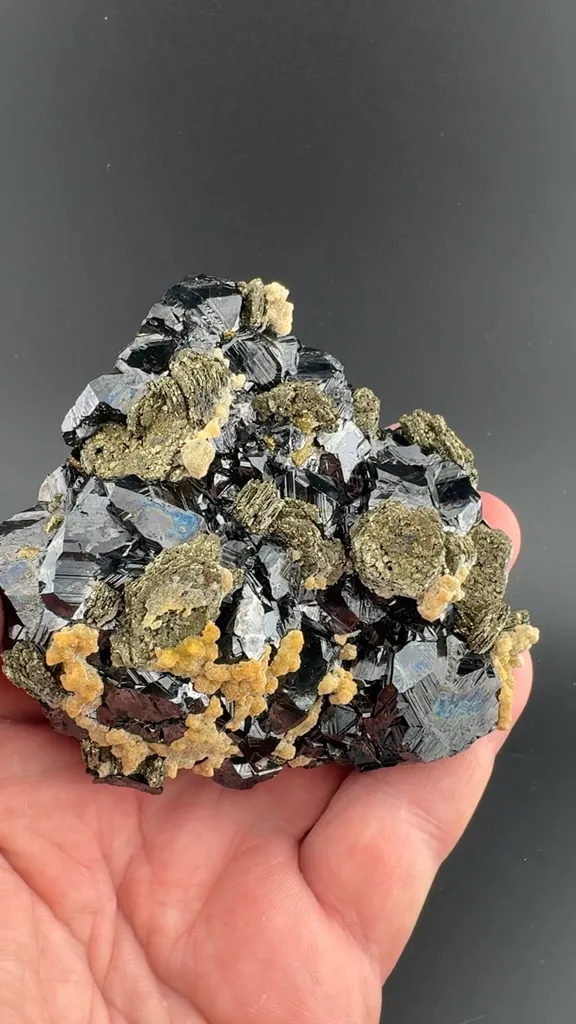
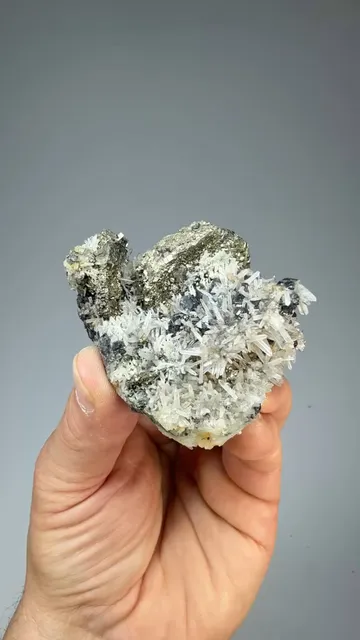
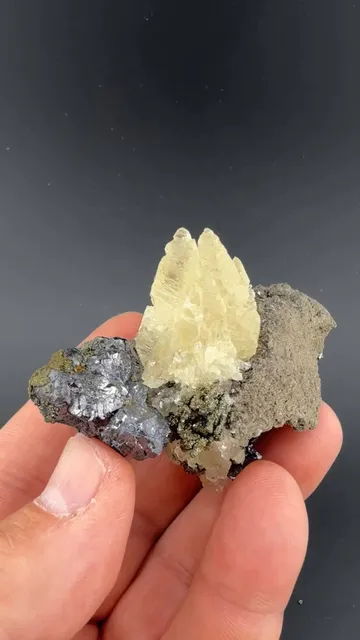
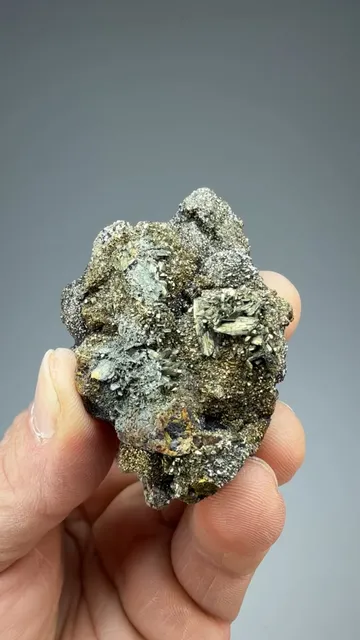
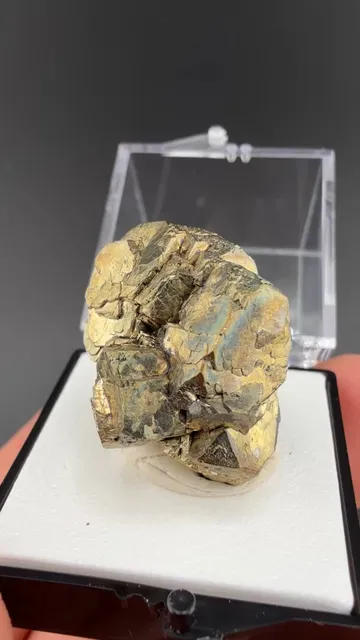
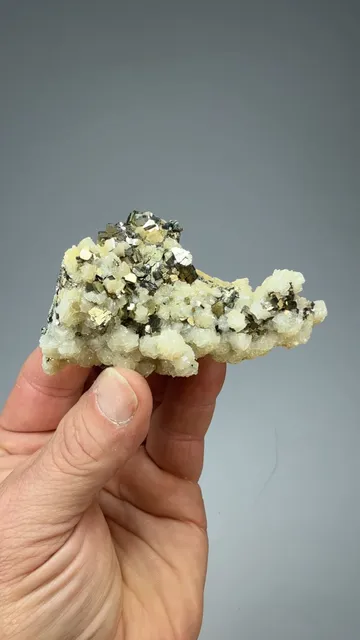
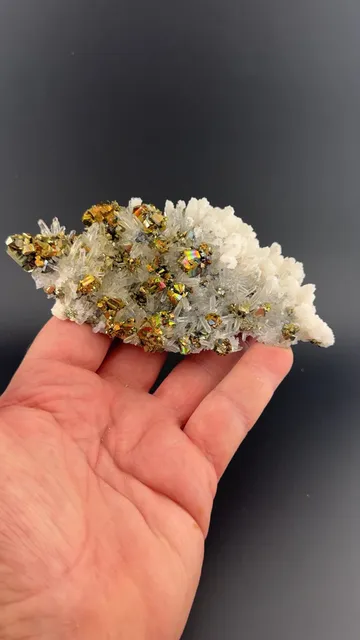
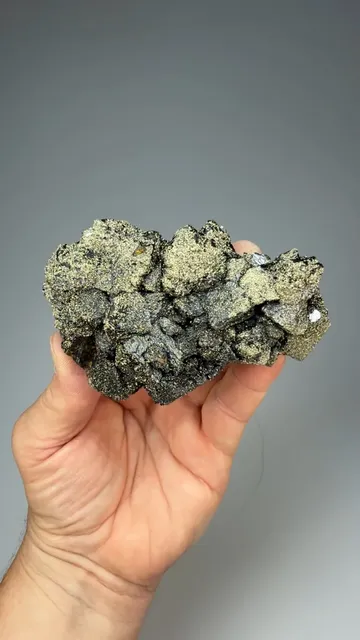
Pseudo-hexagonal thin platy crystals of what were once pyrrhotite measuring to 1.5 cm are in size, these now replaced by crystallized pyrite and scattered across the top of a black lustrous twinned sphalerite crystal matrix. Minor calcite present. This is in very good condition.
The Herja Mine, historically known as Kisbanya and located in the Maramures County of Romania, is a legendary underground mining district with operations dating back to medieval times and expanding heavily through the 19th and 20th centuries. Geologically, the deposit is situated within the Neogene volcanic arc of the Inner Carpathians, featuring complex hydrothermal vein systems hosted in volcanic and sedimentary rocks driven by extensive magmatic activity. Mineralogically, Herja is world-famous among collectors and museums for producing some of the finest epithermal ore specimens ever found, most notably brilliant, razor-sharp crystals of stibnite, berthierite, quartz, and various sulfides that display exceptional crystal size and metallic luster.
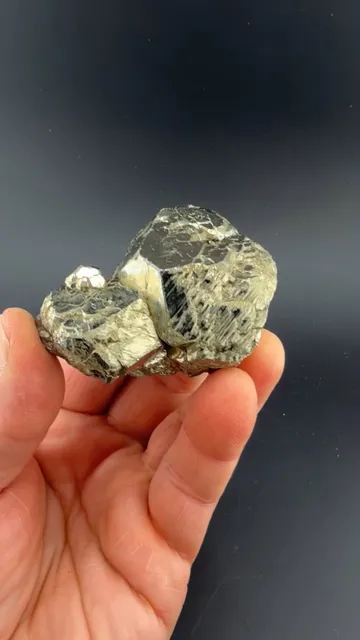
Pyrite after pyrrhotite is a classic pseudomorph where iron disulfide replaces iron sulfide while preserving the original crystal morphology of the precursor mineral. Geologically, these transformations occur within hydrothermal veins, metamorphic rocks, or massive sulfide deposits when changing chemical conditions, such as rising sulfur activity or oxidation, destabilize pyrrhotite. Mineralogically, the resulting specimens typically retain the distinctive hexagonal or tabular crystal habits characteristic of pyrrhotite, while acquiring the brassy yellow metallic luster and cubic crystal system attributes of pyrite.

Comments