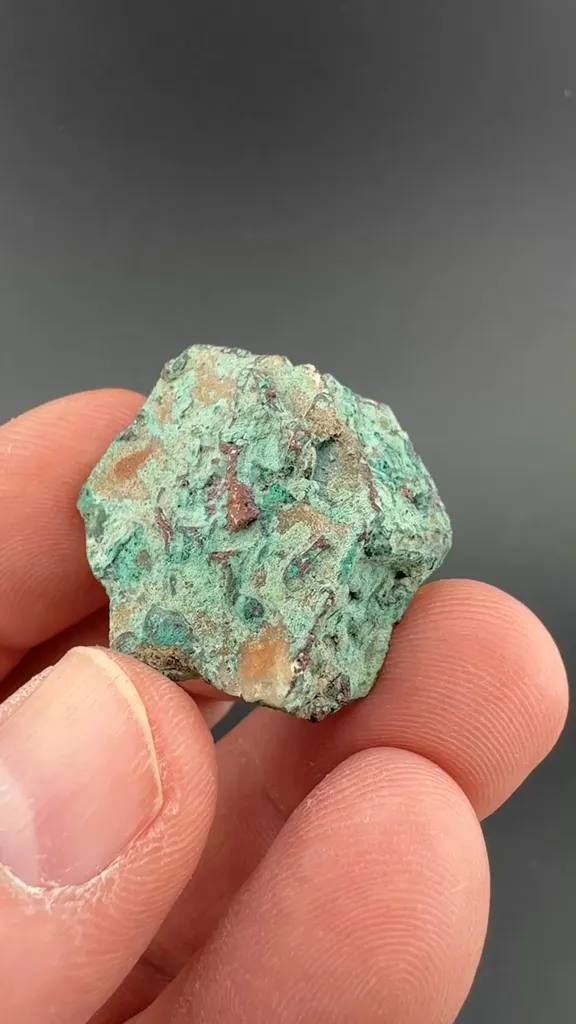

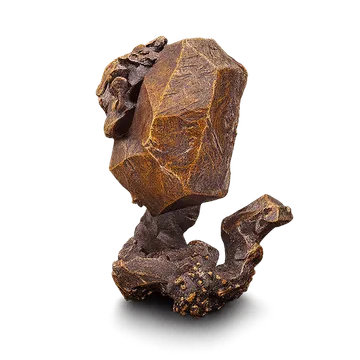
Copper after Aragonite
Unknown Owner
Help improve this recordNo owner is registered for this specimen yet. If it's yours or you know more about it, you can add the owner, provenance, publications and other details.
Classic Bolivian pseudomorph specimen, at one time this was a sharply formed pseudo-hexagonal crystal of aragonite. Now completely replaced by native copper. Complete all around with no points of attachment.Corocoro is a historic mining district located in the Pacajes Province of the La Paz Department in western Bolivia. Mining in the area dates back to pre-Columbian times and expanded significantly during the Spanish colonial period, when oxidized copper ores supplied the mint in Potosi. By the 19th and 20th centuries, it became world-famous for its massive production of native copper. Geologically, the deposit sits on the Bolivian Altiplano and is hosted within a thick sequence of folded and faulted Tertiary red bed sandstones and conglomerates. The mineralization is unique, formed by circulating solutions that precipitated native copper and associated copper minerals directly into the porous sedimentary layers and along major structural faults.Pseudomorphs of copper after aragonite from Corocoro are classic mineral specimens highly prized by collectors. These form when copper-bearing hydrothermal fluids or groundwaters circulate through sedimentary layers containing preexisting aragonite crystals. As the solutions dissolve the original calcium-based carbonate crystals, native copper systematically takes its place, perfectly preserving the distinct pseudohexagonal and cyclic twin shapes of the parent aragonite. This complete atomic and chemical substitution results in sharp, metallic copper sculptures that capture the exact geometry of a completely different mineral.
Product details
Known provenance
| Date | Collector | Acquisition price |
|---|---|---|
| 08/2026 | Unknown Owner | Not disclosed |
| — | Weinrich Minerals | Not disclosed |
Comments