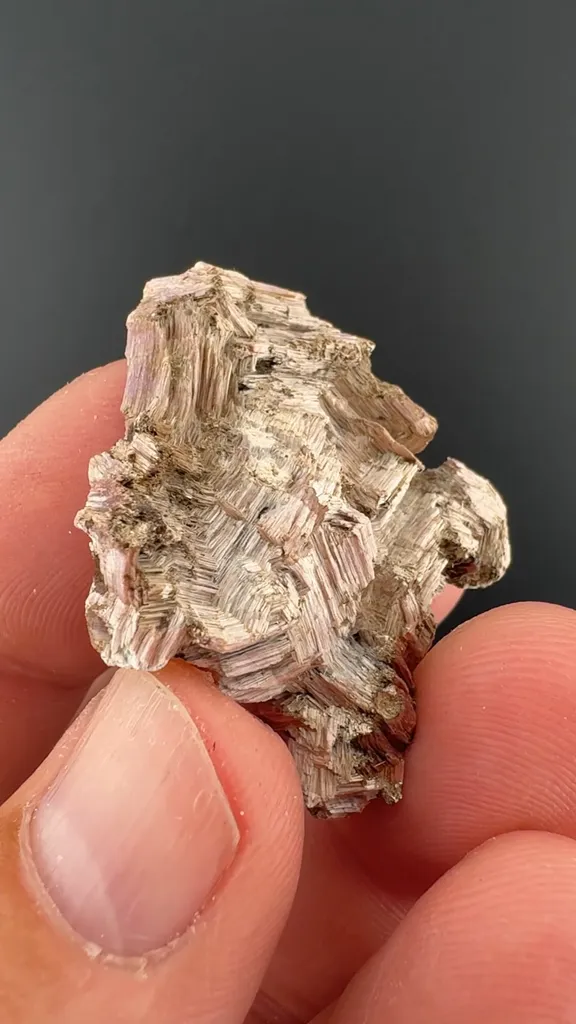
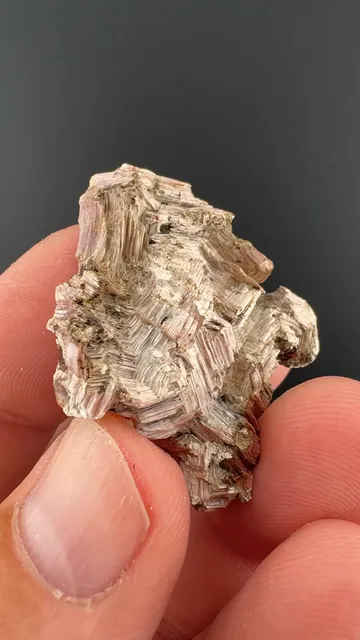
An excellent example for the species and area. The specimen consists of a crystallized cluster of sussexite. The specimen has been confirmed via x-ray identification by George Robinson.
The Cannon mine, located in Stambaugh within the Iron River-Crystal Falls district of Iron County, Michigan, was a major underground iron mine operated by the Hanna Mining Company. Geologically, the deposit is hosted within the Paleoproterozoic-aged Ironwood Iron-Formation, where structurally controlled cherty iron-formation strata underwent intensive secondary enrichment, forming massive bodies of high-grade hematite and goethite ore within synclinal folds. Construction of the main shaft began in 1951, and commercial ore production commenced in 1955, serving as a highly modernized operation utilizing sub-level stoping methods. The mine operated continuously until economic shifts and the depletion of easily accessible reserves led to its permanent closure in 1963.
Sussexite is a rare manganese borate mineral that typically forms fibrous, parallel, or radiating masses with a silky luster. Geologically, it precipitates in low-temperature hydrothermal veins or as a secondary alteration product within highly metamorphosed manganese-rich iron-formations and skarn deposits. The mineral is notable for its distinctive pink, white, or light yellow coloration and is closely related to the magnesium-dominant endmember szaibelyite, often requiring specialized analytical testing to definitively differentiate between the two species.

Comments