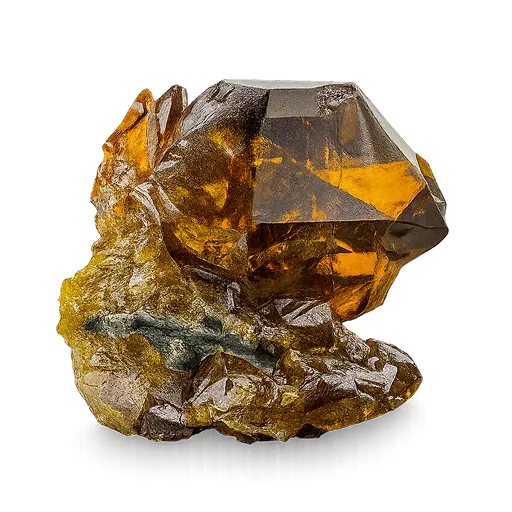
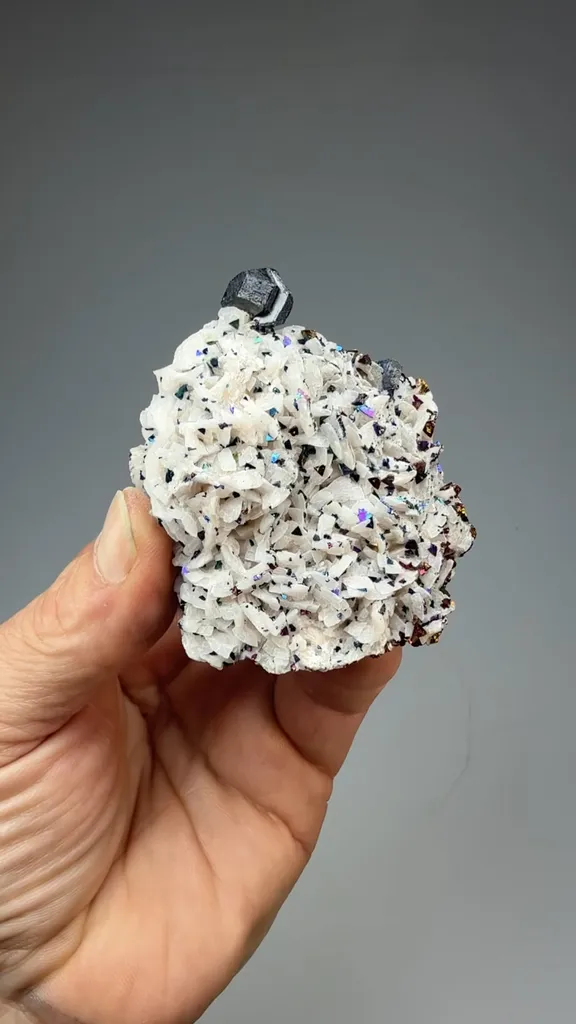
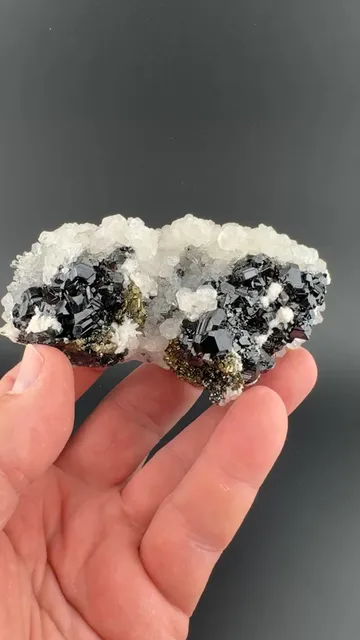
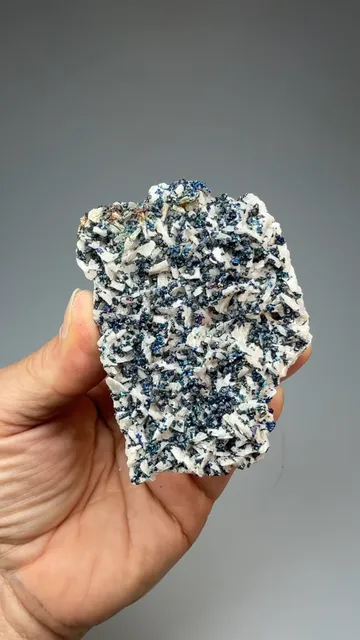
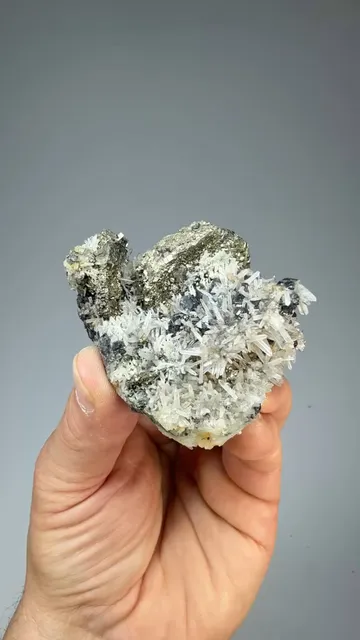
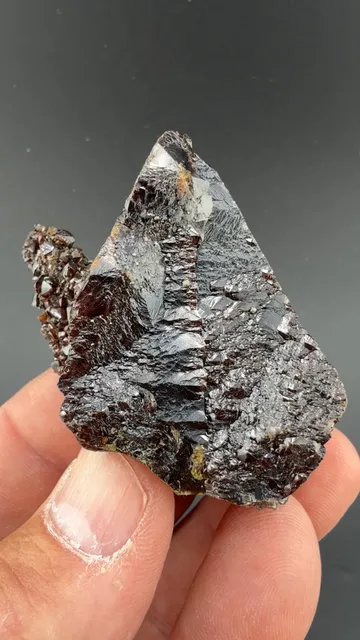
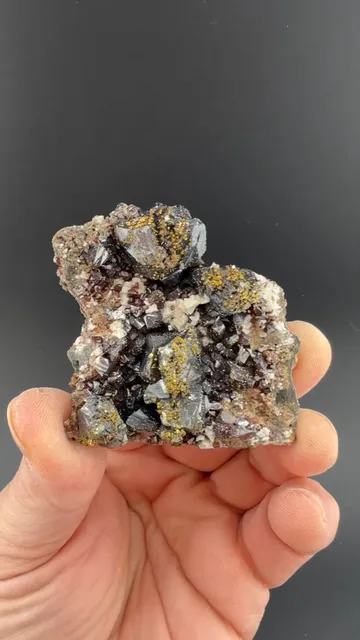
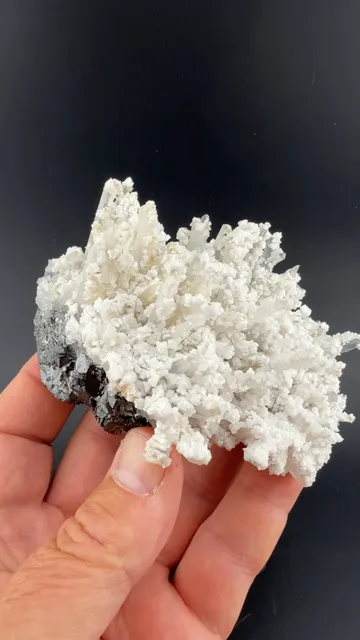
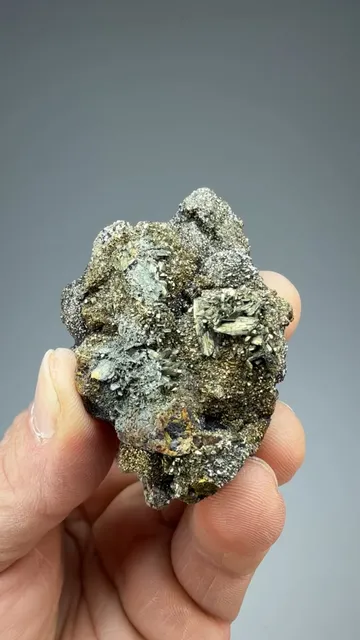
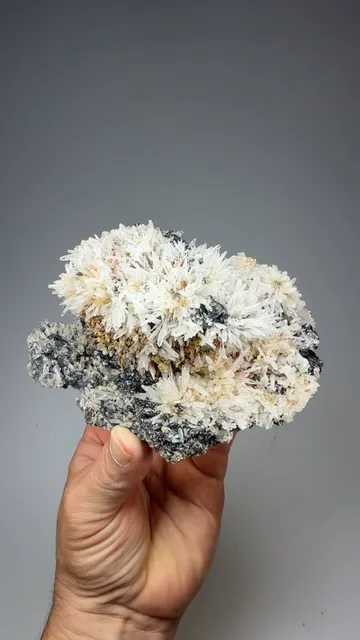
A sharp twinned crystal of sphalerite along one edge of a matrix hosting light pink crystals of dolomite and showy iridescent chalcopyrite. In good condition.The Pelican mine, located southwest of Picher in Ottawa County, Oklahoma, was a productive lead and zinc producer within the Oklahoma section of the historic Tri-State district. Geologically, the deposit consists of Mississippi Valley-type carbonate-replacement mineralization hosted within the Mississippian-aged Boone Formation, a thick sequence of cherty limestone. Tectonic fracturing and brecciation allowed low-temperature, metal-bearing hydrothermal solutions to migrate through the strata, dissolving the limestone and depositing massive galena and sphalerite ores, frequently accompanied by dolostone and chalcopyrite crystals. Commercial underground mining at the Pelican property began during the Picher Field boom era around 1915, expanding rapidly to supply critical metals during World War I under the operation of the Century Zinc Company. The mine remained a steady contributor to the district's massive industrial output through the 1920s and 1930s until ore depletion and falling post-war metal prices led to the cessation of primary underground extraction at the site by the late 1940s.


Comments