
Calcite
Unknown Owner
Help improve this recordNo owner is registered for this specimen yet. If it's yours or you know more about it, you can add the owner, provenance, publications and other details.
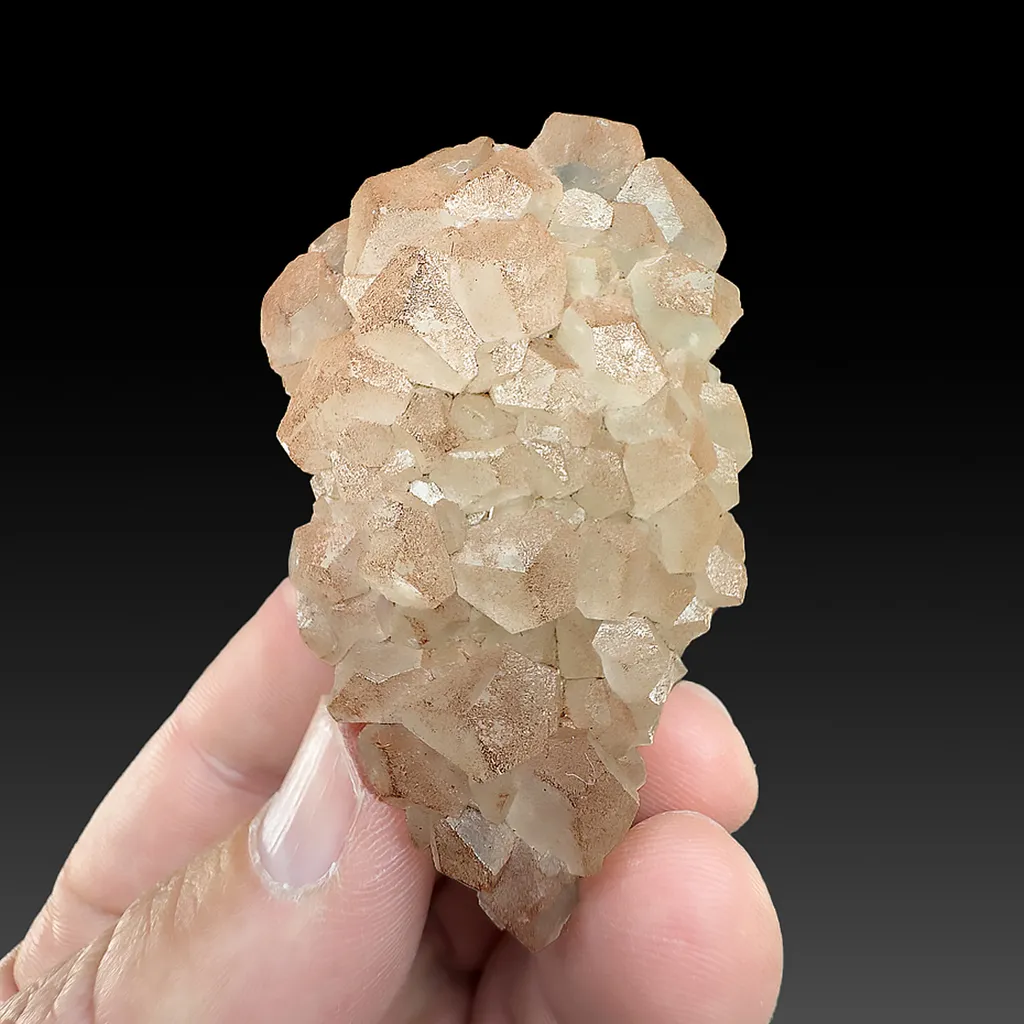
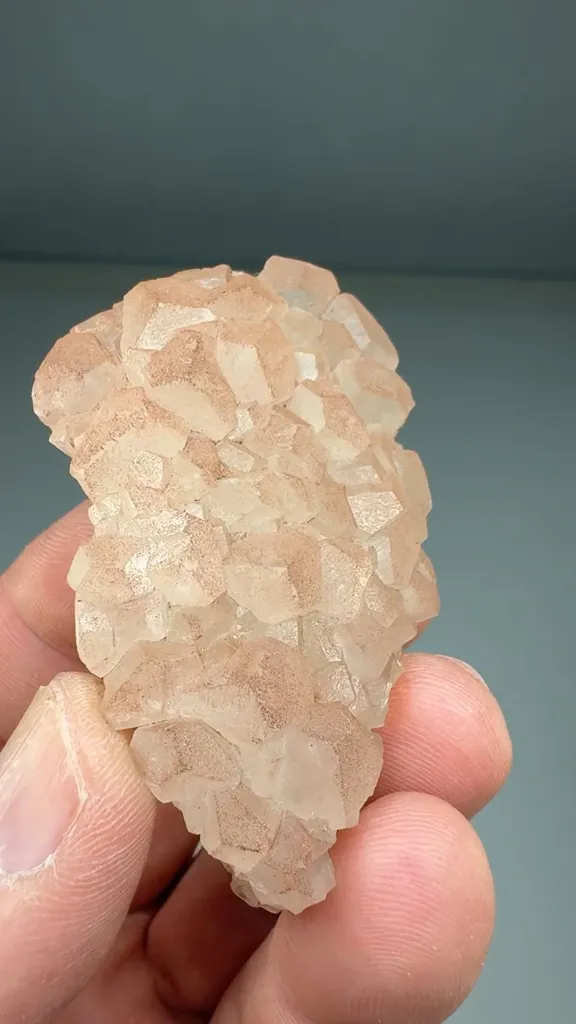
Pinkish crystals of rhombohedral translucent calcite measuring to almost 1.0 cm in size across the top of matrix. In good condition. Nice for this old locality. The specimen comes with a previous label from the A. E. Seaman Mineral Museum as shown at the end of the video.The Columbia mine, situated near the city of Crystal Falls within Iron County, Michigan, United States, is a historic underground iron operation noted for its early production on the Menominee Iron Range. Geologically, this deposit is hosted within the Paleoproterozoic-age Riverton Iron Formation, a complex and heavily folded sequence of interbedded cherty iron carbonate, iron silicate, and slate layers that underwent significant regional deformation. Natural circulation of deep meteoric fluids along major structural fractures and fault zones oxidized the primary iron-bearing minerals and dissolved the silica matrix, creating highly concentrated bodies of secondary soft red hematite ore trapped along structural troughs. Historically, the deposit was identified during exploratory test-pitting and trenching in the early 1880s, leading to the commencement of regular commercial mining and the first official rail shipments in 1883 under the management of the Crystal Falls Mining Company. The facility, which later came under the operation of the Huron Iron Mining Company, expanded into a substantial underground complex utilizing deep vertical shafts and extensive drifts to extract high-quality ore for Midwestern blast furnaces. Continuous corporate mining ran for several decades, playing an important role in the early industrial development of the Crystal Falls district, until the depletion of easily accessible high-grade underground reserves and changing economic conditions led to the permanent cessation of regular ore extraction around 1906.The A. E. Seaman Mineral Museum, located on the campus of Michigan Technological University in Houghton within Houghton County, Michigan, United States, is celebrated as the official mineral museum of the state of Michigan and a premier repository for Midwestern geological heritage. Geologically, the museum acts as the ultimate reference archive for the unique mineralogy of the Lake Superior region, curating tens of thousands of scientifically significant specimens that document the unique Keweenaw native copper deposits, the metamorphism of the Marquette Iron Range, and classic worldwide occurrences. The collection features unparalleled clusters of crystalline native copper, large calcites, and rare regional species that provide researchers with a comprehensive look at Proterozoic volcanic and sedimentary mineralization. Historically, the institution had its origins in 1885 when the Michigan Mining School was established, with the collection growing rapidly under the dedicated care of Arthur Edmund Seaman, a prominent professor of geology who served as its first official curator and for whom the museum was formally named in 1932. The museum was housed within various campus buildings, including the long-standing Hubbell Hall and later the Electrical Energy Resources Center, before moving into its own dedicated, state-of-the-art facility in 2011 to better accommodate public exhibits and advanced academic research. Through 2026, the museum continues to function as an active, vital educational asset and a major regional attraction, welcoming thousands of visitors annually while preserving its irreplaceable holdings as a definitive benchmark for global topographic mineralogy.
Product details
SpeciesCalcite
SizeSmall Cabinet
Dimensions7.0 x 4.5 x 2.0 cm
Added on05/28/2026
LocalityUSA, Michigan, Columbia Mine
Known provenance
| Date | Collector | Acquisition price |
|---|---|---|
| 05/2026 | Unknown Owner | $150.00 |
| — | Weinrich Minerals | Not disclosed |
Learn more
Mineral guide
Learn about Calcite
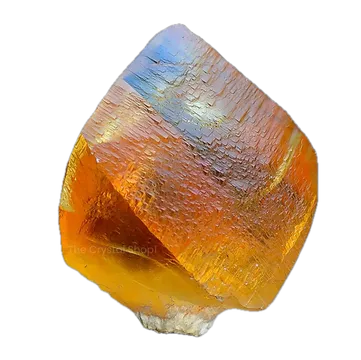
diverse shapes, colors, and optical quirks; widely available yet scarce elite pieces from Elmwood and Charcas drive collecting value and display.Regional guide
Comments