Los Lamentos-Wulfenit, Chihuahua — dicke, glänzende orange bis karamellfarbene Kristalle aus dem Erupción-Ahumada-System, berühmt für Farbe, Vielfalt und Sammler-App…
Key facts
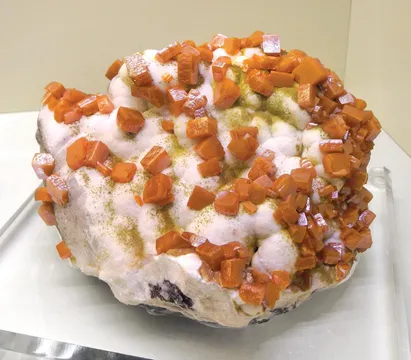
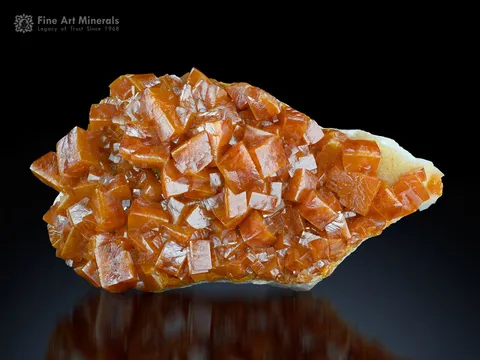
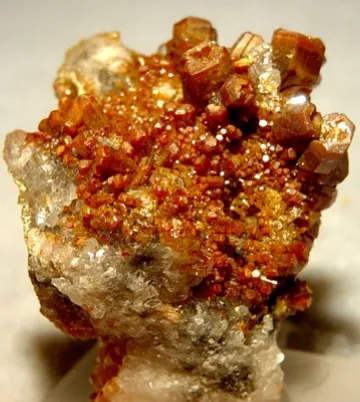
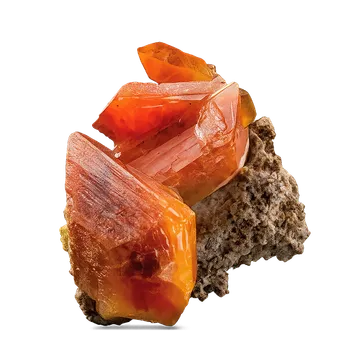
Der Wulfenit aus Los Lamentos ist einer der großen mexikanischen Klassiker: dicke, glänzende, von orange bis karamellfarben schimmernde Pb(MoO4)-Kristalle aus dem oxidierten Blei-Zink-Mantel des Erupción-Ahumada-Minenkomplexes im Sierra de Los Lamentos, Ahumada Gemeinde, Chihuahua. Die feinsten Stücke haben auch aus der Distanz eine erkennbar markante Optik — stämmige blättrige oder blockige Kristalle, oft mit warmem Butterscotch- bis tiefroten-orange Farbton, auf weißer bis cremefarbener Calcite oder auf dunkler vanadinit- und descloizit-reicher Matrix. Im Vergleich zu den hauchdünnen „Fensterglas“-Wulfeniten vieler Fundorte erscheinen Los Lamentos-Kristalle häufig dicker, schwerer wirkend und architektonischer.

Foto: Wikimedia Commons
Der Ruf des Fundorts gründet sich sowohl auf Fülle als auch auf Charakter. Los Lamentos produzierte über Jahrzehnte zehntausende Sammlerstücke, doch die besten Beispiele bleiben begehrt, weil die Mine nicht nur Quantität, sondern Vielfalt bot: karamellfarbene „Würfel“, dicke tabuläre Platten, orange-gelbe blockige Kristalle, rot-orange transparente Platten, Wulfenit teilweise oder ganz von Vanadinit überzogen, und ungewöhnliche Stücke mit Descloizit oder Willemit. Sammler schätzen die besten Stücke wegen Schärfe, Dicke, Glanz, gesättigter Farbe und dem auffälligen Kontrast zwischen orangefarbener Bleimolybdate und weißer Calcite.
Geologisch stammen die Exemplare aus einem karbonat-hosted Replacement-System, das sich als einzelner Mantel in Kreidekalk entwickelt hat. Primäres Bleiglanz- und Sphalerit wurde gründlich zu Cerussite, Anglesit, Hydrozinkit, Willemit, Vanadinit, Descloizit und Wulfenit oxidiert. Die Wulfenitzone war am besten in den unteren Abbaubereichen der Ahumada ausgeprägt, vor allem rund um und unter dem 500-Fuß-Ebene, mit dem feinsten Material nahe der 700-Fuß-Ebene und dem Gebiet Los Baños nahe der Wasserlinie.

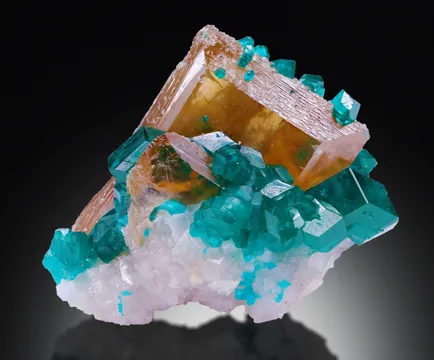
Foto: Wikimedia Commons
Der Name Los Lamentos—„die Klagen“—ist Teil der Ortskenntnis so sehr wie der Mineralogie. Er bezieht sich nicht auf Sammlerfrustration, sondern auf das unheimliche Stöhnen des Windes, der durch Risse und Höhlen in dem Kalksteingrat über der Mine zieht. Dasselbe höhlenartige Kalkstein-Leitungssystem kontrollierte sowohl das Erz als auch die spätere Supergene-Mineralisierung, die die Mine berühmt machte.## Vorgeführte Exemplare
Nach specimens suchen: Alle Wulfenit-Specimenen aus den Los Lamentos Mountains, Chihuahua, Mexiko ansehen
Der klassische Abbauort ist das Erupción-Ahumada-Mantogrundsystem in der Sierra de Los Lamentos, etwa 80 Kilometer östlich von Villa Ahumada im nordöstlichen Chihuahua. Im Sammlergebrauch bezieht sich „Los Lamentos“ üblicherweise auf das Distriktgebiet oder die verbundenen Erupción- und Ahumada-Arbeiten, doch die präziseste Kennzeichnung für die meisten Wulfenite-Funde lautet Ahumada-Mine, Los Lamentos District, Chihuahua, Mexiko. Die oberen Erupción-Arbeiten sind historisch wichtiger für Anglesit und verwandte Bleioxide, während die produktive Wulfenitzone überwiegend im unteren Ahumada-Teil des gleichen Mantosystems lag.
Die Lagerstätte ist eine karbonatgehostete Blei-Zink-Silber-Ersatzmantelung in Kreidekalkstein. Mindat fasst das Lagergestein als einzigen Mantel zusammen, der durchschnittlich etwa 15 Meter hoch, 20 bis 30 Meter breit und 1.500 Meter lang abwärts geneigt ist, gehostet in einer flach abfallenden Riffbed-Äquivalenz der unteren Kreideformation Finlay. Das ursprüngliche Sulfidenset bestand vorwiegend aus Bleiglanz und Sphalerit; die Oxidation erzeugte die für Sammler bekannten Mineralien: Anglesit, Cerussit, Calcit, Gips, elementarer Schwefel, Hydrozinkit, Willemit, Vanadinat, Descloizit und Wulfenit.
Die Bergbaubetriebe waren umfangreich und schichteten sich entlang des abwärts geneigten Mantos. Die alten Beschreibungen berichten von mehreren Ebenen, die in Abständen von etwa 30 Metern lagen, einem Stollenmundloch (Adit), einem internen Abstieg und tiefer gelegenen Abbaustellen, die die 210 Meter tiefe Ebene erreichten, wobei eine 244 Meter tiefe Ebene erschlossen war, aber der Zugang zum Erzgang nicht erfolgreich abgeschlossen wurde. Wasser war die große praktische Grenze. Hochgradiges Oxid-Gestein und forsøgende Zonen erstreckten sich weiter nach unten, doch Pumpengrenzen und Wasserzufluss bestimmten wiederholt, was abgebaut werden konnte.
Die Bergbaugeschichte von Los Lamentos unterscheidet sich von vielen älteren mexikanischen Distrikten, weil es kein spanisches Kolonial-„antigua“ war. Die Entdeckung des Erzes wird José María de la Peña im Jahr 1907 zugeschrieben, mit späteren Untersuchungs- und Erwerbsbemühungen von David Bruce Smith und Mitarbeitern. Erz wurde in den späten 1910er Jahren verschifft, und Mitte der 1920er Jahre war die Ahumada-Mine ein bedeutender nordamerikanischer Bleiproduzent aus sekundären oxidierten Bleierzen. Die Liegenschaft produzierte Hunderttausende Tonnen konzentrierter Blei-Erze, bevor Wasserprobleme 1931 den Betrieb zwangen zu schließen.
Die Geschichte der Specimens begann früh, beschleunigte sich jedoch, nachdem William F. Foshags Wirtschaftsgeologie-Abhandlung von 1934 die Lokalität weiter ins öffentliche Bewusstsein gerückt hatte. Sammler und Händler besuchten in den 1940er Jahren, darunter Dan Mayers, Francis Wise, Earl Calvert, Wendell Stewart und Louis Vance. Die kommerzielle Spezimenproduktion setzte sich bis in die 1950er, 1960er und 1970er Jahre intermittent fort, mit wichtigen späteren Auffüllungen in 1968, 1976, 1979 und zu Beginn der 1980er Jahre, als Exploration und Entwässerung den Zugang zu tieferen Bereichen kurzzeitig wieder öffneten.Der Zugang heute sollte als privat, minenbewacht und keineswegs als eine beiläufige Sammelgelegenheit betrachtet werden. Historische Berichte machen deutlich, dass Spezimenabbau die Erlaubnis der Eigentümer oder Betreuer erforderte; spätere Berichte beziehen sich auf Vereinbarungen über die Licona-Familie und Bergbau- oder Explorationsinteressen. Die unterirdischen Gänge sind alt, ausgedehnt, wasserbetroffen und gefährlich. Für Sammler ist Los Lamentos inzwischen primär ein Marktplatzort statt einer Feldsammelstelle.
Bemerkenswerte Funde konzentrieren sich um die untere Wulfenitzone. Die besten Exemplare wurden knapp oberhalb und auf der 700-Fuß-Ebene gemeldet, einschließlich teilweise gefluteter Hohlräume in der Nähe des Gebiets Los Baños. Vanadat und Descloizit waren im oberen Teil der Wulfenitzone reichlich vorhanden und bedeckten oder ersetzten häufig Wulfenit, während tiefer liegende Hohlräume sauberere, größere und glänzendere orange bis orange-rot Kristalle lieferten. Ein Bohr- und Entwässerungsabschnitt aus dem Jahr 1983 deutete darauf hin, dass die Sekundärmineralisierung unterhalb der alten Wasseroberfläche fortgesetzt wurde, was die verlockende Möglichkeit hinterließ, dass signifikante ungesammelte Spezimenbereiche weiterhin unter der Erde erhalten geblieben sind.## Eigenschaften von Wulfenit aus den Los Lamentos Gebirgen, Chihuahua, Mexiko
Die charakteristische Wulfenit-Habitus aus Los Lamentos ist dick tabular bis blokkig. Kristalle reichen von dünnen Platten bis hin zu kräftigen pseudo-kubischen Formen, verlängerten blockigen Prismata, steil pyramidal ausgebildeten Kristallen und seltenen rot-orangefarbenen „Fensterplatten“. Viele Kristalle zeigen die quadratische Umrissform, die man von Wulfenit erwartet, jedoch mit deutlich größerer Dicke als die Arizona-Stil-Waferplatten. Auf guten Proben stehen die Kristalle der Matrix in architektonischen Clustern empor statt flach zu liegen wie zerbrechliche Flocken.
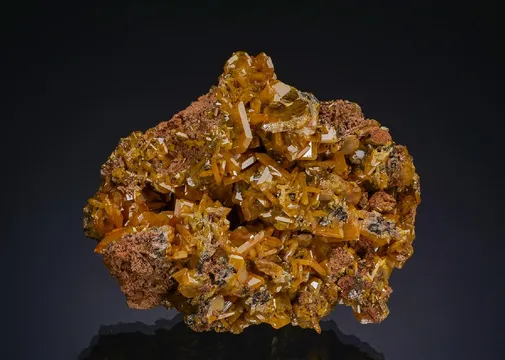
Die Farbe ist eine der Stärken der Fundstelle. Typische Los Lamentos-Stücke reichen von blassgelb und Honig über Orange-Gelb, Butterscotch, Karamell, verbranntes Orange bis Rot-Orange. Einige Kristalle sind eisengefärbt in dunkel rötlich-braun oder purpur-schwarz. Zonierung ist häufig, oft senkrecht zur c-Achse, was einigen Kristallen ein geschichtetes „Sandwich“-Aussehen verleiht. Flächen können transparent bis transluzent sein, mit hellem glasigem bis harzähnlichem Glanz an sauberen Terminations- und Pinaoidflächen.
Kristalloberflächen sind oft diagnostisch. Viele Kristalle besitzen glänzende quadratische c-Flächen, die von abgerundeten oder gestuften Seitenflächen begrenzt werden. Einige zeigen Einschnitte, eingekerbte Linien oder polykrystallin-hügelige Wachstum auf Prismas- und Pyramidenflächen. Die Kanten der besten Kristalle bleiben scharf genug, um als klare Geometrie gelesen zu werden, doch die Seitenflächen können eine leicht blasige oder eingefallene Wachstumsstruktur aufweisen, die Teil des Charmes der Fundstelle ist.
Die Größe variiert stark. Kleine Kristalle von nur wenigen Millimetern sind auf mit Kalkspat bedeckten Platten reichlich vorhanden, besonders bei älteren Materialien mit zahlreichen Butterscotch-Kristallen. Sammelstücke für die Display-Sammlung zeigen üblicherweise Kristalle um 5 bis 15 mm. Bessere Kabinettstücke können Kristalle von 2 cm oder mehr Durchmesser haben, und in der Literatur werden Kristalle von über 6 cm verzeichnet. Eine bemerkenswerte Charge aus den 1970er Jahren soll dick miteinander verwachsene Kristalle bis zu ca. 3 × 4 × 4 cm in schweren Clustern von 12 bis 15 cm Durchmesser umfasst haben. Große, isolierte, unbeschädigte Kristalle mit gesättigter Farbe sind deutlich seltener als überfüllte Platten kleinerer Kristalle.
Die Matrix ist ein wesentlicher Qualitätsfaktor. Klassische Stücke zeigen orange Wulfenit auf weißer bis cremefarbener Kalkspatmatrix, manchmal botryoidal, körnig oder krustig. Diese weiße Matrix erzeugt den stärksten Farbkontrast und ist besonders begehrt, wenn die Kristalle gut isoliert sind. Weitere Matrizen umfassen limonitische oder hämatitische Gossen, braune Descloizit- oder Vanadatinit-reiche Krusten sowie schwammig oxidiertes Erz. Einige Stücke tragen drusy Vanadinit, Vanadatinit mit Arseninhalten, Descloizit, Willemit, Hydrozinkit, Pyromorphit, Quarz, Baryt oder Hemimorphit.Vanadinait- und Desclozait-Verband sind zentral für die Mineralogie von Los Lamentos. Im 500- bis 650-Fuß-Abschnitt der Wulfenitzone können beide Minerale als Überkrekungen auf Wulfenit auftreten oder als pseudomorphische Ersetzungen nach Wulfenit. Manche Proben bewahren vanadinaitische Schalen oder Abdrücke in Wulfenit-Form, bei denen der darunterliegende Wulfenit teilweise gelöst wurde. Diese Stücke wirken visuell weniger „rein“ als orange-auf-weißer Calcit-Klassiker, sind aber äußerst interessant und charakteristisch für die supergene Chemie des Mine.
Die hochwertigsten Los Lamentos-Stücke kombinieren fünf Merkmale: gesättelte orange bis rötlich-orange Farbe, dicke, scharfe Kristalle, heller Glanz, minimierter Kantenschliff und eine ansprechende Anordnung auf kontrastierender Matrix. Eine Platte, überfüllt mit Hunderten kleiner Kristalle, kann sehr eindrucksvoll wirken, doch ernsthafte Sammler zahlen Prämien für isolierte Großkristalle, ästhetische dreidimensionale Kompositionen und Kristalle, die nicht nur groß, sondern sauber präsentiert sind.## Collector Notes
Los Lamentos Wulfenit ist so häufig, dass die meisten ernsthaften Wulfenit-Sammlungen ein Exemplar aufnehmen können, aber wirklich feine Stücke sind nicht häufig. Die Fundstelle produzierte jahrelang in Hülle und Fülle, daher bleiben kleine bis mittlere Exemplare am Sekundärmarkt verfügbar, von bescheidenen Thumbnail- und Miniaturstücken bis hin zu historischen Cabinet-Stücken. Die besten Beispiele—große unbeschädigte orangefarbene Kristalle auf weißem Calcit, transparente rot-orange Platten oder historisch dokumentierte Pocket-Stücke—werden zunehmend als Klassiker gehandelt statt als gewöhnlicher mexikanischer Wulfenit.
Die Beschriftung verdient Aufmerksamkeit. Viele Exemplare tragen einfach die Bezeichnung „Los Lamentos“, „Erupción Mine“, „Ahumada Mine“ oder „Erupción-Ahumada Mine“. Fur die meisten Wulfenite ist „Ahumada Mine, Los Lamentos District“ die präziseste historische Zuordnung, sofern kein alter Etikett oder Dokumentation etwas anderes nachweist. Ein mit „Los Lamentos mine“ beschriftetes Exemplar kann mehrdeutig sein, da das ursprüngliche Los Lamentos/Benito Juárez-Gelände eine andere Distriktexponierung war und nicht die für die Gegend berühmte klassische Wulfenit produzierte.
Zustand ist das Hauptkaufkriterium. Wulfenit ist weich, spröde, schwer für seine Größe und anfällig für Kantenstücke. Los Lamentos-Kristalle sind oft dicker als die zerbrechlichen Fensterplättchen anderer Fundorte, aber ihre Ecken und Plattenkanten brechen dennoch leicht ab. Untersuchen Sie sorgfältig das primäre Ausstellungs-kristall unter einer 10-fachen Vergrößerung. Flohnäpfchen (Fleabites) an peripheren Kristallen sind häufig und können bei älteren Stücken akzeptabel sein, aber eine aufgeplatzte Führungskante oder eine reparierte Hauptkristall wirkt sich stark auf den Wert aus.
Schäden sind vorhersehbar. Dünne Platten können abgeknickte Ecken haben. Blockige Kristalle können abgebrochene Kanten, fehlende Termini oder gesprungene Basen zeigen. Überfüllte Platten weisen oft Kontaktbeschädigungen am Rand auf, wo das Exemplar zugeschnitten oder aus der Pocket entfernt wurde. Vonadanit- oder Descloizit-beschichtete Stücke können unter attraktivem sekundärem Drusen zerstörte Wulfenit verstecken; das ist nicht unbedingt täuschend, aber es verändert den Wert von „sauberem Wulfenit“ zu einer interessanten Ersatz- oder Überwachsungsexemplar.
Reparaturen sind möglich und sollten offengelegt werden. Da die Kristalle relativ schwer sind und die Matrix krümelig sein kann, treten im breiten Wulfenit-Markt wieder befestigte Wulfenit-Kristalle auf. Prüfen Sie auf Leimschnitte an Kristallbasen, falsch ausgerichtete Wachstums Linien, unnatürliche Positionen oder helle Fluoreszenz durch Klebstoff unter Langwellen-UV. Reparaturen disqualifizieren nicht automatisch bei wichtigen alten Klassikern, aber unoffengelegte Reparaturen sind ein ernstes Problem.Kein einzelner, weithin anerkannter Fälschungstyp ist in der Literatur eindeutig mit Los Lamentos verbunden, aber die Art selbst birgt allgemeine Authentizitätsrisiken. Wulfenit kann durch orangefarbene Glasplatten, gefärbtes oder behandeltes Carbonatmaterial oder geklebte Anordnungen echter Kristalle auf unabhängigem Matrixmaterial imitiert werden. Speziell für Los Lamentos sollten Matrix und Begleiterscheinung sinnvoll sein: orange bis karamellfarbige Wulfenit mit Calcit, Vanadinit, Descloizin, Willemit, Hydrozinkit oder oxidiertem Blei-Zink-Erz ist glaubwürdig; seltsame Matrixstrukturen, unglaubwürdig gleichmäßige glasige Platten oder Kristalle, die ohne natürliche Kontaktbeziehungen sitzen, verdienen Vorsicht.
Für die Auslage schützen Sie Los Lamentos-Wulfenit vor Vibrationen, leichtfertigem Staubwischen und saurer Reinigung. Niemals aggressiv reinigen. Mechanisches Bürsten kann Kanten zerkratzen, Säuren greifen die gängige Calcitmatrix an, und Einweichen kann brüchige, lehmige oder calcithaltige Stücke destabilisieren. Halten Sie es an der Matrix, nicht an den Kristallen, und lagern Sie es fern von härteren Mineralien, die die weichen Wulfenitflächen abschmirgeln oder absplittern können.## Geschichten & Feldnotizen
Los Lamentos besitzt eine der großartigen Ursprungsgeschichten des mexikanischen Bergbaus. Das Distrikt war kein alter spanischer Abbau, der von modernen Bergleuten wiederentdeckt wurde; es war eine harte Wüsten-Prospektition im revolutionären Chihuahua. José María de la Peña wird die erste Erzentdeckung im Jahr 1907 zugeschrieben, nachdem ein 7 Meter tiefer Prospektstollen hochgradige Cerussit-Erzschichten traf. David Bruce Smith, ein schottisch-geborener Bergmann, der Englisch und Spanisch mit demselben Akzent sprach, untersuchte 1909 Lagen und kehrte während der gewalttätigen Jahre der Mexikanischen Revolution zurück. 1916 optionierte er Lagen für 50.000 Dollar, doch die beiden Hindernisse fasste der alte Bericht knapp zusammen: zu wenig Wasser und zu viele Banditen.
Die Villa-Pancho-Episode liest sich wie ein Grenzland-Bergbau-Roman, denn so war es fast. Smith und sein Partner E. F. Knotts bearbeiteten die Lagen, wann immer die „mexikanische Untergrund-Telegraphenverbindung“ Villa anderswo meldete. Von einem Aussichtspunkt über der Mine aus beobachteten sie Staubwolken, maßen, ob sich herannahende Reiter als Gefahr ankündigten, und schlüpften bei Bedarf davon. Das Spiel dauerte zwei Jahre. Im Oktober 1918 erwischte Villa sie in der Mine, wütend darüber, dass sie ihn so oft umgangen hatten. Zuerst befahl er, sie bei Morgengrauen erschießen zu lassen, dann revidierte er, weil Lösegeld mehr wert sei als Rache. Villa forderte 100.000 Dollar in Goldmünzen. Smith entgegnete: „Wenn das dein Preis ist, nimm uns ruhig mit raus und schieß uns tot.“ Villa senkte die Summe auf 75.000 Dollar. Smith antwortete: „Wenn ich auch so viel Geld auftreiben könnte, mein General, was sollte ich dann hier in dieser gottverlassenen Wüste tun?“ Nach zwölf Tagen sank das Lösegeld auf 20.000 Dollar. Smith fuhr nach El Paso, beschaffte Geld durch die American Smelting and Refining Company, versuchte mit Papiergeld zurückzukehren, und Villa explodierte, weil er Gold gefordert hatte. Smith tauschte das Geld dann gegen Gold und schmuggelte es retour per Auto und Pferd. Das Gold wog etwa 69 Pfund, und auf dem größten Teil der Reise trug er es bei sich. Nachdem das Lösegeld gezahlt war, hielt er die Mine vor weiteren Überfällen unter dem rauen Code der Zeit sicher.
Wasser, nicht Banditen, besiegte letztlich den groß angelegten Betrieb. Das Lager selbst litt lange unter Wassermangel; jahrelang mussten Trink- und Camp-Wasser aus einer Quelle 26 Kilometer entfernt herangeschafft werden. Dann, um die 705-Fuß-Ebene, stieß die Mine auf das regionale Grundwasser. Das Erz ging weiter abwärts, sodass Pumpen installiert wurden. Das Volumen stieg auf erstaunliche 6.500 Gallonen pro Minute. Die Mine konnte diese Pumpkosten nicht unendlich tragen, und 1931 schloss sie nach der Produktion von 365.000 Tonnen konzentrierten Bleierzes mit Schmelzhütten-Renditen von 13.564.000 Dollar. Diese Grenze – Erz und Proben, die unter Wasser weiter existieren, aber unzugänglich bleiben – wurde Teil des dauerhaften Los Lamentos-Mystikums.Sammler wurden in den 1940er-Jahren vom Versprechen der Wulfenit unter Tage angezogen, das zuvor beim Bergbau als Erz behandelt worden war. Louis Vances Bericht von 1949 mit Earl Calvert und ihrem Führer Gómez gehört zu den großen Erzählungen über das Sammeln von Musterexemplaren. Sie verließen Villa Ahumada um 17 Uhr mit 10 Gallonen Wasser und „ein paar Stücken Dynamit, nur für den Fall“, schwangen sich über 50 Meilen ungeteerter Wüstenstraße, die durch tiefe, enge Schluchten unterbrochen wurde, und erreichten den Mine-Wärter um 20:30 Uhr. Ihre Schlafunterkunft war ein 12 × 14 Fuß großes Adobe-Büro mit Schreibtisch, drei Stühlen, einem großen Eisenschrank und alter Bürokratie, die noch an Wandreifenspulen hing. Die verlassene Stadt war einst eine bewässerte Oase gewesen, als der Minzwasser die Maisfelder und Gärten speiste, doch zu Vances Besuch waren die Dachbalken aus den Gebäuden entfernt worden, weil Holz zu knapp war, um vertan zu werden, und die Adobe-Wände schmolzen wieder in die Wüste.
Ihr unterirdischer Rundgang begann mit einem 457–meter langen Horizontalstolln, dann 914 Meter eine Rampe hinunter. Auf etwa dem 600er Niveau verließen sie die Rampe und überquerten alte Stopes in Richtung des 800er Niveaus, knapp über dem Wasser. Die Luft, mehr als 1.000 Meter vom Portal entfernt, war frisch, weil der Kalkstein so rissig war. Vance verzeichnete, dass ein früherer Besucher auf dem Weg zum Schmelzwerk 40 Wagenladungen fein kristallisierten Wulfenits gesehen habe – Material aus Ebenen, die damals unter Wasser standen. Zuerst gab es überall Wulfenit, aber keinen guten Wulfenit: Kristalle zu klein, zu eisenverfärbt oder zu gewöhnlich. Dann reichte Gómez Vance einen mittelmäßig aussehenden Probe, und fragte: „Ist das gut?“ Vance zögerte, ihn zu enttäuschen, drehte es um und fand die Rückseite superb. Gómez brach in Gelächter aus; er wusste genau, was er getan hatte.
Das Sammeln wurde ernster, als Gómez guten Wulfenit in einer schmalen Spalte im solidem Kalkstein fand. Handwerkzeuge waren langsam, also ließen die mexikanischen Bergleute am zweiten Tag die Schicht sprengen. Der Sprengsatz öffnete die Spalte, ruinierte aber einen Großteil der Pocket: Hunderte orange-gelbe kubische Kristalle, drei Viertel bis eine ganze Zoll an Kante, lagen zerbrochen da. Später, während Earl Calvert unbehaglich auf dem Bauch zwischen einem riesigen Felsen und der Wand arbeitete, traf der Lampenstrahl von Vance eine schmale Ritze. Calvert konnte nicht sehen, was Vance sah, und sagte ihm schließlich, die Plätze zu wechseln. Nach fünf Minuten schob Vance eine große Platte beiseite und rief: „Earl, wir haben den Jackpot getroffen.“ Calvert kroch hinein, sah die Pocket und hob sofort ein hervorragendes Exemplar auf, etwa 25 × 25 Zentimeter, dick mit großen Wulfenit-Kristallen bedeckt. Hinter der Platte befand sich eine Höhle, ungefähr einen Yard breit, einen Yard hoch und fast genauso tief, ausgekleidet mit großen gelben Wulfenit-Kristallen auf Trümmern in einem alten Lösungsweg. Einige Stücke ließen sich einfach herausheben; andere mussten aufgebrochen werden, wo Wulfenit die Fragmente zusammengeklebt hatte.Das Herausholen der Proben war fast so denkwürdig wie das Finden selbst. Der Aufstieg den 22-Grad-Anstieg mit Säcken voller Bleiminerale fühlte sich für Vance an wie „Treppensteigen ohne Treppen“. Den Bergleuten, hieß es, gelänge der Aufstieg regelmäßig in 20 Minuten mit voller Last; die Sammler brauchten eine Stunde. Am dritten Tag waren die Lasten so schwer, dass die mexikanischen Bergleute vorausgingen, ihre eigenen Beutel fallen ließen und zurückkamen, um Vance und Calvert zu entlasten, als sie noch nur halb den Aufstieg geschafft hatten. Zurück im Sonnenlicht sahen die Männer einander an und lachten. Vance notierte in seinem Tagebuch, dass drei Tage unterirdisch sie von Kopf bis Fuß mit rotem Eisenoxid überzogen hatten: „Ich bin zum ersten Mal in meinem Leben rothaarig.“ Ihre Kleider waren zerrissen und befleckt; er benutzte ein Seilstück als Hosenträger-Ersatz. Eine heiße Dusche in El Paso wusch genug roten Schlamm ab, um Schnitte undPrellungen zu zeigen – und, wie es sich für einen echten Sammler gehört, ließen sie bereits Pläne für die nächste Expedition schmieden.
Die Höhlen der Mine speisten ihre eigene Mythologie. Die natürliche Belüftung war so stark, dass Bergleute angeblich Zigaretten ansteckten und die Rauchrichtungen beobachteten, dann in Richtung des größten Luftstroms abbauten, weil dies auf offene, ore-bedeckte Höhlen davor hindeutete. Ein Einbruchloch 40 Meilen nördlich der Mine soll an manchen Tagen Luft einatmen und an anderen ausatmen, weshalb der Ort den lokalen Namen „der atmende Vulkan“ trug. Unterirdisch markierten benannte Höhlen den Fortschritt des Bergbaus durch den Mantel: Cueva de Monte Blanco, Cueva de los Leones, Cueva del Coyote, Cueva del Nuevo Mundo, Long Tom Cave, Hojas de Plata und Los Baños. Russell Bennett beschrieb verbundene Kammern, ausgekleidet mit weißem Gips und Calcit, so reflektierend, dass die Lampen der Bergleute einen das Gefühl vermitteln ließen, durch einen Kristallpalast zu gehen. Lange Gipsfäden hingen von der Decke herab und wehten im durch vorbeigehende Körper verursachten Luftzug, während Böden Gipskristalle wie Akantusblätter mit zartem Rosa trugen.
In späteren Jahrzehnten gab die Mine weiterhin Wulfenit in Schüben frei. In den späten 1950er- und 1960er-Jahren soll der kooperative Bergwerksleiter Holted Proben für 80 Cent pro Pfund von seinem Haus in Villa Ahumada verkauft haben. Gene Schlepp erinnerte sich daran, eine besonders große Tasche mit Hunderten feiner Stücke von ihm erworben zu haben. Gerry Blairs Bericht von 1970 verwandelte Villa Ahumada in eine eigene Probenjagd-Szene: Er folgte einer einzigen Spur zu einem Metzger namens García, der sich unter dem Tresen hindurch nach unten beugte und zwei ausgezeichnete Wulfenite hervorholte, eine auf weißem Kalkstein 3,5 Zoll lang mit gelben Kristallen und eine andere eine hohle Kuppel aus tieforangefarbenen ineinander gewachsenen Kristallen. Benny Fenn verbrachte später Zeit bei Los Lamentos in 1969–1970 und sammelte etwa 2.000 Pfund — ca. 400 Flats — guter Wulfenit aus einer Reihe von Taschen. Er erinnerte sich, dass über mehrere Monate der Boden seiner Scheune in Colonia Juárez mit „dem fantastischsten Wulfenit bedeckt war, den man sich vorstellen kann.“Das letzte große Kapitel gehört zur Wasserführungsebene. Die feinste Los Lamentos-Wulfenit soll aus Los Baños stammen, „Die Bäder“, in der tiefsten Erweiterung der Mine direkt über dem Wasser. In den frühen 1980er-Jahren öffneten sich durch Explorationsarbeiten und Pumpen kurzzeitig wieder der Zugang zur 700-Ebene nach grob zwei Jahrzehnten. Sammler schöpften einen fabulösen Wulfenitfund aus Los Baños, während Bohrprotokolle angeblich Cerussit mit erheblichen Wulfenitfunden zwischen der 700- und 800-Fuß-Ebene und darunter zutage brachten. Die Implikation ist verführerisch: Unter den alten Betriebsrouten, erhalten unter Wasser und Einsturz, könnte der Mantel noch Taschen klassischer orangefarbener Kristalle tragen, die kein Sammler gesehen hat.## Mineralogische Aufzeichnungen & Veröffentlichungen
Wilson, Wendell E. “Famous Mineral Localities: The Erupcion/Ahumada Mine, Los Lamentos District, Chihuahua, Mexico.” The Mineralogical Record, 1. November 2003. Der nützlichste moderne, sammlerorientierte Artikel mit Geschichte, Geologie, Stückproduktion, Etikettierungshinweisen, Taschenanamnese und detaillierten Mineralbeschreibungen.
Wilson, Wendell E. “Famous Mineral Localities: Los Lamentos, Chihuahua, Mexico.” The Mineralogical Record 11, Nr. 5, 277–286, 1980. Ein grundlegender Lokalitätsartikel, der von Mindat für viele Spezies aus der Mine zitiert wird.
Foshag, William Frederick. “The Ore Deposits of Los Lamentos, Chihuahua, Mexico.” Economic Geology 29, Nr. 4, 330–345, 1934. Der klassische technische Beitrag über das Erzvorkommen; DOI 10.2113/gsecongeo.29.4.330.
USGS National Geologic Map Database-Eintrag zu Foshags 1934er Arbeit. Bibliografische Bestätigung des Economic Geology-Artikels, Autor, Seiten, Datum und kartierte geologische Einheiten.
Megaw, Peter K. M.; Ruiz, Joaquin; Titley, Spencer R. “High-temperature, carbonate-hosted Ag-Pb-Zn(Cu) deposits of northern Mexico.” Economic Geology 83, Nr. 8, 1856–1885, 1988. Regionärer carbonate-Austauschrahmen für nördliche mexikanische Vorkommen, einschließlich der Vorkommenfamilie, zu der Los Lamentos gehört.
Alvarez, A.; Giles, D. A. “Los Lamentos lead-silver mine, Chihuahua,” in Lead-Zinc-Silver Carbonate-hosted Deposits of Northern Mexico, Society of Economic Geologists Guidebook, 1986. Feldführer-Kontext für Los Lamentos in der nördlichen Mexiko-Karbonat-hosted Lead-Zink-Silber-Provinz.
Mindat-Lokalitätsseite: Erupción Mine, Los Lamentos Mountains, Ahumada Municipality, Chihuahua, Mexico. Der zugänglichste Datensatz der Lokalität, mit Koordinaten, alternativen Namen, Mineralienliste, Minen-Geologie, Fördernotes und Foto-Links.
Wulfenit-spezifischer Vorkommensdatensatz mit zugehörigen Mineralstatistiken und Fotogalerie-Zugriff.
University of Arizona / Arizona Board of Regents Profil für Megaw, Ruiz und Titley, 1988. Hilfreiche Abstracts und bibliografische Details zum breiteren carbonate-hosted Deposit-Modell.## Videos & Medien
[“Wulfenit mit Vanadinit (Varietät Endlichit) aus der Erupción-Mine (Ahumada-Mine), Los Lamentos Gebirgskette, Mexiko” — Fabre Minerals, Vimeo.] (https://vimeo.com/726983086) Short specimen video showing thick tabular wulfenite on matrix with vanadinite from an important European collection.
[“Wulfenit | Erupcion Mine, Los Lamentos, Ahumada Mun., Chihuahua, Mexiko” — Mineral Auctions / Arkenstone-Archiv.] (https://www.mineralauctions.com/items/wulfenite-85840) Archivierte Auktionsseite mit einem Bild des Exemplars und einer nützlichen Beschreibung der karamellfarbenen Los Lamentos-Kristalle, Calcit-Matrix und Zustand.
[Wikimedia Commons Kategorie: Minerals of Los Lamentos Mts.] (https://commons.wikimedia.org/wiki/Category:Minerals_of_Los_Lamentos_Mts) Open-Access-Foto-Kategorie mit mehreren Wulfeniten von Los Lamentos und verwandten Mineralien.## Weiteres Lesen & Externe Links
Mindat: Erupción Mine, Los Lamentos Mountains, Ahumada Municipality, Chihuahua, Mexico — Wesentliche Ortungseite mit Geologie, alternativen Namen, Koordinaten, Mineralienliste, Fundhistori e und Referenzen.
Mindat: Wulfenit aus der Erupción Mine — Wulfenit-spezifischer Fundortnachweis mit zugehörigen Mineralien und einer großen Foto-Galerie.
The Mineralogical Record / Free Library: „Famous Mineral Localities: The Erupcion/Ahumada Mine“ — Die reichhaltigste, sammlerorientierte Quelle zur Los Lamentos-Geschichte, Geologie, Pocket-Beschreibungen und Kennzeichnung.
Crossref-Eintrag: Foshag, „The Ore Deposits of Los Lamentos, Chihuahua, Mexico“ — DOI- und bibliografischer Nachweis für das klassische Economic Geology-Paper von 1934.
USGS National Geologic Map Database: Foshag 1934 Eintrag — Unabhängige bibliografische Auflistung mit Seitenbereich, Veröffentlichungsdatum und geologischen Einheitennachweisen.
Rock & Gem: „De Colores: Los Lamentos, Chihuahua“ — Kurzer illustrierter Überblick aus Peter Megaws mexikanischer Mineral-Lokalität-Serie.
Rock & Gem: „De Colores: Mexico’s Mineral Palette“ — Kontextartikel, der Los Lamentos unter den wichtigsten mexikanischen Probenproduktions-Distrikten einordnet.
Wikimedia Commons: Minerals of Los Lamentos Mts — Nützliche offene Bilddatenbank für Los Lamentos Wulfenit und zugehörige Mineralien.
Wikimedia Commons: Wulfenite-24637.jpg — Rob Lavinsky-Foto thicker oranger Wulfenit-Kristalle von Los Lamentos auf Matrix.
Wikimedia Commons: Wulfenite-33941.jpg — Rob Lavinsky-Foto eines rotdor orange Fensterbrett-ähnlichen Los Lamentos Kristalls.
Fabre Minerals Video auf Vimeo — Rotierende Videoansicht eines Los Lamentos-Wulfenit mit Vanadatmineral.