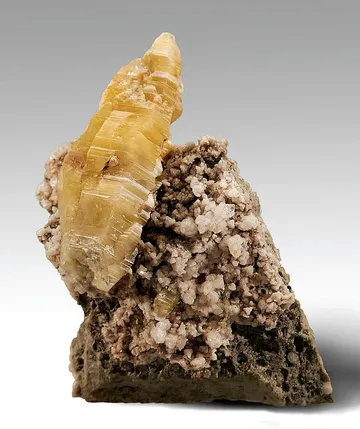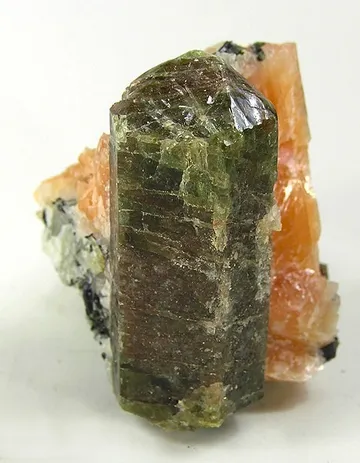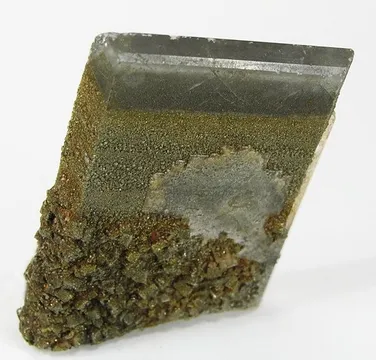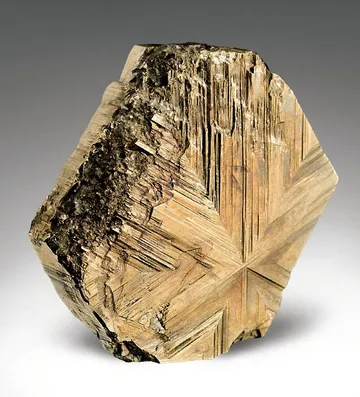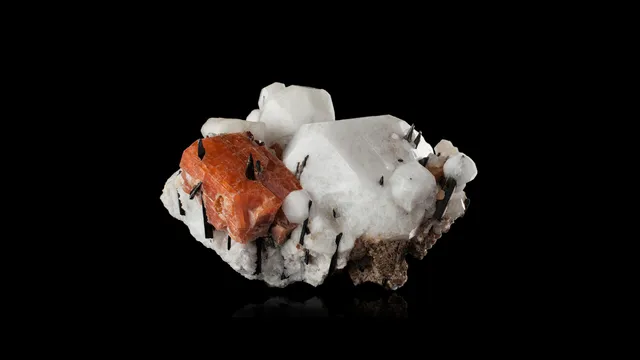
Carrière Francon, Montréal - site type de weloganite, célèbre pour ses cristaux jaune citron pseudo-hexagonaux dans des veines/carbonates; prisé pour la localité et la rareté.
Key facts
Francon Quarry est la localité qui a fait de la weloganite un minéral de collection plutôt qu’une simple curiosité chimique. L’espèce, Na2Sr3Zr(CO3)6·3H2O, est un carbonate hydraté de sodium, strontium et zirconium, et Francon est sa localité type. Ce qui distingue le matériel de Francon n’est pas seulement sa rareté, mais sa présence : des cristaux de couleur jaune paille à jaune citron, pseudo-hexagonaux en contour, souvent profondément striés et légèrement gonflés le long du prisme, insérés dans des cavités avec quartz, calcite, dawsonite, fluorite, strontianite et d’autres minéraux issus de l’un des dépôts minéraux urbains les plus singuliers du Canada.

Photo : Wikimedia Commons
Le décor est presque improbable : une localité minérale rare de niveau mondial au cœur de Montréal. Francon était une carrière de calcaire dans le quartier Saint-Michel, mais la weloganite ne provenait pas d’un calcaire ordinaire. Elle provenait de cavités dans une sills alcalin, riche en dawsonite, carbonatée, liée à la province igneuse alcaline Monteregienne. Ces cavités ont produit un assemblage carbonaté exceptionnellement inhabituel, riche en strontium, baryum, sodium, aluminium, zirconium, fluor et espèces carbonatées. Le résultat fut une localité qui a livré dix espèces de type-localité et plus de quatre-vingt minéraux valides, avec la weloganite comme prix signature.

Photo : Wikimedia Commons
Pour les collectionneurs, l’attrait est immédiatement visuel. De fines weloganites de Francon présentent une couleur miel douce ou citronnée, un éclat vitreux à quelque peu nacré, et une architecture empilée, en pagode, qui les rend reconnaissables même avant de lire une étiquette. Les meilleurs cristaux exhibent des contours pseudo-hexagonaux nets, de fortes stries horizontales de croissance, une largeur de cristal ondulante et des terminaisons nettes allant de pointes pyramidales émoussées à des pédions plus plats. Les spécimens en matrice sont particulièrement prisés, car ils ont préservé le minéral dans l’assemblage vuggy qui prouve sa localité et donne aux cristaux échelle, contexte et contraste.
Historiquement, la weloganite porte également un poids canadien inhabituel. Ann P. Sabina, de la Commission géologique du Canada, a reconnu le minéral inhabituel lors d’un travail dans la région de Montréal en 1966, et l’espèce a été décrite en 1968 par Sabina, J. L. Jambor et A. G. Plant. Elle a été nommée d’après Sir William Edmond Logan, fondateur et premier directeur de la Commission géologique du Canada. En termes de collection, c’est l’un de ces rares cas où la localité type est aussi la référence pour les specimens d’affichage de qualité.## Spécimens en vedette
Search for specimens: View all weloganite specimens from Francon Quarry, Montréal, Canada
Francon Quarry se trouve au 3701 Rue Jarry Est à Montréal, dans le quartier St-Michel de la ville. La carrière est inactive, appartenant à la ville, et n’est plus une localité de collecte dans le sens pratique; les références modernes la décrivent comme utilisée pour le déchargement hivernal de neige. Pour les collectionneurs, le matériel de Francon est donc presque entièrement historique : spécimens collectés pendant l’exploitation de la carrière, vieux stocks de marchands, dispersions de collections, et pièces conservées dans les musées.
Géologiquement, la carrière extrayait du calcaire ordovicien qui avait été intrudé par des sills et des dykes alcalins génétiquement liés aux collines du Monteregian, la même province alcaline plus large qui comprend le mont Royal et le Mont Saint-Hilaire. Le weloganite s’est produit dans des cavités du sill St-Michel, décrit dans les travaux initiaux comme un sill alcalin de 5 à 10 pieds et dans les résumés ultérieurs comme épais environ 2 m. La roche est largement discutée comme un phonolite carbonatée riche en dawsonite ou comme un sill apparenté au carbonatite, et sa minéralogie est notablement différente de celle des autres carrières de la région de Montréal.
La carrière est devenue célèbre sur le plan minéralogique après la découverte du weloganite en 1966. La description de l’espèce en 1968 a établi Francon comme locale-type et a attiré l’attention sur le reste de la minéralogie des poches. Les travaux ultérieurs ont documenté une remarquable série de nouvelles espèces, notamment dresserite, hydrodresserite, strontiodresserite, sabinaite, franconite, montroyalite et voggite, avec doyleite et hochelagaite également listées comme espèces co-type-localité. La carrière se classe derrière Mont Saint-Hilaire parmi les localités-types les plus prolifiques du Canada.
La production de spécimens de collection était liée à l’activité de la carrière. À mesure que les explosions dévoilaient des sections fraîches du sill, les collectionneurs et chercheurs pouvaient récupérer du matériau de cavité. Au moment où l’exploitation a cessé, les expositions importantes de weloganite avaient été réduites à l’état historique. Les Francon weloganites « neuves » modernes signifient généralement de vieux spécimens nouvellement libérés de collections privées, et non du matériel collecté récemment.
Les trouvailles notables vont de cristaux millimétriques pour des séries systématiques à des pièces de cabinet avec plusieurs cristaux jaunes nets sur une matrice annoncée de quartz. La réputation de la localité repose sur le fait que Francon produisait du weloganite sous forme de cristaux attrayants et autonomes, et non seulement de grains microscopiques ou d’inclusions. Les résumés ultérieurs de la localité citent des cristaux allant jusqu’à environ 6 cm; les fiches de données minérales donnent une limite supérieure exceptionnelle de 10 cm. Pour la plupart des collectionneurs, cependant, un cristal net de 5 à 15 mm sur matrice constitue déjà une pièce Francon sérieuse.## Caractéristiques de la weloganite provenant de Francon Quarry, Montréal, Canada
Les formes classiques de weloganite de Francon présentent des prismes pseudo-hexagonaux dans un minéral triclinique rendu visuellement hexagonal par un jumelage répété. Les cristaux sont rarement des colonnes droites simples. Ils ont tendance à être säbés, horizontalement striés et irréguliers en largeur, avec une silhouette pincée et gonflée due à une croissance oscillatoire. Certains cristaux ressemblent à des plaques empilées; d’autres ressemblent à de petites pagodes, des barils ou des trompettes effilées.
La couleur est l’un des attributs locaux clés. Les cristaux de Francon les plus prisés sont pâle paille, jaune citron, jaune miel ou ambre. Des exemples incolores, blancs, grisâtres et verdâtres existent également, et de nombreux cristaux sont partiellement translucides plutôt que totalement transparents. Des fragments minces peuvent être incolores; les sections basaliales peuvent montrer un zoning du blanc au jaune. Les collectionneurs préfèrent généralement les cristaux jaunes avec une certaine transparence, surtout lorsque la couleur paraît naturelle plutôt que terne, chalky ou trop altérée.
Les terminaisons sont variables. Certains cristaux se rétrécissent en extrémités pyramidal peu pointues; d’autres se terminent par un pédion plat, parfois plus large que le prisme principal. Les faces du prisme sont généralement fortement striées et rainurées, une caractéristique à interpréter comme un caractère de croissance normale, non comme un dommage. Les meilleurs exemples conservent des jonctions de faces nettes, des terminaisons propres et une section croisée pseudo-hexagonale visible.
La plage de taille la plus typique pour les collectionneurs va de quelques millimètres à environ 1–2 cm. Les cristaux fins au-delà de 2 cm sont beaucoup plus désirables, et les spécimens en matrice avec plusieurs cristaux bien positionnés sont rares. La description originale mentionnait des cristaux d’environ 2 mm à plus de 3 cm le long de l’allongement, tandis que les résumés de localités ultérieurs enregistrent des cristaux exceptionnellement plus grands.
Les associations comptent à Francon. Des vugs doublés de quartz constituent des hôtes particulièrement attractifs, apportant étincelle et contraste contre la weloganite jaune. Calcite et dawsonite sont des associées classiques importantes, et le matériel de Francon peut également inclure strontianite, fluorite, baryte, célestine, sidérite, dolomite, pyrite, marcasite, galène, sphalérite, zircon, anatase, et des minéraux rares de carbonate d’aluminium et de baryum. Dresserite et les espèces apparentées apportent un intérêt locality supplémentaire, bien qu’elles ne devraient pas être supposées sans confirmation visuelle ou analytique.
Les facteurs de qualité sont simples mais exigeants: netteté, couleur jaune naturelle, translucidité, terminaison intacte, bords intacts et matrice convaincante constituent la hiérarchie. Un seul cristal jaune bien formé sur matrice dépasse généralement un cristal plus grand mais chalky, incomplet ou détaché. Comme la carrière est fermée, la provenance compte également. Des étiquettes anciennes provenant de collectionneurs canadiens, de cercles du Service géologique, de collectionneurs montréalais ou de marchands réputés ajoutent une vraie valeur.LeWeloganite de Francon est également connue pour son comportement luminescent. La triboluminescence a été décrite comme bleu pâle, et une réponse à l’ultraviolet à ondes courtes dans les spécimens de Francon a été rapportée dans la littérature locale, allant de nuances orange pâle à orange. La réponse UV, toutefois, devrait être considérée comme une observation de soutien plutôt que comme un outil d’identification autonome, car les minéraux associés à Francon peuvent fluorescer différemment et les revêtements peuvent compliquer l’interprétation.## Notes du collectionneur
Aucune demande récurrente bien documentée sur des Francon weloganites fabriquées comparable aux problèmes classiques des quartz teints, crocoïte collé ou “échantillons” issus de laboratoires n’est établie dans la littérature minérale. Les préoccupations d’authenticité principales sont plus subtiles : locality incorrecte, cristaux réattachés, matrice réparée, minéraux associés mal étiquetés, et affirmations trop ambitieuses sur la taille, la rareté ou l’historique de collection.
La localité est la première préoccupation. Francon est la localité type et le repère pour les weloganites de qualité affichage, mais la weloganite est également connue dans d’autres localités québécoises, y compris Mont Saint-Hilaire et une carrière de calcaire à l’est de Montréal. Un spécimen simplement étiqueté « Montréal » ou « Québec » mérite un examen plus approfondi. Pour un achat sérieux de Francon, l’étiquette devrait idéalement indiquer Francon Quarry, St-Michel ou Montréal, Québec, Canada, et les étiquettes plus anciennes ou l’historique de collection doivent être préservés.
Les réparations sont possibles et devraient être attendues sur le marché des classiques fragiles et creusés dans les cavités. La weloganite présente une cassure basale parfaite, une dureté modeste et une fracture conchoïdale; des cristaux cassés et réattachés sont plausibles. Examinez la base de chaque cristal au magnificateur pour détecter des films de colle, des stries discontinues, des ruptures suspectement nettes, ou un cristal reposant à un angle inhabituel sur une matrice sans lien géologique. La lumière UV peut parfois révéler de l’adhésif, mais elle peut aussi être confondue avec la fluorescence naturelle des minéraux associés.
Les problèmes de condition sont courants. Recherchez des terminaisons meurtries, des pédions manquants, des arêtes prismatiques ébréchées, des bases clivées et des surfaces ternes ou craieuses. Un revêtement blanc peut être une altération naturelle ou un changement de surface post-collection, mais il réduit l’attrait visuel lorsqu’il masque la brillance et la couleur. Un nettoyage agressif est un autre risque : un nettoyage excessif acide ou chimique peut laisser des faces givré, gravées ou anormalement mates. Une weloganite Francon fine ne devrait pas paraître polie ; les faces naturelles présentent des stries de croissance, un zoning subtil et une surface vitreuse à vitreuse là où elles sont fraîches.
Les cristaux lâches sont moins désirables que les échantillons en matrice sauf s’ils sont exceptionnellement nets, volumineux ou historiquement documentés. La matrice ajoute à la fois l’esthétique et la preuve : quartz, calcite, matériel riche en dawsonite et les textures typiques de francon vug aident à soutenir l’attribution. Inversement, un cristal brillant perchée sur la matrice sans continuité géologique devrait être traité avec prudence.
La rareté est réelle mais hiérarchisée. De petits Francon weloganites pâles ou partiellement endommagées apparaissent périodiquement, en particulier provenant d’anciennes collections. Des échantillons de matrice jaune fin avec des cristaux nets de plus de 1 cm sont beaucoup moins courants. De grands échantillons translucides, bien terminés, avec une couleur prononcée et une provenance historique sont des raretés canadiennes classiques et devraient être évalués avec le même soin accordé à d’autres échantillons de type provenant d’une localité fermée.La disponibilité sur le marché est intermittente plutôt que régulière. La carrière n’est pas une source moderne, donc les spécimens apparaissent via les stocks de marchands, les enchères, les dispersions de collections et du matériel canadien ancien. Un bon étiquetage n’est pas un luxe; pour ce site, la provenance fait partie du spécimen.## Stories & Field Notes
L’histoire de la découverte ne commence pas dans un district montagnard éloigné, mais dans le trafic de Montréal et la poussière de calcaire. En juillet 1966, Ann P. Sabina travaillait sur ce qui allait devenir un guide pour collectionneurs de la Geological Survey of Canada couvrant l’itinéraire de l’Ontario au Lac-Saint-Jean. Le calcaire de l’île de Montréal n’était pas connu pour ses minéraux cristallisés rares. Des géologues plus tôt avaient noté des sills et des dykes ignées dans la région, mais la minéralogie n’avait pas attiré le type d’attention qui entourera plus tard Francon.
La première visite de Sabina à la carrière n’était pas une marche triomphante vers un terrain de collecte ouvert. Selon des récits biographiques ultérieurs, on lui refusa l’accès pour des « raisons de sécurité et d’assurance ». Sa solution était pratique et très Sabina : elle paya un jeune homme travaillant à la carrière 5 dollars pour lui apporter des échantillons. Le même récit note que le salaire horaire moyen d’un travailleur québécois à l’époque était de 2,26 $, ce qui n’était pas une course de services symbolique. C’était un petit investissement sur le terrain qui donna l’une des grandes découvertes minérales du Canada.
Lors de cette première inspection du massif sill igneux, des cavités contenant des minéraux cristallisés retinrent son attention. Parmi eux se trouvait quelque chose d’inconnu, et sa couleur fut l’élément qui fit mouche. Sabina se souvint par la suite que c’était la « splendide couleur dorée » du minéral qui attira son regard. De retour au laboratoire de la Geological Survey of Canada, Sabina, J. L. Jambor et A. G. Plant établirent que le matériau était nouveau. La description de 1968 présenta le weloganite comme un nouveau carbonate de strontium et de zirconium, nommé d’après Sir William Edmond Logan.
Le nom portait une symétrie historique que les collectionneurs apprécient encore. Logan avait fondé la Geological Survey of Canada en 1842, et la Survey avait été établie à Montréal avant d’être déplacée plus tard à Ottawa. Plus d’un siècle plus tard, un minéral trouvé sous l’industrie calcaire urbaine de Montréal lui rendrait hommage. Francon, autrefois une carrière ordinaire en activité, devint un jalon minéralogique.
Le travail de Sabina sur Francon devint aussi partie d’une carrière plus vaste qui a façonné la collecte canadienne. Elle passa des décennies à développer des ressources de diffraction sur poudre minérale et à rédiger les guides « Rocks and Minerals for the Collector » qui faisaient entrer les localités canadiennes entre les mains d’amateurs et de professionnels. Des récits ultérieurs lui attribuent l’identification de neuf des dix nouvelles espèces minérales de Francon, et notent que les nouvelles locales de l’époque ne la créditaient pas correctement pour la découverte. Les spécimens, toutefois, ont tenu le registre. Chaque weloganite de Francon bien conservé porte encore la trace de cette première flash jaune sur le mur d’une carrière à Montréal.## Registres et Publications minéralogiques
Sabina, Ann P.; Jambor, John L.; Plant, A. G. (1968). “Weloganite, a new strontium zirconium carbonate from Montreal Island, Canada.” The Canadian Mineralogist, 9(4), 468–477. La description d’espèce d’origine, y compris le cadre Francon, la morphologie, la chimie, les données optiques, les minéraux associés et le nom donné à Sir William E. Logan.
Chen, T. T.; Chao, G. Y. (1975). “X-ray crystallography of weloganite.” The Canadian Mineralogist, 13(1), 22–26. Un article crystallographique clé cité dans les résumés modernes des données sur le weloganite.
Grice, J. D.; Perrault, G. (1975). “The crystal structure of triclinic weloganite.” The Canadian Mineralogist, 13(3), 209–216. L’article sur la structure qui a établi la structure triclinique du weloganite dans le traitement minéralogique moderne.
Gait, R. I.; Grice, J. D. (1971). “Some observations on weloganite.” The Canadian Mineralogist, 10, 912. Un court résumé cité dans les bibliographies de localités et d’espèces.
Tarassoff, Peter; Horváth, László; Pfenninger-Horváth, Elsa (2006). “Famous mineral localities: The Francon Quarry, Montréal, Québec, Canada.” The Mineralogical Record, 37(1), 5–60. L’article localitaire moderne majeur sur Francon ; il documente le statut de la carrière en tant que deuxième lieu type le plus prolifique du Canada après Mont Saint-Hilaire.
Handbook of Mineralogy: Weloganite. Fiche minéralogique concise avec formule, cristallographie, propriétés physiques, associations, distribution, références et matériel type.
Mindat: Weloganite from Francon Quarry, Montréal, Québec, Canada. Fiche d’occurrence résumant la formule, l’habitus, la couleur, le statut de localité-type et les références.
Mindat: Francon Quarry, Montréal, Québec, Canada. Page locale complète listant la suite minérale, les espèces locale-type, les types de roches, le statut de localité et la bibliographie.
Geological Survey of Canada / Science.gc.ca: “95. Weloganite (1966).” Un résumé gouvernemental de la découverte, de la dénomination, du cadre géologique et de l’importance du weloganite dans l’histoire du GSC.
Le matériel type de la Survey géologique du Canada est enregistré pour le weloganite en tant qu’échantillons GSC 17257 et 61337 dans la fiche de données du Handbook of Mineralogy.## Lectures complémentaires et liens externes
Page de localité Mindat pour Francon Quarry — Le meilleur point de départ pour la liste des minéraux de la carrière, les espèces type-localité, le statut de la localité et le chemin de références.
Page d’occurrence Mindat pour la weloganite à Francon Quarry — Entrée d’occurrence ciblée pour la weloganite, y compris l’habitus, la couleur, la formule et les références bibliographiques.
Description canadienne original de 1968 dans le Canadian Mineralogist — Source primaire essentielle pour la description de l’espèce, l’habitus cristallin, les propriétés physiques, la chimie et les minéraux associés.
PDF du Handbook of Mineralogy weloganite — Référence compacte pour les données cristallographiques et physiques, le matériel type et les citations standard.
Science.gc.ca “Weloganite (1966)” — Compte rendu gouvernemental lisible de la découverte et de sa place dans l’histoire du Geological Survey of Canada.
Mineralogical Record Vol. 37 No. 1 issue de retour — Source de l’article localité majeur Francon Quarry par Horváth, Tarassoff et Pfenninger-Horváth.
Wikimedia Commons : catégorie média Francon Quarry — Images librement licenciées de la weloganite et des minéraux associés de Francon.
Women Geoscientists in Canada : Ann Phyllis Sabina Stenson — Profil biographique avec des détails sur la carrière de Sabina et l’histoire de la découverte de Francon.
Canadian Rockhound : Les dix meilleurs minéraux du Canada — Résumé orienté collectionneur mettant en évidence la weloganite comme minéral canadien classique.