Tanzanite Collectors Guide
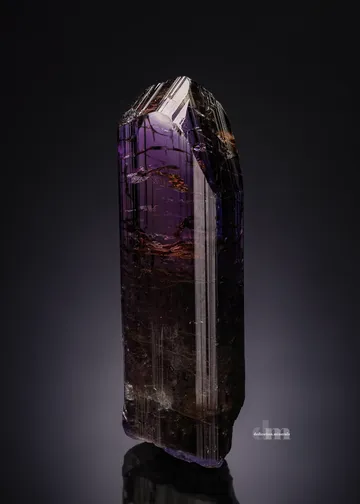
Tanzanite is the vivid blue‑to‑violet gem variety of zoisite, famed for its saturated color and mesmerizing pleochroism. In hand, crystals flash different hues when rotated—typically blue, violet, and a warmer bronze/green axis in unheated stones. The best pieces show a rich royal blue with a hint of violet, often intensified by heat treatment that removes brownish tones.
Crystals are orthorhombic and usually prismatic, commonly flattened on one axis, with bright glassy luster and parallel striations. Most specimens originate from a single district at Merelani, Tanzania, where tanzanite occurs in graphite-rich, metamorphosed schists alongside diopside, calcite, and occasional garnet (tsavorite). Collectors prize isolated, gemmy crystals and the exceedingly rare matrix pieces perched on graphite or calcite. While small singles are accessible, fine large crystals and pristine matrix specimens are scarce and can command major prices comparable to elite classic minerals.
Discovered in 1967 near Merelani and popularized by Tiffany & Co., tanzanite rapidly became a 20th‑century gem icon. In the mineral world its reputation has steadily grown as the Merelani mines yielded superb crystals—sometimes vividly saturated and water‑clear, other times with dramatic color zoning or striking associations on graphite. The species’ appeal blends pure beauty (that unmistakable blue‑violet glow), scientific interest (strong pleochroism, heat‑sensitive color centers), and locality mystique (essentially a one‑source gem). Today, collectors at every level pursue tanzanite: beginners for affordable small crystals, and advanced collectors for unrepaired, richly colored, display‑worthy singles or rare matrix pieces—especially those with provenance from notable Merelani “blocks.”
Although zoisite occurs worldwide, true “tanzanite” of collectible quality and color is essentially unique to northern Tanzania. The localities below have produced the specimens that define the species for collectors.
The world’s tanzanite capital. Merelani (Simanjiro District; historically labeled “Arusha”) is subdivided into mining blocks that have yielded tanzanite since 1967. Crystals range from thumbnail singles to sizeable cabinet pieces, typically sharply terminated prisms with brilliant luster and strong pleochroism. Most stones are heated after recovery to develop the coveted blue‑violet—unheated pieces may show green/bronze/brown with blue‑violet axes.
Aesthetically, collectors love:
- Gemmy, saturated singles with crisp terminations.
- Color zoning: blue‑violet bodies with residual green/brown zones.
- Matrix specimens on graphite schist or with diopside/calcite—rare and highly prized.
- Unheated crystals showing tri‑color pleochroism (for connoisseurs).
Though thousands of crystals have been mined, truly top, unrepaired, robustly colored pieces remain uncommon. Many large crystals show cleavage or internal stress, and graphite matrix can be friable—making intact, repair‑free matrix pieces exceptional.
- Color and Pleochroism:
- The marquee feature is saturated blue to blue‑violet. After heating (common), the bronze/green axis is reduced, emphasizing blue/violet. Unheated crystals may display striking trichroism with blue, violet, and green/bronze depending on orientation—desirable to connoisseurs.
- Vivid, even saturation visible in ambient light is ideal. Pieces that only “come alive” with strong backlight are less impactful in a cabinet.
- Rotate the crystal while viewing: display it along the axis that shows the richest blue‑violet.
- Clarity and Luster:
- Tanzanite can be extraordinarily transparent. High clarity, especially near the termination, adds drama. Some crystals show veils or graphite needles—minor inclusions are acceptable if they don’t cloud the piece.
- Look for sharp, glassy faces and reflective terminations. Dullness, heavy etching, or a sugary surface reduces impact unless compensated by exceptional color or size.
- Crystal Form and Size:
- Orthorhombic prisms, typically flattened on one axis, with well‑defined striations. Terminations range from chisel‑like to stepped/complex; complete, undamaged tips are critical.
- Large, gemmy crystals exist but are rare in superb condition; many show internal stress or cleavages. Balanced proportions (not too thin/flat for the height) display best.
- Matrix and Associations:
- Isolated singles dominate the market. True matrix specimens—tanzanite on graphite schist, with diopside or calcite—are rare and fetch premiums for contrast and context.
- Beware crumbly graphite: genuine matrix is often delicate, and mounting may be necessary for safe display.
- Condition:
- Tanzanite has perfect cleavage in one direction and fair toughness—tips and edges chip easily. Prioritize pristine or near‑pristine terminations.
- Expect that many significant pieces are repaired; disclosed, high‑quality repairs can be acceptable, but unrepaired specimens command a premium.
- Aesthetics:
- Aim for a specimen that looks saturated and lively without special lighting, with strong geometry and a commanding termination. Pleochroic play on rotation is a bonus; dramatic contrast on graphite or white calcite is jackpot aesthetics.
- Heat Treatment:
- Heating (typically 500–600°C) to develop blue‑violet is common and broadly accepted for tanzanite; it is standard in the gem trade and frequently encountered in specimens.
- Visual detection can be difficult. Clues may include remnants of green/brown zones at protected areas, or “color borders” within the crystal. Unheated stones, when verifiable, are rarer and prized for their natural tri‑color pleochroism. Definitive calls often require lab analysis.
- Repairs and Re‑attachments:
- Check for straight, planar lines across the prism or where crystal meets matrix; slight misalignment of striations or glossy glue seams under magnification can betray re‑glues.
- Some epoxies fluoresce under LW‑UV; a faint line may appear at joins. Many Merelani matrix pieces have at least one repair due to fragile graphite—insist on disclosure.
- Surface Modifications:
- Polishing to disguise small chips on the termination is occasionally seen; a too‑perfect, mirror‑like flat with no natural growth features can be a red flag.
- Coatings/dyes are uncommon but possible; look for color concentrated in pits/crevices or a “painted” look along edges.
- Handling:
- Despite hardness ~6–7, tanzanite is brittle with perfect cleavage—handle with care, avoiding pressure across the thin axis or on the termination. Support both crystal and matrix (graphite can crumble).
- Light and Heat:
- Color is generally stable to normal display lighting. Avoid prolonged strong heat or rapid temperature swings (hot case lighting, direct sun through glass) which can induce cracks or alter color centers. LED case lights are ideal.
- Cleaning:
- Dust gently with a soft brush or air bulb. For grime, use lukewarm water with a drop of mild soap; rinse and dry carefully.
- Avoid ultrasonic/steam cleaners and avoid acids (especially if calcite is present on matrix). Do not subject specimens to heat for cleaning.
- Storage:
- Provide padded, vibration‑free support. Keep separate from harder minerals that could scratch it, and away from softer materials it could scratch.
- If displayed, a small amount of museum putty or a custom cradle helps prevent tipping, particularly for tall, flattened crystals or fragile matrix pieces.
- Inspect occasionally for any movement at repaired joins or changes in matrix integrity.
By focusing on saturated, lively color, pristine terminations, and (when possible) rare, stable matrix associations, collectors can build a compelling suite of this modern classic—one whose beauty and singular origin make it an essential in any contemporary mineral collection.