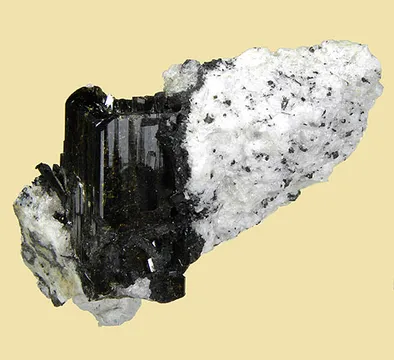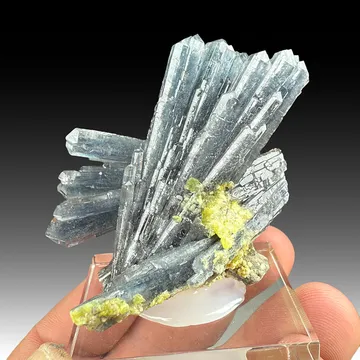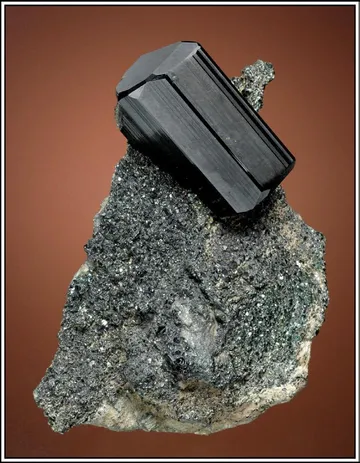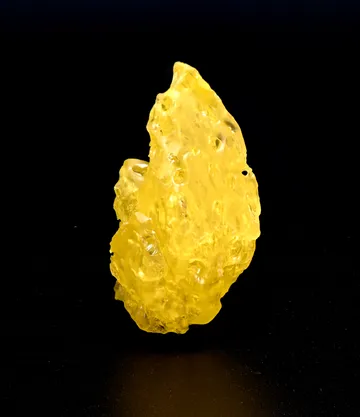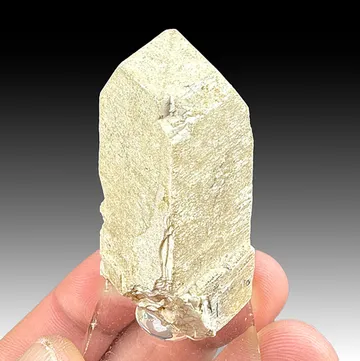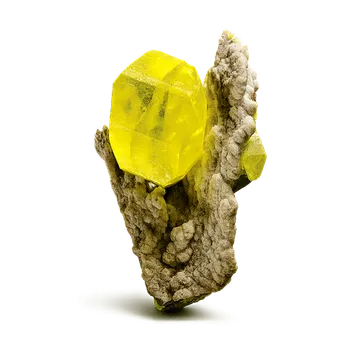
Sulfure de Cianciana — la célèbre localité de collectionneurs de Sicile pour les cristaux natifs S8 jaune vif sur aragonite, valorisés pour leur couleur, leur éclat et leur intégrité cristalline.
Key facts
Cianciana est l’un des grands noms siciliens du soufre : une localité de collection où le soufre natif jaune vif, S8, est inséparable de l’histoire sociale des zolfares de l’île et de la géologie des évaporites messiniennes qui ont fait de la centrale et du sud de la Sicile une province de soufre de classe mondiale. Les meilleures pièces ne sont pas de simples croûtes jaunes ou des minerais granulaires ; elles sont des cristaux nets, brillants, souvent gemmes, placés sur une matrice d’aragonite pâle, de calcite granulaire, de gypse ou de calcaire, avec le contraste du soufre jaune citron contre le carbonate blanc à gris donnant aux spécimens leur caractère sicilien inimitable.

Photo : Wikimedia Commons
Ce qui distingue Cianciana de nombreuses localités de soufre, c’est la combinaison de la qualité des spécimens et de l’histoire minière. Les mines autour de la ville produisaient des cavités localement appelées garbere — espaces ouverts dans la veine de minerai contenant du soufre — où l’aragonite, la celestite, le gypse et le soufre avaient la place pour crystalliser. Ces poches ont produit certains des matériaux de spécimens siciliens les plus admirés : des cristaux de soufre à faces lisses et brillants, parfois modifiés par des marches de croissance ou par dissolution ultérieure, et dans des cas exceptionnels atteignant des tailles qui placent la localité dans le premier rang des occurrences de soufre natif.
Sur le plan géologique, Cianciana appartient au monde sicilien du gypse-soufre : des strates évaporitiques du late Miocène Messinien et des calcaires et carbonates porteurs de soufre associés se sont formés dans un milieu anoxique riche en sulfate. Le soufre natif n’est pas du soufre volcanique fumant. Il résulte de processus diagenétiques sédimentaires liés aux évaporites, aux hydrocarbures ou à la matière organique, à la réduction bactérienne du sulfate, et au remplacement ou à l’altération des lits porteurs de sulfate. Cette origine aide à expliquer les associations classiques : l’aragonite et la calcite issues de la formation carbonatée, le gypse de l’hôte évaporitique, et l’éventuelle celestine dans l’assemblage plus large.

Photo : Wikimedia Commons
Pour les collectionneurs, le soufre de Cianciana se juge selon quatre critères avant tout : couleur, éclat, intégrité du cristal et matrice. Les spécimens les plus désirables présentent des cristaux saturés allant du jaune canari au jaune miel profond avec un éclat vitreux élevé, une translucidité à la transparence, et une fixation naturelle sur une matrice carbonatée sicilienne ou de gypse convaincante. Des miniatures avec un ou deux cristaux isolés et intacts peuvent être aussi attractives que des pièces plus grandes de cabinet, car le soufre est tendre, cassant et thermiquement sensible ; une miniature Cianciana propre, nette et bien composée est une réussite non négligeable.## Specimens en vedette
Search for specimens: View all sulfur specimens from Cianciana, Sicily, Italy
Les mines de soufre de Cianciana étaient un ensemble de mines abandonnées autour de Cianciana, dans la province d’Agrigente, en Sicile. Le groupe comprenait les mines Falconera, également appelées le groupe Falconera-Grotticelli, la mine Savarini et la mine Passo di Sciacca; les récits historiques locaux nomment également Grotticelli, Passarello, Falconera, Passo di Sciacca et Savarino parmi les sols de ce territoire. Dans les anciennes étiquettes, la province peut apparaître sous le nom de Girgenti, nom historique associé à Agrigento.
L’exploitation autour de Cianciana a commencé au XIXe siècle. La société britannique Morrison Seager & Co. est enregistrée comme ayant commencé les travaux en 1840, mais les difficultés de transport et les routes mauvaises ont limité les premières opérations. En 1860, l’entrepreneur local Vincenzo di Giovanni a conclu un accord avec les propriétaires britanniques pour rouvrir et exploiter les mines. À partir de ce moment, la région s’est rapidement développée en l’un des districts de soufre notables de Sicile; d’ici 1900–1905, Cianciana était le centre d’un ensemble de 17 mines employant plus de 1 100 travailleurs.
Le type de dépôt est le classique dépôt de soufre sédimentaire sicilien hébergé dans la série gypse-soufre du Messinien. Ces dépôts se sont formés dans des strates évaporitiques plutôt que dans des évents volcaniques. Dans les galeries minières, des poches de spécimens apparaissaient comme des cavités dans la veine de minerai. Le terme des mineurs garbera, issue du sicilien garbu, était utilisé pour ces cavités; sur le plan minéralogique, elles représentaient les espaces importants, car les cavités ouvertes permettaient au soufre et aux minéraux associés de se développer sous forme de cristaux d’exposition de qualité plutôt que comme un minerai massif.
L’histoire minière a transformé Cianciana d’un village agricole en un centre d’extraction de soufre. Le travail était intensif, mal payé et lié à l’ancienne hiérarchie minière sicilienne des picconieri — les ouvriers du pic sous terre — et des carusi, les garçons et les jeunes qui transportaient le minerai à la surface. Les mines ont finalement fermé en 1962. Aujourd’hui, la localité est une source historique et mineralogique plutôt qu’une mine active de collection; les spécimens sur le marché sont majoritairement des pièces d’ancien stock, du matériel d’extractions antérieures, ou des spécimens qui ont transité par des réseaux de marchands et de collections longtemps après la fin de l’extraction. Des restes de mines abandonnées peuvent encore être visibles dans le territoire, mais les galeries souterraines doivent être considérées comme des ruines industrielles dangereuses, et non comme des sites de collecte occasionnels.Parmi les trouvailles notables de Cianciana figurent des cristaux de soufre brillants sur une matrice de calcite granuleuse, du soufre avec de l’aragonite, et de rares gros groupes de gypse associés au soufre. Les tailles de cristal les mieux documentées sont impressionnantes : des cristaux de soufre jusqu’à 20 cm, des jumeaux de pénétration d’aragonite jusqu’à 3 cm ou plus de diamètre, et de grands groupes de cristaux de gypse transparents. Ces chiffres ne doivent pas être interprétés comme des tailles typiques de vente au détail ; la plupart des spécimens disponibles sont bien plus petits. Mais ils expliquent pourquoi le site occupe une place aussi marquée dans la collecte sérieuse de soufre.## Caractéristiques du soufre de Cianciana, Sicile, Italie
Le soufre de Cianciana est surtout reconnu pour des cristaux jaunes lumineux à jaunes miel, typiquement orthorhombiques, souvent avec des formes dipyramides en bloc et des faces brillantes, lisses. De bons échantillons peuvent être translucides à transparents, avec un éclat résineux à verre. Le look classique de collectionneur est le soufre jaune sur aragonite et calcite blanches, crème ou grises, parfois avec une matrice carbonatée granuleuse qui encadre le cristal plutôt que de l’écraser.
Les cristaux peuvent être nets et textbook-like, mais Cianciana a aussi produit des faces avec des étages de croissance, un léger arrondi et des surfaces rugueuses causées par une dissolution secondaire sélective. Ces textures ne sont pas automatiquement des défauts ; sur le vrai soufre sicilien ancien, elles peuvent faire partie du caractère du site. La question de la qualité est de savoir si le cristal reste complet, brillant, bien attaché et visuellement cohérent.
Les minéraux associés enregistrés dans les mines de soufre de Cianciana incluent l’aragonite, la calcite, la célestine, le gypse et la matrice calcaire. L’aragonite est particulièrement importante dans les spécimens de collection: elle apparaît sous forme de jumeaux prismatiques incolores à gris et en tant que matériau blanc, granuleux à cristallin autour du soufre. Le gypse peut se présenter sous forme de grands groupes transparents, parfois abritant ou accompagnant le soufre. La célestine est moins fréquente dans l’association documentée par les photos mais appartient à l’assemblage reconnu.
La plupart des échantillons de Cianciana vus sur le marché des collectionneurs vont de miniatures à de petits morceaux de cabinet. Les cristaux de soufre sur ces pièces vont généralement de quelques millimètres à quelques centimètres, avec des cristaux isolés dans la plage de 1–3 cm qui sont particulièrement attrayants lorsqu’ils sont nets et non endommagés. Des pièces de cabinet plus grandes existent et peuvent montrer de nombreux petits cristaux dispersés sur la matrice ou des individus plus grands et plus rares ; cependant, la fragilité du soufre rend les grandes pièces, non endommagées et bien composées, bien plus rares que ne le suggèrent de simples mesures.
Les spécimens de Cianciana les plus forts partagent généralement plusieurs traits: couleur jaune saturé plutôt que recouvrement pâle et chalky; haut brillant; translucidité; terminaisons cristallines indemnes; attachement naturel visible; et une matrice cohérente avec l’assemblage evaporito-carbonatier sicilien. Un seul cristal pristine sur aragonite peut surpasser une plaque plus grande de soufre blessé ou granuleux. À l’inverse, une grande association gypse-soufre peut être significative même si les cristaux de soufre ne sont pas individuellement parfaits, car un gypse bien développé avec du soufre est une présentation Cianciana plus rare.## Notes du collectionneur
Le sulfur est un minéral d’exposition exigeant. Il présente une faible dureté, des cristaux cassants et une sensibilité à la chaleur et aux changements rapides de température. Les pièces de Cianciana doivent être tenues à l’écart du soleil direct, des sources lumineuses chaudes pour l’exposition, des radiateurs et des rebords de fenêtre. Un chauffage ou refroidissement brusque peut fissurer les cristaux de soufre. Manipulez les spécimens par la matrice, et non par le soufre, et évitez le nettoyage à l’eau, aux solvants, aux nettoyeurs ultrasoniques ou au brossage agressif. Même une brosse douce peut user les arêtes des cristaux.
La condition est centrale pour la valeur. Regardez attentivement les terminaisons ébréchées, les arêtes en contact, les faces meurtries et les cristaux détachés ou recollés. Une usure légère au niveau des arêtes est courante sur les anciens spécimens de soufre et peut être acceptable, en particulier sur les pièces grandes ou historiquement importantes, mais les cassures qui semblent réassemblées, la colle à la base des cristaux, ou le soufre posé de manière anormale sur une surface de fracture fraîche doivent être traités avec prudence.
L’authenticité mérite une attention particulière. Le soufre sicilien est l’un des cas classiques dans la littérature sur les fraudes miniséralogiques. Renato Pagano a documenté des « soufrés siciliens » artificiels dans The Mineralogical Record en 2002 : des cristaux de soufre cultivés en laboratoire sur une matrice sicilienne blanche, dans certains cas assez convaincants pour être difficiles à distinguer des spécimens naturels par l’apparence seule. Des travaux ultérieurs sur les isotopes du soufre ont montré que certains spécimens manufacturés vendus comme siciliens provenaient de soufre de dôme salé non sicilien cristallisé sur une matrice sicilienne. L’entrée sur le soufre de Mindat résume le problème et rappelle que le test des résidus de sulfure de carbone et l’analyse isotopique ont été utilisés pour l’authentification.
Cela ne signifie pas que chaque beau soufre de Cianciana est suspect. Cela signifie que la provenance compte. Les anciennes étiquettes, l’historique de collection, la réputation du vendeur et la cohérence de la matrice et de l’attachement sont importants. Un spécimen de haute qualité avec une ancienne étiquette européenne ou institutionnelle est plus rassurant qu’un « soufre sicilien » impeccablement parfait et étrangement bon marché apparaissant sans historique sur une marketplace en ligne. Soyez particulièrement méfiant face à des pièces qui paraissent trop parfaites, présentent des amas très réguliers sur une surface de matrice curieusement fraîche, ou proviennent de vendeurs proposant également des combinaisons évidentes de soufre cultivé en laboratoire.
La disponibilité sur le marché est stable mais sélective. De petits spécimens de soufre Cianciana apparaissent de temps à autre chez des marchands européens, lors d’enchères et dans de vieilles collections; des exemples fins avec des cristaux lustres isolés sur de l’aragonite ou de la calcite sont bien plus rares. La localité ne produit pas de matériel provenant d’une mine opérationnelle dans un sens moderne significatif, donc le marché recycle essentiellement des stocks anciens.Pour les collectionneurs sérieux, une bonne pièce de Cianciana se paie mieux en fonction de la qualité locality que de la taille des cristaux seulement: une matrice convaincante, une attache naturelle, des faces intactes et une couleur soutenue demeureront les facteurs de valeur durables.## Stories & Field Notes
L’histoire du soufre de Cianciana commence non pas comme une romance de collectionneur mais comme une transformation industrielle dure. La mémoire locale situe Vincenzo di Giovanni au tournant de 1860, lorsqu’il demanda à la société britannique Morrison Seager & Co. d’activer l’exploitation du soufre sur le territoire. D’autres mines suivirent — Falconera, Pipitone Stradella, Passerello, Savarini et Passo di Sciacca — et Cianciana devint connu dans le district alentour comme un paese di zolfare, une ville de mines de soufre.
La géographie quotidienne des mines comptait. Les galeries étaient loin du village, si bien que les mineurs partaient longtemps avant l’aube. Des récits de Cianciana préservent les détails physiques sombres: des hommes marchant dans le froid de l’hiver et la chaleur de l’été, parfois pieds nus parce que les chaussures étaient un luxe. Sous terre, les picconieri brisaient le soufre dans le rocher. Les carusi portaient le minerai vers le haut, et les morceaux durs griffaient leurs épaules déjà pliées jusqu’à saigner. Dans une caisse d’échantillons, le soufre de Cianciana est brillant et ordonné; dans la mine, il représentait le poids, l’abrasion, l’obscurité et le travail.
La pression sociale éclata en 1953, lorsque les mines furent occupées. Les récits locaux insistent sur le fait que les femmes se joignirent à l’action pour soutenir leurs maris et leurs fils. Ce détail est important, car il place le soufre de Cianciana non seulement dans l’histoire minéralogique mais dans la lutte d’après-guerre pour le travail sicilien, les salaires et la survie dans des communautés dont l’économie était devenue dépendante d’une industrie déjà en déclin.
Une histoire des années 1950 prend la forme d’un miracle de mineurs. Le 24 mars, un groupe de mineurs décide de travailler de nuit afin de pouvoir rester en ville le lendemain pour la fête de l’Annunziata. Personne ne s’éveilla à l’heure convenue. Plus tard, presque comme par accord préalable, ils se rassemblèrent à l’entrée de la galerie Giudice et la trouvèrent détruite. C’est là qu’ils étaient censés travailler. Les mineurs interprétèrent leur échec à se réveiller comme l’intervention de la Madonna, et dès lors ils résolurent de parrainer la fête en son honneur tant qu’ils vivraient, comme un acte public de gratitude et de dévotion.
Lorsque les mines fermèrent en 1962, Cianciana perdit plus qu’une industrie. Les traces restantes devinrent fragmentaires: un paysage de structures abandonnées, de souvenirs et de témoignages littéraires. Des écrivains et poètes locaux, dont Salvatore Mamo et Alessio Di Giovanni, ont maintenu vivante la mémoire du pays du soufre. Di Giovanni, né à Cianciana, est particulièrement lié au monde des zolfare; son Sunetti di la surfara, écrite en dialecte sicilien, appartient au même terrain émotionnel que les anciennes routes minières et les garbere qui produisaient les cristaux que les collectionneurs chérissent aujourd’hui.## Registres et publications minéralogiques
Mindat — mines de soufre Cianciana, Cianciana, province d’Agrigente, Sicile, Italie — Enregistrement de localité principal pour le groupe de mines de Cianciana, incluant l’historique, les noms des mines, les minéraux associés et les tailles de cristaux rapportées.
Mindat — Soufre natif des mines de soufre Cianciana — Enregistrement d’occurrence de substances listant le soufre natif comme de classe mondiale pour cette localité et résumant les minéraux associés à partir des données photo.
Jervis, Guglielmo. I tesori sotterranei dell’Italia, Vol. 3, Regione delle Isole Sardegna e Sicilia. Ermanno Loescher, 1881. — Référence italienne du XIXe siècle citée dans la bibliographie d’occurrence Mindat pour le soufre de Cianciana.
Palache, Charles; Berman, Harry; Frondel, Clifford. The System of Mineralogy, 7e éd., Vol. 1: Elements, Sulfides, Sulfosalts, Oxides. John Wiley & Sons, 1944, pp. 140–144. — Référence classique de minéralogie systématique citée pour le soufre natif.
Del Caldo, A.; Moro, C.; Gramaccioli, C. M.; Boscardin, M. Guida ai minerali. Fratelli Fabbri Editori, 1973. — Guide minéral italien cité dans la littérature locale.
De Michele, V. Guida mineralogica d’Italia. Istituto Geografico De Agostini, 1974. — Guide minéralogique italien cité pour l’occurrence.
Wilson, Wendell E.; Pagano, Renato. “Famous mineral localities: The sulfur mines of Sicily.” The Mineralogical Record, Vol. 43, No. 2, 2012, pp. 161–206. — Article majeur moderne sur les localités de collectionneurs concernant les mines de soufre siciliennes, cité dans la bibliographie Cianciana de Mindat.
The Mineralogical Record — mars-avril 2002, Vol. 33, No. 2 — Numéro contenant “Artificial ‘Sicilian’ sulfurs” de Renato Pagano, pp. 149–153.
Peterson, R. C.; Kyser, Kurt; Pagano, Renato; Klassen, K. “Sulfur isotope analysis for the identification of sulfur sources.” 2003. — Étude citée dans les discussions ultérieures sur des spécimens artificiels de soufre sicilien; importante pour distinguer le soufre de sel-dôme cristallisé sur matrice sicilienne du soufre sicilien naturel.
EarthWonders — Sulfur, Cianciana, Sicily, Italy, ex George Vaux and Bryn Mawr College — Fiche de spécimen documentée notant un soufre Cianciana de 5 cm avec provenance George Vaux et Bryn Mawr College, publiée dans Mineralogical Record Special Issue: Mineral Collections in California.## Lectures complémentaires et liens externes
Page de localité Mindat pour les mines de soufre Cianciana — Meilleur point de départ technique unique pour le groupe de mines, liste d'espèces, histoire et notes sur la taille des cristaux.
Page d’occurrence Mindat pour le soufre natif de Cianciana — Enregistrement ciblé du soufre sur la localité, y compris les minéraux associés et la bibliographie.
Wikimedia Commons — Minéraux de Cianciana — Catégorie d’images ouverte avec des spécimens de soufre, d’aragonite et de gypse provenant de la localité.
Wikimedia Commons — Sulphur-Aragonite-235619 — Photographie de Rob Lavinsky d’un petit soufre miniature net avec aragonite de Cianciana.
Wikimedia Commons — Soufre&gypse Sicile — Photographie haute résolution de Didier Descouens montrant du gypse avec du soufre natif de Cianciana.
Cianciana.com — Miniere di Zolfo — Récit historique local des mines de soufre, noms des mines, conditions de travail, occupation de 1953, fermeture en 1962 et l’histoire d’Annunziata.
Enjoy Sicilia — Mines de soufre à Cianciana — Résumé accessible en anglais de l’histoire minière du soufre à Cianciana et mémoire locale.
ScienceDirect — Formation de carbonates secondaires et de soufre natif dans les strates sulfatées riches en Messinien, Sicile — Contexte de recherche géologique sur le soufre natif et la formation de carbonate dans les strates siciliennes du Messinien.
OSTI — Géologie et études isotopiques des dépôts de soufre siciliens — Ancienne étude isotopique et géologique soutenant une origine biogénique du soufre sicilien dans la série gypse-soufre.
Mindat — Page générale sur le minéral Soufre natif — Page générale sur les espèces de soufre, y compris des notes sur des spécimens artificiels de soufre sicilien et des questions d’authentification.
The Mineralogical Record — Numéro mars-avril 2002 (ancien numéro) — Source de l’article publié par Renato Pagano sur les sulfures « siciliens » artificiels.