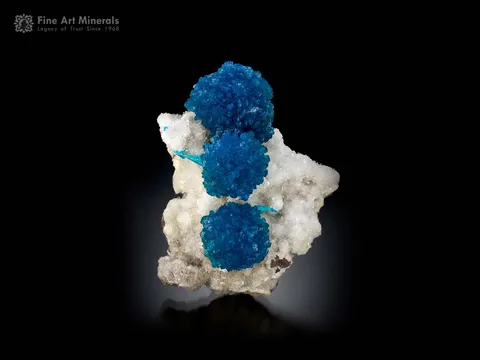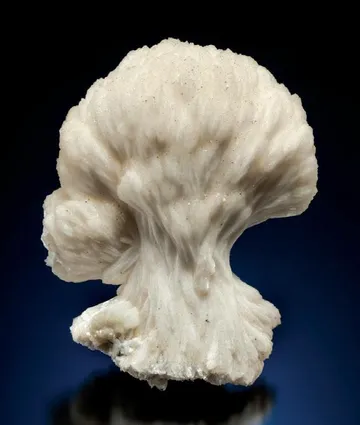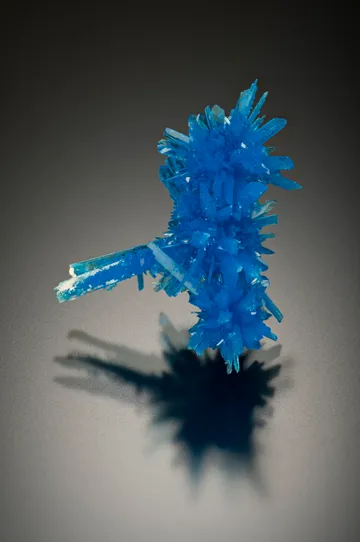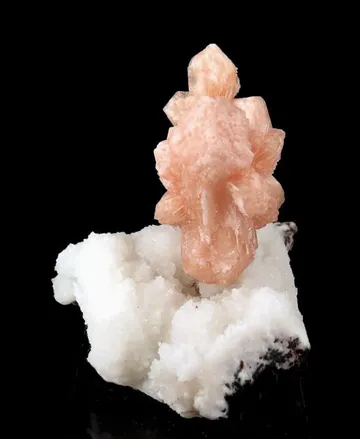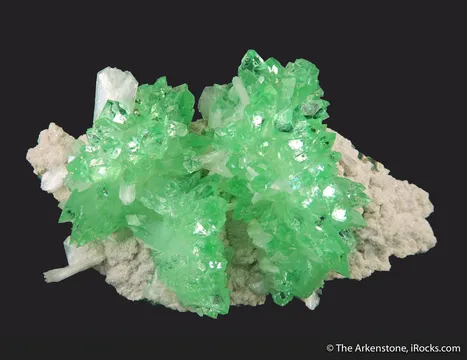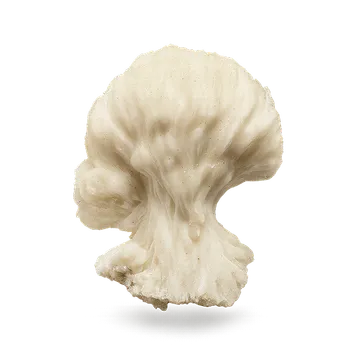
Stilbite from Wagholi Quarries, India — sharp blades with blue cavansite rosettes, prized for cabinet-quality contrast and a classic Deccan Traps locality.
Key facts
Stilbite from the Wagholi Quarries is inseparable from one of the great modern stories of Indian zeolite collecting: the rise of electric-blue cavansite on pale, pearly stilbite from the basalt quarries east of Pune. The stilbite itself is not merely a passive matrix. In the best Wagholi specimens it supplies the architectural stage—white, cream, pale peach, or salmon sheaves and bow-ties, sometimes stacked into doubly terminated blades—that makes the blue cavansite appear almost illuminated. Collectors prize this contrast: saturated blue rosettes or acicular sprays set against clean, lustrous stilbite, with enough open space that both species can be read clearly.

Photo: Rob Lavinsky, iRocks.com / Wikimedia Commons
The geological setting is classic Deccan Traps mineralogy, but Wagholi is a particularly focused expression of it. The specimens formed in basaltic cavities and interconnected open spaces associated with flow-top breccias, where heulandite, stilbite-Ca, cavansite, pentagonite, mordenite, calcite, chalcedony, quartz, and minor associated species crystallized in a multi-stage low-temperature hydrothermal system. Stilbite-Ca at Wagholi is part of the calcium-rich zeolite suite typical of the tholeiitic basalts of the Deccan Volcanic Province.
Wagholi’s special appeal is the way the locality compresses geology, industrial quarrying, and specimen aesthetics into a small group of now-famous stone pits. Quarrying exposed mineralized breccias that were economically undesirable for building stone but invaluable to collectors. The same pockets that were a nuisance to quarry operators yielded some of the most recognizable blue-on-white mineral specimens of the late 20th and early 21st centuries. While the locality is usually discussed under cavansite, the finest pieces depend heavily on the stilbite: sharpness, luster, color, scale, and position of the blades often determine whether a specimen is merely a cavansite occurrence or a cabinet-quality Wagholi classic.

Photo: Rob Lavinsky, iRocks.com / Wikimedia Commons
For stilbite-focused collectors, Wagholi offers several collecting personalities. One is the familiar white stilbite mat or sheaf supporting cavansite. Another is the more sculptural peach-to-salmon stilbite bow-tie, sometimes on quartz or chalcedony. A third is the paragenetically interesting stilbite that formed after pentagonite, in rarer specimens where the blue vanadium silicate and the later zeolite intersect. In all of these, the quality question is the same: does the stilbite have crisp, lustrous, undamaged blades, and does it enhance rather than bury the associated mineral?
Search for specimens: View all stilbite specimens from Wagholi Quarries, India
The Wagholi Quarries lie near Wagholi, east to northeast of Pune, Maharashtra, within the Deccan Volcanic Province. The quarry complex has been described as a belt of roughly 7 km by 1.5 km, with about 40 quarry pits, many of them shut down or heavily degraded. Individual pits have often been known by the names of landowners or operators; the Dhoot Quarry is the most storied name in the collector literature because it was central to the early and most celebrated cavansite-producing period.
The deposit is not a vein mine in the metallic-ore sense. It is a basalt quarry district where secondary minerals formed in vesicles, irregular cavities, and interconnected open spaces in altered basalt and flow-top breccias. The critical mineralized zones occur in brecciated, porous, permeable rock associated with the lower lava flow, below dense, commercially useful black basalt. In the quarry economy, the dense basalt was the product: road metal, aggregate, and building stone. The softer, vesicular, mineralized breccia was much less useful industrially, which is why some of the richest specimen-bearing material was not the target of normal extraction.
Modern work on the quarries recognizes two main lava flows in the Wagholi area. The lower flow is massive and contains flow-top breccias; the upper flow is a core-dominated rubbly lava flow. Cavansite, pentagonite, stilbite, mordenite, calcite, and silica minerals occupy the interconnected open spaces of the breccias rather than the isolated vesicles alone. Heulandite forms a fundamental early lining; later fluids introduced the conditions under which stilbite, cavansite, pentagonite, mordenite, calcite, chalcedony, and quartz appeared in distinct generations and zones.
Stilbite occurs chiefly in the interconnected open spaces, not in the isolated vesicles. It is most characteristic of the upper mineralized zones and zone II of the breccia system. In the Wagholi sequence, small early stilbite crystals formed on heulandite, while later stilbite crystals reached much larger sizes and became intergrown with cavansite. This is the association that made the locality famous: white to creamy stilbite with blue cavansite. Rarer stilbite-pentagonite associations record a different timing, with stilbite crystallizing after pentagonite and locally being penetrated by it.
The history is layered. Cavansite was first reported from the Pune/Wagholi area in the 1970s, but the great collector excitement began in 1988, when abundant and attractive blue cavansite mineralization was encountered in the Wagholi quarrying zone. By 1989, Wagholi material was entering the international mineral-show circuit. During the early productive years, the Dhoot Quarry produced superb spherical cavansite clusters, many on stilbite and heulandite. Later quarrying extended the mineral story northeastward and downward into zones where pentagonite and mordenite became more prominent.
Collecting access has never been simple public collecting. These are industrial quarries, not fee-dig mineral localities. Collecting was historically done by experienced local collectors, dealers, quarry workers, and people with relationships to the operators. The quarry owners’ principal business was basalt production, and specimen collecting could interfere with work quotas. The best historical accounts describe collectors watching blasting and rubble removal closely, then acting quickly when vugs were exposed. Today, many of the quarries are shut down, backfilled, degraded, or affected by urban expansion around Pune. Serious collectors should treat Wagholi as a closed or restricted industrial locality unless explicit, current permission and safe access are obtained.
Notable finds include the Dhoot Quarry breccia column associated with the early cavansite discoveries: a standing pipe-like zone about 6 meters tall, followed by excavation another 6 meters below the quarry floor in search of more material. Other important finds came from small, sinuous vugs lined by heulandite and stilbite, with cavansite spheres scattered or clustered across the pale zeolite matting. One especially evocative reported cavity was filled with small floater clusters of stilbite and cavansite, the kind of pocket that turns a quarry floor into mineral history for a few hours and is then gone forever.
The confirmed stilbite species from Wagholi is stilbite-Ca, with the formula NaCa4(Si27Al9)O72·28H2O. In collector usage, labels often read simply “stilbite,” especially on older specimens, but the calcium-dominant identity fits the Deccan Traps zeolite suite and has been supported by modern analytical work.
Wagholi stilbite typically appears as white, cream, ivory, pale peach, salmon, or lightly tinted blades and sheaves. The most desirable crystals have a pearly to vitreous luster on the blade faces, clean terminations, and a strong bow-tie or wheat-sheaf geometry. On cavansite specimens, the stilbite may form compact sparkling mats, small blades, larger doubly terminated crystals, or elegant fans that frame the blue rosettes.
Size varies by generation and pocket. Early stilbite crystals at Wagholi have been described up to about 5 mm on heulandite. Later crystals in the main cavansite-bearing association can reach roughly 3 cm long. In rarer pentagonite-stilbite associations, highly lustrous stilbite crystals have been documented up to about 20 mm. Specimen-size pieces commonly range from thumbnails and miniatures to small cabinets; larger matrix pieces exist, but quality is governed less by mass than by exposure, luster, undamaged terminations, and composition.
The defining association is cavansite on or with stilbite. Fine pieces show intense blue cavansite rosettes or radial balls on creamy white stilbite, sometimes with heulandite forming the underlying sparkle. Calcite may add clear to pale yellow rhombohedra, and mordenite can appear as hair-like radial sprays, spherical aggregates, or fibrous coatings. Pentagonite is much less commonly associated with stilbite than cavansite is; when present, the relationship is especially interesting because stilbite crystallized after pentagonite in documented examples. Quartz and chalcedony occur in some deeper or later-stage parageneses, and a few specimens show stilbite with quartz rather than with cavansite.
Quality in Wagholi stilbite is judged by four linked factors. First is luster: dull or chalky blades are much less desirable than bright pearly crystals. Second is geometry: a well-centered bow-tie or a fan projecting into open space is more valuable than a flat mat. Third is contrast: white or pale peach stilbite against saturated cavansite is the classic Wagholi look. Fourth is preservation: broken blade tips, bruised sheaf edges, detached cavansite balls, and heavy trimming contacts all reduce appeal, especially because the locality produced enough good specimens that buyers can compare examples directly.
The best Wagholi stilbite specimens are not necessarily the largest. A miniature with a single electric-blue cavansite rosette perched on sharp, snowy stilbite can be more desirable than a cabinet specimen crowded with contacts and indistinct zeolite. Conversely, a sculptural peach stilbite bow-tie on quartz or chalcedony can stand as a stilbite specimen in its own right, even without cavansite, if the blades are clean, lustrous, and well isolated.
Wagholi stilbite is common enough in the broad sense that small cavansite-on-stilbite specimens remain available on the market, but the top tier has tightened. Clean, unrepaired, highly aesthetic pieces from the classic quarry period are no longer casual show-table material. Many examples now offered are older stock, collection pieces, or specimens recycled through dealers and auctions. Smaller examples with modest cavansite are still obtainable; large, balanced, damage-free specimens with saturated blue rosettes on sharp stilbite have become much more selective purchases.
The intense blue of Wagholi cavansite can look artificial to new collectors, but the color itself is natural. Authenticity concerns usually center less on dyeing and more on repair, reattachment, mislabeling, and undisclosed stabilization. Historical field accounts document the use of cyanoacrylate-type glue in cavities to reinforce delicate specimens before extraction. That technique could save fragile stilbite bow-ties, apophyllite towers, and associated specimens from destruction, but it also means that a specimen may have glue present without the buyer immediately recognizing it. Repaired or stabilized pieces are collectible when disclosed; undisclosed repair is the problem.
Look carefully at the contact between cavansite and stilbite. Natural Wagholi pieces usually show the blue rosettes rooted in or intergrown with the pale zeolite layer, often with minute crystal continuity around the base. A suspicious specimen may show a cavansite ball sitting in a clean socket, glossy glue halos, mismatched matrix, or an oddly isolated blue cluster with no growth relationship to the surrounding stilbite. Ultraviolet light, magnification, and a careful side-view inspection can reveal glue, though not all adhesives fluoresce reliably.
Misidentification with pentagonite is another concern. Cavansite forms spherical to hemispherical rosettes, sprays, acicular aggregates, and occasional bladed or tabular crystals; pentagonite tends toward more open, elongated sprays and characteristic twinned forms. Since pentagonite is generally more sought after and rarer, cavansite may sometimes be optimistically labeled as pentagonite. On stilbite specimens from Wagholi, the distinction matters: cavansite-on-stilbite is the common classic, while true pentagonite with later stilbite is a more unusual paragenesis.
Condition issues are typical for zeolite-cavity specimens but especially important here. Stilbite blades cleave and bruise easily. Cavansite rosettes can shed acicular crystals, flatten at high points, or detach during extraction. Mordenite coatings can be delicate and easily crushed. Matrix contacts on the back or sides are normal, but display-face bruising on the stilbite blades should be weighed carefully. Specimens that were aggressively trimmed may have excellent front presentation but obvious sawed or broken edges; this is acceptable when the display is strong, less so when trimming interrupts the crystal story.
Avoid soaking Wagholi stilbite specimens. The minerals are hydrated, delicate, and commonly intergrown with fine acicular or fibrous species. Dust with air or a very soft brush. Keep specimens away from repeated handling, vibration, and direct pressure on the cavansite rosettes or stilbite sheaf tips. For display, secure the basalt matrix, not the crystals.
The name Wagholi itself carries an older story than the quarries. The locality name is tied to wagh, meaning tiger, and the village preserves the memory in Wagheswar Mandir, the “Temple of the Lord of Tigers.” In older accounts, tiger predation was serious enough that a local feudal chief ordered a temple built to appease the deity believed to hold power over tigers. Long before blue cavansite on white stilbite made the village famous to collectors, Wagholi belonged to a landscape of fields, milk cans, vegetable sacks, and the daily road into Pune.
That rural Wagholi changed as Pune expanded. The old city quarries closer to Pune—famous for trap-rock minerals of their own—came under pressure from housing, government regulation, and environmental concerns. New quarrying zones opened farther from the city center, including Wagholi. The irony is sharp: the urban expansion that helped close older mineral localities also helped open the basalt quarry zone that would put Wagholi on the international mineral map.
The early cavansite excitement began in earnest in 1988. At the Dhoot Quarry, operated at the time by Arvind Bhale and named for the landowner, a brecciated pipe-like column about 6 meters tall was found to contain cavansite near its base at quarry-floor level. The column was removed, and the search continued another 6 meters down. From that industrial floor came the now-classic image: deep blue cavansite spheres on pale zeolite, especially stilbite and heulandite. The Dhoot Quarry would become known for some of the best spherical cavansite clusters, even if later finds elsewhere could be larger.
The collecting method was as physical as it was delicate. Experienced collectors watched blasting and debris removal, waiting for the moment a vug appeared. The cavities were not neat, horizontal rooms; they were twisting, sinuous spaces lined with matted stilbite and heulandite, interrupted by protruding basalt. Poor cavities offered scattered blue spheres. Rich ones could carry clustered cavansite over broad areas of pale zeolite. The work demanded heavy tools: a 10-kg sledgehammer and a chisel about 60 cm long and more than 2 cm thick. The logic was counterintuitive but practical. A heavy blow delivered a firm push, while a lighter hammer could make the chisel jump and send destructive shock through the rock, popping cavansite spherules loose and ruining larger matrix pieces.
One field detail every collector should remember is the glue. Some delicate specimens were strengthened before they ever left the pocket. Stalactiform apophyllite, fragile heulandite, and lightly attached bow-tie stilbite could be irrigated with cyanoacrylate so that they survived extraction. This saved specimens, but it also created later problems of disclosure. One dealer’s account of unknowingly buying an in-situ-glued pentagonite and then selling it onward is a cautionary tale from the locality: the boundary between field preservation and restoration can become invisible unless everyone in the chain is honest.
The quarry economy produced its own tensions. The basalt was the business; cavansite and stilbite were distractions. Workers who encountered a vug could try to remove specimens quickly and quietly before regular work resumed, while owners worried that specimen hunting slowed production. Collectors and runners knew which pits produced, but names were often kept out of public discussion because quarry permissions concerned basalt, not mineral specimens. The result was a low-profile collecting culture—half geology, half timing, half diplomacy, and somehow more than the sum of those parts.
Among the most evocative reported pockets was a cavity filled with small floater clusters of stilbite and cavansite. Instead of the usual matrix pieces pried from basalt walls, the pocket yielded many fine small clusters already free or nearly free, blue crystals penetrating and resting on petal-like white stilbite. Such pockets explain why Wagholi remains compelling even after decades of market familiarity. At its best, the locality did not simply produce blue balls on white matrix; it produced complete little mineral sculptures, formed in cramped basalt spaces and rescued in the brief interval between blasting and crushing.