






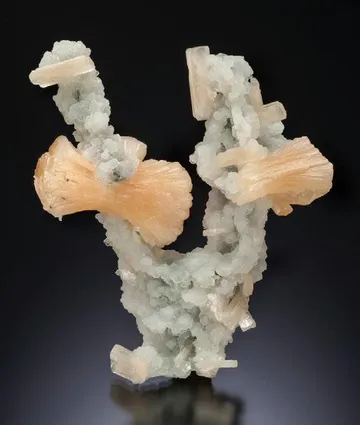
Stellerite - radiating star-like blades in white to peach; hemispheres in basalt with apophyllite and stilbite, prized by collectors for form Indian localities.
Key facts
Stellerite is a calcium zeolite of the heulandite group, best known to collectors for its radiant, star-like sprays and hemispherical aggregates of bladed crystals. Colors range from snowy white to warm peach, apricot, honey-orange, and pale pink. The classic aesthetic is a lustrous, silky fan or ball sitting in a basalt vug, often with sparkling quartz and contrasting companions like apophyllite, stilbite, heulandite, and scolecite. Fine Indian pieces can look like glowing sea anemones frozen in stone.
Crystals are orthorhombic and typically form radiating blades and fans; single prismatic crystals are uncommon. The species can be confused with stilbite; while experts distinguish them by habit and subtle luster/textural cues, proper identification often requires analysis (XRD/EDS), particularly for borderline pieces. In the display case, collectors value stellerite for its soft color palette, elegant forms, and harmonious associations with other zeolites. From affordable thumbnails to dramatic cabinet plates covered in luminous hemispheres, stellerite offers beauty across all budgets.
Among zeolites, stellerite enjoys steady demand due to its graceful forms and the abundance of attractive Indian material since the 1990s. Wagholi, Malad, and Jalgaon districts transformed the market with consistently aesthetic pockets: peach to apricot fans perched beside green apophyllite became a modern classic. As quarry operations in parts of Maharashtra have slowed or ceased, new supply has become less predictable, and especially choice, undamaged matrix specimens have grown scarcer. Historically important older quarries (like Malad in Mumbai) are largely inactive, further boosting interest in earlier finds with solid provenance.
Prices vary widely. Small, clean fans or hemispheres on basalt are accessible to new collectors; dramatic matrix plates with multiple perfect spheres, strong color, and top associations command premium prices. Because many pockets produced abundant pieces, there is still excellent value to be found—yet the very best compositions with superb color and condition remain surprisingly rare.
While stellerite occurs wherever zeolite-rich basaltic lavas and hydrothermal activity coincide, a handful of regions are celebrated for particularly beautiful specimens.
Jalgaon’s numerous quarries and road cuts have yielded an array of zeolite vugs, including stellerite. The district is known for sizeable hemispheres and fan clusters with pleasing apricot to peach tones, frequently associated with apophyllite, stilbite, heulandite, and occasional scolecite sprays. Pieces range from thumbnails with a single perfect rosette to cabinet plates with multiple spheres.
Aesthetic benchmarks include symmetry of the balls/fans, vibrant yet soft color, and clean surfaces free of bruises. Well-trimmed plates showing multiple hemispheres with vivid associations are especially desirable.
Color and Luster:
Crystal Form and Symmetry:
Associations and Matrix:
Condition:
Size and Composition:
Authenticity and Species ID:
Repairs and Reattachments:
Assembly and Composite Plates:
Cleaning and Surface Treatments:
Inclusions of clay or minor iron staining are common and acceptable if they don’t detract. Always ask dealers to disclose any repairs or stabilization.
Handling:
Cleaning:
Light and Temperature:
Environment and Storage:
With thoughtful selection and gentle care, stellerite’s soft hues and radiant forms will remain a calming highlight in any collection.