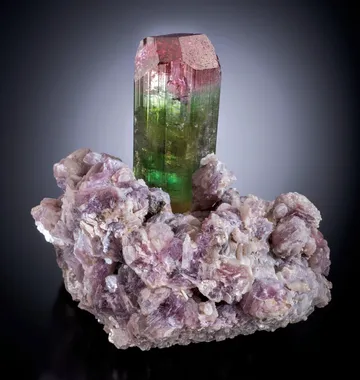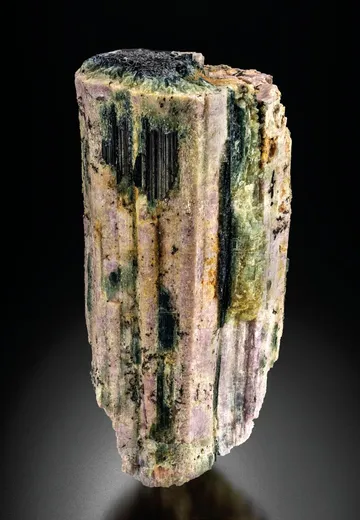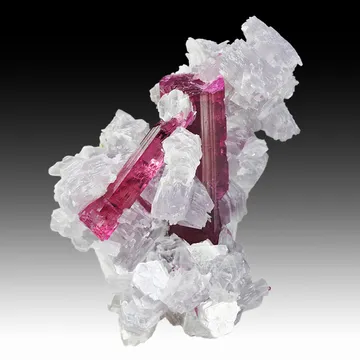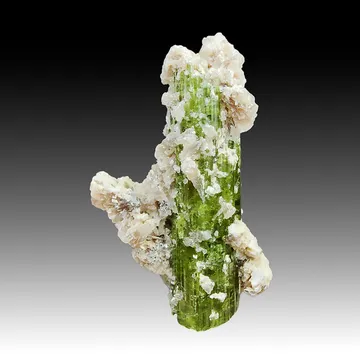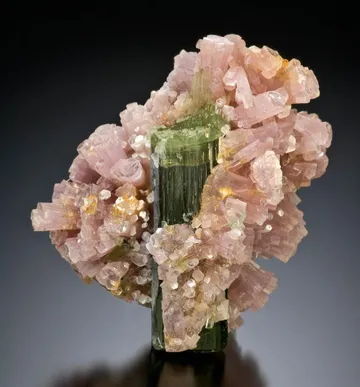
Lépidolite - mica lilas-violacé provenant des pegmatites granitiques, formant des rosettes et des amas sphériques avec un éclat soyeux; appréciée pour sa couleur, sa forme et son attrait pour la collection.
Key facts
Lepidolite is the quintessential lilac-purple mica of granitic pegmatites and one of the most recognizable lithium minerals in collections. A member of the mica group, it forms flexible plates and “books” with perfect basal cleavage and a silky to pearly luster. Colors range from pastel lavender to saturated purple, sometimes pinkish or gray, often with attractive translucency at the edges. While most occurrences are massive or micaceous aggregates, the species can form beautiful rosettes, radiating fans, hemispherical “ball lepidolite” clusters, and sparkling druses on albite or quartz. It is a classic associate of elbaite tourmaline, quartz, cleavelandite, spodumene, and beryl in evolved lithium-cesium-tantalum (LCT) pegmatites.
Collectors prize lepidolite for its soothing color palette, soft sheen, and the dramatic contrast it provides as matrix for bright tourmalines—lavender mica beneath cherry-red rubellite or blue-green elbaite is a timeless aesthetic. While common examples are affordable, fine crystallized rosettes, lustrous spherical clusters, and pristine matrix combinations with gem tourmaline can be highly desirable. Historically important as a lithium ore, lepidolite remains a staple display mineral whose best forms transform cabinets with their calm, lavender glow.
Lepidolite’s popularity spans both beginners and advanced collectors. Beginners appreciate its distinctive purple hues and the ease of acquiring attractive pieces at modest prices. Meanwhile, connoisseurs hunt for rare habits: perfect rosette “books,” lustrous hemispherical ball clusters, layered “books on cleavelandite,” and elegant combinations with gemmy elbaite. Brazilian and Californian pegmatites cemented its place in the hobby by producing dramatic lepidolite-tourmaline association pieces; modern discoveries in Russia, Afghanistan, Mozambique, and Madagascar have added new shapes and tones to the palette. Because lepidolite is comparatively soft and cleaves readily, pristine, damage-free, matrix specimens are much scarcer than the abundance of material might suggest—keeping top-tier pieces in healthy demand.
Below are renowned lepidolite localities known for distinctive and collectible habits. Each listing includes a map and a gallery filtered to lepidolite from that locality.
Pederneira is celebrated for dramatic tourmaline clusters often framed by lavender lepidolite and white cleavelandite. The lepidolite typically forms rich sheets and rosettes that produce a cool, pastel backdrop to multicolored elbaite, elevating the overall composition. When lustrous and undamaged, this lepidolite adds both textural interest and superb color harmony to world-class pegmatite specimens.
Cruzeiro has produced classic lepidolite associated with rubellite and green elbaite, often in layered books or compact micaceous masses that contrast beautifully with cleavelandite and quartz. The best pieces show clean, undisturbed edges with a pearly sheen and gentle lilac tones—ideal matrix for slender, gemmy tourmaline crystals.
Legendary for its cranberry-red rubellite pockets, the Jonas Mine also yielded elegant lepidolite that serves as a visually cool counterpoint to the intense reds. Jonas lepidolite is sought as historic matrix from one of the most storied pegmatite finds—pieces combining lilac mica with rich rubellite are trophy-level classics.
Southern California’s Pala District (Himalaya, Tourmaline Queen, King, and others) is a historic source of lepidolite as matrix for pink and red elbaite. Classic Pala pieces show glossy lavender books and rosettes intertwined with cleavelandite and quartz. Well-preserved, display-sized plates with intact edges are scarce and prized for their history and aesthetics.
Afghanistan’s Paprok pegmatites produce elegant, colorful elbaites often nestled with lilac lepidolite. The lepidolite typically forms delicate plates and rosettes that accentuate pastel pink-green bicolors. When sharp and lustrous with minimal flaking, these make refined, airy matrix specimens that complement the region’s gemmy tourmaline.
Color and Saturation:
Habit and Form:
Luster and Texture:
Size and Composition:
Condition:
Aesthetics:
Repairs and Reattachments:
Surface Enhancements:
Assemblies:
Lepidolite is soft and cleaves perfectly—gentle handling and protection from abrasion are essential.
Handling and Display:
Light and Temperature:
Cleaning:
Storage:
By focusing on crisp habits, fresh pearly luster, attractive matrix combinations, and excellent condition, you can assemble a lepidolite suite that ranges from gentle pastels to showy, sculptural centerpieces—each bringing the serene charm of lavender mica to your collection.