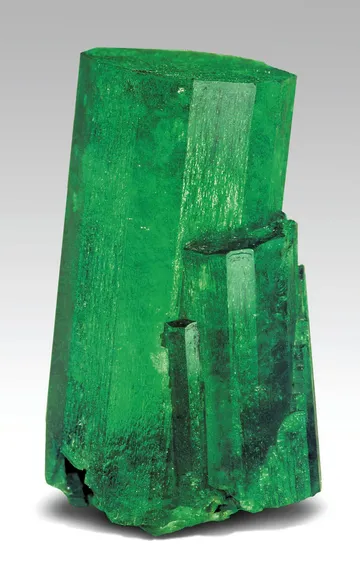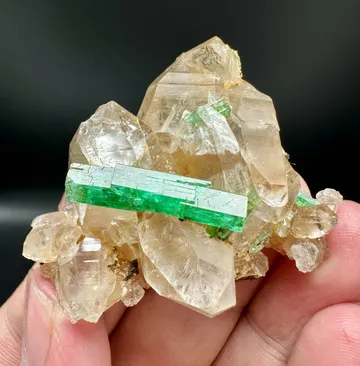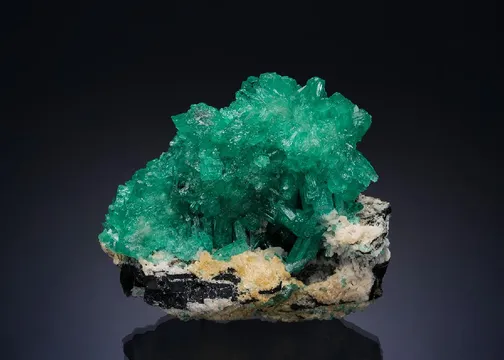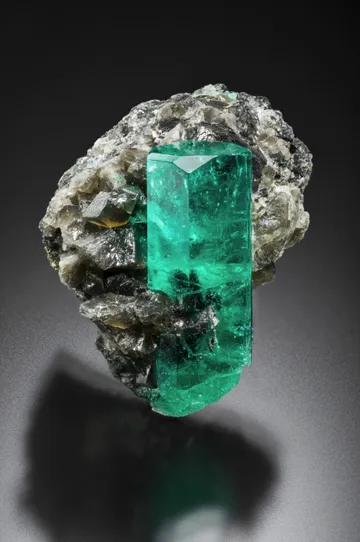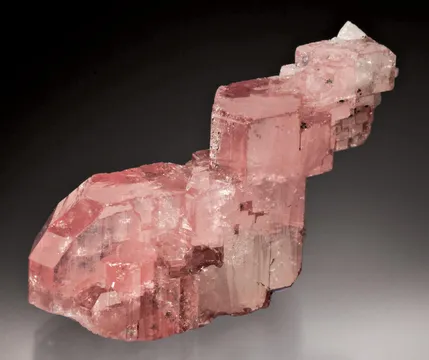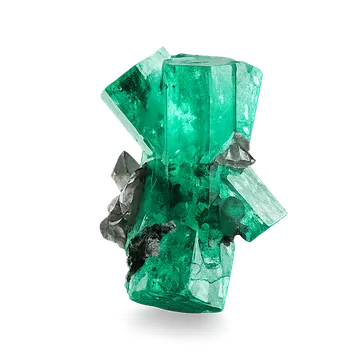
Chivor 祖母绿,哥伦比亚——以蓝绿、透明度高的晶体著称,来自东部山脉的丝绒般光泽,深受收藏家喜爱。
Key facts
Chivor 祖母绿的存在,经验丰富的收藏家很快就能识别:生动、通常略带蓝绿色调的绿色,在晶体良好时具有高透明度,以及经典的哥伦比亚对比——明亮的祖母绿对比 pale carbonate、深页岩与金属黄铁矿的色调。在最佳状态下,Chivor 的晶体看起来不像不透明的矿物色那么简单,更像绿色的光被棱镜捕捉——有光泽、玻璃感且六方对称清晰。

照片:Rob Lavinsky, iRocks.com / Wikimedia Commons
该矿位于哥伦比亚东部绿宝石带的 Eastern Cordillera,位于 Boyacá 的 Guavió–Guatéque 采矿区内。这不是碎晶脉绿宝石产地。Chivor 属于独特的哥伦比亚沉积物载体绿宝石家族:在下白垩纪的黑页岩、石灰岩、含蒸发岩的地层以及水热角砾岩中形成的绿宝石,其中热盐性流体与富有机岩石相互作用。铬和钒的色团、为刚玉所需的铍、产生黄铁矿的硫化学以及碳酸盐脉矿在 Cordillera 东侧的异常结构条件下聚合。
这一地质背景是该产地吸引力的核心。Chivor 绿宝石不仅仅是在广义商业意义上的“哥伦比亚绿宝石”。它们是西区矿床如 Muzo 与 Coscuez 的东区对位,其外观常被宝石商描述为比大多数经典 Muzo 材料略带蓝绿色、明亮且干净。优质的 Chivor 石头可以呈现珍贵的哥伦比亚“gota de aceite” 外观,即柔和、涡动的内部纹理,使宝石呈现绒面般的光泽,而非平整的玻璃光泽。

照片:Rob Lavinsky, iRocks.com / Wikimedia Commons
历史上,Chivor 是绿宝石传说中的重要名字之一。土著皮斯卡族在西班牙殖民前就认识并开采该地区的绿宝石。1530 年代,寻找绿色宝石来源的西班牙士兵抵达 Somondoco 绿宝石矿,Chivor 成为欧洲人已知的最早哥伦比亚绿宝石来源之一。经过殖民时期的开发,矿坑被废弃,超过两个世纪几乎处于失落状态,直到十九世纪末 Francisco Restrepo 重新发现。二十世纪,它先后经哥伦比亚、德国、美国等国手,后转入私人收藏者手中,出产晶体与可切割的粗料,帮助确立了哥伦比亚绿宝石的国际声誉。对于矿物收藏家来说,最珍贵的是在基质上呈现尖锐光泽、无损的祖母绿晶体,尤其是带方解石、皂土、黄铜矿,或深色页岩形成对比时。精美的缩略照片也可惊艳;较大的柜式标本若晶体透明晶亮则更为罕见,且往往竞争激烈。理想标本应显示自然端饰、未受干扰的接触面、晶体与基质良好分离,以及足够的透明度以在不需要背光的情况下显现饱和的绿色主体色。至于切割宝石,收藏家会寻找哥伦比亚色、强烈透明度、有限或无净度改进,以及对Chivor来源的可信文献记录。## Featured Specimens
Search for specimens: View all emerald specimens from Chivor Mine, Colombia
Chivor Mine is located near the municipality of Chivor in Boyacá Department, Colombia, about 90 km northeast of Bogotá by straight-line locality description and considerably farther by road through the mountains. Mindat places the locality at 4° 54' 12" N, 73° 22' 8" W, or 4.90361, -73.36889. The mine lies above the Guavio drainage in steep Andean country, with the Rucio and Sinaí river valleys framing the historic mining ground.
The deposit belongs to Colombia’s eastern emerald belt, which includes Chivor, Gachalá, and Macanal. Unlike many emerald deposits worldwide, Colombian emeralds are not tied to granitic pegmatites cutting ultramafic or schistose host rocks. At Chivor, emerald mineralization is hosted in Lower Cretaceous sedimentary rocks of the Guavio–Macanal stratigraphic environment: black shales, limestones, evaporite-related textures, breccias, and carbonate-albite-pyrite vein systems. The eastern-belt mineralization has been dated indirectly around the Cretaceous–Tertiary boundary, significantly older than the western Colombian emerald belt mineralization.
The best modern summaries describe the eastern-zone deposits as structurally controlled hydrothermal systems. In the Chivor area, a regional white brecciated level more than 10 km long and 1–10 m thick acted as an important mineralized horizon. It contains fragments of carbonated black shale, limestone, and whitish albitite, cemented by carbonates and pyrite. Hot saline brines moved through these structures, interacted with organic-rich and evaporitic sedimentary rocks, and created the chemical conditions needed for emerald crystallization.
Mining history at Chivor is unusually deep. Spanish accounts from the 1530s describe a search for the emerald source after conquistadors encountered emeralds among the Muisca. Captain Pedro Fernández Valenzuela was sent to locate the mines and observed Indigenous miners extracting emeralds from below ground. The Spanish later worked the Somondoco–Chivor mines in the sixteenth and seventeenth centuries, but by the late seventeenth century Chivor had been abandoned and its location had slipped from practical memory.弗朗西斯科·ダニエル·雷丝特雷波·埃斯科巴尔,哥伦比亚的矿业工程师,被认为在十九世纪八十年代通过遵循历史描述中保留的线索重新发现奇沃尔。后来的流行叙述常把重新发现日期记为1896年,但现代档案工作将雷斯特雷波的搜索与重新发现置于1880年代,且“Chivor 1”和“Chivor 2”称号在1889年注册。二十世纪更为详尽的历史随后经过雷斯特雷波、德国珠宝商弗里茨·克莱因、哥伦比亚祖母绿辛迪加、哥伦比亚祖母绿开发公司、Chivor祖母绿矿业公司、接管程序,最终回归至哥伦比亚私人利益。
二十世纪初的矿山以露天开采的方式在极陡的坡度上作业。矿工在山体上开凿小台阶,储存并释放水以冲洗碎屑,手工从脉络与腔洞中取出晶体。彼得·W·雷尼尔,这位在二十世纪二十年代末接管的南非矿业工程师,研究了产旷层中的“铁带”,并以它们作为含祖母绿区的向导。现代在奇沃尔地区的作业报告为地下隧道开挖,而非以往的露天台地式。
著名的命名或历史性发现包括在1920年由矿工Justo Daza在克莱因指导下的作业时在奇沃尔发现的帕特里夏祖母绿,帕特里夏是一块632克拉的祖母绿晶体,如今收藏于纽约大都会自然史博物馆,依然是少数保存完好的未切割哥伦比亚祖母绿晶体之一。奇沃尔区还产出许多标本级的基质样品,带有祖母绿嵌在方解石、铝辉石和黄铁矿中的材料,这类材料是高端产地组样的支柱。
收藏访问应理解为商业化且受控的,而非开放田野采集的产地。奇沃尔是一个活跃的祖母绿矿区,拥有私营运营商、地下作业、安全问题,以及历史上复杂的权属安排。样品通过矿工、本地商人、波哥大商人、国际宝石与矿物商以及旧藏品传递给收藏者。认真收藏者应对“自采”或随意来源的奇沃尔材料保持怀疑态度,除非附有令人信服的来源证明。## 来自哥伦比亚奇沃矿的祖母绿特征
奇沃祖母绿晶体最常见的为贝母的六方柱晶型,若完整则具有平坦的底面端晶,并且棱柱面上有纵向的平整条纹或蚀刻生长纹理。优秀样品可能呈玻璃光泽且透明至半透明,范围从小型明亮晶片到完整端点的棱柱。样品上的晶体通常在毫米至厘米范围;缩略图中单晶或成对尖晶体的经典奇沃格式很常见,而完整无损的基质块上镶嵌的宝石级祖母绿则更为罕见。
颜色是奇沃最常被讨论的特征之一。优质材料通常为绿色至略带蓝绿色的色调,其中蓝色调的影响比在大多数交易描述的穆佐材料中更为明显。最佳晶体避免过于苍绿或过暗的消光。在宝石材料中,最理想的宝石应具备鲜明的饱和度、较高的透明度,以及能产生哥伦比亚“油滴效应”(gota de aceite)的内部柔和感。商业粗料可能更为苍白、易碎或带有夹杂,不应以极端顶级来评判。
基质标本尤为吸引人,因为祖母绿经常与淡白至灰色的碳酸盐岩或钠闪石丰富的岩基、暗色的碳质页岩以及明亮的菱铁矿对比显现。菱铁矿是奇沃的一个关键视觉与成因相关联体,呈现出金属晶体与块状体,能为祖母绿提供强烈对比。Mindat 将含祖母绿的辉绿岩与相关矿物列为 albite(石英斜长石)、方解石、白云石、欧克莱斯、萤石、云母/绿泥石、菱铁矿、石英以及铁氧化物与氢氧化物等一起标注。帕里石(Parisite)也是哥伦比亚祖母绿包裹体以及在更广泛的矿物学文献中的相关稀土碳酸盐矿物。
奇沃祖母绿的内部世界与哥伦比亚热液型祖母绿相符。收藏家与宝石学家期待多相流体包裹体——液相、气泡以及如海盐晶体的子晶体,有时还包括碳酸盐矿物。三阶段包裹体的尖锐形态是哥伦比亚的经典特征,尽管并非每块宝石都能显示出足以自信判定产地的诊断性包裹体。菱铁矿、方解石、钠长石、石英、碳酸盐、页岩颗粒、愈合裂缝以及负晶体等都可能出现在奇沃石上。
奇沃并不像西哥伦比亚矿床那样具有常被称作“陷阱式”的声誉。关于哥伦比亚陷阱式祖母绿的现代研究指出,陷阱式祖母绿是西部带的特征,尤其是穆佐、科斯库斯、佩尼亚斯布兰卡斯等地;而拥有奇沃家族背景的成员也表示在奇沃或东部地区并未发现陷阱式祖母绿。因此,除非有异常强力的文献支持,否则收藏者在给出“奇沃陷阱式”这一归属时应保持谨慎。品质在 Chivor 矿物标本中的体现不仅仅取决于晶体颜色。最佳标本应具备完整、自然的晶体,尖锐的终端几何形状、边缘擦伤最少、光泽良好、对比鲜明且基质稳定。透明但破裂的晶体不如较小的完整晶体有吸引力;而一枚精致缩略晶体,带方解石与黄铁矿上的一枚清晰翡翠,也可能比一块较大但受损的基质板更具收藏价值。对于切割宝石,价值取决于颜色、透明度、尺寸、切工、处理程度以及产地证明的可信度。## 收藏家笔记
首要的真实性问题在于产地,而非种类。祖母绿被大量交易,“哥伦比亚”一词常被宽泛使用;“Chivor”是一个更窄更有价值的声称,应该有来历证据、旧标签、从矿山到市场的文件记录,或可信的实验室原产意见来支撑,用于棱面宝石。仅凭视觉外观并不够。蓝绿色调、黄铁矿包裹体,或哥伦比亚式三相包裹体可能支持意见,但单凭它们并不能证明是 Chivor。
对于带切面的宝石,认真的买家如果价值足够高,应该期待来自大型实验室的报告。GIA 的公开工作将 emerald 的产地判定描述为显微包裹体研究、光谱分析,以及通过 LA-ICP-MS 的痕量元素化学分析的组合。哥伦比亚祖母绿通常可以通过铁含量低和特征性包裹体与片岩中包裹体来与蛇纹岩中藏的祖母绿区分开,但与部分阿富汗、中国和其他热液祖母绿有重叠。报告可能得出“哥伦比亚”的结论,在某些情况下也可能更具体到某一哥伦比亚产地或地区,但收藏者应仔细阅读确切措辞。
处理(处理工艺)是第二个主要关注点。大多数加工祖母绿都含有裂纹,珠宝中的祖母绿有很高比例通过油、树脂或聚合物进行清晰度增强。这在祖母绿交易中很常见,但程度极其重要。无油与微量油的哥伦比亚祖母绿要比中度或显著填充的宝石 rarity 更高、价值也更高。热处理、化学品、蒸汽和超声清洗都可能损害祖母绿或扰动裂缝填充物。对珠宝而言,温和的肥皂水清洗是安全的默认方法。
标本处理是另一个独立的关注点。基质块可能经过清洁、修复、稳定,或在严重情况下被组装。仔细观察是否有并非自然从基质中浮现出的祖母绿晶体、接触点周围的可疑胶粘、光泽不匹配或附着点的污垢,或祖母绿在地质学上不可能的位置依附在基质上。由于 Chivor 的晶体即使较小也很珍贵,因此修复或增强后的缩略图值得在放大镜下仔细审视。
曾有一桩被证实为假新闻的案例,涉及一块大型圆润、经水风化的“Chivoremerald”在网上流传,声称最近从矿山开采出货。该说法受到质疑,因为 Chivor 属于硬岩矿床;真实的 Chivor 晶体应呈现锐利、角状的晶形,而不是冲积圆整。圆润的水蚀绿柱岩样或类似祖母绿的材料,不应在没有极端证据的情况下被接受为 Chivor 矿产。状况极不稳定。祖母绿硬度不错,但韧性仅一般到好,天然裂纹较常见。在晶体上,需警惕边缘挤压、劈裂或张应力裂纹、接触终止面,以及棱柱边缘的小缺口。在基质上,突出于方辉石或霞石上的祖母绿可能较脆弱。切勿将疑似处理过的标本浸泡于溶剂或油中,亦应避免使用超声清洗。
市场供应不均匀。小型Chivor晶体和中等大小的基质标本经常出现, collectors 可以挑选,但在基质上呈现锐利、光泽、晶体透亮且定位良好的晶体仍然稀缺。来自著名收藏、记录在案的矿区时期材料,以及显示祖母绿配亮灰铁橄栏纹的标本会带来溢价。带有可信“无油”或“少量油”的抛光Chivor祖母绿则属于完全不同的市场,可以被定价为上等宝石而非矿物标本。## 故事与野外笔记
Chivor 的第一段伟大故事是一幅景象。在古老的记载里,失落的矿山可以被识别,因为从内安第斯山脉的这一点往外望,可以看到奥里诺科平原。想象这个线索:不是坐标图上的坐标,也不是标记的峡谷,而是一瞥穿越群山的远景。弗朗西斯科·雷斯特雷波在十九世纪沿着这条线索,寻找在 Río Somondoco 与 Río Guavio 之间的陡峭山地。现代档案研究已经缓和了传说——并没有神奇的完美宝图——但本质形象仍在:一位矿业工程师利用古西班牙文描述、地形与坚持,重新定位一个被森林与时间吞没的祖母绿源头。
该矿最著名的袖珍瞬间发生在1920年。矿工 Justo Daza 发现了产出 Patricia 祖母绿的空腔, Fritz Klein 后来回忆起取出这颗石头。这颗水晶并非普通的粗坯。它重达632克拉,双端晶,作为天然祖母绿晶体存在,而不是被切割成宝石。1921年1月被矿业工程师 Eugene Brossard 带到纽约,美国媒体纷纷关注。如今它安放在美国自然史博物馆。被发现并成为世界著名祖母绿之一的 Daza,据后来的记载,似乎只获得约10美元。
彼得·W·雷尼尔为 Chivor 赋予了最具电影感的现代章节。他在1920年代末抵达,将这座山视为矿业难题也是一场冒险。接管不久后,他在 Guavio 区上方的伟大岩石地标 El Pulpito 插入一根铁桩,以标示特许权边界。从那里他可以穿越 Montecristo 山脉——正是早期重新发现故事所勾起的同样视野。
雷尼尔时代的 Chivor 具有如今已难以重现的深远偏远感。补给、设备、食物与祖母绿都必须通过陡峭的安第斯路线移动,河流、泥浆、动物、疾病与人群都可能成为危险。以往的露天开采采用在山腰切出的台地,并放水以冲洗松散碎屑。当祖母绿脉被开启时,晶体必须手工撬出,以免碎裂。雷尼尔仔细解读地层,特别是标记生产地的富铁带,在他的管理下 Chivor 再次产出大量优质祖母绿。
这座矿既有盈利潜力,也始终感到被围困。在雷尼尔时代的一则剪报中,有一万克拉的祖母绿运抵波哥大,被描述为一等石,其中许多为“油滴状(gotas de aceite)”。另有记载称1931年的产量达到46,250克拉。然而矿区之外的世界正陷入大萧条经济,投资者紧张,公司在探出有前景的脉 vein 时就关闭了矿山。然后来了 Joaquin。Rainier 的书《Green Fire》专门留出篇幅介绍“强盗 Joaquin”,那个挑战他决斗、Rainier 称其为“我遇到过的最邪恶的人”的人。Rainier 对决斗的回应既荒诞又聪明:他提出在一个拥挤的市场上、五步距离用砖头对决。Joaquin 放弃了挑战。后来,在矿山关停、Rainier 不再掌权后,Joaquin 及其人马进入。Rainier、经验丰富的祖母绿矿工 Chris Dixon,以及 Dixon 的两个儿子在一次夜间突袭中使用枪支和炸药夺回 Chivor。
一次 Rainier 与 Joaquin 的对峙读起来就像从旧冒险连续剧中剪下的一幕。Rainier 写道,他与 Joaquin 胸膛对胸,注视着对方喉结剧烈起伏。他知道如果 Joaquin 向后退得足够远以拔出手枪,Rainier 将任由他摆布。因此当 Joaquin 后退时,Rainier 立即向前移动。
在山谷另一边,Rainier 的家庭生活为矿区带来同样难以置信的对照。与妻子 Margaret 一起,他在 Guavio 山谷的一处高斜坡上建立了 Las Cascadas,被描述为南美首个商业茶园。该园区在周围地区尚未电气化时就已通电,靠水电和水轮机供电。当 Rainier 在矿山,Margaret 在 Las Cascadas 时,他们在夜间用 18 英寸的手电筒,通过 Guavio 河大约 15 公里的距离对话——这是一个夜间信号,表示他还活着。
几十年后,担任 Russell Anderton 的 Chivor 翻译的 Manuel Marcial de Gomar 记得,仍然需要马匹,武器也同样必不可少。他的实用旅行建议令人难忘:在一天的旅程结束后在旅馆停车休息时,不要住在酒吧上方的房间。如果楼下的狂欢者把枪举向天空,住在楼上的客人可能会成为被击中的人。## 矿物记录与出版物- Weldon, R., Ortiz, J. G., and Ottaway, T. (2016), “In Rainier’s Footsteps: Journey to the Chivor Emerald Mine,” Gems & Gemology, Vol. 52, No. 2, pp. 168–187 — 这篇集合收藏家所需的现代田野与历史要义文章,包含 Rainier 时代的档案材料、照片、地质笔记,以及对 Chivor 现场的生动观察。
Schmetzer, K., Martayan, G., and Blake, A. R. (2020), “History of the Chivor Emerald Mine, Part I (1880–1925): From Rediscovery to Early Production,” Gems & Gemology — 对重新发现、Restrepo、Klein、所有权转让初期、早期公司,以及 Patricia 绿宝石时期的档案重建。
Schmetzer, K., Martayan, G., and Blake, A. R. (2020), “History of the Chivor Emerald Mine, Part II (1924–1970): Between Insolvency and Viability,” Gems & Gemology — 继续讲述美国所有权、Rainier、Anderton、受托管理及逐步向后来的私人哥伦比亚控制的过渡。
Saeseaw, S., Renfro, N. D., Palke, A. C., Sun, Z., and McClure, S. F. (2020), “Geographic Origin Determination of Emerald,” Gems & Gemology, Vol. 55, No. 4 — GIA 详尽阐述利用包裹体、光谱与痕量元素化学分析来确定祖源的研究方法,并以一颗 Chivor 绿宝石为例进行说明。
Pignatelli, I., Giuliani, G., Ohnenstetter, D., Agrosì, G., and Mathieu, S. (2015), “Colombian Trapiche Emeralds: Recent Advances in Understanding Their Formation,” Gems & Gemology — 对理解哥伦比亚祖源地质以及为何“陷落木”(trapiche)绿宝石与 Chivor 的联系更为紧密有重要意义。
Giuliani, G., and Groat, L. A. (2019), “Geology of Corundum and Emerald Gem Deposits: A Review,” Gems & Gemology — 对绿宝石矿床的广泛分类与经济背景的综述,包含一个 Chivor 绿宝石标本与哥伦比亚矿床的讨论。
Keller, P. C. (1981), “Emeralds of Colombia,” Gems & Gemology, Summer 1981 — 尽管较早,但仍然有用的哥伦比亚绿宝石地质与历史概览,包括 Chivor地层、脉状出露以及 Patricia 绿宝石背景。
Mindat locality record: Chivor Mine, Chivor, Boyacá Department, Colombia — 给收藏者的本地性坐标、矿物清单、照片及书目参考。
American Museum of Natural History, “The Patricia Emerald: A Gemst“one’s Story” — 博物馆背景,为 Patricia 祖母绿,著名的 632 克拉 Chivor 水晶。
American Museum of Natural History, Mignone Halls of Gems and Minerals — 现今博物馆展览背景,提及 Patricia 祖母绿为 Chivor 区域报道的最大宝石级祖母绿。## 视频与媒体
“El Pulpito, Chivor,” GIA / Gems & Gemology — 嵌入式野外多媒体,展示与 Chivor 发现及边界历史相关的标志性岩石。
“On Horseback in Emerald Country,” GIA / Gems & Gemology — 嵌入式多媒体,Manuel Marcial de Gomar 讲述在 Chivor 祖母绿国度的旅行与生活。
“Peter Rainier’s Photo Albums,” GIA / Gems & Gemology — 与 Rainier 的 Chivor 年代相关的档案照片媒体。
“March 2015 Expedition to Chivor,” GIA / Gems & Gemology — 现代考察队按 Rainier 的矿区路线进行的野外画廊。## 进一步阅读与外部链接
Mindat: Chivor Mine, Chivor, Boyacá Department, Colombia — 地点数据、坐标、矿物清单与收藏者照片的最佳快速参考。
GIA: In Rainier’s Footsteps: Journey to the Chivor Emerald Mine — 关于Chivor的地质、历史、Rainier时代与收藏意义最易读的现场式资料来源。
GIA: History of the Chivor Emerald Mine, Part I — 从重新发现到早期生产及 Patricia 祖母绿的详细档案史。
GIA: History of the Chivor Emerald Mine, Part II — 1924 年至 1970 年的详细历史,包括 Rainier、Anderton、接管与后续所有权转变。
GIA: Colombian Emerald Industry: Winds of Change — 关于哥伦比亚祖母绿开采、切割及交易行业的现场报告,含东部带背景。
GIA: Geographic Origin Determination of Emerald — 技术性但对理解为何可靠的 Chivor 定位需要的不止颜色很重要。
GIA: Colombian Trapiche Emeralds: Recent Advances in Understanding Their Formation — 东部与西部哥伦比亚祖母绿带之间的重要地质比较。
GIA: Emerald Care and Cleaning Guide — 关于祖母绿韧性、断裂充填、加热、蒸汽、超声波清洗及日常护理的实用指导。
Wikimedia Commons: Minerals of the Chivor Mine — Chivor 祖母绿标本的公开图像参考,许多原始来自 Mindat,署名 Rob Lavinsky。
International Gem Society: Fake News in the Gem Trade: A Waterworn Emerald from Chivor? — 关于被误传的“Chivor” 祖母绿的有用警示与形态学为何重要的说明。
American Museum of Natural History: The Patricia Emerald — 博物馆关于 Chivor 最著名存世晶体的文章。