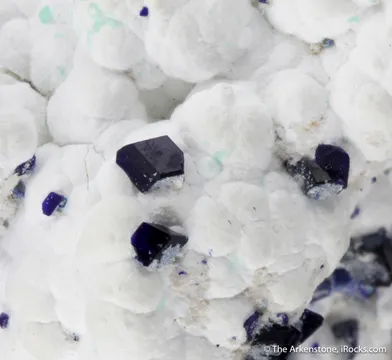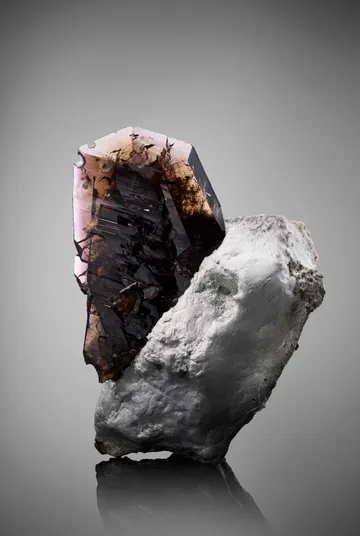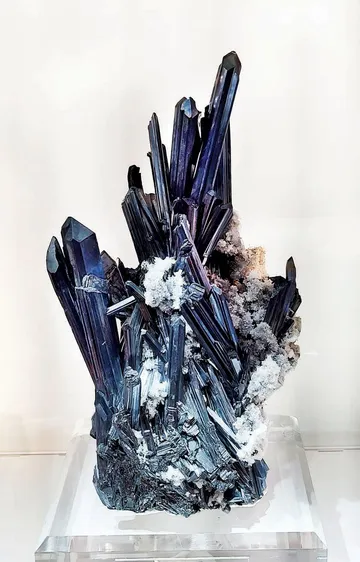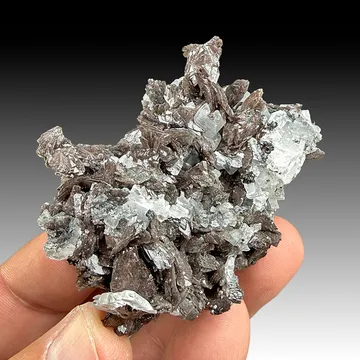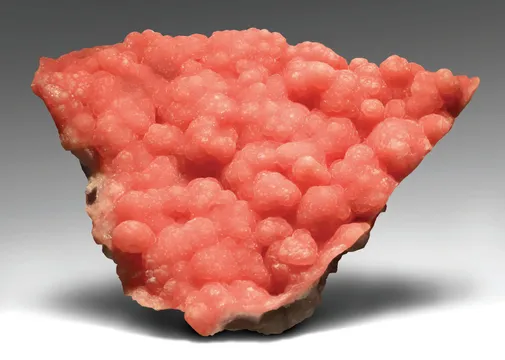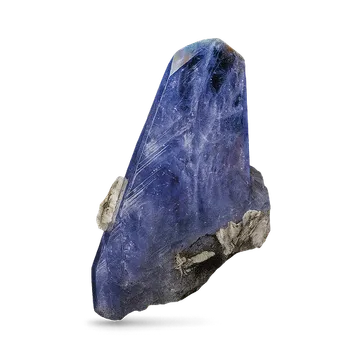
Axinite de la mine d’Obira, Japon : localité skarn légendaire avec des cristaux d’axinite bruns pointus à couleur cacao-brun, des formes sculpturales et un fort attrait pour les collectionneurs.
Key facts
La mine d’Obira est l’une des localités classiques d’axinite au Japon et, pour de nombreux collectionneurs, le nom le plus fortement associé à l’axinite japonaise acérée dans les anciennes collections. Les meilleures pièces présentent un aspect immédiatement reconnaissable: des coins et lames brun chaâtain à brun clouâtre, parfois avec des tonalités internes mauves ou violacées, regroupés sur du skarn ou formant des groupes denses et architecturaux. Elles ne présentent généralement pas les cristaux simples, vitrifiés et gemmeux associés à certaines occurrences alpines ou russes; la force d’Obira réside dans son caractère sculptural, issu du skarn — des cristaux avec des arêtes en forme de couteau, des formes en coin escarpées et un lustre poli qui récompense un éclairage latéral puissant.

Photo : Wikimedia Commons
Sur le plan minéralogique, Obira appartient au système boroné riche en skarn et en tin-polymétallique de la région montagneuse Sobo–Katamuki sur Kyushu. La mine exploitait un assemblage complexe de minerais de tin, zinc, plomb, cuivre, arsenic et sulfures apparentés, mais la renommée des collectionneurs repose sur la suite borosilicate : axinite, danburite, datolite, tourmaline, fluorite, quartz et calcite, avec pyroxène, grenat, amphibole et d’autres minéraux de skarn. Dans ce cadre, les fluides porteurs de bore interagissaient avec des roches murales calcaire et mafiques; la tourmaline domine dans des host rocks plus siliceux ou granitiques, tandis que l’axinite est la plus caractéristique lorsque les fluides rencontrent des roches ferrifères-magnésiennes à calcarées.
La localité est historiquement importante car des échantillons d’Obira ont pénétré à la fois les collections institutionnelles japonaises et le commerce minéralogique international. Les sources japonaises décrivent depuis longtemps la mine comme une occurrence d’axinite célèbre, et les bases de données modernes des localités enregistrent à la fois axinite-(Fe) et axinite-(Mn) provenant de la mine. Des étiquettes plus anciennes peuvent simplement dire « Axinite, Mine Obira, Oita, Japon », et ce nommage ancien ne devrait pas être automatiquement écarté: de nombreuses pièces classiques étaient étiquetées avant que les suffixes de l’espèce moderne ne deviennent routiniers.
Les collectionneurs recherchent plusieurs éléments dans l’axinite d’Obira. Le premier est la définition cristalline — des faces nettes en coin plutôt que des croûtes brunes massives. Le second est le lustre, car les plus belles pièces d’Obira peuvent être fortement réfléchissantes même lorsqu’elles ne sont que translucides. Le troisième est la composition de l’échantillon: des amas avec de nombreux cristaux bien debout, une matrice attrayante, ou des associations avec le quartz, la fluorite, le datolite, des pseudomorphes de danburite, des sulfures ou des minéraux de skarn sont plus désirables que des fragments détachés et ratatinés. Les meilleures pièces de cabinet portent aussi l’indéfectible prime d’un classique japonais fermé: la localité, l’âge et l’historique de l’étiquette comptent presque autant que la taille.## Specimens en vedette## Locality Information
Search for specimens: View all axinite specimens from Obira Mine, Japan
La mine d’Obira, écrite 尾平鉱山 en japonais, se situe dans le district d’Ogata de la ville actuelle de Bungo-Ono, préfecture d’Oita, Kyushu. La localité se trouve dans un pays montagnard escarpé à l’est du mont Sobo, et une littérature minière plus ancienne localise la mine à environ 30 km au sud de la gare d’Ogata sur la ligne Hohi. Les coordonnées modernes placent la localité près de 32°50′30″N, 131°34′40″E.
Le gisement est mieux compris comme un skarn et un réseau de veines mixtes de tin et de polymétalliques du Miocène, lié à des intrusions acides. Les roches régionales comprennent des roches sédimentaires paléozoïques et calcaro-squelettiques, des roches granitiques plus anciennes, des composants serpentinite ou ultramafiques, des roches volcaniques de la région de Sobo, et des roches intrusives acides plus récentes. Des intrusions de granite et de granite-porphyre au Miocène ont fourni chaleur et fluides minéralisants; lorsque ces fluides ont rencontré du calcaire, de la diabase tuffeuse, des roches calcaro-sileuses, de l’ hornfels et des roches murales mafiques, ils ont produit des assemblages de skarn et de borosilicates. L’élément important pour les collectionneurs d’axinite est que Obira n’est pas une simple localité de « poche cristalline de veine ». C’est un système multi-étapes de contact-métasomatique, de pneumatolyse et d’hydrothermalité, et l’axinite reflète cette complexité.
Le système de minerai de la mine comprend à la fois des dépôts de contact métasomatiques et des veines. Les descriptions publiées divisent les dépôts en masses skarn à base de zinc et de plomb garnet–hedenbergite–axinite–datérolite–ilvaïte, en veines tourmaline–fluorite–cassiterite–quartz, et en veines sulfureuses ultérieures. Dans les roches murales calcaréuses et mafiques, le bore était fixé principalement sous forme d’axinite et, plus rarement, de danburite; dans des roches plus siliceuses ou granitiques, il se formait plus communément en tourmaline. Cette distinction explique pourquoi l’axinite d’Obira est si fortement liée à des corps de skarn spécifiques et à des contacts de roches murales mixtes plutôt qu’à chaque partie de la mine.
L’histoire minière est longue. Les histories locales enregistrent l’extraction d’argent dès 1547 et le début de l’extraction du tin en 1617. Par la suite, la mine est devenue une opération de tin importante, avec la présence également de zinc, plomb, cuivre, arsenic et sulfures dans le système de minerai. Au XXe siècle, l’exploitation a traversé une phase industrielle moderne: la mine Mitsubishi Obira a été formée vers le milieu des années 1930 en consolidant des droits antérieurs, et un concentrateur a été construit en 1940. Un chiffre de production enregistré pour 1941 indique 53 222 tonnes de minerai et 391 tonnes de métal tin. La mine principale a fermé en 1954, et certaines histoires locales notent une brève phase ultérieure Kurauchi Obira avant la fermeture finale en 1959.Les anciens lieux d’exploitation n’étaient pas une seule mine simple. Les descriptions géologiques distinguent les gisements d’Okuma Mitsubishi Obira et Kurauchi Obira, avec des galeries, des veines et des bodies d’ore contenant différents; des noms rencontrés dans les descriptions japonaises anciennes incluent la veine d’étain Sugi-Iwadani, la veine d’étain-cuivre-arsenic Sugi-Iwadani, la veine ou galerie Koumori, la veine d’étain de la vallée Hajikami, la veine Hinata, la veine Sensuji, la veine Showa, le dépôt Okura et le dépôt Ginshiki ou Ginpo. Pour les collectionneurs, ces noms comptent car la qualité d’axinite n’était pas répartie uniformément. Certains corps étaient principalement des veines tourmaline– quartz– cassitérite; d’autres étaient des masses skarn porteuses d’axinite ou des corps skarn-veine mêlés.
Le dépôt Okura est particulièrement pertinent. Il a été décrit comme un dépôt de contact massif dans des grès paléozoïques riches en matériau igneux de base, contenant des minéraux skarn, de l’axinite, de la fluorite, du quartz, de l’adularie fine et prismatique, une tourmaline mineure, des sulfures et du minerai oxydé. Il était fait mention que l’axinite y formait des cristaux individuels attractifs. La même description note la présence rare de cristaux de fluorite de la taille d’un poing et de cristaux d’hedenbergite atteignant 20–30 cm de diamètre, rappelant que le skarn d’Okira était capable de produire une croissance minérale exceptionnellement grossière.
Un autre lieu clé d’axinite au sein de la mine était le dépôt Ginshiki au nord-est de la veine d’étain de la vallée Hajikami. Il a été interprété comme un dépôt de contact formé par le remplacement d’un lentille de calcaire inclus dans l’ hornfels. Il contenait de la calcite, du quartz, des minéraux skarn, des sulfures et surtout une axinite abondante; les cristaux d’axinite apparaissaient en nombres suffisants pour former de beaux groupes de spécimens. La sphalérite et la galène figuraient parmi les sulfures majeurs dans ce dépôt, et il a été également enregistré un ilvaïte porteur de germanium.
La mine est fermée. L’accès à la collecte devrait être traité en conséquence: il s’agit d’un site minier historique, et non d’un site de collecte publique ouvert. Anciens postes d’exploitation souterrains, remblais instables, terrains privés ou gérés, zones de contrôle environnemental et terrain de montagne escarpé rendent la collecte occasionnelle inappropriée. Les spécimens modernes sur le marché sont mieux considérés comme du vieux stock, pièces de collection recyclées, matériel détenu par des négociants, ou de petites quantités provenant d’anciens remblais et de collections immobilières plutôt que d’une production minière active.## Caractéristiques de l’axinite de la mine Obira, Japon
L’axinite d’Obira se présente le plus souvent sous des teintes marron, brun clouette, brun fumé, brun violette sombre ou brun avec des nuances mauves. Certaines pièces présentent des bords translucides ou des fenêtres lorsqu’elles sont éclairées par derrière, mais l’attrait du gisement pour les collectionneurs réside moins dans la transparence gemme que dans la forme, la lustre et le caractère ancien-classique. Des échantillons forts peuvent apparaître presque métalliquement bronze sur les faces sous une lumière directe, puis basculer vers des tons marron-violet ou fumé brun-clouette sur les bords.
L’habitus classique est en forme de coin, en lame, cohérent avec le nom japonais « ono-ishi », ou pierre-axe. Les bons cristaux présentent des formes nettes et aplaties, des terminaisons obliques, des bords évasés et des faces striées ou échelonnées. Certains spécimens d’Obira se composent de nombreuses figures cristallines droites couvrant une surface de matrice; d’autres sont radiants, en éventail, incurvés ou en grappes intercroisées. Un style moins courant mais attrayant consiste en des cristaux relativement isolés perchés sur du skarn ou du quartz. Les descriptions des marchands et des musées enregistrent des cristaux individuels allant de la taille millimétrique à environ 1 cm sur de nombreux spécimens de cabinet, certains exemples commerciaux atteignant environ 2 cm de cristaux et des groupes agrégés plus grands.
L’identité de l’espèce peut être compliquée. Mindat répertorie axinite-(Fe), axinite-(Mn) et le groupe d’axinite provenant d’Obira. Les registres de musées japonais incluent également « manganaxinite » d’Obira, utilisant une terminologie plus ancienne ou traduite pour l’axinite dominé par Mn. Dans la collecte pratique, les étiquettes plus anciennes peuvent ne pas distinguer le suffixe de l’espèce; une confirmation analytique est nécessaire avant de pouvoir appeler avec assurance un échantillon axinite-(Fe) ou axinite-(Mn). En l’absence d’analyse, « groupe d’axinite » ou tout simplement « axinite » est l’étiquette descriptive la plus sûre pour les spécimens plus anciens.
Les associations font partie des plaisirs du lieu. L’axinite se rencontre dans un voisinage minéralogique qui peut inclure la datéloïte, la danburite, le quartz, la calcite, la fluorite, la tourmaline, l’hedenbergite, les grenats, l’ilvaïte, l’épidote, la grunérite ou d’autres amphiboles, la pyrite, la pyrrhotite, l’arsénopyrite, la sphalérite, la galène et la chalcopyrite. Certains spécimens commerciaux sont décrits avec des pseudomorphes de quartz après la danburite, une association qui évoque fortement l’environnement skarn riche en borosilicate d’Obira. La fluorite d’Obira est également bien connue, et les associations de fluorite incolore à vert pâle, de quartz et de tourmaline aident à situer l’axinite dans le cadre plus large de la mine.
Dans les descriptions de sections minces et de dépôts d’olé, l’axinite d’Obira n’est pas seulement un minéral de poche. Il peut remplir les espaces entre des minéraux skarn plus anciens tels que l’hedenbergite–diopside et la grenat, inclure de petits grains de pyroxène, croître le long de fissures ou de limites de zonation dans le grenat, et présenter des relations eurédales par rapport au quartz, à la calcite et à de nombreuses sulfures. Cette paragenèse est importante pour les collectionneurs car elle explique les textures communes de la matrice : l’axinite peut sembler encastrée dans un skarn dense plutôt que librement croisée dans des cavités ouvertes, et même de petits cristaux peuvent être partiellement comprimés par des minéraux ultérieurs.La qualité se juge par la netteté, la brillance, le placement et l’absence de entaille/douleur. Une fine axinite d’Obira devrait présenter des contours de coin ou de lame nets, des faces réfléchissantes et un regroupement visuellement cohérent. La couleur doit être assez riche pour montrer des tons brun, brun-violacé ou mauve plutôt que une masse noire morte. La matrice peut ajouter de la valeur lorsqu’elle encadre les cristaux ou expose des minéraux associés; elle peut déprécier lorsque l’axinite est engloutie par un skarn massif ou des croûtes tachées de fer. Comme de nombreuses pièces sont anciennes, une étiquette historique, en particulier une antérieure au commerce moderne, est un facteur de qualité significatif.## Notes du collectionneur
Le problème d’authenticité le plus répandu n’est pas le traitement mais la confiance envers la localité. Obira est un nom japonais célèbre, et des axinites anciennes japonaises provenant d’autres skarns d’Oita et de Miyazaki, y compris Toroku et les localités associées à la région Sobo, peuvent superficiellement paraître similaires. Une étiquette ancienne fiable, une provenance par un vendeur, des informations de catalogue de type musée ou une histoire de collection bien documentée sont précieuses. Les spécimens étiquetés uniquement « Japon » ou « Oita » ne devraient pas être automatiquement requalifiés en Obira sans preuve complémentaire.
Aucune tradition établie de coupe, de teinture, d’irradiation ou de revêtement n’est associée aux spécimens d’axinite d’Obira. L’espèce est généralement collectée comme des cristaux naturels, et une amélioration superficielle évidente serait inhabituelle. Des réparations sont possibles sur tout minéral à arêtes tranchantes, en particulier sur les groupes d’axinite qui dépassent, mais les réparations doivent être jugées au cas par cas. Utilisez une loupe pour vérifier la présence de colle aux points de contact, un éclat de lustre inadapté sur les arêtes cassées et des cristaux suspectement isolés sur une matrice sans rapport.
L’état est une question sérieuse. L’axinite a une bonne dureté, mais les arêtes en coin et les terminaisons fines s’écaillent facilement. Beaucoup de pièces d’Obira présentent de petites ébréchures sur les arêtes, des points élevés meurtris ou des cicatrices ressemblant à des clivages dues à l’extraction dans un skarn dense. Des cristaux foncés et brillants peuvent dissimuler des dégâts jusqu’à être vus sous une lumière à angle faible. Sur les spécimens groupés, regardez particulièrement les cristaux les plus hauts ou les plus exposés ; ils ont tendance à subir le premier choc. La coloration au fer, l’oxydation des sulfures et l’érosion des dépôts anciens peuvent aussi diminuer la qualité visuelle.
La rareté est relative. L’axinite d’Obira n’est pas une rareté à un seul spécimen, et des exemplaires apparaissent dans le commerce, mais des pièces fines, non endommagées et bien cristallisées en cabinet sont légitimement rares. De petits groupes, des fragments et des pièces anciennes modestes sont plus accessibles que des spécimens de qualité exposition avec des cristaux de plus d’un centimètre et une bonne esthétique. Les pièces portant des étiquettes historiques fortes, des collections japonaises nommées, ou des associations telles que fluorite, datalite, quartz lié à la danburite, ou une matrice skarn attrayante sont plus compétitives.
La disponibilité actuelle sur le marché est épisodique. Des négociants japonais proposent occasionnellement des spécimens d’axinite d’Obira de petites à moyennes tailles, et des marchands internationaux ont traité des pièces classiques allant de groupements miniatures à de petits spécimens en cabinet. Les meilleurs exemples ont tendance à émerger par le biais d’anciennes collections plutôt que par la production récente. Un acheteur doit être préparé à une orthographe variable — Obira, Mine d’Obira, Obira Kozan, Ono-gun, Ogata-machi, Bungo-Ono ou Bungo-Ohno — et à des étiquettes plus anciennes qui utilisent « Oita », « Kyushu », ou « Bungo » plutôt que le nom municipal actuel.## Stories & Field Notes
La manière la plus vivante de comprendre Obira est de l’imaginer non pas comme un seul puits minier mais comme un système de montagnes de veines nommées, d’adits et de lentilles de skarn. La description d’après-guerre du Geological Survey of Japan préserve une géographie souterraine remarquablement concrète : des veines fléchissant le long de dikes de granit-porphyre, des masses de skarn remplaçant des lentilles de calcaire, d’anciens adits qui coupent vers un minerai non vu, et le même événement de minéralisation changeant de caractère selon la roche qu’il a pénétrée.
À la veine d’étain Sugi-Iwadani, le canal principal de minerai Mitsubishi a été traçable sur plus de 1 200 m dans la ligne de fault. La veine s’étendait généralement du nord-est au sud-ouest, en forte pendage, avec une largeur habituelle d’environ 1,5 m sous terre. Là où elle rencontrait la veine Koumori, toutefois, elle se dilatait considérablement à environ 6 m. La différence verticale entre le point culminant à l’affleurement, proche de 1 250 m d’altitude, et le niveau le plus bas exploré sous l’entrée New O切 était d’environ 480 m. C’est ce type d’échelle qui fit d’Obira une mine industrielle plutôt qu’une simple occurrence de spécimens.
La veine d’étain de la vallée Hajikami ressemble à un rêve de collectionneur de minéraux et à un problème pour le mineur en même temps. Elle avait deux veines principales, l’une environ 230 m de long du tellur à son niveau le plus bas, et deux filons miniers plus riches. L’un des filons riches mesurait environ 40 m de long et 5–6 m de largeur; un autre, développé autour de la jonction de deux veines, s’étendait d’environ 50 m et s’élargissait à 7–8 m près du point de rencontre. Les cavités dans le filon riche du sud produisaient de beaux cristaux de quartz, tourmaline, fluorite, arsenopyrite, sphalérite et sidérite. La description ancienne insiste sur les détails : des aiguilles de tourmaline rassemblées radialement comme des châtaignes en bouquet, leurs extrémités allant du noir au vert puis aux extrémités soyeuses incolores; le fluorite apparaissait sous forme d’octaèdres ou de cubes d’un vert prairie pâle; l’arsénopyrite formait des cristaux prismatiques minces ou plus gros, parfois dressés comme des accessoires sur les parois des cavités ou rassemblés en faisceaux parallèles.
La sidérite dans ces cavités était décrite avec des termes encore plus mémorables. Elle enrobait le quartz en grains en forme de peigne sous forme de gouttelettes globulaires ou de croûtes fines, et à certains endroits formait des disques plats de 2–3 cm de diamètre et seulement 2–3 mm d’épaisseur. Ces disques « senbei », nommés d’après le biscuit rond japonais, restaient debout dans de hauts empilements de plus de dix sur les parois des cristaux de quartz et de tourmaline. À proximité, la marcassite formait des nodos radiaux et des croûtes botryoïdes, leurs surfaces noires souvent ridées comme un cerveau. De tels détails comptent car ils révèlent le même environnement de poche qui pouvait encadrer l’axinite ailleurs dans la mine : espace libre, impulsions répétées de fluide, et croissance minérale serrée dans des cavités tridimensionnelles complexes.Le dépôt d’Okura donne à l’histoire de l’axinite sa texture skarn. À la surface, il s’agissait d’un massif de contact massif dans un grès paléozoïque riche en matière igneuse basique. Il contenait des minéraux de skarn, axinite, fluorite, quartz, adulaire fine à prismes courts, tourmaline mineure, sulfures et minerai oxydé. L’axinite était remarqué pour former des cristaux individuels attractifs. On disait que la fluorite pouvait atteindre des cristaux de la taille d’un poing dans de rares occasions, et l’hedenbergite atteignait des cristaux extraordinaires de 20 à 30 cm de diamètre. À environ 50 m sous l’affleurement, une galerie du niveau Koumori passait par la continuation projetée du corps, où la géologie changeait : un petit corps ultramafique dissimulé portait une veine d’environ 50 cm de large et environ 60 m de long. Le même corps de minerai pouvait donc se présenter comme skarn en superficie et comme veine ci-dessous simplement parce que la roche hôte changeait.
Une autre scène souterraine provient du dépôt de contact à l’intérieur des exploitations de Koumori. À environ 80 m au-delà de la section inférieure de la veine sous Okura, les mineurs rencontrèrent un corps skarn plus large que 10 m dans de l’actinolite hornfels. Aucune surface correspondante n’existait en surface. L’interprétation était qu’un petit lentille de calcaire cachée avait été entièrement remplacée. Le corps contenait des minéraux de skarn, de la calcite, de la tourmaline, de l’axinite et de la limonite. Il y avait des agrégats clairsemés de cristaux uniques de quartz plus grands qu’un pouce, trouble par des inclusions et des bulles, et d’anciens récits disaient que la danburite accompagnait autrefois ce quartz.
Puis il y avait le dépôt Ginshiki, l’un des noms les plus importants pour les collectionneurs d’axinite. Il se situait au nord-est de la vallée Hajikami, près de la veine d’étain, juste au-dessus de la route minière. Il était interprété comme un corps de contact formé par le remplacement complet d’une lentille de calcaire enfermé dans du hornfels. En plus de la calcite, du quartz, des minéraux de skarn et des sulfures, il contenait surtout une axinite abondante. La vieille description dit que les cristaux d’axinite se rassemblaient en nombres pour former des spécimens « splendides ». La sphalérine et la galène étaient abondantes parmi les sulfures, et l’ilvaïte portant du germanium a été enregistrée là-bas.
L’histoire humaine a ses arêtes vives. Des récits locaux décrivent Obira comme ayant officiellement commencé en 1617 pour l’étain, après un plus ancien enregistrement d’exploitation argentifère en 1547. Au vingtième siècle, la mine est devenue une communauté montagnarde moderne sous l’égide d’importants opérateurs, y compris Mitsubishi. Les retours locaux la qualifient de « fuyajo », un château qui ne dormait pas, avec des installations de divertissement et des rues où l’on buvait pendant son essor. Un récit donne une population maximale d’environ 3 500 habitants et affirme que les premières projections de films dans la préfecture d’Oita ont atteint Obira très tôt, une image étonnante pour une implantation minière montagnarde isolée désormais connue par la plupart des collectionneurs uniquement à travers de petits cristaux bruns dans d’anciens paquets.## Registres et publications minéralogiques
“DMB1743 AXINITE, Obira Mine, Japan” — Crystal Classics, Vimeo — Vidéo de spécimen de marchand montrant un spécimen d’axinite d’Obira en rotation.## Lectures complémentaires et liens externes
Mindat : Mine d'Obira, ville de Bungo-Ono, préfecture d'Oita, Japon — Meilleure entrée unique de localité pour la liste des minéraux d'Obira, coordonnées et structure des sous-localités.
Mindat : Galerie de spécimens de la mine d'Obira — Utile pour comparer les habitudes cristallines, les styles de spécimens et les conventions d'étiquetage.
TrekGEO : Mine d'Obira — Résumé concis en anglais du contexte skarn, des assemblages minéraux, du chiffre de production et de l'histoire minière.
Geological Survey of Japan : texte explicatif de la carte géologique de la zone d'Obira — La source la plus détaillée pour les veines individuelles d'Obira, les dépôts et les relations skarn.
J-STAGE : Miyahisa, « Boulangerite dans les minerais sulfurés de la mine d'Obira » — Utile pour le cadre de dépôt de minerai et la suite de minéralisation.
J-STAGE : « Datolite de la mine d'Obira, Préfecture d'Ôita, Japon » — Contexte essentiel pour la série borosilicate d'Obira au‑delà de l'Axinite.
J-STAGE : Ozaki, « Variation chimique des axinites en référence à leurs modes d'occurrence » — Article minéralogique technique plaçant l'axinite d'Obira parmi les occurrences japonaises d'axinite.
Geological Survey of Japan : spécimen manganaxinite M12793 — Enregistrement de spécimen muséal confirmant du matériel d'axinite à dominance Mn provenant d'Obira.
Article de relations publiques de la ville de Bungo-Ono sur l'axinite — Note culturelle locale sur l'axinite d'Obira et sa sélection comme minéral de la préfecture d'Oita.
Wikimedia Commons : Catégorie Mine d'Obira — Petite catégorie multimédia contenant des images d'axinite et de fluorite d'Obira.
[Guide principal du collectionneur d'axinite] (https://earthwonders.com/guides/axinite)