ExploreMarketCollectors

Earthwonders

The global marketplace for authentic geological specimens. Connecting passionate collectors with trusted dealers worldwide.

Get on the list for the latest from EarthWonders
Privacy Policy
Join Our Community
InstagramLinkedInFacebookYouTube
Discover

Browse Market

Browse specimens

Collector Profiles

Learn

Guides

All Policies

Blog

Newsletter

Company

About Us

Our Story

Contribute

Careers

© 2026 earthwonders
    GuidesEventsBlog
    AllFeaturedJust droppedUnder $500Statement piecesGreenBluePurpleAmethystQuartzFluoriteTourmalineMalachiteAzuriteRhodochrosite🇳🇦Tsumeb🇲🇽Mexico🇧🇷Brazil🇮🇳India
    0 views
    Login to Edit Guide
    Translated from English—See original

    Andorite from San José Mine, Bolivia

    Overview

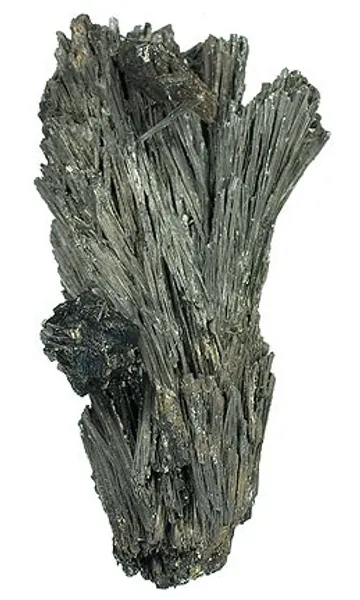
    San José Mine andorite is one of the classic Bolivian sulfosalt prizes: steel-gray to gray-black, highly metallic crystals, commonly tabular, rounded, and strongly striated, with the best examples showing a stacked, bladed, almost architectural growth that makes a rare species look unexpectedly displayable. In collector usage the label “andorite” is still widely understood for these San José specimens, although modern nomenclature treats the old andorite field more carefully, particularly around senandorite and quatrandorite. For the display collector, the important point is practical: San José produced some of the most impressive crystallized Ag-Pb-Sb sulfosalt material ever to reach the specimen market.

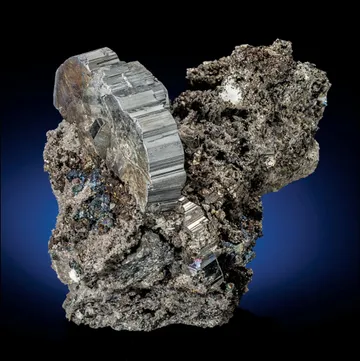
    striated steel-gray andorite crystal from San José Mine — credit: Rob Lavinsky, iRocks.com, CC BY-SA 3.0

    Photo: Wikimedia Commons

    The mine sits at Oruro, in one of Bolivia’s great tin-silver districts, where Miocene igneous activity, altered volcanic rocks, and older sedimentary rocks created an unusually fertile setting for complex sulfides and sulfosalts. Andorite here belongs to a broader San José assemblage of cassiterite, pyrite, stannite and ferrokësterite, zinkenite, jamesonite, miargyrite, pyrargyrite, galena, sphalerite, tetrahedrite, rhodostannite, and other ore minerals. That complexity is part of the locality’s appeal: many specimens are not isolated single-species curiosities, but miniature fragments of a polymetallic vein system in which silver, lead, antimony, tin, and sulfur were all chemically active.

    The best San José andorites are sought for sharpness, metallic brightness, well-developed tabular crystal form, strong parallel striation, and clean association. Zinkenite needles on andorite, andorite on pyrite or stannite-group matrix, and pieces showing rhodostannite or pale alteration minerals can be especially desirable. Large crystals are rare, and a reported upper size of about 15 cm places the locality in a world-class category for the species group; most collector specimens are far smaller, often thumbnail to miniature size, but even small pieces can be visually strong when the crystal is complete, lustrous, and well terminated.

    andorite with zinkenite from San José Mine — credit: Rob Lavinsky, iRocks.com, CC BY-SA 3.0

    Photo: Wikimedia Commons

    Historically, San José is one of those localities where mining history and collector history overlap. The mine is a major Oruro tin-silver operation that later became famous among collectors for sulfosalt specimens. Production of specimen-grade material was especially important in the 1970s, and the 2004 find of fine andorites gave the species a fresh place in the modern market. Good examples are not common, but they appear often enough that a patient collector can still choose between compact single crystals, clusters with zinkenite, and richer matrix pieces.

    Featured Specimens

    Locality Information

    Search for specimens: View all andorite specimens from San José Mine, Bolivia

    San José Mine is located at Oruro, Cercado Province, Oruro Department, Bolivia, on the western side of the city. It is a tin-silver mine in the Central Andean tin belt, a metallogenic province famous for silver-tin-base-metal systems and an extraordinary suite of sulfosalt minerals. The deposit is related to Miocene igneous activity and has been described as a silver-tin deposit associated with a quartz-latite dome and, in later work, with mineralization around the San José and Itos stocks. The district geology includes altered volcanic and intrusive rocks and older sedimentary host rocks, and the ore occurs mainly in veins and hydrothermal breccias.

    The collector importance of San José lies in its late, sulfosalt-rich stages. Early mineralization includes cassiterite and pyrite, while later stages introduced silver- and lead-antimony sulfosalts. Andorite formed in that sulfosalt environment, commonly with zinkenite, stannite-group minerals, pyrite, cassiterite, jamesonite, and quartz. Older Japanese studies of the San José sulfosalts described andorite from the San Isidro and Moropoto veins as crystals in vugs in the central portions of veins, associated with sulfosalt bands rather than as a broad, disseminated ore mineral.

    The mine has a long mining history tied to the growth of Oruro as a silver and tin center. San José was a large tin-silver mine, closed in 1992, and later reopened on a small scale from 2002, largely for specimen production. Collectors should understand the distinction between visiting the tourist-oriented mine workings and acquiring specimens: public mine tours may be possible through local operators, but specimen collecting access is not the same thing as tourist access. The collector market depends on material recovered through miners, cooperatives, old stocks, and established dealers.

    Specimen production has several recognizable chapters. The 1970s were especially important for specimen-grade sulfosalts, including andorite and plagionite, and the early 2000s brought renewed interest as fine andorite and associated sulfosalts entered the market. A November 2004 discovery is repeatedly associated with many of the fine modern andorite specimens in circulation, including pieces with zinkenite, pyrite, and stannite-group minerals. This find helped make San José andorite familiar to a new generation of collectors, not just as a rare name on an old label but as a visually compelling metallic species.

    San José and nearby Itos are closely linked in both geology and specimen commerce. The two mines are close enough, and the historical workings and vein systems are entangled enough, that older labels can be imprecise. Many specimens sold simply as “San José Mine” may in fact be from neighboring Itos or from an Itos vein within the broader San José mining system. For a locality specialist, a more specific label such as San Isidro vein, Moropoto vein, Socavón level, Itos vein, or San José-Itos system is worth preserving, even when the market name remains “San José.”

    Characteristics of Andorite from San José Mine, Bolivia

    San José andorite is typically gray-black to steel-gray with a bright metallic luster. The classic crystal habit is rounded tabular to bladed, with prominent parallel striations. Many crystals look layered or stacked, with repeated plates growing in parallel; some have sawtooth-looking terminations where several parallel individuals meet. Single crystals may be lustrous and sharp, but many show a faintly fibrous or satin-like surface texture, and some carry pale yellowish, beige, or whitish coatings from alteration minerals.

    The best display pieces are usually thumbnails to miniatures, with crystals from about 1 to 3 cm being a realistic target size for well-formed examples. Dealer and collection records also document larger miniatures and small-cabinet specimens, including clusters around 4 to 7 cm across. Exceptional crystals have been reported up to about 15 cm, but such pieces should be treated as major locality specimens rather than normal market material.

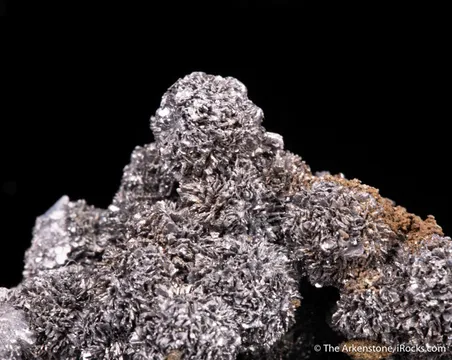
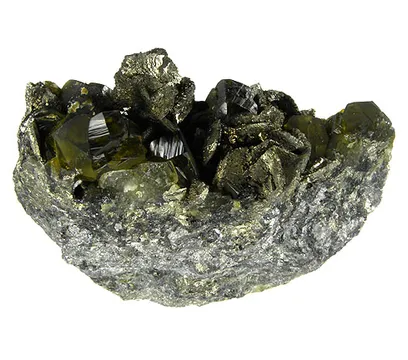
    The most characteristic associations are zinkenite, pyrite, stannite or ferrokësterite, cassiterite, jamesonite, and rhodostannite. Zinkenite appears as dark metallic needles or sprays and can give a specimen extra contrast when it crosses the smoother andorite faces. Pyrite adds brassy pyritohedral texture. Stannite-group matrix may be dark, iridescent, or granular, and historically some San José material labeled stannite was later shown to be ferrokësterite. Rhodostannite is an important micromineral association and has been documented as octahedral crystals on andorite. Alunite, zunyite, cervantite, stibiconite-like coatings, and other alteration-related minerals may appear on or near andorite specimens.

    Under the microscope and in polished section, San José andorite belongs to a wider paragenetic fabric of silver-tin-base-metal mineralization. Published work has recorded ordinary and Bi-rich andorite, along with ramdohrite and related sulfosalts. Older studies also described minor copper in the analyzed andorite and noted that San José andorite compositions were close to the ideal AgPbSb3S6 formula, though slightly PbS-rich in the samples studied.

    Quality depends on a few collector-visible factors. Strong metallic luster is crucial; dull, granular, or heavily coated pieces are less desirable unless they show an important association. Complete terminations matter because the crystals are often tabular and easily edge-worn. A single, sharp, lustrous, striated crystal can be preferable to a larger but massive-looking aggregate. Associations should be legible, not merely present: zinkenite needles should stand proud, pyrite should frame rather than bury the andorite, and stannite-group matrix should add contrast without obscuring the main crystals.

    Collector Notes

    The chief authenticity issue is not fakery but nomenclature and locality precision. “Andorite” is a traditional collector name, but modern mineral nomenclature has split or refined parts of the old andorite concept, particularly around senandorite and quatrandorite. Many historical and commercial labels remain under “andorite,” and that usage is still meaningful in the collector market. For advanced species collectors, however, a specimen should not be assumed to be a modern species-level determination without analytical support.

    San José versus Itos attribution is the second major issue. The mines are near one another and share a related tin-silver-sulfosalt environment; many specimens have moved through the market under broad “San José” labels. If a specimen is labeled “Itos vein, San José Mine,” “Itos Mine,” or simply “San José,” preserve that wording rather than trying to over-correct it. Old collection labels, mine-level notes, dealer provenance, and analytical reports are especially valuable.

    There are no well-documented treatments or manufactured fakes that are specific to San José andorite. The practical concern is misidentification among metallic sulfosalts. Zinkenite, jamesonite, stannite, ferrokësterite, franckeite, and related species from San José have a history of commercial label confusion. Fine needles labeled zinkenite may be jamesonite in some San José material; some material historically sold as stannite has been reidentified as ferrokësterite, while other supposed ferrokësterites are really stannite. For andorite itself, XRD, SEM/EDS, or electron microprobe work is the best route when species-level certainty is required.

    Condition deserves close attention. San José andorite is a brittle metallic sulfosalt, and the most attractive crystals have exposed tabular edges that chip easily. Check terminations, side edges, and the backs of matrix pieces. A contacted base is normal and acceptable, but bruised striated faces, bent-looking plates, crushed zinkenite needles, or scuffed metallic luster reduce value. Pale coatings can be natural and locality-typical, but they may also hide damage, so inspect coated faces carefully under angled light.

    Market availability is intermittent rather than impossible. Small single crystals and thumbnails appear from time to time, and 2004-find material still circulates through dealer inventories and old collections. Recent market examples include thumbnail single crystals around 1 cm, striated single crystals around 2.5 cm, and andorite-zinkenite clusters several centimeters across. Modest thumbnails may be affordable relative to the rarity of the species group, while large, highly lustrous, damage-free crystals or richly associated matrix pieces move into a much more competitive tier. Provenance to an old collection, the 1970s production, or the 2004 find adds interest when the specimen quality supports it.

    Stories & Field Notes

    The modern collector story of San José andorite turns sharply in November 2004. Before that find, fine crystallized andorite from the mine was known but not commonly encountered by most collectors. The 2004 material changed the visual standard: steel-gray, lustrous, layered crystals; some freestanding enough to be appreciated as sculptural miniatures; others set with zinkenite needles and pyrite. Dealer notes from the period describe the find as significant enough to redefine expectations for crystallized andorite, and the surviving specimens support that judgment. Even when the language of the market is enthusiastic, the mineralogical reality is clear: this was not merely more ore. It was collector-grade sulfosalt crystallization.

    One specimen from that wave, documented at 5.5 x 3.2 x 2.2 cm, is a nearly self-contained statement of the find: a layered, steel-gray, lustrous andorite crystal, striated and contacted at the base where it detached from the host rock. Another, 4.2 x 3.4 x 1.6 cm, shows the aesthetic partnership that made San José so memorable: andorite crystal groups intergrown with prismatic zinkenite needles on a pyrite matrix. These are small objects by cabinet-mineral standards, but in the world of rare sulfosalts they are unusually expressive.

    The San José story also runs through the career of Federico Ahlfeld, often called the father of Bolivian mineralogy. Dealer and collection notes tie the 2004 andorites to the same vein system worked by Ahlfeld, and they recall the period when San José and Itos were important tin sources during World War II. That connection gives the specimens an appealing historical layering: a silver-tin orebody known through economic geology, a sulfosalt suite refined by laboratory mineralogy, and a collector find that finally gave andorite the kind of crystal form usually reserved for more common metallic minerals.

    Inside the mine tradition, San José is more than a specimen locality. Tourist accounts of the Oruro mine emphasize the socavones, the cooperative mining system, and the ritual world of the underground, including offerings to El Tío, the mine spirit honored in Bolivian mining culture. For collectors, that context is a reminder that these bright metallic crystals come from a living mining landscape, not an abandoned hill worked only for specimens. The same workings that supplied rare sulfosalts are part of Oruro’s social history, labor history, and mining identity.

    Mineralogical Records & Publications

    • F. Keutsch and M. K. de Brodtkorb, “Metalliferous paragenesis of the San José mine, Oruro, Bolivia,” Journal of South American Earth Sciences 25, no. 4, 485–491, 2008 — The key modern paragenesis paper for San José, documenting andorite, Bi-rich andorite, rhodostannite, kësterite/ferrokësterite, and the wider Ag-Sn-base-metal assemblage.

    • A. Kitakaze and A. Sugaki, “Sulfosalt minerals from the San Jose Mine, Bolivia and their mineralization,” Science Reports of Tohoku University, Series III, vol. XVII, no. 1, 1988 — Detailed older work on San José sulfosalts, including andorite from the San Isidro and Moropoto veins, EPMA data, X-ray powder data, and paragenetic interpretation.

    • M. Pastor, A. Pastor, L. Torró, Á. Martínez, D. Artiaga, B. Torres, and P. Alfonso, “The San José-Itos Mines, Oruro, Bolivia: Structure and Ag-Sn Mineralization,” 13th SGA Biennial Meeting, 2015 — Useful for the San José-Itos structural context and modern interpretation of the Ag-Sn vein system.

    • N. Sidki-Rius, A. Jiménez-Franco, P. Alfonso, A. Penedo, and A. Aguilar, “Mineral Chemistry of Ore Minerals in the San Jose Mine of the Oruro District, Bolivia,” Goldschmidt Abstracts, 2017 — A concise analytical update on ore mineral chemistry, including sulfosalts and In-bearing phases from San José.

    • F. M. Chace, “Tin-Silver Veins of Oruro, Bolivia,” Economic Geology, 1948 — Classic economic-geology treatment of the Oruro tin-silver vein system and alteration framework.

    • C. G. Cunningham, J. McNamee, J. P. Vasquez, and G. E. Ericksen, “A model of volcanic dome-hosted precious metal deposits in Bolivia,” Economic Geology 86, no. 2, 415–421, 1991 — Regional model paper for Bolivian volcanic-dome-related precious-metal systems.

    • Wikimedia Commons file: Andorite-Stannite-201998.jpg — Documents an 11.8 x 7.2 x 3.7 cm San José andorite-stannite specimen formerly in the Academy of Natural Sciences Philadelphia collection.

    • Wikimedia Commons file: Andorite-152236.jpg — Documents a 5.5 x 3.2 x 2.2 cm San José andorite from the November 2004 find, photographed by Rob Lavinsky.

    • Wikimedia Commons file: Andorite-Zinkenite-210566.jpg — Documents a 4.2 x 3.4 x 1.6 cm San José andorite with zinkenite and pyrite from the November 2004 find.

    Further Reading & External Links

    • Mindat locality page: San José Mine, Oruro, Bolivia — The most useful single online locality reference, including coordinates, mineral list, mining notes, and label cautions.

    • Mindat occurrence page: Andorite from San José Mine — Focused occurrence record for San José andorite, including habit, color, abundance, associations, and references.

    • ScienceDirect: Metalliferous paragenesis of the San José mine, Oruro, Bolivia — Essential technical abstract and citation details for the 2008 paragenesis study.

    • ResearchGate: The San José-Itos Mines, Oruro, Bolivia: Structure and Ag-Sn Mineralization — Helpful for understanding the San José-Itos relationship and the broader vein system.

    • ResearchGate: Sulfosalt minerals from the San Jose Mine, Bolivia and their mineralization — Valuable older mineralogical study with specific andorite vein information.

    • Goldschmidt Abstracts: Mineral Chemistry of Ore Minerals in the San Jose Mine of the Oruro District, Bolivia — Short but useful modern analytical note on ore mineral chemistry.

    • USGS: A model of volcanic dome-hosted precious metal deposits in Bolivia — Regional geologic context for Bolivian volcanic-dome-related mineralization.

    • Wikimedia Commons: San Jose Mine category — Open image archive with San José mineral specimen photographs and locality media.

    • Minfind: Andorite specimens — Useful for recent market examples, sizes, associations, and availability trends.

    • iBolivia: Mina San José — Context for the mine as an Oruro site with underground tours and mining-history interpretation.

    • Main andorite Collector's Guide