






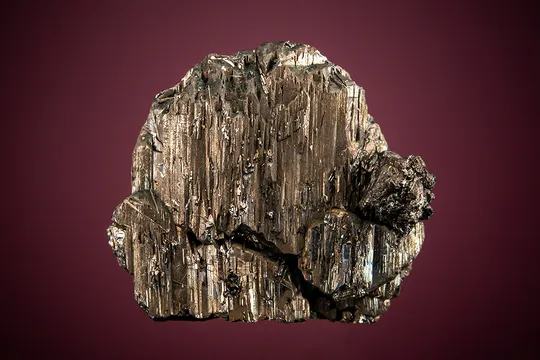
Andorite — rare sulfosalt with steel-gray to black crystals, high luster, and feathered groupings; prized in classic Bolivian and Peruvian localities.
Key facts
Andorite is a rare silver–lead–antimony sulfosalt in the andorite–fizelyite series, prized by connoisseurs for its brilliant metallic luster and elegant crystal forms. Typical crystals are steel-gray to black, often striated and highly lustrous, forming thick prismatic blades, blocky prisms, or parallel bundles and sprays. Fine specimens can show sharp terminations and attractive herringbone or “feathered” groupings, commonly on contrasting white to clear quartz or with associated sulfides such as pyrite, sphalerite, or stibnite/jamesonite. It is soft and brittle (Mohs ~3), with a high specific gravity and a tendency to lightly tarnish—factors that make pristine, undamaged pieces both scarce and especially valuable.
The best andorite ever found comes from a handful of classic silver districts in Bolivia and Peru, where pockets produced lustrous, sharply terminated crystals and aesthetic clusters through the 20th century. Fresh, mirror-bright faces, larger crystal size, complete terminations, and display on a good matrix dramatically elevate a specimen’s desirability. Because new production is sporadic, andorite remains a sought-after rarity in sulfosalt-focused collections and in any cabinet aiming to represent the great silver mines of the Andes.
Andorite sits firmly in the “connoisseur sulfosalt” category: not abundant, often overshadowed by better-known silver minerals, yet fiercely pursued by specialists. Classic pockets at Bolivia’s San José and Chocaya mines and Peru’s San Genaro and Quiruvilca mines set the benchmark—sleek, reflective crystals with crisp striations and attractive groupings. These finds circulated widely among collectors in the 1960s–1990s and continue to define top quality.
Today, fresh discoveries are uncommon. As a result, fine older pieces—especially on good quartz matrix or in large, damage-free crystals—command strong prices and trade quickly when they appear. Collectors also appreciate andorite’s historical significance in the Andean silver story and its aesthetic versatility: from stout, graphite-luster prisms to elegant feathery aggregates sparkling against white quartz. Because the supply pipeline is thin, choice pieces enjoy enduring, even rising, demand.
Below are renowned sources known for producing distinctive andorite specimens. Only localities with verified IDs are included.
Oruro’s San José Mine is arguably the most celebrated andorite source. Classic specimens feature lustrous, striated prisms and thick blades—often in radiating sprays or stair-stepped clusters—on quartz. The best have mirror-bright, gunmetal faces and crisp terminations, sometimes accompanied by pyrite, sphalerite, or tetrahedrite. These crystals display superbly with bright contrast and remain reference pieces for form and luster. Large, undamaged matrix specimens are uncommon and highly coveted.
Luster and freshness
Crystal size and form
Aesthetics and matrix
Condition
Color and patina
Rarity and provenance
Repairs
Surface coatings and “re-blackening”
Polishing
Ask dealers about any restoration—solid disclosures are standard practice for high-end sulfosalts.
Andorite, like many sulfosalts, benefits from careful, dry storage and gentle handling.
Handling
Environment
Cleaning
Tarnish management
Health and safety
Following these simple practices will preserve the brilliant luster and sharp forms that make andorite such a rewarding mineral to collect.