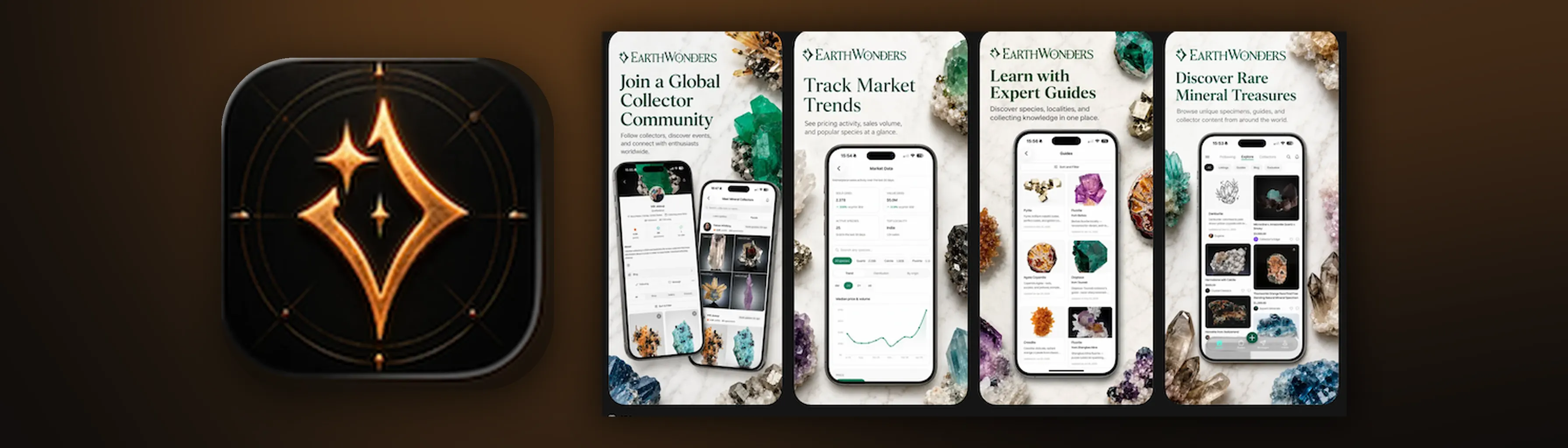
We’re so excited to finally say it: the EarthWonders iOS app is live on the App Store. Since launching on June 23rd, collectors have been adding specimens, browsing collections, reading guides and bringing more of the mineral world into one place. This has been a huge step for EarthWonders, and we’d love for you to be part of it. Download the app here, add your favourite pieces, and help us keep building a home for collectors everywhere.
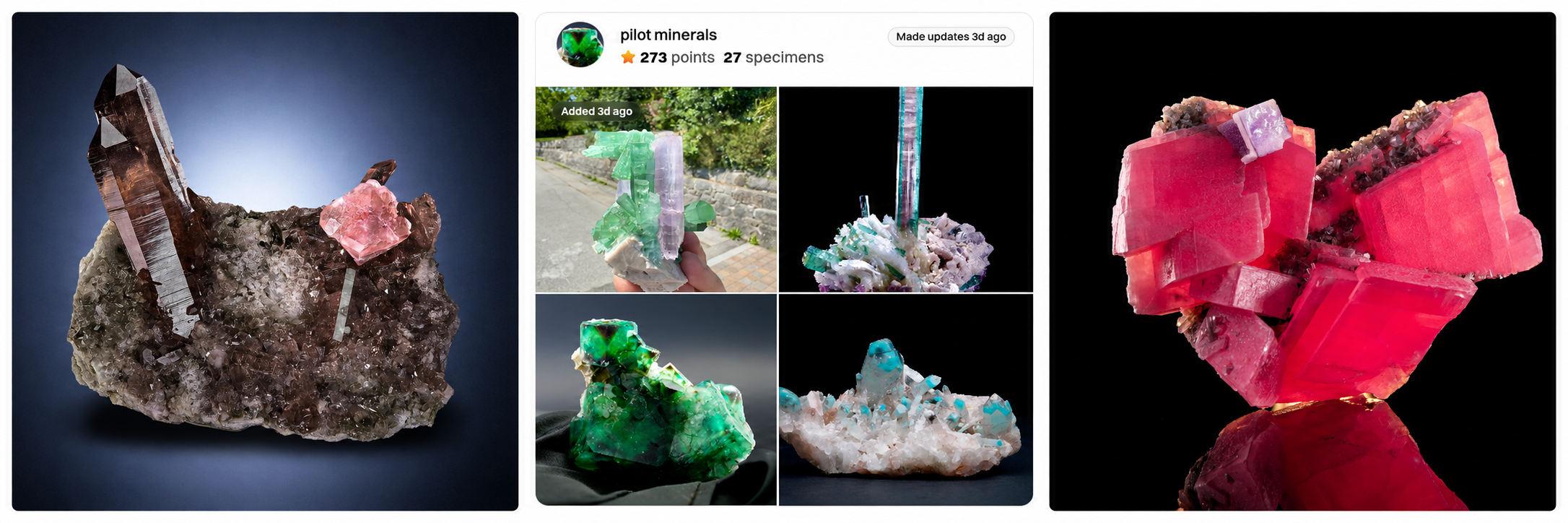
A warm welcome to all the new collectors joining EarthWonders - we’re so happy to have you in our growing community of passionate mineral and crystal enthusiasts. This month, we’re spotlighting Pilot Minerals, a collector based in Italy who has been collecting since 2000 and has already shared 27 striking specimens with the EarthWonders community.
The team has been busy developing a new EarthWonders.com experience, designed to make the site easier and more enjoyable to explore.
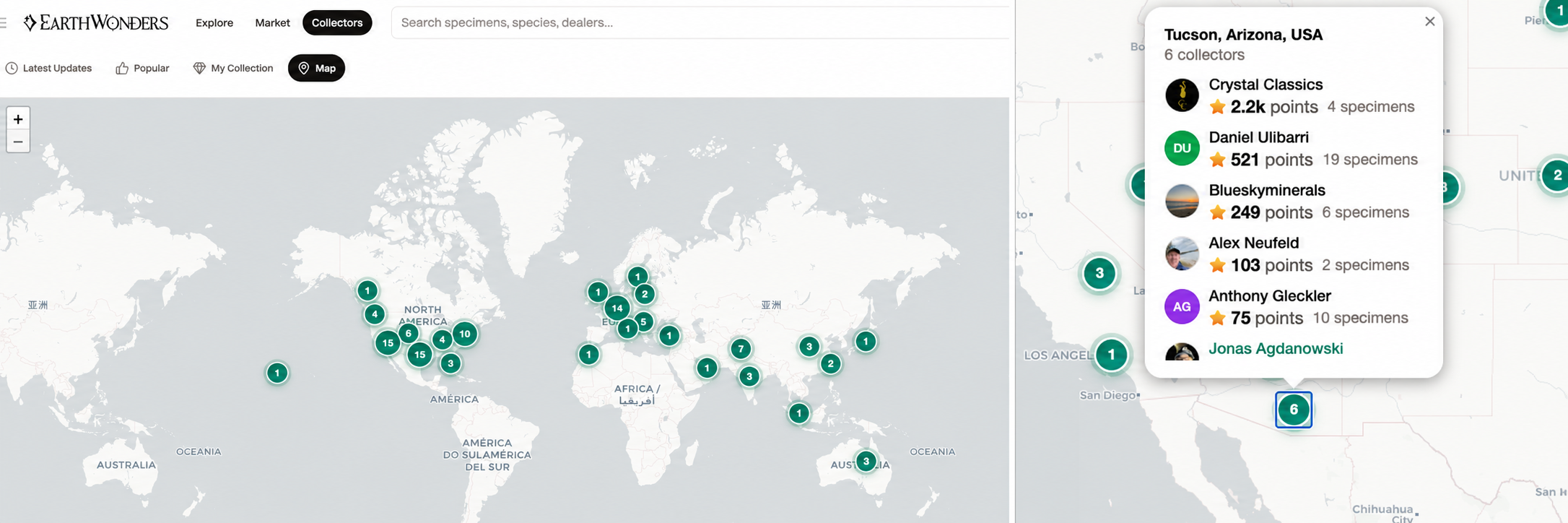
There are a bunch of new updates and features, the Collector map and Explore section to name a few.
The collector map gives visitors a more visual way to discover the EarthWonders community. It helps show how wide-reaching mineral collecting really is, connecting people through places, collections, and shared interests. Whether you are looking for collectors nearby or simply curious about where others in the community are based, the map adds a more personal sense of connection to the site.
Have you updated your location so other collectors can find you?
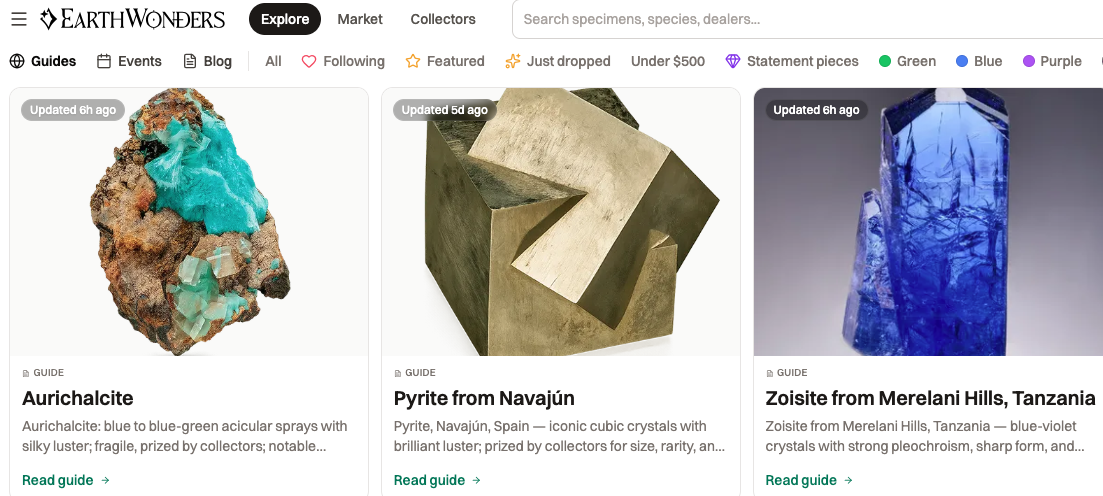
The Explore section is designed for browsing without needing to know exactly what you are looking for. It brings together different ways to discover EarthWonders content, from featured specimens and market highlights to guides, events, blog posts, and collector profiles.
The goal with this update is simple: to make EarthWonders.com feel more useful, more connected, and more enjoyable for the mineral community. We want it to be a place where collectors can browse, learn, share, and feel part of something larger.
Have a look around the updated EarthWonders interface, and let us know what you think.
Every collector has a piece they know inside and out: the locality, the habit, the story, the little details that make it special. Our Guides page is a place to share that knowledge. We’ve added hundreds of mineral guides across species and localities, and collectors can contribute their own photos, notes, and expertise to help make each guide more useful for the community. Browse the guides, add what you know, and help other collectors understand the specimens they love.
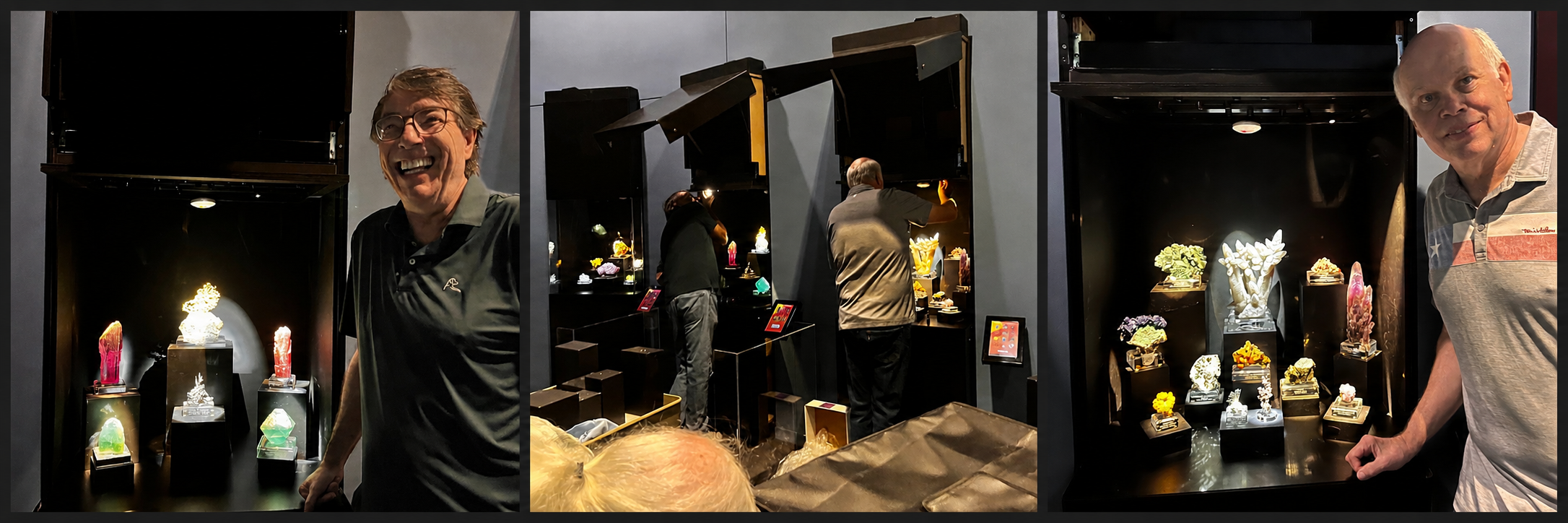
As the 2026 World Cup kicks off, the Perot Museum of Nature and Science in Dallas, Texas, is marking the occasion in a way that mineral collectors will appreciate: with an exhibition centred on minerals from countries connected to the tournament.
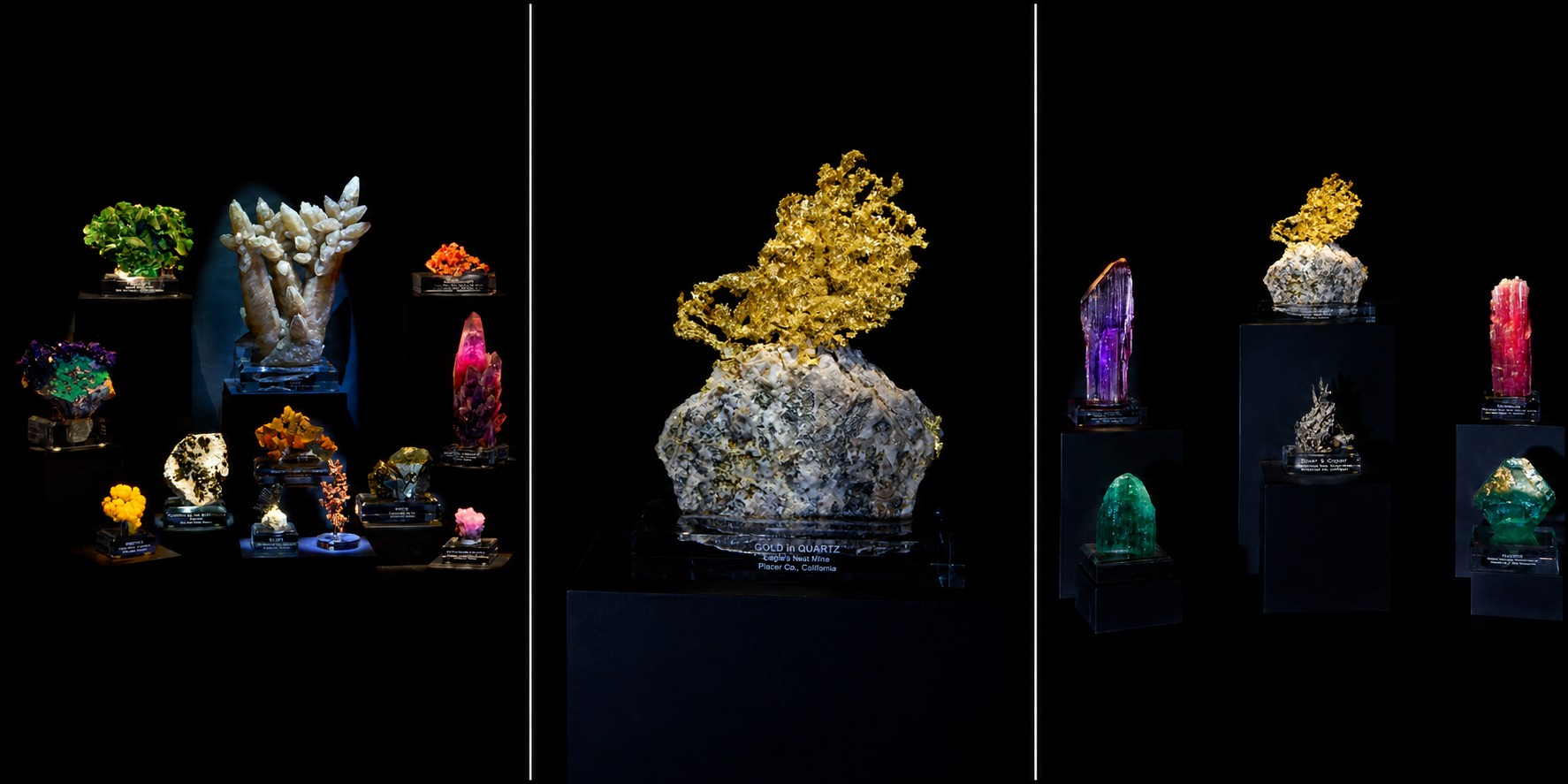
Minerals of the World Cup is on view in the museum’s gems and minerals galleries, bringing together specimens that link geology, locality, and national identity.
The EarthWonders team got the inside scoop from Caroline Im, Director of Gems and Minerals at the Perot Museum, about how the exhibition came together. It is not every day that you see soccer and minerals in the same sentence, and we were super excited to hear more about it!
The exhibition was designed to highlight the close relationship between mineral specimens and the geological histories of the countries they come from.
“Each specimen was selected not only for aesthetic quality, but also for how strongly it represented a locality that has shaped mineral collecting, mining history, or scientific understanding."
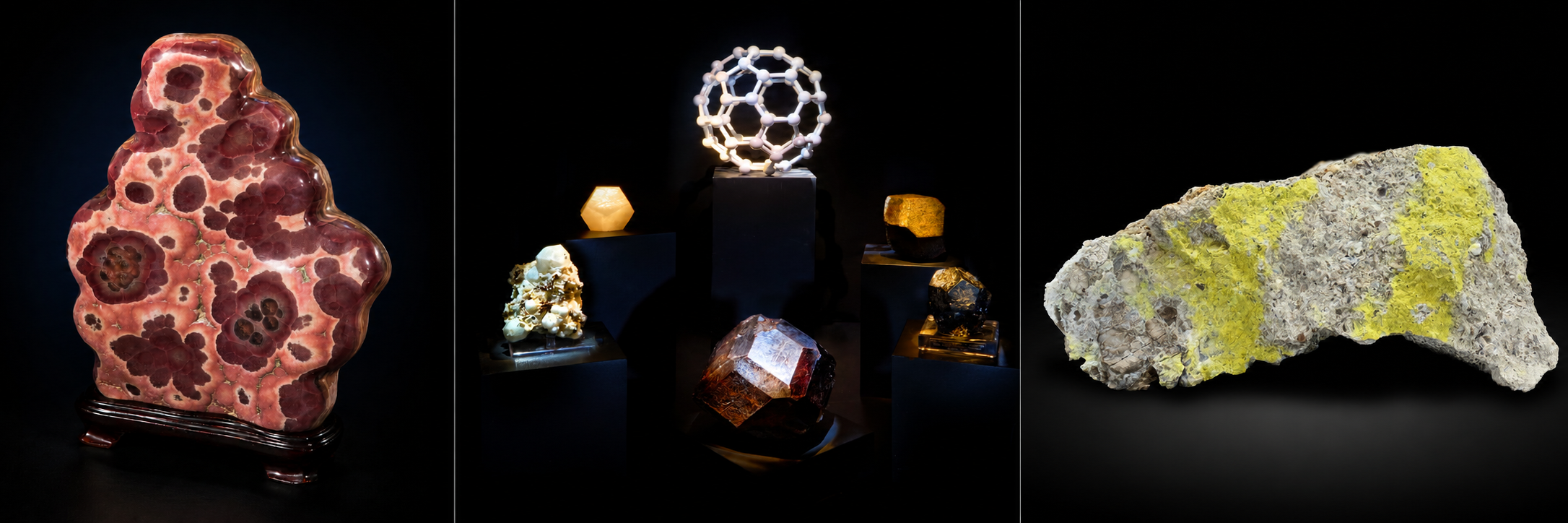
In many cases, certain minerals are closely tied to particular regions, such as tourmaline from Brazil, amethyst from Uruguay, and rhodochrosite from South Africa. Curators and specialists were consulted when making some of the selections. Henrik Friis at the Natural History Museum of Norway, for example, recommended silver as the specimen most strongly connected to Norway.
The exhibition was also intended to show that minerals are global objects shaped by trade, science, exploration, and culture. Pairing specimens with their countries of origin helps illustrate how dramatically geology varies from place to place, and how each region can produce minerals tied to its own landscape, environment, and history.
Not every country has the same abundance or diversity of collectible minerals as places such as the United States or Brazil, where large mineral industries and active mining communities can make specimens easier to source. Calcite, quartz, and gypsum appear several times throughout the displays, but even familiar minerals can still tell important geological stories and reflect the character of the places they come from.
One example is bauxite from Haiti. While bauxite may not be as universally aesthetically pleasing as some of the other specimens, it is important to Haiti’s mining history. Its inclusion helps show that the exhibition includes minerals with strong historical and regional connections, not only dramatic crystal specimens.
The United States and Mexico display cases were drawn entirely from the personal collections of Kevin Brown and Rick and Sharrie Ely, respectively. Although they are not curators, each brought a distinct perspective to the design and selection of the specimens.
For the United States case, Brown selected pieces with similar colors and visual balance from opposite coasts, along with a gold specimen from California to anchor the display.
For the Mexico case, Rick and Sharrie Ely focused on both historically significant specimens and exceptional crystal examples, emphasizing the diversity and legacy of Mexican mineral collecting. The exhibition also includes three historic specimens from Dr. Miguel Romero, known as the “Father of Mexican Mineralogy.” Many visitors have been excited to see Mexico represented through silver, since Mexico has historically been one of the world’s most important sources of the metal.
One of the most talked-about pieces in the exhibition is the rhodochrosite from Japan. It surprises many visitors because Japan is not commonly associated with world-famous rhodochrosite specimens. The piece stands out for both its size and aesthetics.
The rarest specimen on display is the strelkinite from Jordan.
Several specimens also have notable field stories. Three were self-collected by geologists while working in the field: gypsum from Algeria, collected by Keith and Diane Brownlee; gypsum from Tunisia; and calcite from Qatar, collected by Tahir Bukhari.
Watching people look for personal connections in the cases has been amazing. Visitors have run to find specimens from countries they are supporting during the football tournament, while others have searched for their family’s country of origin or places they have travelled to.
Students and younger visitors have also been especially engaged with the historical and scientific aspects of the displays.
“Because North Texas is hosting the most number of games in the World Cup, we are expecting an increase in international visitors. Just as soccer brings people together from around the world, I hoped this exhibition could give visitors a small connection to home during the World Cup. One of the most rewarding parts of organizing this exhibition was bringing together specimens that not only showcase extraordinary natural beauty, but also reflect the geology, history, exploration, and cultures tied to different regions around the globe.”
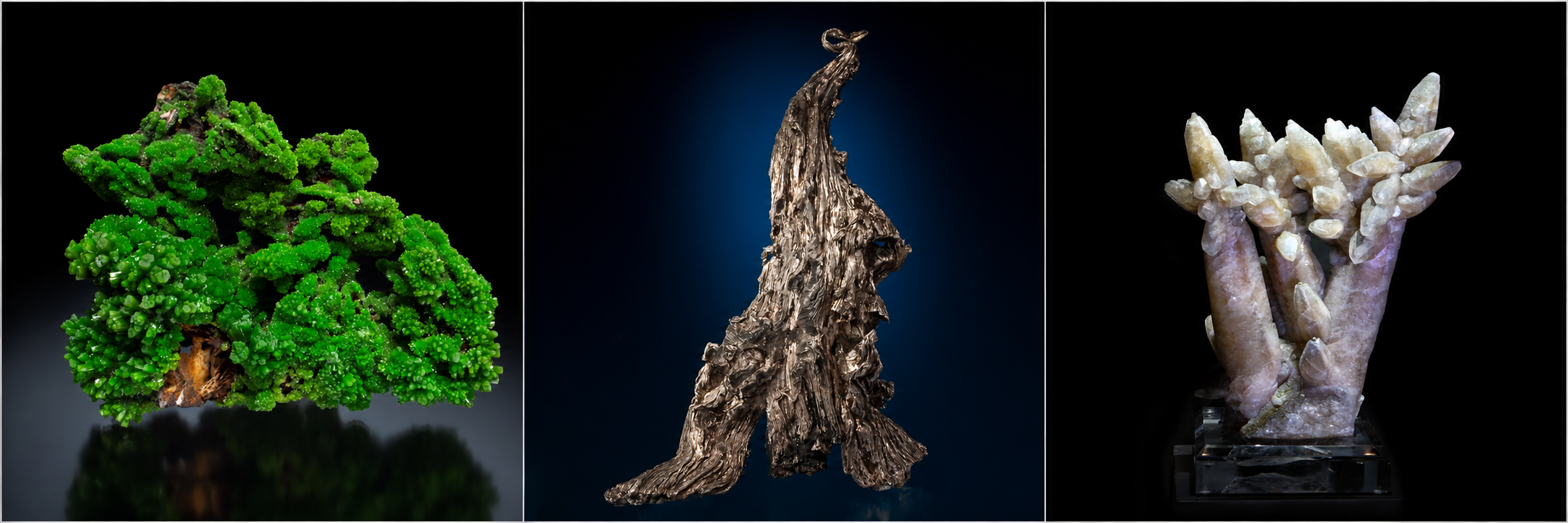
If mineral collectors could remember only three specimens from the exhibition, Im said she would choose the pyromorphite from Les Farges, France, the wire silver from Kongsberg, Norway, and the sculptural calcite from Charcas, San Luis Potosí, Mexico.
"All three have an incredibly tree-like quality, though each expresses it in a completely different way. The pyromorphite resembles a miniature bonsai tree, with brilliant spring-green hoppered crystals evoking leaves and foliage. The wire silver has the appearance of twisting branches and tree trunks, almost as though it were frozen organic growth in metal form. The calcite, with its large branching arms, feels almost monumental, like the impression of a massive tree translated into crystal."
The Perot Museum hopes visitors leave with a greater appreciation for both the scientific and human stories behind mineral specimens.
Minerals of the World Cup is scheduled to run through September 7, 2026.
If you have specimens, locality information, research, or stories that could help others discover the world of minerals, we would be very happy to hear from you. Reach out to the team, info@earthwonders.com
Until next time, friends!