
1
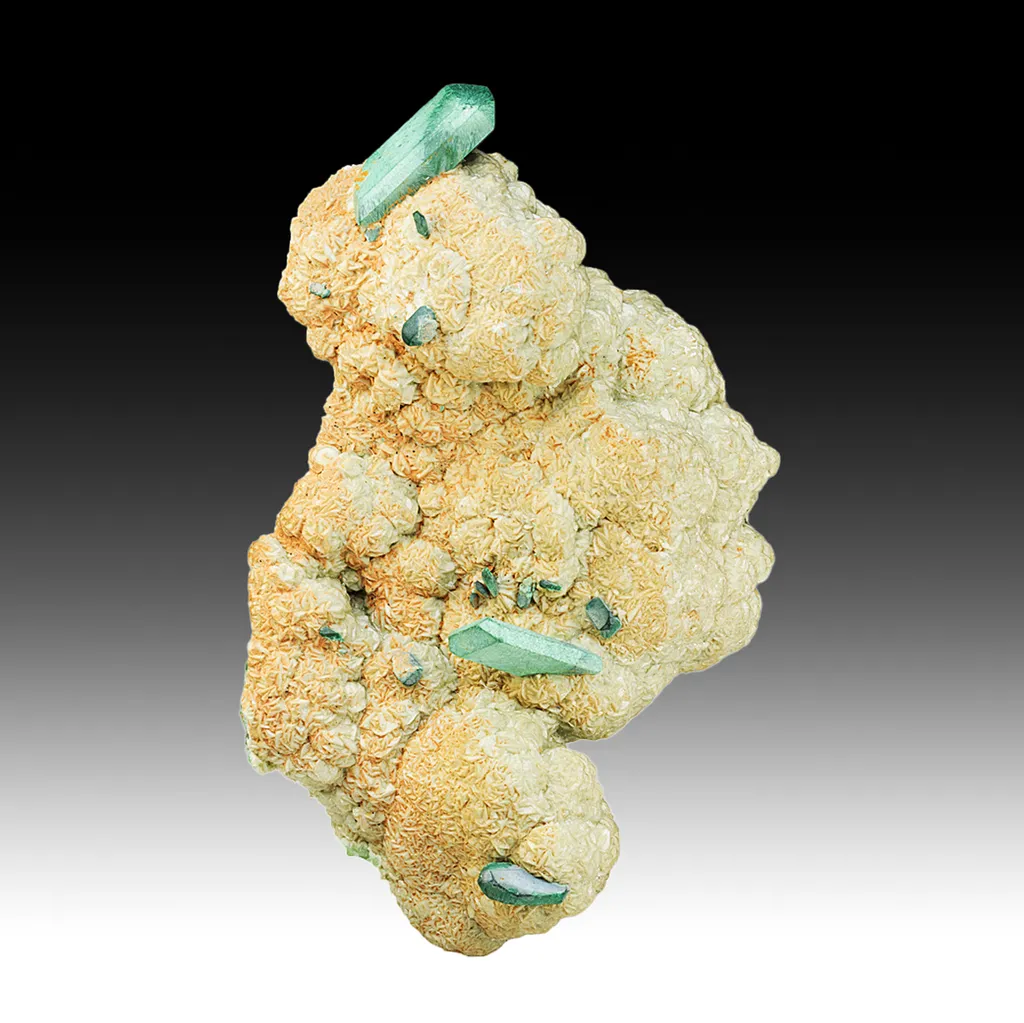
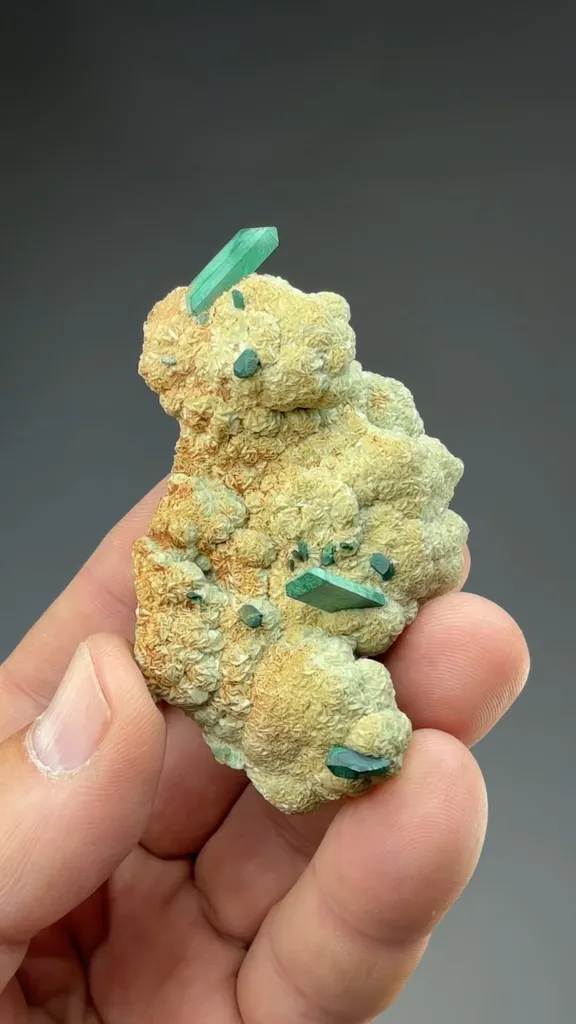
Malachite after Azurite with Smithsonite
1


- Free shipping
- Seller offers an extended return window of up to 14 days
 Ships from USA
WM
Weinrich MineralsFeatured
A neat combination specimen showing prismatic crystals of what were once azurite sharply formed in measuring to 1.5 cm in size, these now replaced by green malachite and scattered across the top of a smithsonite crystal matrix. In excellent condition.
The Tsumeb mine, located in the Otavi Mountainland of northern Namibia, is a world-renowned polymetallic deposit famous for its immense mineral diversity and exceptional crystal specimens. Geologically, the ore body is a steeply dipping, pipe-like structure that cuts through a thick sequence of folded and faulted Neoproterozoic dolostones and limestones belonging to the Otavi Group. The core of the pipe is filled with a heavily altered feldspathic sandstone, known as the Tsumeb pseudo-aplite, which acted as a structural conduit for deep-seated, metal-rich hydrothermal fluids that deposited massive concentrations of copper, lead, zinc, silver, and arsenic sulfides. Due to prolonged exposure to groundwater weathering in a semi-arid climate, these primary sulfides underwent intense oxidation across three distinct, deeply buried zones, creating an unparalleled variety of secondary minerals within open solution cavities. Indigenous peoples had surface-mined the prominent green outcrop for centuries before formal European exploration led to the founding of the Otavi Minen- und Eisenbahn-Gesellschaft (OMEG) in 1900. Industrial-scale underground mining commenced in 1905 and continued almost continuously under various corporate entities, including the Tsumeb Corporation Limited (TCL), until declining ore reserves and rising operating costs forced the permanent closure of the underground workings in 1996.
A pseudomorph occurs when a mineral undergoes a chemical transformation or replacement process that completely changes its internal composition while perfectly preserving the external crystal shape and habit of the original species. In the case of malachite after azurite, this phenomenon is driven by late-stage changes in the local geochemical environment within the oxidized zones of copper deposits. Azurite and malachite are both basic copper carbonates, but azurite requires a higher concentration of dissolved carbon dioxide to remain stable. When percolating groundwaters become more dilute or less acidic, the azurite crystals become chemically unstable and slowly alter into malachite by losing carbon dioxide and gaining water. Because this replacement happens gradually on an atom-by-atom basis, the resulting malachite retains the sharp, distinct monoclinic bladed or tabular forms of the original azurite crystals. The finished pseudomorph often displays a striking contrast between the sharp, rigid geometric lines of the ancestral azurite and the fibrous, velvety, emerald-green texture of the newly formed malachite.
Product details
SpeciesMalachite, Azurite, Smithsonite
SizeSmall Cabinet
Dimensions8.5 x 5.0 x 2.5 cm
Listed on07/16/2026
LocalityNamibia, Oshikoto Region, Tsumeb
SKU1471005
Comments