Diamond
Unknown Owner
Help improve this recordNo owner is registered for this specimen yet. If it's yours or you know more about it, you can add the owner, provenance, publications and other details.
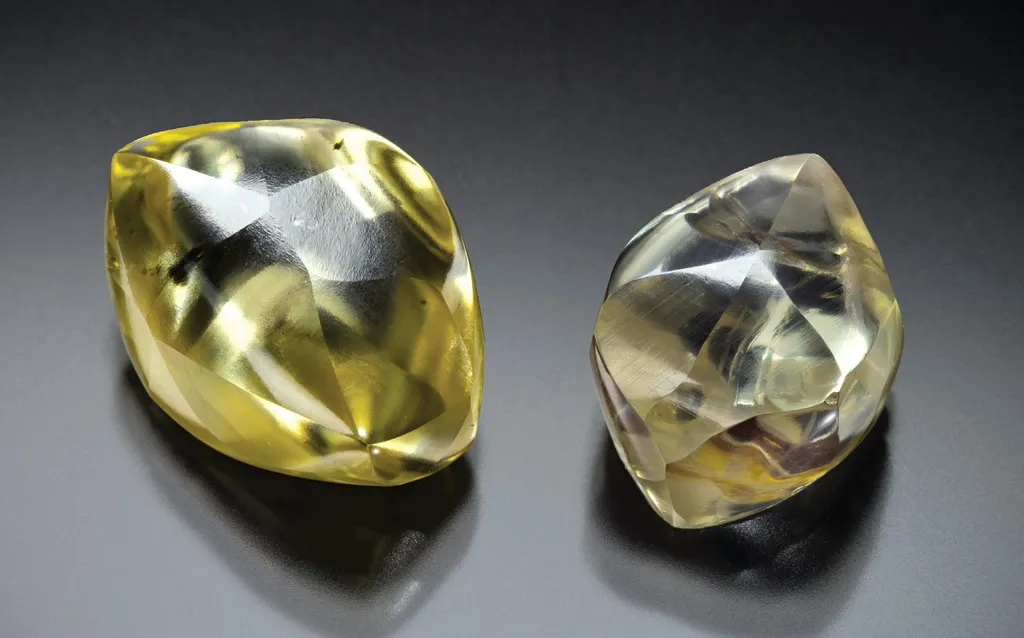
Source special issue: mineral-collection-university-of-delaware, PDF page: 15. Label: Figure 15. Diamonds, 7.25 carats and 5.64 carats, from Murfreesboro, Pike County, Arkansas. Diamonds were first discovered in Arkansas on August 1, 1906, by John Wesley Huddleston, a pig farmer who found a 4.5-carat diamond and a 3-carat diamond on the same day (Kunz, 1906). They were sent for identification to a jeweler in Little Rock, and then to George Kunz in New York, who made arrangements to visit the site in January 1907 along with Dr. Henry S. Washington. Travel arrangements in 1907 were more complicated than they would be today; the best way to travel was by rail from New York to Little Rock, then by rail to Prescott and on to Cooley’s Crossing. The remaining six miles to the mine near Murfreesboro were traveled by wagon. By the time Kunz arrived more than 150 diamonds had been found by Huddleston, all but two of them found on the surface, for a total of 200 carats. Kunz purchased the lot, and most of them were probably faceted. The 5.64-carat diamond crystal in the University of Delaware collection could be from the original Huddleston find but the 7.25-carat crystal belonged to a later discovery because no diamond of such a size was discovered until after 1908. Although the exact dates of discovery of these two diamonds are unknown, we can say that the yellow hexoctahedron was found sometime after 1908 and both were found before 1922.
Product details
Species
Added on10/22/2024
Locality
Publications
- Mineralogical Record Special Issue: Mineral Collection University Of Delaware page 15
- Mineralogical Record Special Issue: Mineral Collections In American Northeast page 90
Learn more
Mineral guide
Learn about Diamond
the hardest mineral (Mohs 10) with octahedra, trigons, and cube forms; matrix and alluvial crystals prized for pristine appearance and provenance.Regional guide
Comments