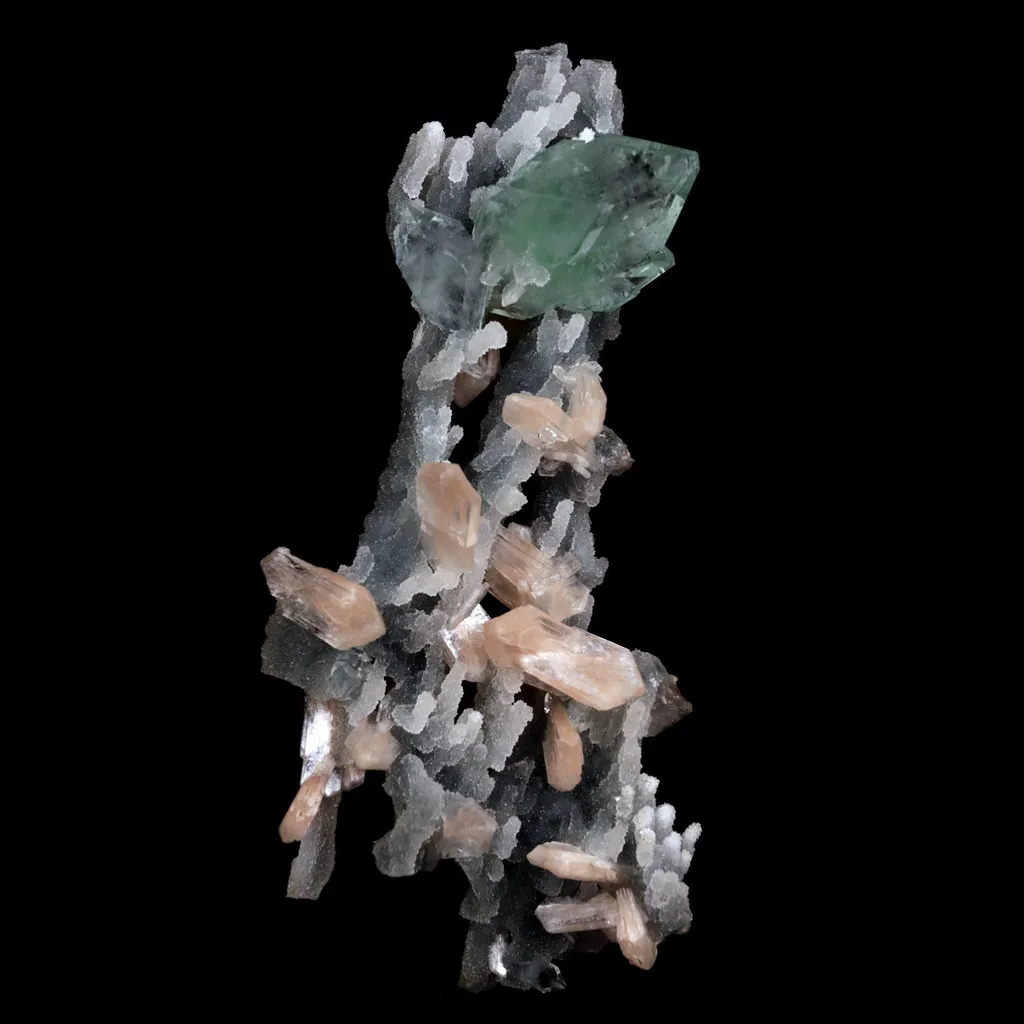
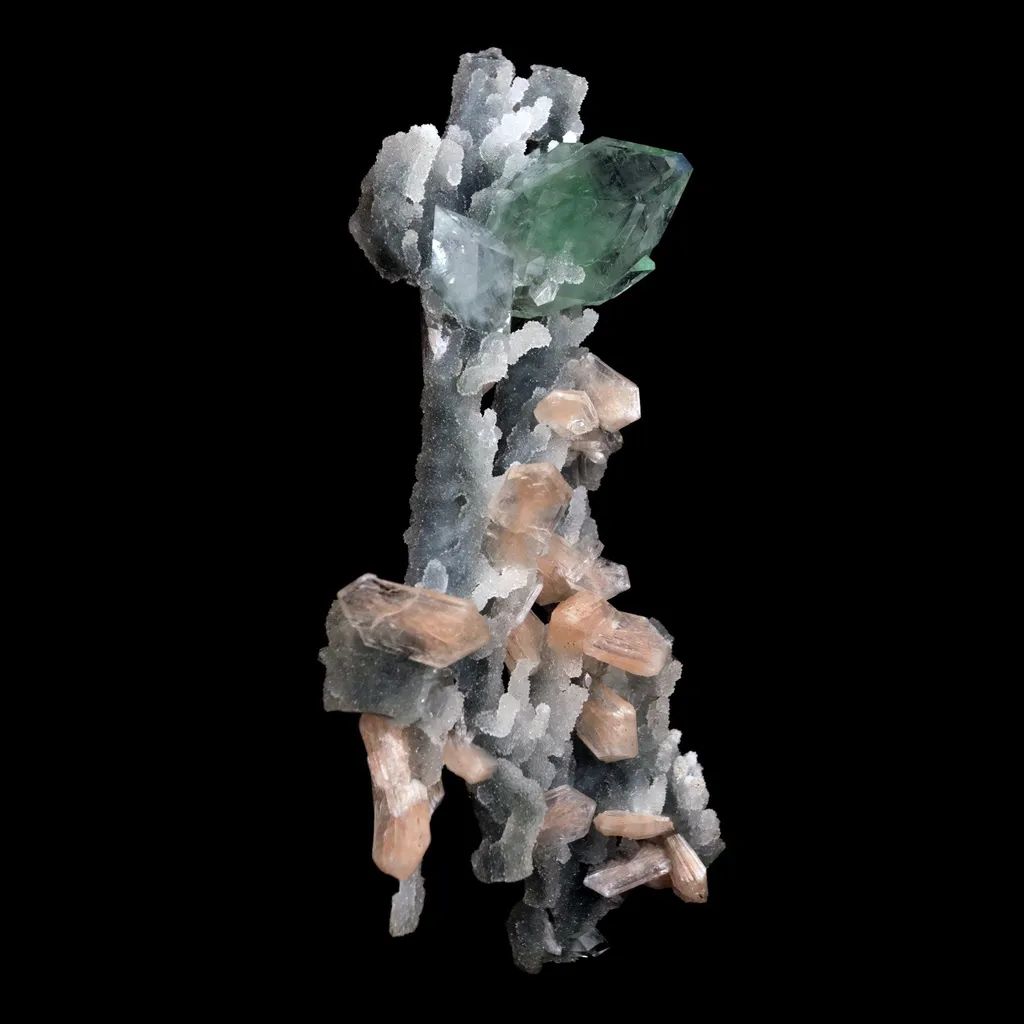
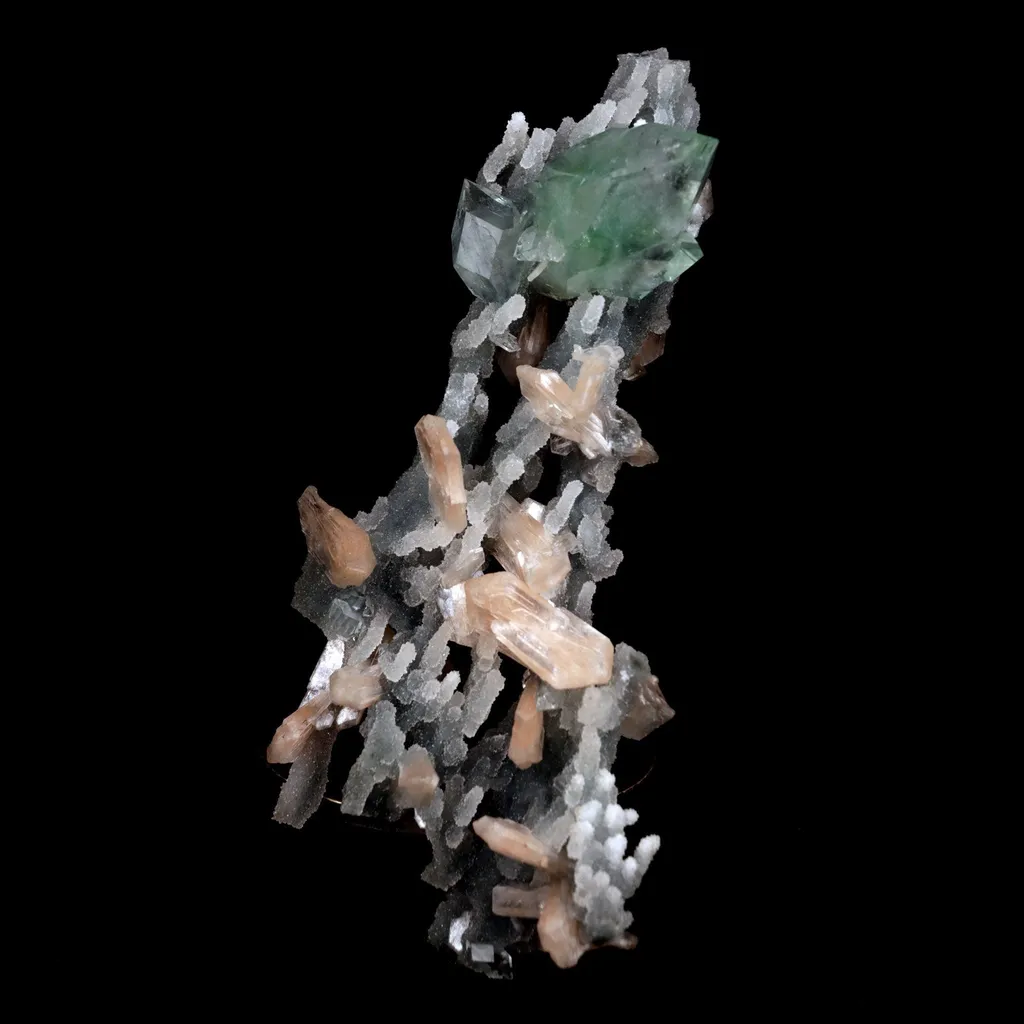
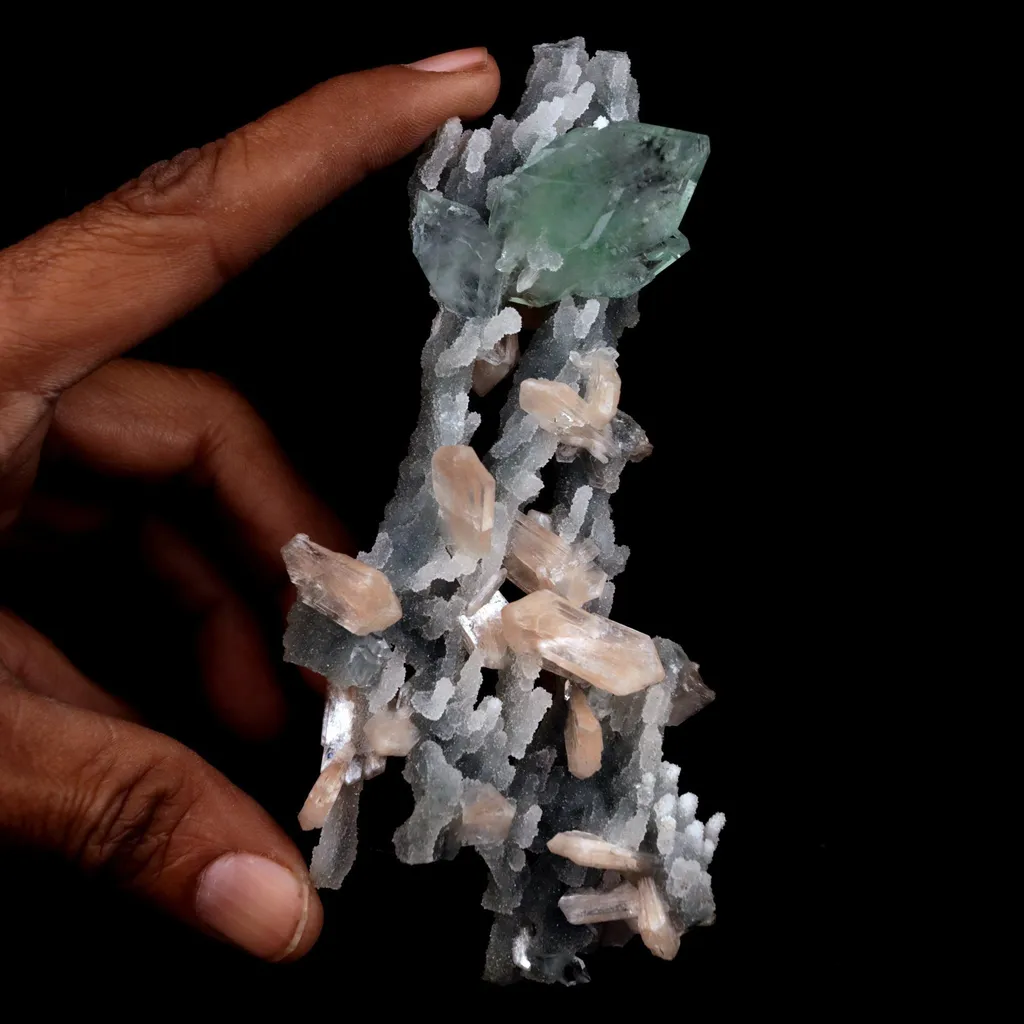
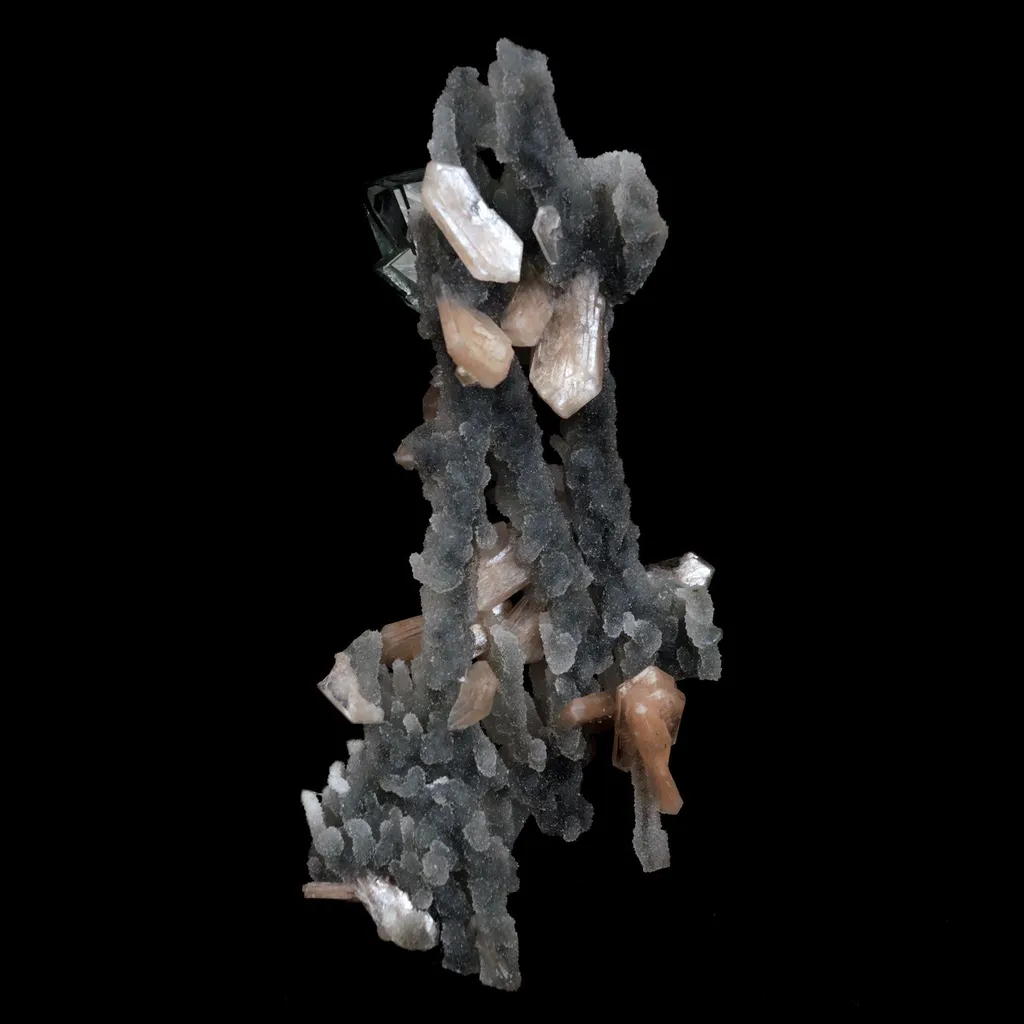
Green Apophyllite with Stilbite on Chalcedony Stalactite Natural Mineral Specimen
Unknown Owner
Help improve this recordNo owner is registered for this specimen yet. If it's yours or you know more about it, you can add the owner, provenance, publications and other details.
Features: Apophyllite crystals are glossy and crisp, with tiny bladed white Stilbite on pastel purplish Chalcedony stalactites on matrix in this great show specimen. Fantastic condition, and it looks great on display. Double-terminated Apophyllite, the largest of its kind.Many Apophyllites are double-terminated, resemb
Product details
SpeciesApophyllite, Chalcedony, Stilbite
SizeCabinet
Dimensions12.7 x 7.6 cm
Added on10/28/2024
LocalityIndia, Maharashtra, Jalgaon District
Known provenance
| Date | Collector | Acquisition price |
|---|---|---|
| 11/2025 | Unknown Owner | $1,000.00 |
| — | Superb Minerals | Not disclosed |
Learn more
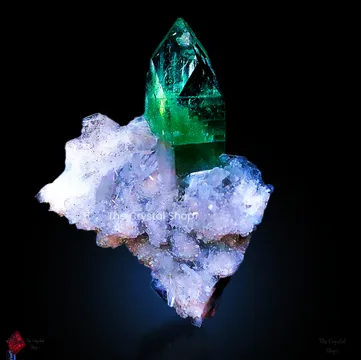
Mineral guide
Learn about Apophyllite
glassy, fish-tail crystals; colorless to green. Great for display and provenance. Key sources: Deccan Traps (India), New Jersey; collecting value.
Regional guide
Comments