
1
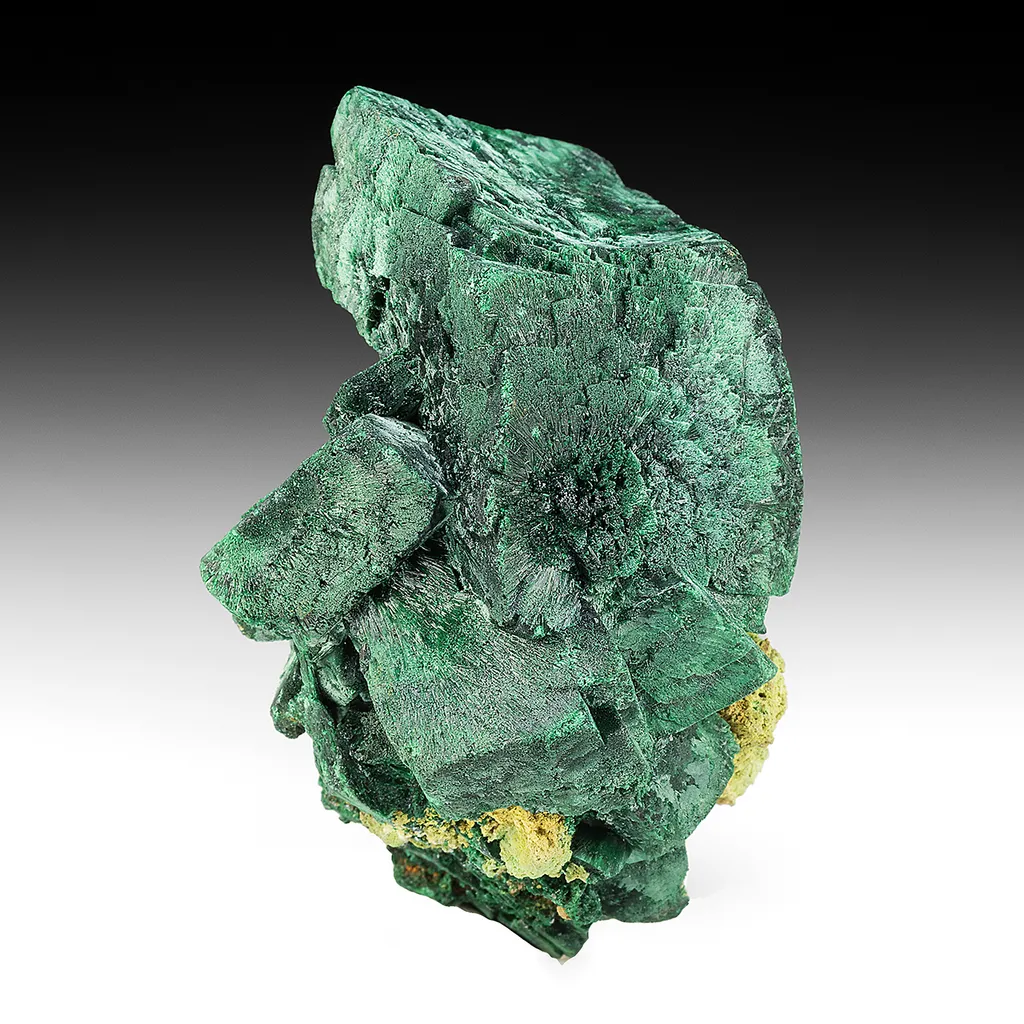
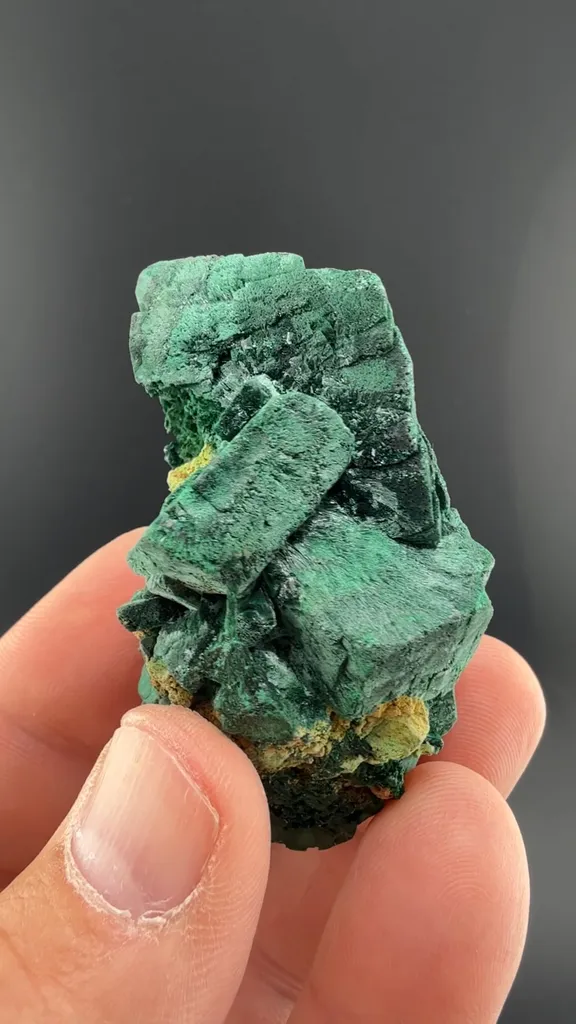
Malachite after Azurite
1


- Free shipping
- Seller offers an extended return window of up to 14 days
 Ships from USA
WM
Weinrich MineralsFeatured
Large blocky crystals of what were once azurite measuring to 4.5 cm in size aesthetic up on matrix. These crystals are replaced by velvety green crystallized malachite. The specimen is in terrific condition all around.
The Tsumeb mine, located in the Otjikoto Region of northern Namibia, is a world-renowned polymetallic deposit famous for its astonishing variety of rare secondary minerals and exceptionally rich copper, lead, and zinc ores. Geologically, the deposit is a pipe-like structure that cuts steeply through a thick sequence of Neoproterozoic dolomites belonging to the Otavi Group, formed by the dissolution of carbonate rocks and subsequent collapse, which created a massive breccia pipe that acted as a major conduit for hydrothermal fluids. This unique setting allowed for extensive, multi-stage oxidation zones extending deep underground, resulting in the crystallization of hundreds of distinct mineral species. Organized underground extraction and processing began under German colonial administration in 1907 by the Otavi Minen- und Eisenbahn-Gesellschaft (OMEG), followed later by Tsumeb Corporation Limited (TCL) in 1947, which expanded operations down to the deepest levels of the pipe. The historic main mine closed permanently in 1996 due to flooding, labor strikes, and depleted economic reserves, though localized slag reprocessing and modern environmental remediation efforts have continued into the 2020s.
A pseudomorph is a mineral specimen that has undergone a chemical replacement process where its internal composition changes entirely to a new mineral species, while perfectly preserving the outward crystal shape and habit of the original mineral. In the case of malachite after azurite, a rise in moisture and localized carbon dioxide levels within the oxidized zone causes the chemically unstable blue copper carbonate, azurite, to gradually alter into the more stable green copper carbonate, malachite. This gradual, molecule-by-molecule substitution leaves a specimen that displays the distinct, sharp, monoclinic bladed crystals typical of azurite, but composed entirely of fibrous, deep green malachite. The Tsumeb mine is highly celebrated among collectors for producing some of the world's finest examples of these dramatic alterations, beautifully illustrating the dynamic geochemical shifts that occur over geological time.
Product details
SizeSmall Cabinet
Dimensions6.5 x 4.0 x 3.5 cm
Listed on07/16/2026
LocalityNamibia, Oshikoto Region, Tsumeb
SKU8282034
Comments