
Quartz var. Smoky with Gwindel
Unknown Owner
Help improve this recordNo owner is registered for this specimen yet. If it's yours or you know more about it, you can add the owner, provenance, publications and other details.
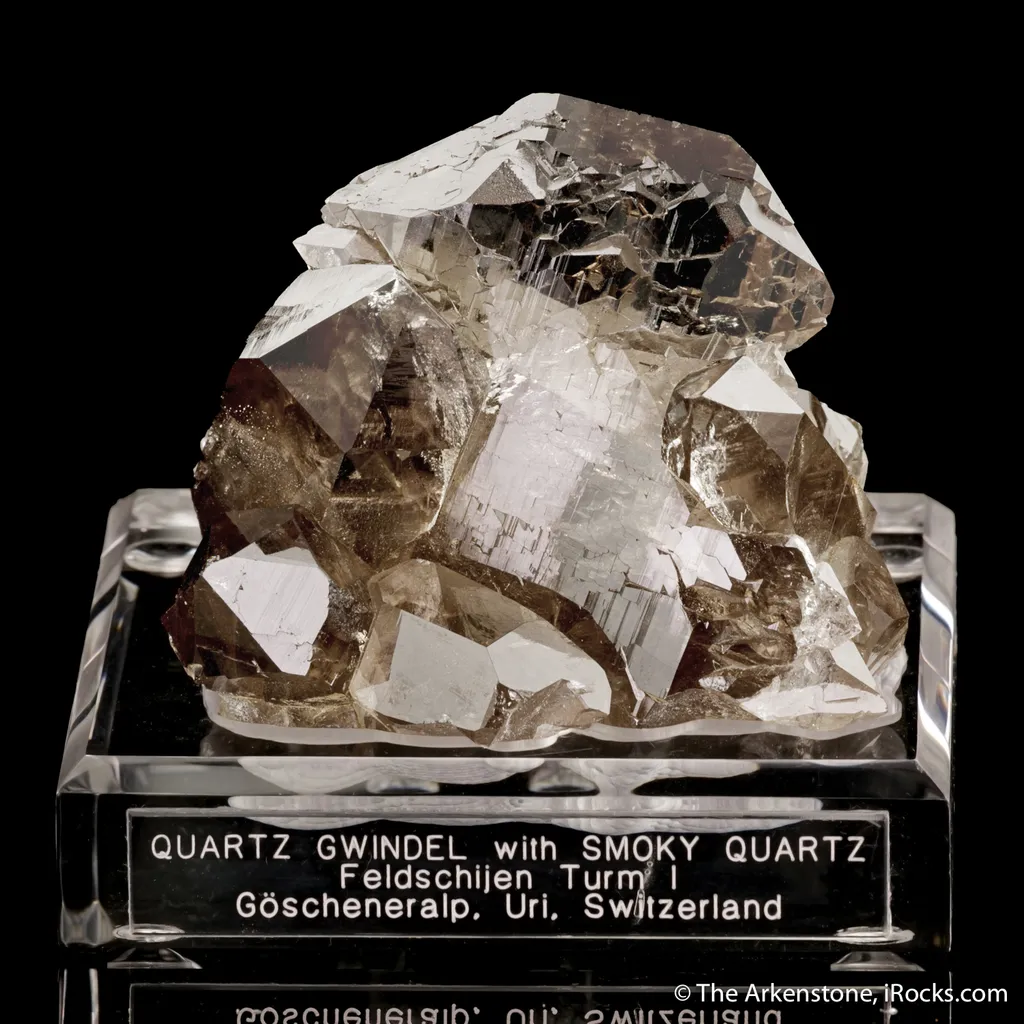
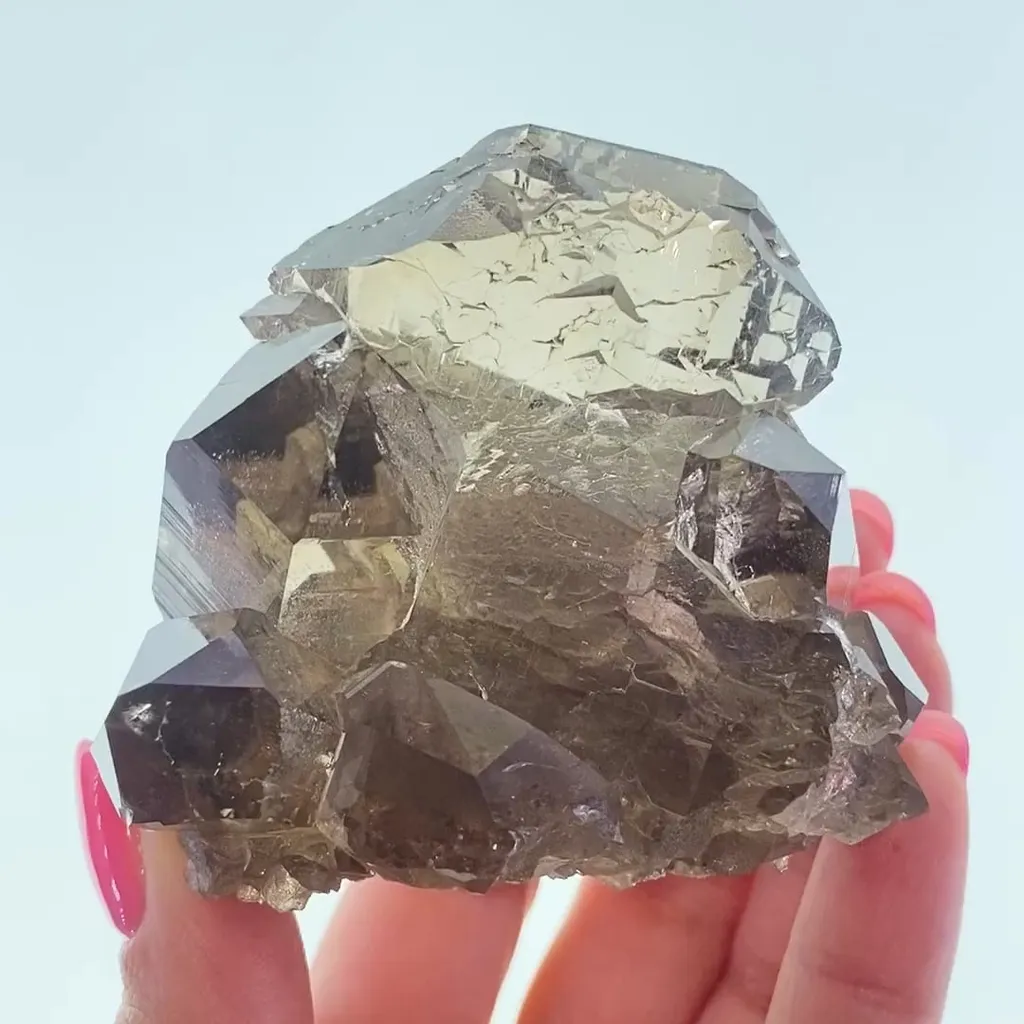
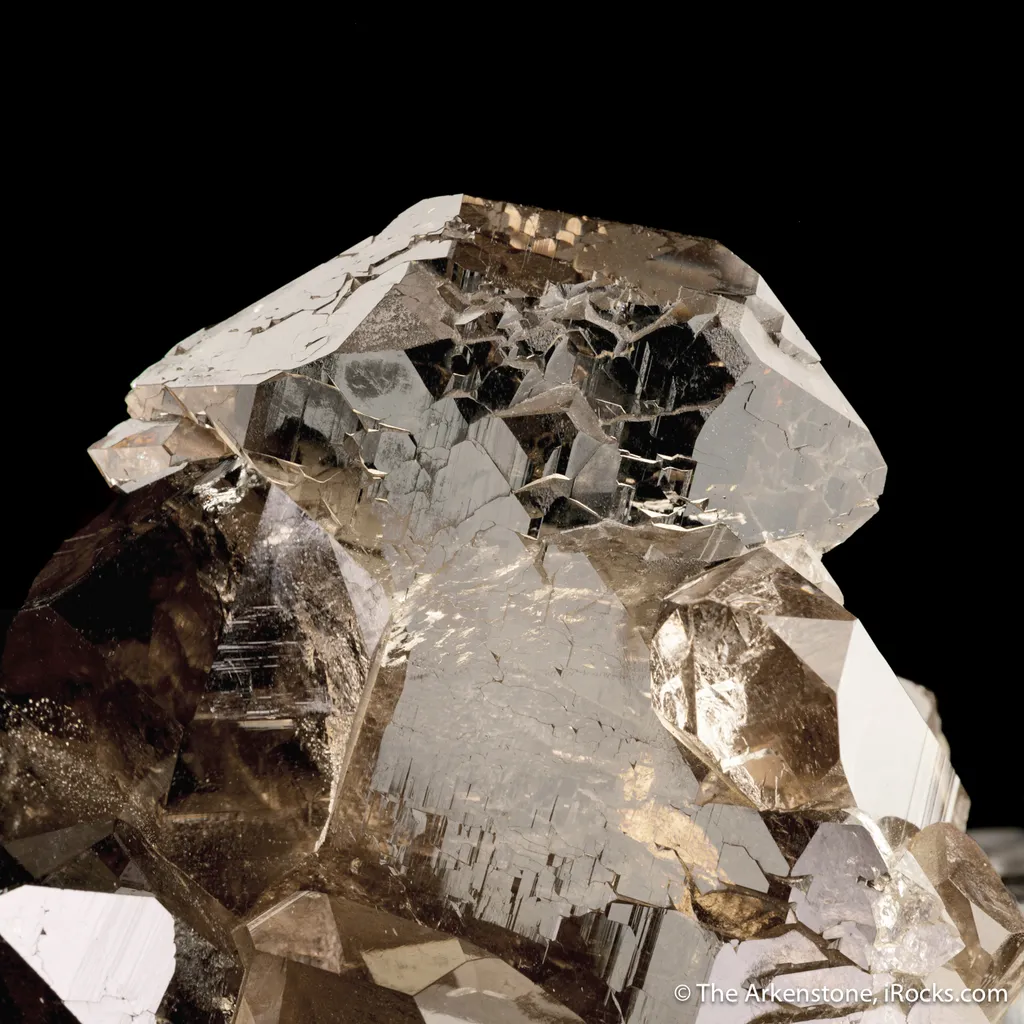
Swiss Smoky Quartz is the pinnacle to many collectors of both Quartz, and classics. This Smoky Quartz specimen, like others in the Lockhart collection, was carefully chosen to represent the highest quality Gwindel Quartz in this size range. It features a sharp and gemmy Smoky Gwindel growing amongst adroitly a cluster of several, beautiful Smoky Quartz crystals with aesthetic balance that is highly unusual for the material. The totally gem Gwindel is 5 cm tall and starts its growth at the plate of granite matrix at the base and literally twists its way up through the other Smoky Quartz crystals that flank it on both sides. The Gwindel and the other smokies are incredibly glassy and completely transparent and you can look through them and see right into any adjacent Quartz crystal! The piece is beautiful all around 360 degrees as you turn it. While single Smoky Gwindels are relatively common, such a tall gemmy one such as this associated with other glassy Smoky Quartz crystals are exceedingly rare, especially on matrix and without repairs. Specimens like this small-cabinet cluster, from this and other famed Swiss localities, are the epitome of both Gwindels and Smoky Quartz crystals, and you can see why. Ex. Brent Lockhart collection (Denver, CO) - the largest USA based collection of Swiss minerals, which we purchased in 2020. He obtained it from the Swiss dealership Siber and Siber in 2017.
Product details
SpeciesQuartz
SizeSmall Cabinet
Dimensions6.8 x 6.3 x 5.8 cm
Added on10/23/2024
LocalitySwitzerland, Uri, Feldschijen glacier
Known provenance
| Date | Collector | Acquisition price |
|---|---|---|
| 11/2025 | Unknown Owner | $3,150.00 |
| — | The Arkenstone | Not disclosed |
Learn more
Mineral guide
Learn about Quartz
a versatile mineral with clear, milky, and colored varieties; crystal forms, formation clues, and tips for identifying amethyst and citrine.Regional guide
Comments