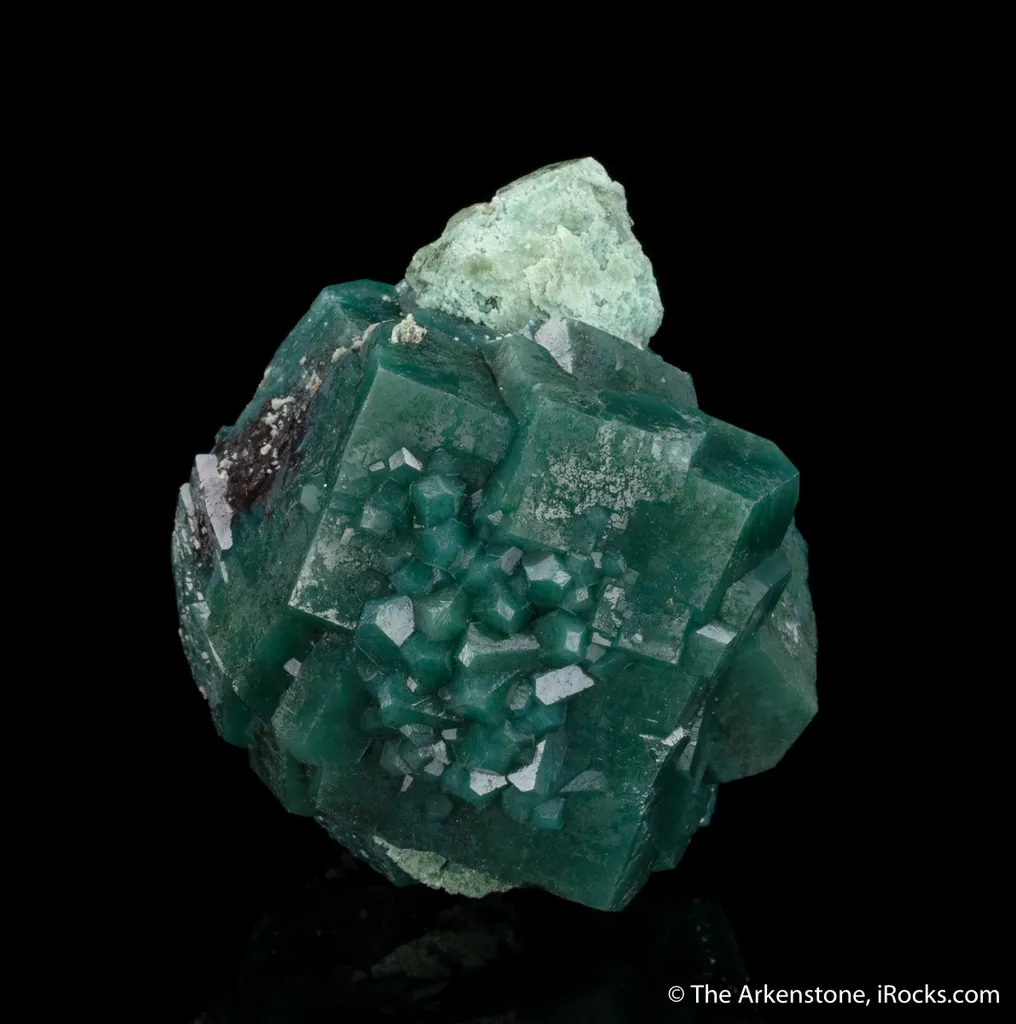
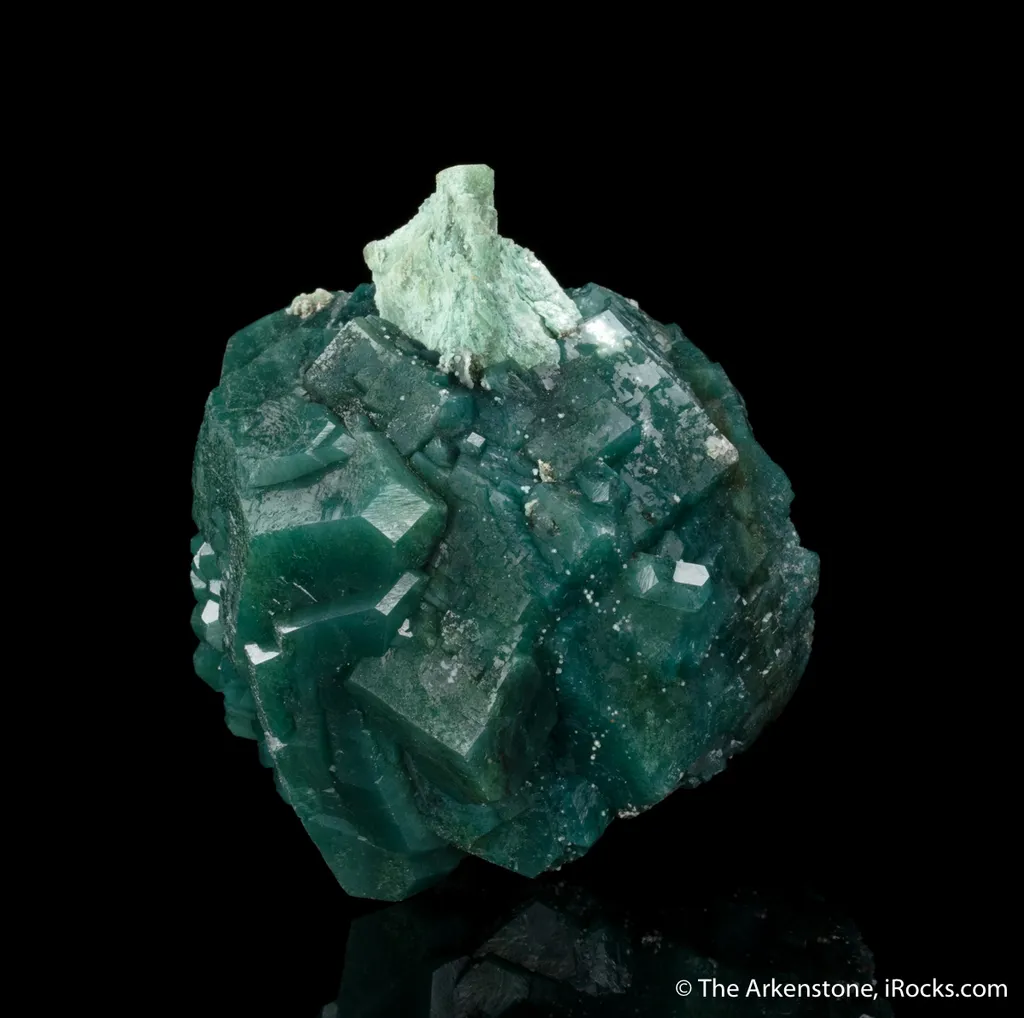
Apophyllite with Celadonite Inclusions


- Free shipping
- Seller offers an extended return window of up to 30 days
 Ships from USA
T
The ArkenstoneFeatured
Celadonite inclusions are dense within this blocky, nicely formed, complex Apophyllite multi-crystal from India. This is one of the most highly included pieces we've seen and it exhibits a saturated, dark forest green from the copious amount of Celadonite within. Celadonite is a potassium-magnesium-iron (ferrous and ferric) layer silicate of the Mica Group. The robust parent Apophyllite crystal that hosts the Celadonite inclusions is actually a series of tightly intergrown, larger crystals accompanied by numerous smaller Apophyllite crystals that are clustered on some of the faces or along the intersection of the larger Apophyllite crystals creating a very geometric and artistic complex arrangement! The piece is almost a floater excepting the sliver of matrix the Apophyllite must have grown on. An incredibly interesting and attractive piece!
Product details
SpeciesApophyllite
SizeSmall Cabinet
Dimensions5.2 x 4.8 x 4.7 cm
Listed on10/23/2024
LocalityIndia, Maharashtra, Jalgaon District
SKUSM19-16
Learn more
Mineral guide
Learn about Apophyllite
glassy, fish-tail crystals; colorless to green. Great for display and provenance. Key sources: Deccan Traps (India), New Jersey; collecting value.
Regional guide
Comments