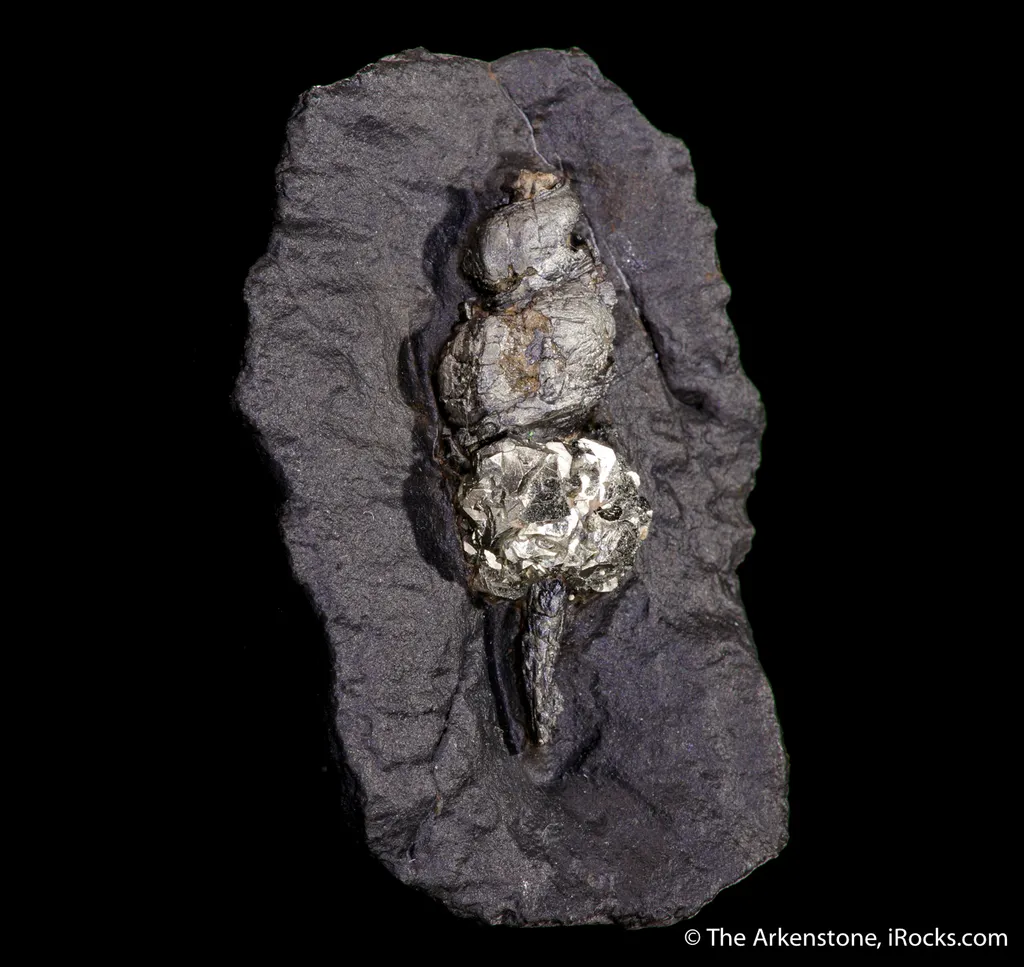
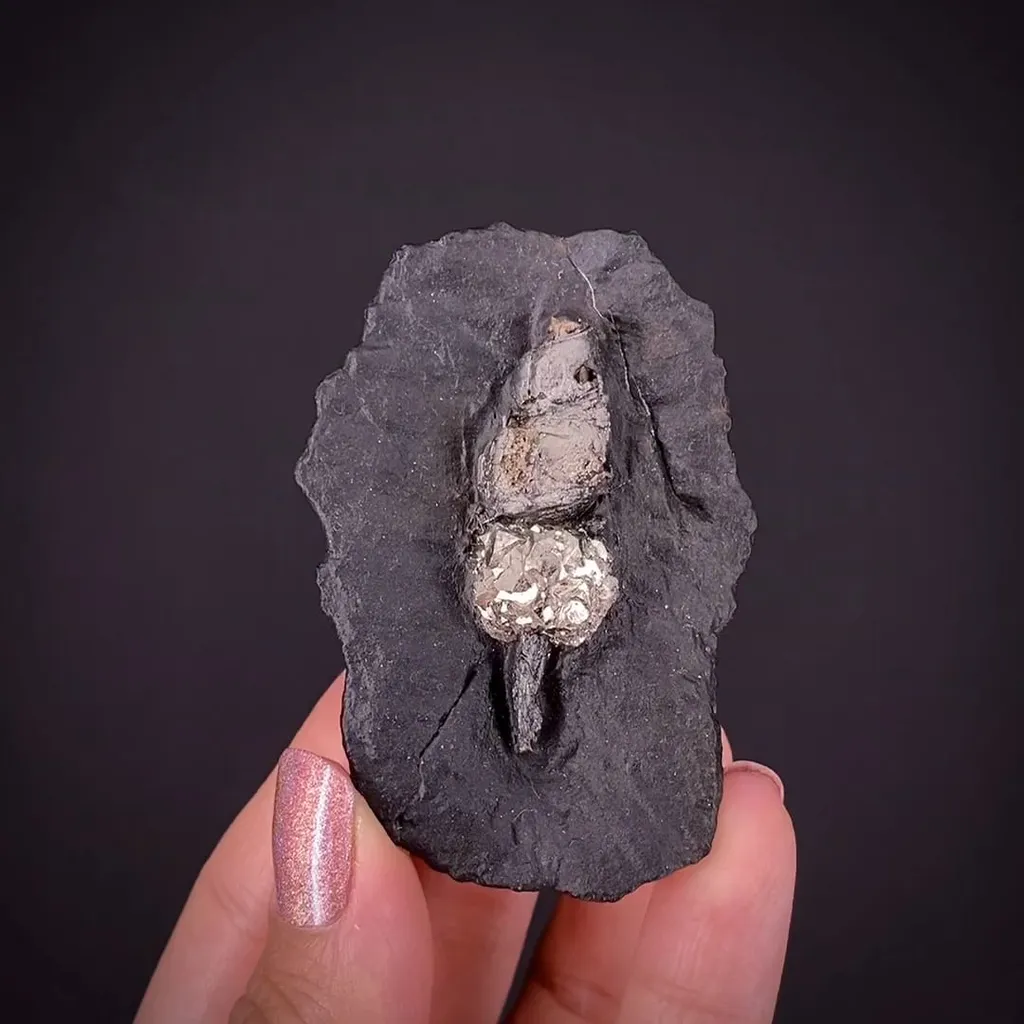

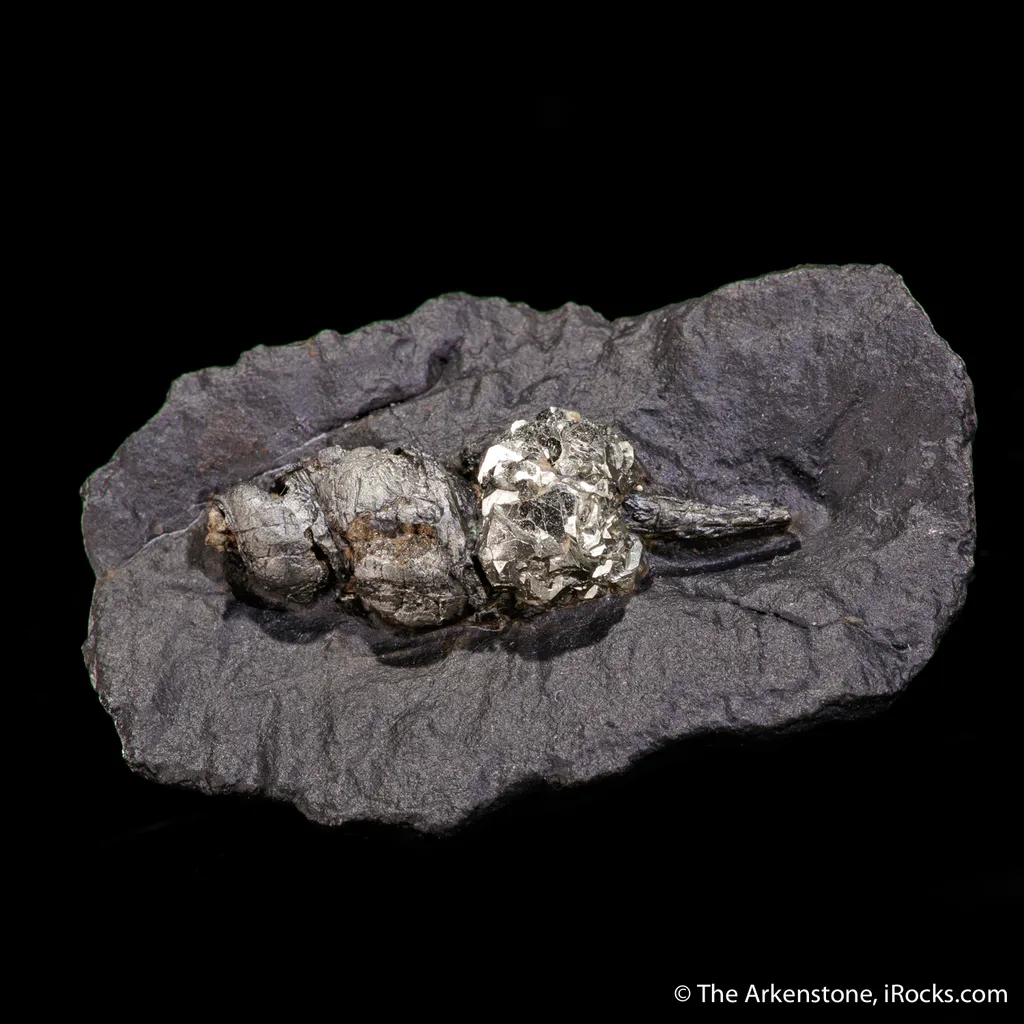
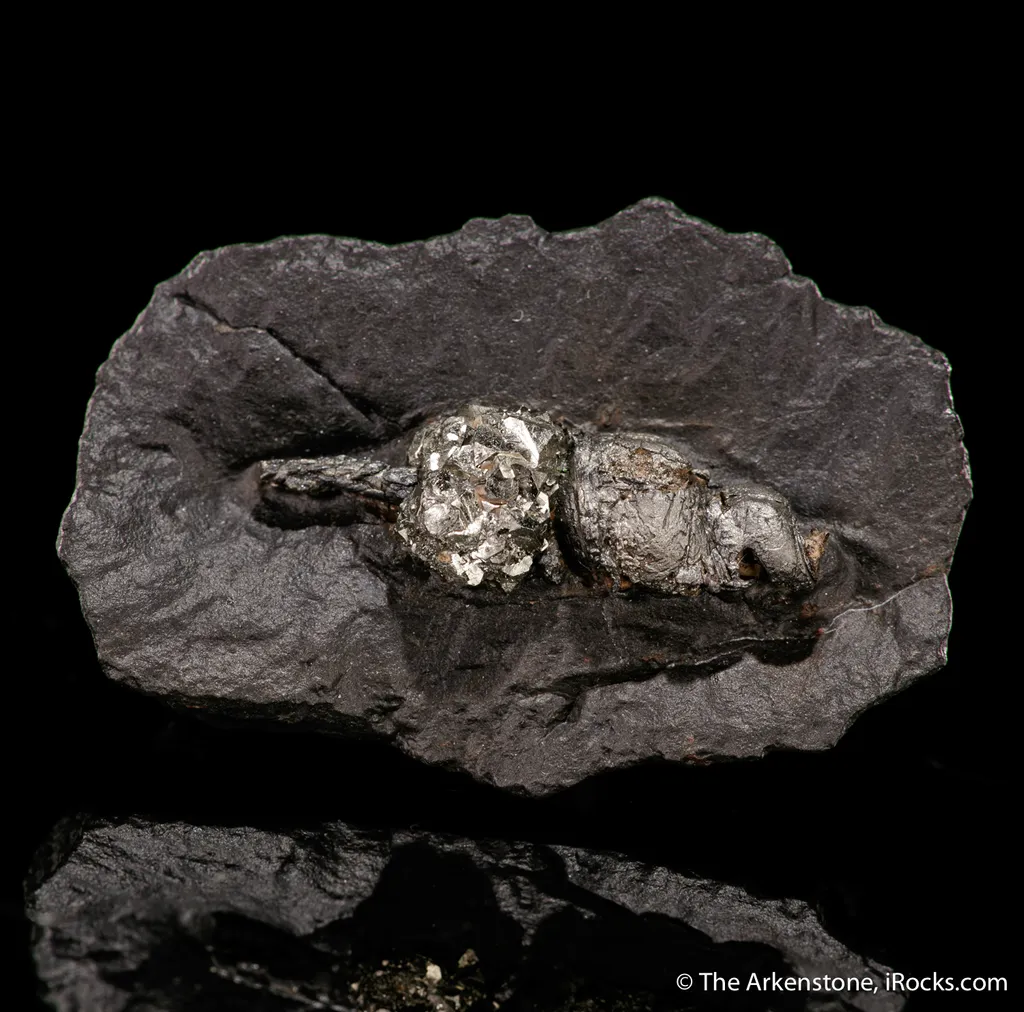
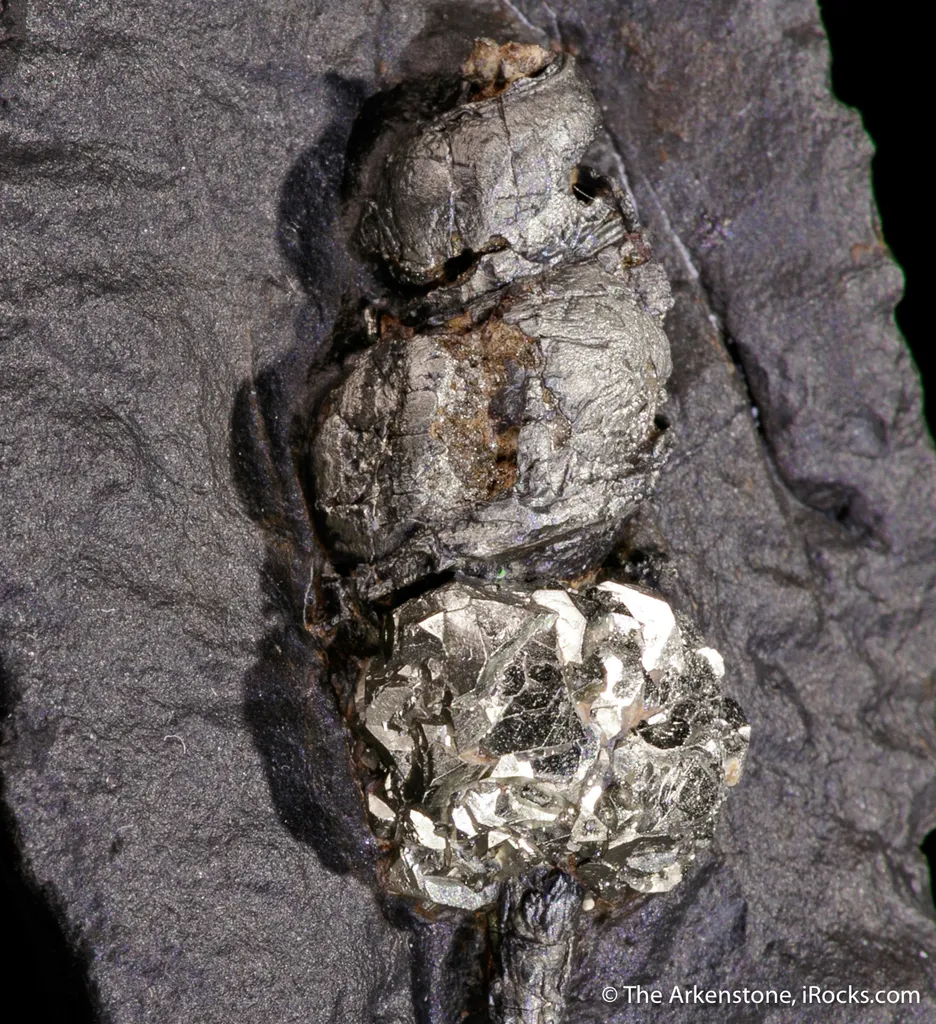
Pyrite ps. after gastropod


- Free shipping
- Seller offers an extended return window of up to 30 days
 Ships from USA
T
The ArkenstoneFeatured
This is the famous Colorado location known for ammonite fossils and where fossils of other sea animals from the ancient ocean bottom of the time are almost never seen. This is a sharp, complete gastropod shell with unusually elongated shape (similar to some modern turritella species, perhaps), and is more complex than the typical spiral gastropods (fossil or not) we more often see. The original shell is replaced by pyrite and then has secondary pyrite crystallization which grew upon it, for dramatic effect of pyrite on the pyritized fossil! These formed from simple chemical processes over time as with several other famous finds of mineralized fossils, given the right conditions in the ground as the soft mud turns to soft stone and then hard stone that entombed the pyrite within: decaying organic matter (the Baculite) provided the Sulfur necessary to react with iron in the environment (likely water rich in iron trickling down when the rock was still porous) and caused iron sulfides (Pyrite) to precipitate and force their way out into the stone as they grew, followed by the whole thing being preserved in rock. Collected by amateur paleontologist and mineral preparator Bill Hawes.
Product details
SpeciesPyrite
SizeSmall Cabinet
Dimensions6.4 x 4.2 x 2.5 cm
Listed on10/23/2024
LocalityUSA, Colorado, Jefferson County
SKUBAC21-04
Learn more
Mineral guide
Learn about Pyrite
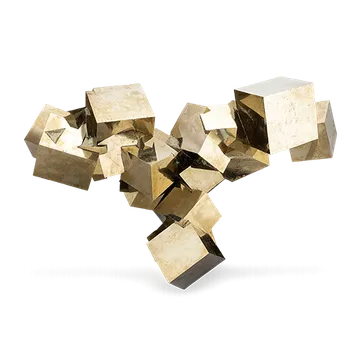
brilliant metallic luster, perfect cubes, and golden color; collectors prize affordable pieces to top specimens, with Navajún and Huanzala localities.Regional guide
Comments