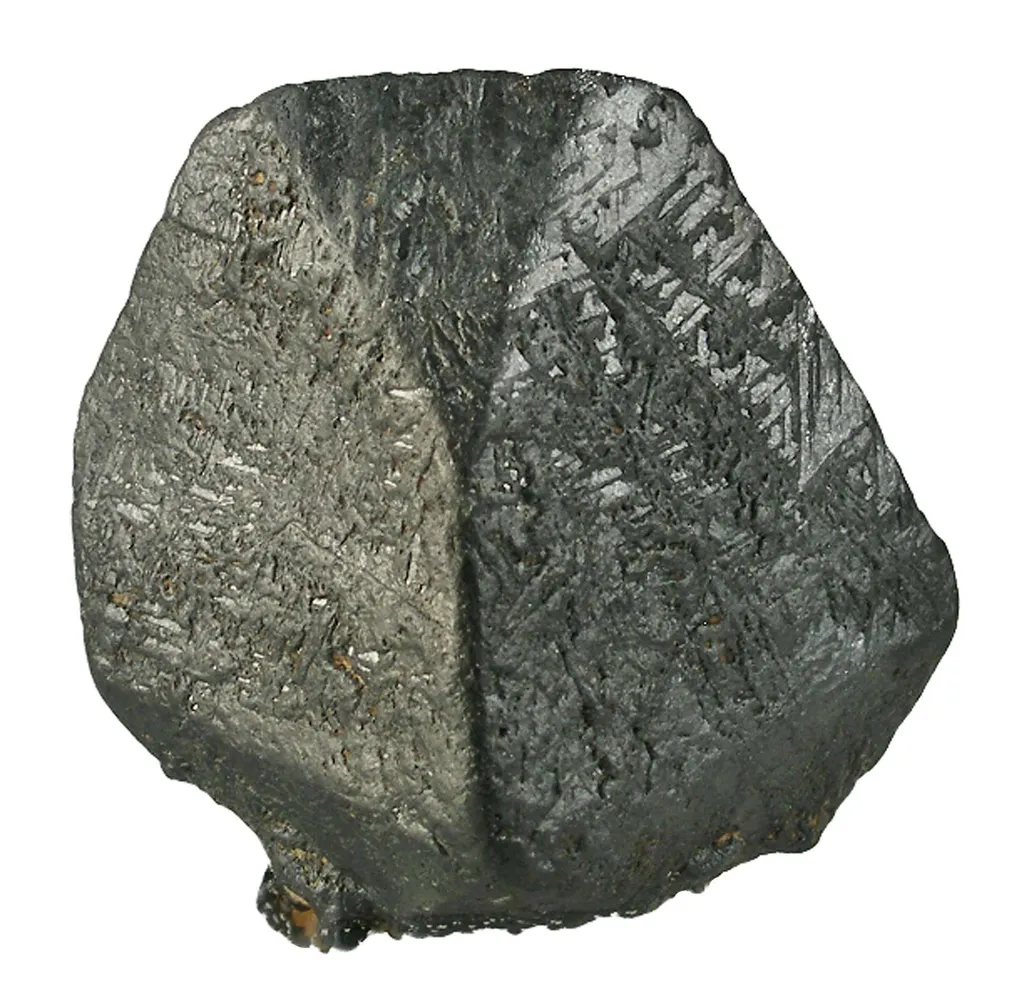
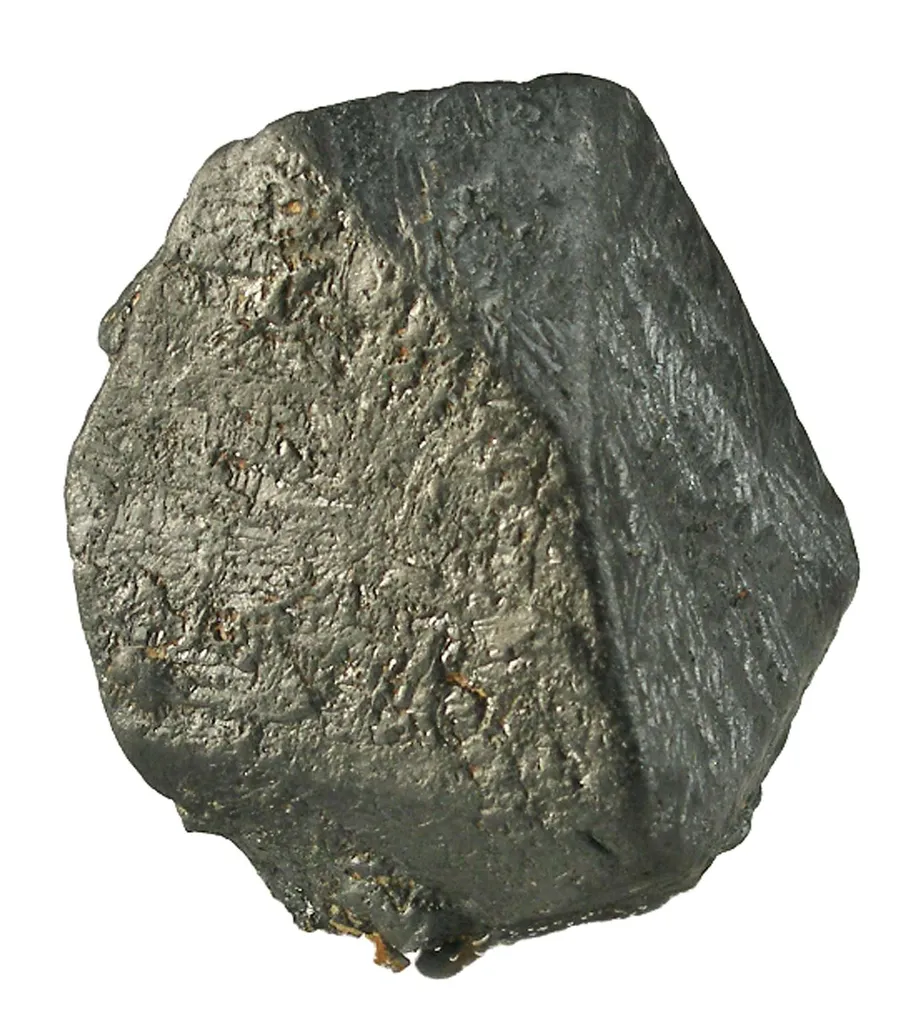
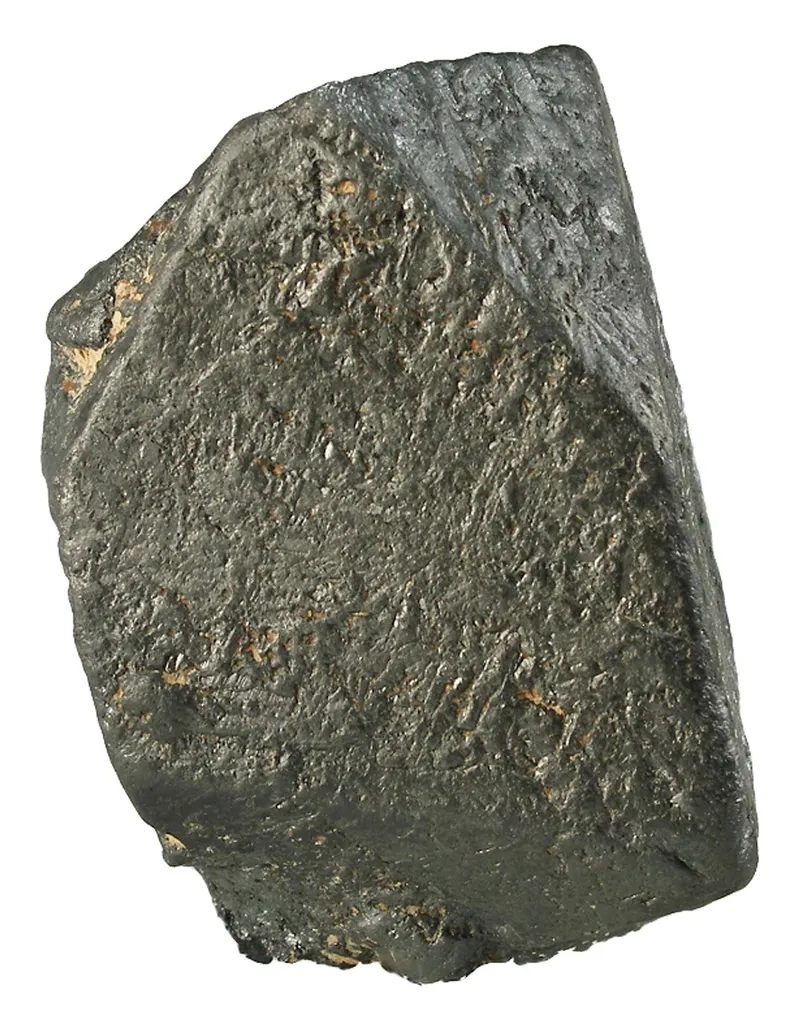
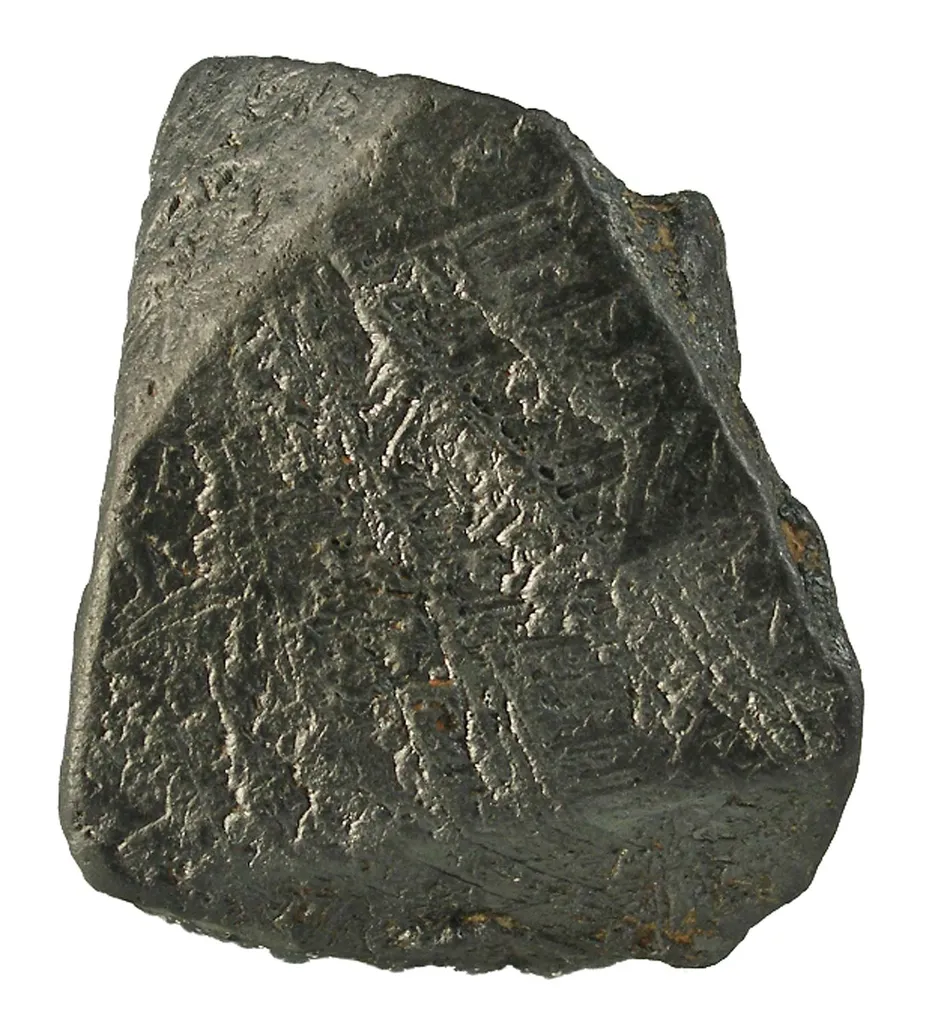
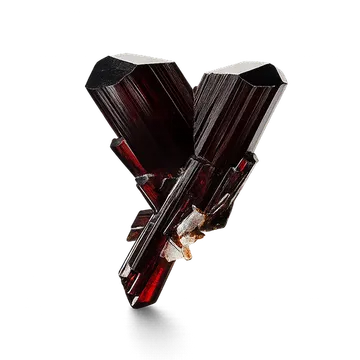
Rutile Paramorph After Brookite
Unknown Owner
Help improve this recordNo owner is registered for this specimen yet. If it's yours or you know more about it, you can add the owner, provenance, publications and other details.
Undoubtedly an old specimen, this piece is typical of a size and style said to be found here in the very early days, late 1800s to early 1900s. I have seen only a very few rutile specimens even approaching this size (in the Smithsonian and American Museums), and its degree of preservation and perfection is shocking (it is pristine and complete all around!). I have seen no brookite of this size, period, from here. This is a kind of pseudomorph replacement called a paramorph, now. It is no longer a brookite despite its apparent habit: A paramorph (also called allomorph) is a mineral changed on the molecular level. The mineral looks identical to the original unaltered form of the brookite (which is normally orthorhombic and not as heavy or robust as rutile) but is now replaced by another form of natural titanium oxide, (tetragonal) rutile. This is, I think, a MAJOR US locality specimen and a major rutile by any worldwide standard
Product details
Known provenance
| Date | Collector | Acquisition price |
|---|---|---|
| 08/2024 | Unknown Owner | Not disclosed |
| — | The Arkenstone | Not disclosed |
Learn more
Mineral guide
Learn about Rutile
sharp tetragonal prisms with mirror luster, diverse twinning, and rutilated quartz; prized for sculptural form, color variety, and display value.Regional guide
Comments