Euclase (illustrated)
Unknown Owner
Help improve this recordNo owner is registered for this specimen yet. If it's yours or you know more about it, you can add the owner, provenance, publications and other details.
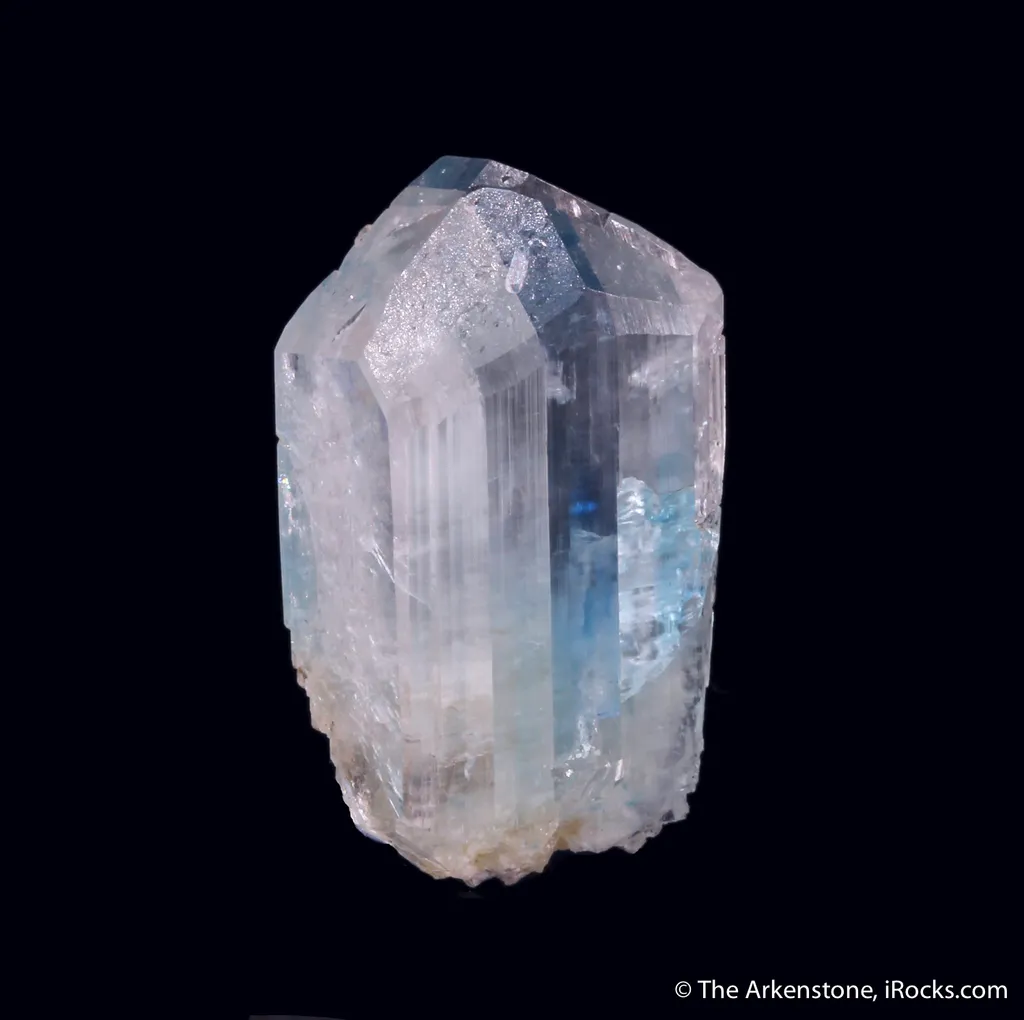
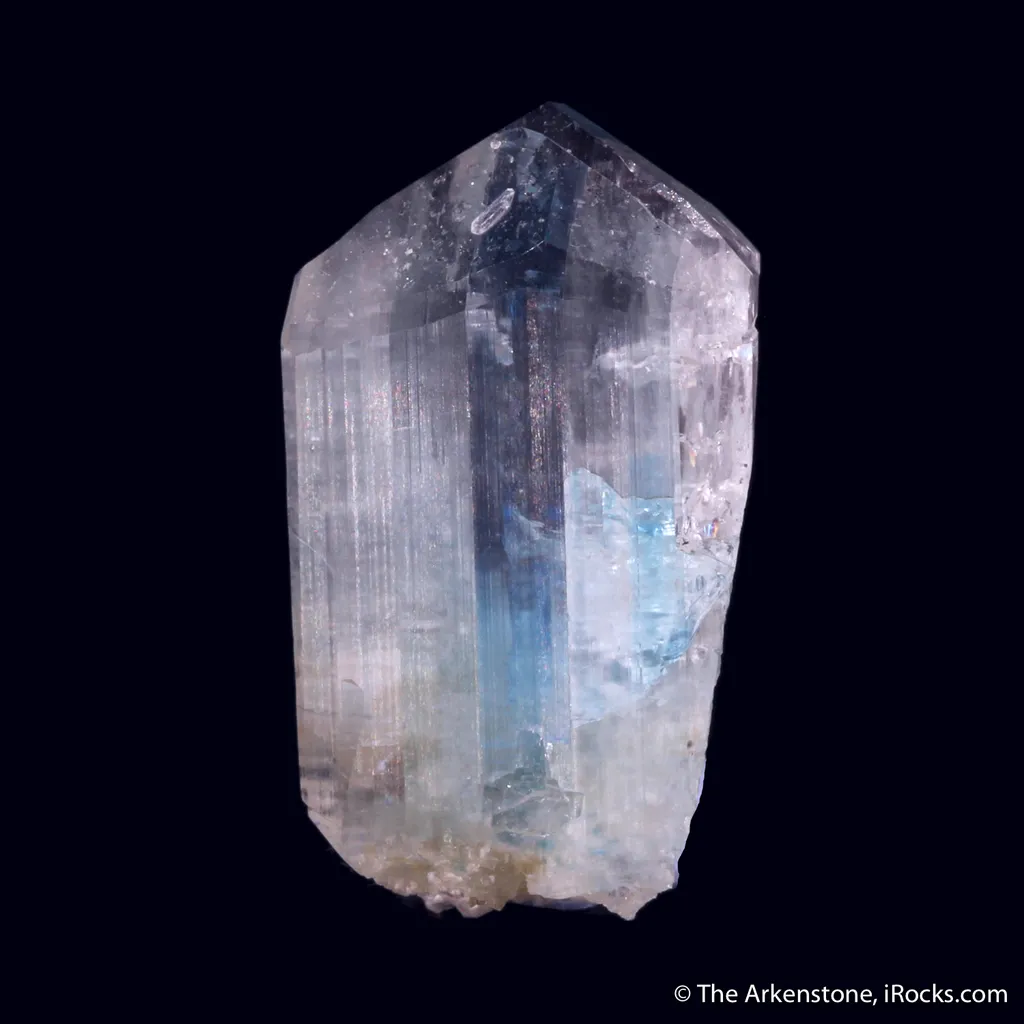
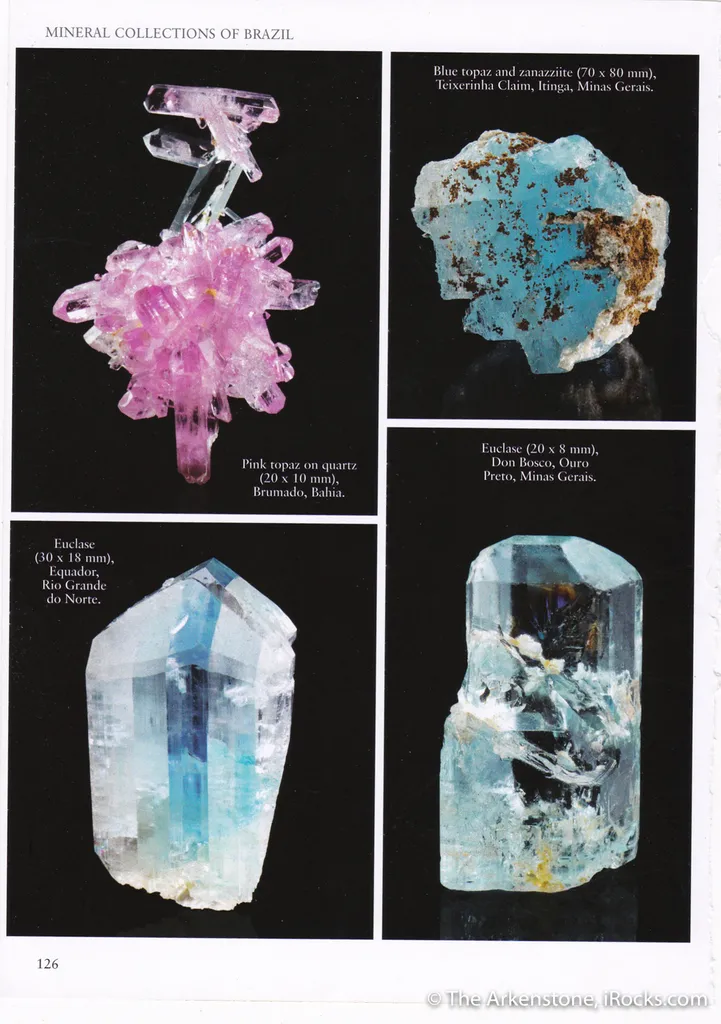
This classic blue-striped Euclase crystal is from a famous and complex pegmatite deposit at Equador in Rio Grande do Norte state in Brazil, the only place that produced these very unique-looking "striped" Euclase crystals. The piece is characterized by a turbid, colorless to subtly pale pastel blue overall color with a distinctive, translucent, dark blue stripe, or vertical zone, extending the length of the front edge of the crystal and most of the way on the backside. The blue stripe is quite captivating in that it is completely transparent on the front and one can see into the stripe and notice vibrant blue, almost ethereal elongate veils floating inside! It is more obvious in person as the camera has trouble focusing on the blue zone. The crystal is well-formed with nicely developed prism and pyramidal terminations with modifications. The prism faces are lightly striated providing a delicate texture to the crystal. The Euclase is well-formed without any edgewear although it exhibits a negative crystal impression (contact) on the right side where it was attached to another Euclase crystal. This is just a captivating thumbnail from this occurrence where the blue striping to the crystals is singular to this locality and found nowhere else in the world! Mass of 5.05 grams. Illustrated in Mineral Collections of Brazil, 2020, page 126.
Product details
SpeciesEuclase
SizeThumbnail
Dimensions2.4 x 1.3 x 1.2 cm
Added on10/23/2024
LocalityBrazil, Rio Grande do Norte, Equador
Known provenance
| Date | Collector | Acquisition price |
|---|---|---|
| 08/2024 | Unknown Owner | Not disclosed |
| — | The Arkenstone | Not disclosed |
Learn more
Mineral guide
Learn about Euclase
rare BeAl silicate prized for vivid blue crystals, glassy luster, and sharp terminations; scarce pristine pieces from pegmatites in Brazil.Regional guide
Comments