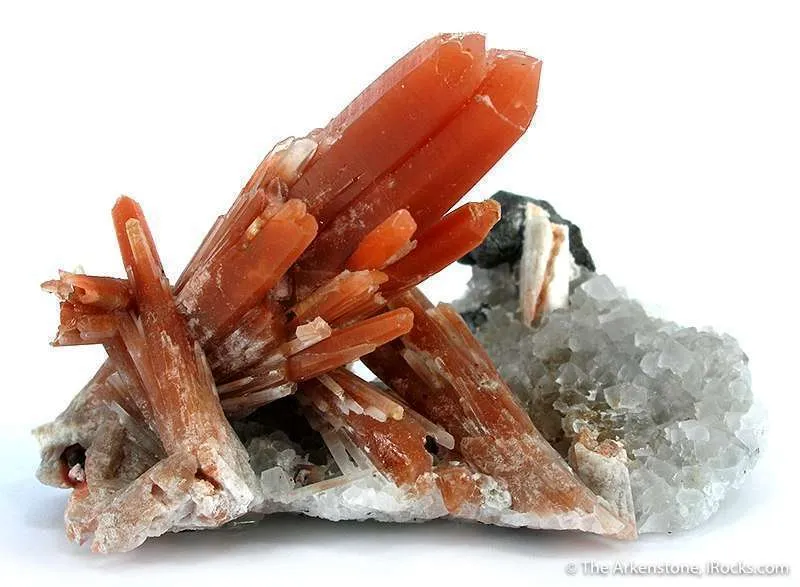
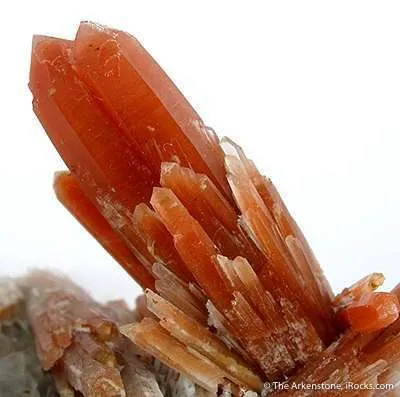
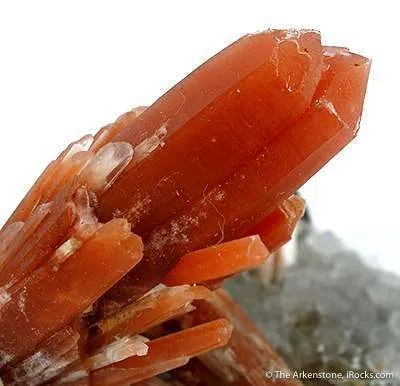
Quartz on Quartz
Unknown Owner
Help improve this recordNo owner is registered for this specimen yet. If it's yours or you know more about it, you can add the owner, provenance, publications and other details.
These red quartz specimens came out around 7-8 years ago and really just shocked people. I do not know to this day what the color cause turns out to have been - it was certainly a mystery at the time. Several stages of material came out, of varying habits. Most were gracile, delicate, and pale orange-red. However, this robust habit, the rarest of them all in my experience, came out near the end of the series of pockets that produced these and has remained today the rarest seen on the market as well. They have always been expensive, with one of the gracile style recently changing hands for north of 50k according to rumor. I prefer this style of fat crystallization but I have never seen one so gracefully perched on matrix, and this robust, fat, translucent, blood-red crystals reach to 6 cm, near the maximum for the style. Their perch on contrasting white matrix is so unlikely, from what else I have seen, as to appear constructed at first glance. Moreover, the cluster is 3-dimensional and really leaps up, visually, and out in all directions. Association with sphalerite, completes the piece by way of accent. It is a little esoteric, admittedly, but to me this pocket represents the finest, most notable quartz from Dalnegorsk by worldwide standards because there is NOTHING LIKE IT from anywhere else, out of all the millions of quartz specimens from thousands of locales. This, is unique. For quartz, that is really saying something!
Product details
SpeciesQuartz
SizeSmall Cabinet
Dimensions7.5 x 5.8 x 5.3 cm
Added on10/23/2024
LocalityRussia, Primorsky Krai, 2nd Sovetskii Mine
Known provenance
| Date | Collector | Acquisition price |
|---|---|---|
| 08/2024 | Unknown Owner | Not disclosed |
| — | The Arkenstone | Not disclosed |
Learn more
Mineral guide
Learn about Quartz
a versatile mineral with clear, milky, and colored varieties; crystal forms, formation clues, and tips for identifying amethyst and citrine.Regional guide
Comments