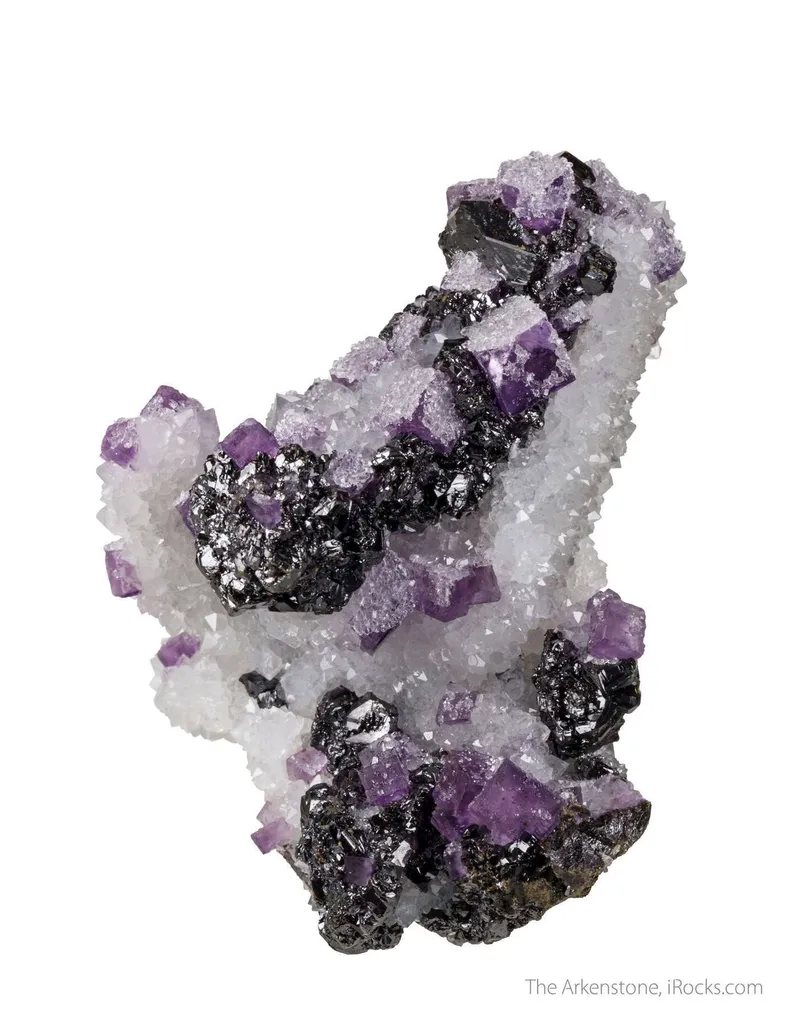
Quartz cast after Barite with Fluorite and Sphalerite
Unknown Owner
Help improve this recordNo owner is registered for this specimen yet. If it's yours or you know more about it, you can add the owner, provenance, publications and other details.
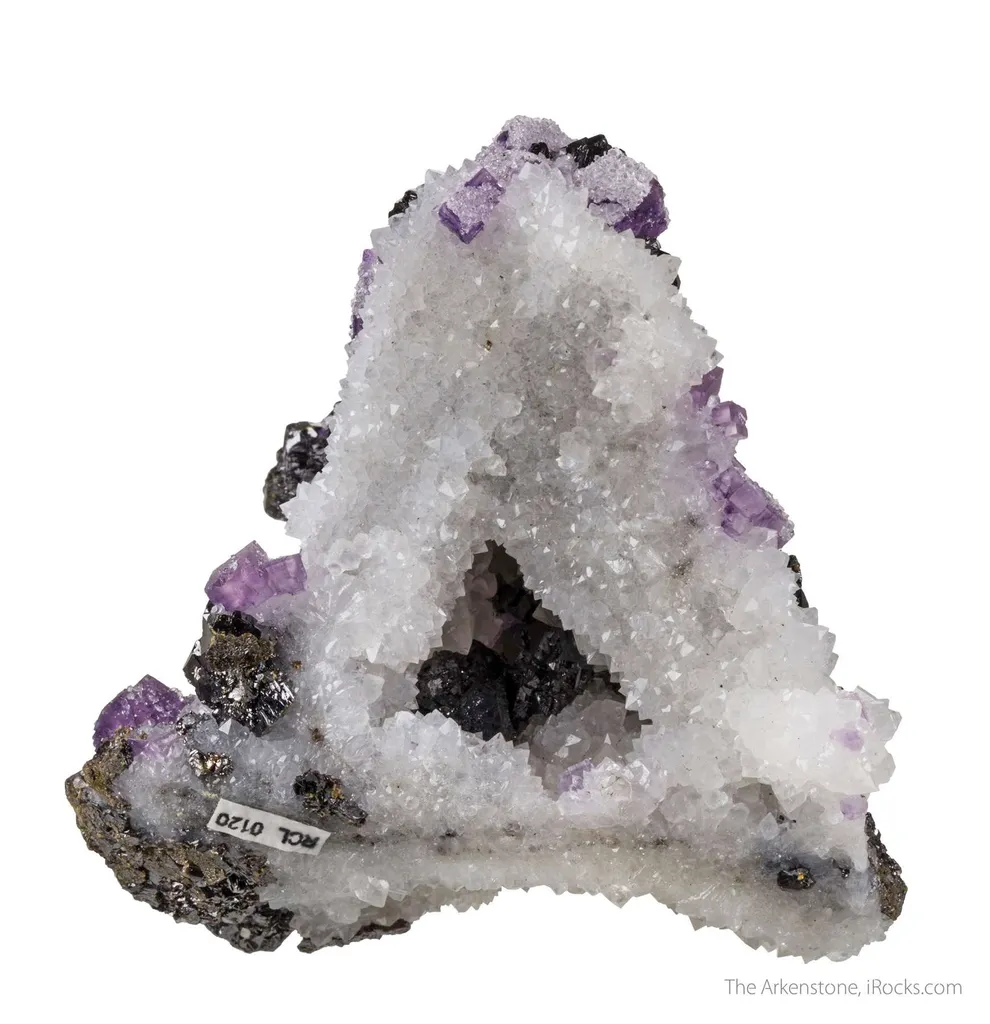
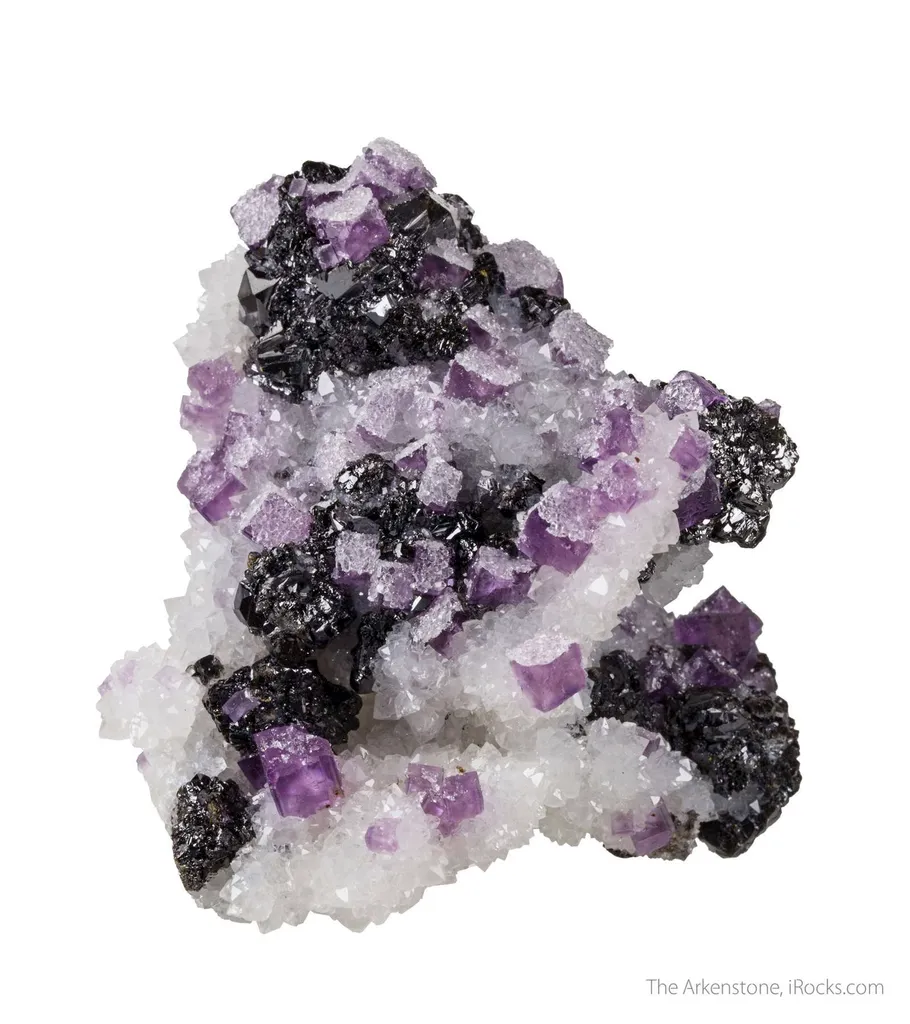
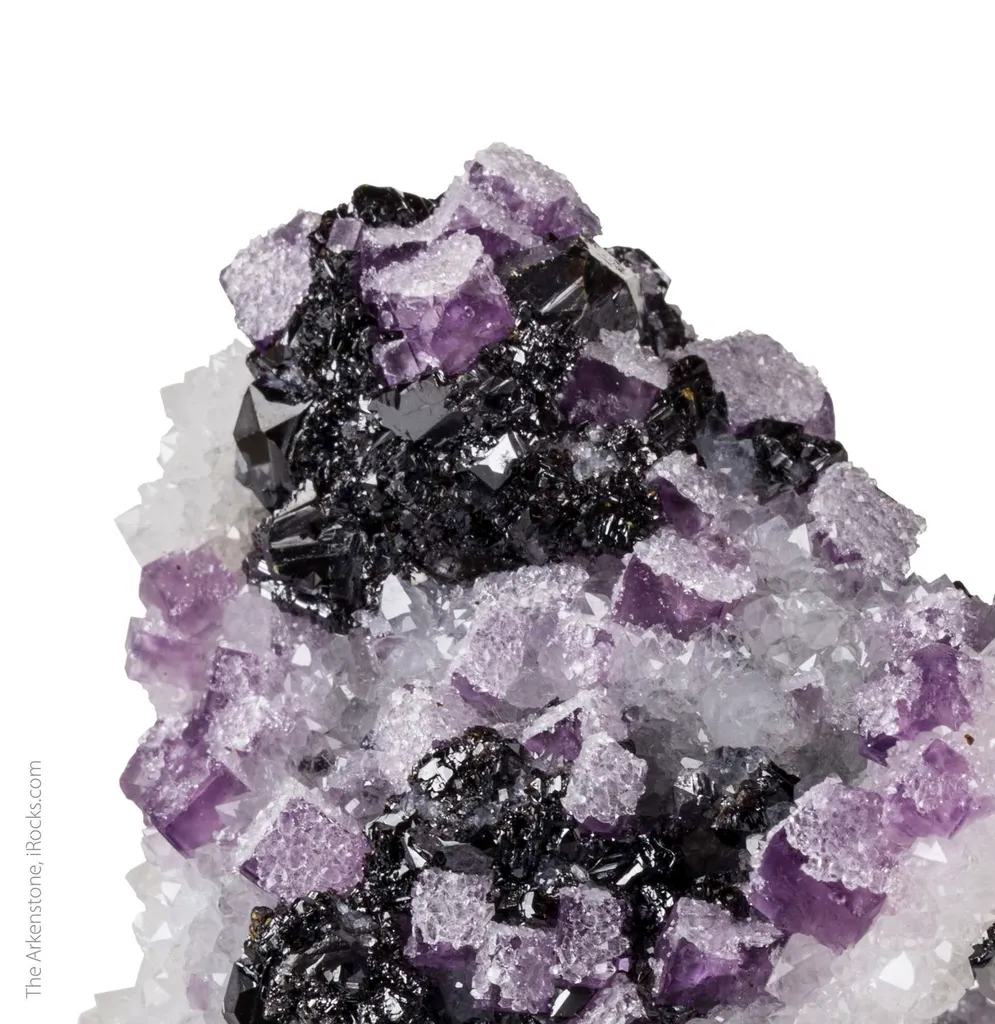
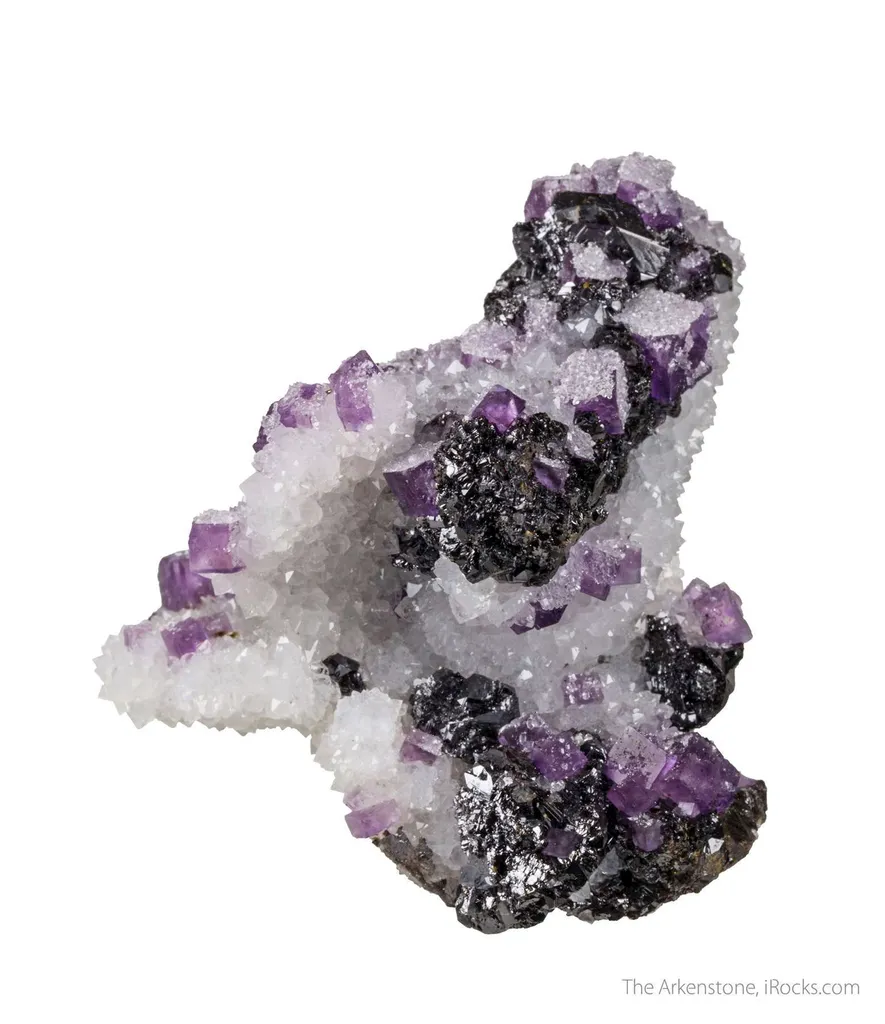
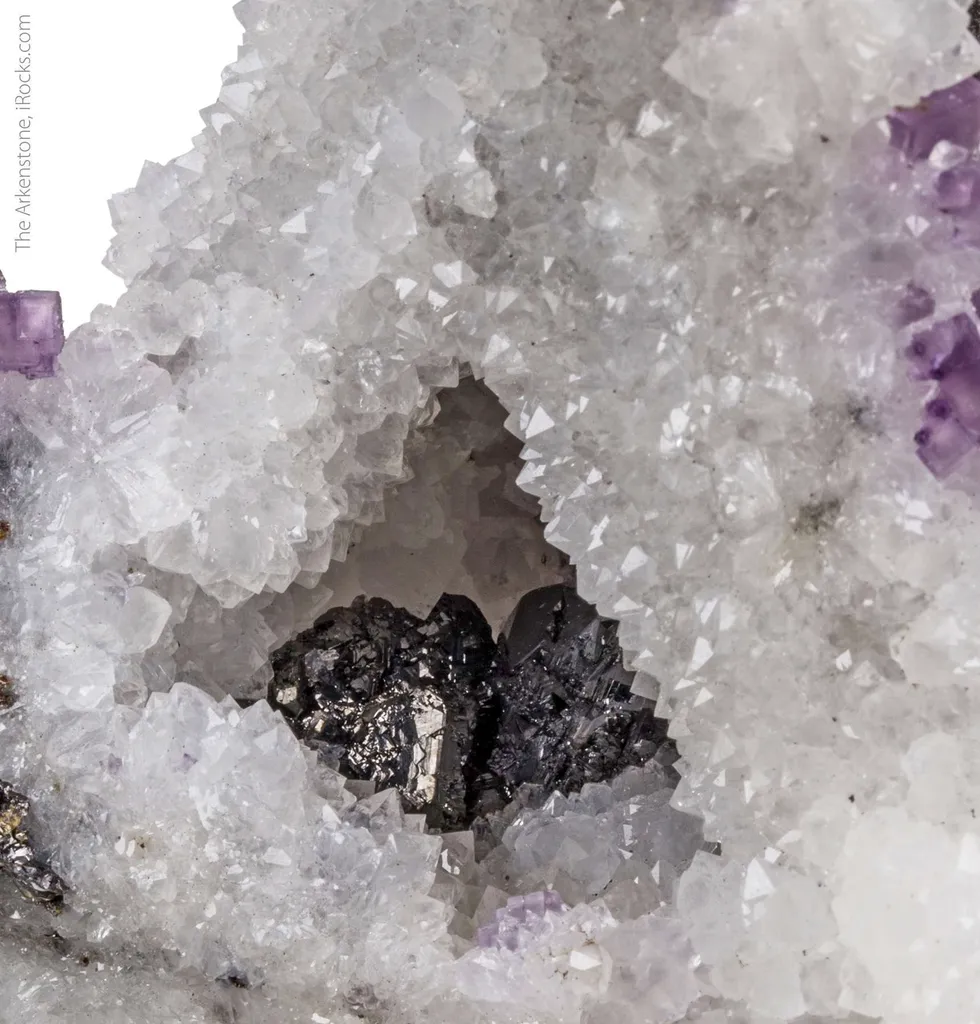
This is one of the older mines in the district from which we see very few specimens preserved, and from which the sparkling white quartz is treasured. And yet, this is perhaps the most interesting specimen I have seen from here over many years. A brilliant, white quartz druse forms the matrix for disparate clusters of splendent, black crystals of sphalerite, to 1.2 cm in length, which also exhibit the occasional red highlight. Scattered on both the quartz and sphalerite crystals are lustrous and translucent, lavender colored fluorite cubes, to 8 mm across. Most of the fluorite crystals have a thin quartz layer covering some faces. This is on its surface, a stunning combo specimen that is just super sparkly and bright! However, there is more...turn it around and you can see the clear form of the quartz replacing large and robust blades of barite. Mined in the 1950's and from the collections of Jimmie Dufoe and Ross Lillie. RCL# 0120. Ross notes that he bought this in 1999 and valued it in 2007 at $3500, by the way, (on the back of his label) indicating the significance he felt this piece had in context of the district. As well, it has a special yellow sticker denoting it was in a nearly-completed deal to sell part of this collection to the Chicago Field Museum. All in all, one of the most unusual specimens in the collection, in our mutual shared opinions.
Product details
SpeciesQuartz, Fluorite, Sphalerite, Barite
SizeSmall Cabinet
Dimensions9.2 x 8.6 x 8.1 cm
Added on10/23/2024
LocalityUSA, Illinois, Cave-in-Rock
Known provenance
| Date | Collector | Acquisition price |
|---|---|---|
| 08/2024 | Unknown Owner | Not disclosed |
| — | The Arkenstone | Not disclosed |
Learn more
Mineral guide
Learn about Quartz
a versatile mineral with clear, milky, and colored varieties; crystal forms, formation clues, and tips for identifying amethyst and citrine.Regional guide
Comments