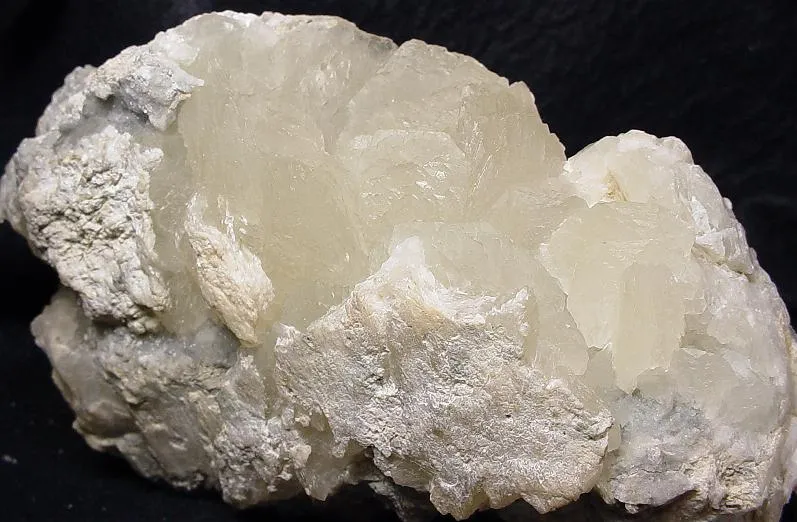
Brucite
Unknown Owner
Help improve this recordNo owner is registered for this specimen yet. If it's yours or you know more about it, you can add the owner, provenance, publications and other details.
A superb old specimen from this classic locality which has produced some of the world's best specimens for this species (and certainly the best ever found in the US). Because of the widely known association between this classic locality and noted collector William Jefferis who was the major collector of this material in the mid to late 1800's, these specimens often are dear to collectors of antique US minerals and localities. This one is particularly impressive because of the size of the crystals (to a whopping 4.5 cm!) and the overall size of the specimen as well, making for a striking piece that is as attractive as it is significant. This specimen only recently came to light out of an antique collection, and I can tell you it was let go by Skip with regret. HISTORY: The specimen comes from the collection and estate of Darwin S. Urffer (1933-2002) and the label is from the collection of Haverford College in rural Pennsylvania. Urffer graduated in 1954 from Earlham College, a Quaker college in Indiana (The Urffers are Quakers). Later he attended Pratt Institute in Brooklyn. The collection actually belonged to his mother (Florence Urffer) originally. Assuming the mother was about the same age as the father (Darwin H. Urffer: 1903-1970), the collection might have been acquired by her in the 1920-1950's. Whether the mother acquired the collection through inheritance or she purchased them from a Haverford collection directly is unknown. Clearly many of the donors listed on the old labels for this and other specimens in the collection were Quaker names, many associated with Haverford College (William S. Vaux was on the board, George Vaux attended the school, several others were alumni, etc.). Many of the specimens in the collection can be dated either by the donors name or by other labels attached such as the A.E. Foote labels that can be dated by the address listed on the label. The earliest specimens date to about 1850. Many date to 1880-1895, thus indicating this collection was inherited and not assembled. All specimens have a collection number on the bottom, and many (but not all) have the old museum display label accompanying, as does this specimen. This collection was acquired by John Betts (whom I thank for the information above) and dispersed on the East Coast awhile back, and this specimen disappeared into Terry Szenics' collection right away. This is the first presentation of it for sale in its current trimmed and cleaned form. 16 x 10 x 6 cm
Product details
SpeciesBrucite
SizeLarge Cabinet
Dimensions16.0 x 10.0 x 6.0 cm
Added on10/23/2024
LocalityUSA, Pennsylvania, Wood's Chrome Mine
Known provenance
| Date | Collector | Acquisition price |
|---|---|---|
| 08/2024 | Unknown Owner | Not disclosed |
| — | The Arkenstone | Not disclosed |
Learn more
Mineral guide
Learn about Brucite
(Mg(OH)2) - vivid lemon-yellow to blue hues; delicate with perfect cleavage, prized for translucent, sculptural forms from Pakistan and Henan.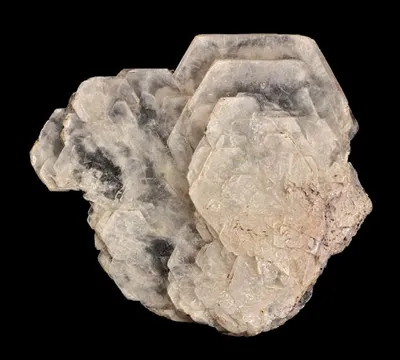
Regional guide
Comments