Greenockite, Chalcopyrite, Prehnite
Unknown Owner
Help improve this recordNo owner is registered for this specimen yet. If it's yours or you know more about it, you can add the owner, provenance, publications and other details.
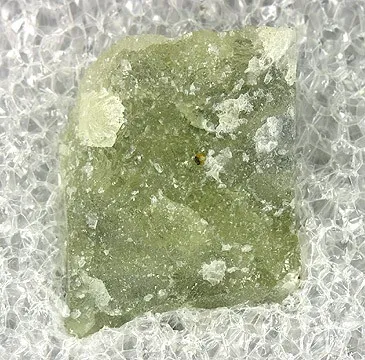
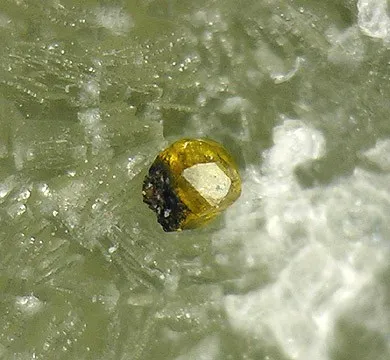
Greenockite is a rather rare species, considering it has a very simple chemistry (Cadmium Sulfide). There are only a handful of localities in the world for fine crystallized Greenockite specimens, and the Summit Quarry in New Jersey is possibly the best U.S. locality for the species (certainly the best in New Jersey). This locality opened in the early 20th Century, and produced a large number of Zeolites species and other associated minerals in its history. It is now long gone, but thanks to collectors like Richard Kosnar, many good specimens now survive from this historic Quarry. This specimen was collected by Richard Kosnar in 1964 when he had just graduated from high school. He had almost exclusive access to the quarry at the time, and was able to collect some very unique and interesting Greenockite specimens over several years time. As a matter of fact, Richard Kosnar most likely collected more Greenockite specimens from New Jersey than any other collector, even many collectors combined. This piece is mounted in a perky box, and upon close examination, one can see a small honey colored "beehive"-shaped Greenockite crystal in the center of the specimen which has a small crystal of Chalcopyrite at the base. The crystals are sitting on a beautifully contrasting green Prehnite matrix. This specimen is nearly 50 years old. Ex. Richard Kosnar Collection.
Product details
SpeciesPrehnite, Greenockite, Chalcopyrite
SizeThumbnail
Dimensions1.6 x 1.4 x 0.5 cm
Added on10/23/2024
Known provenance
| Date | Collector | Acquisition price |
|---|---|---|
| 08/2024 | Unknown Owner | Not disclosed |
| — | The Arkenstone | Not disclosed |
Learn more
Mineral guide
Learn about Prehnite
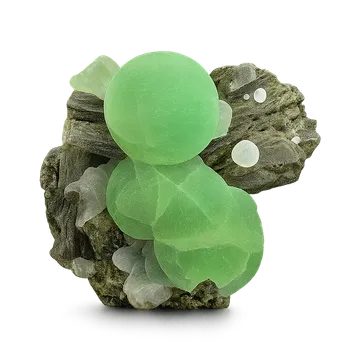
apple- to mint-green crystals and sculptural botryoidal/rosette forms; a calcium aluminum silicate formed in low-temp hydrothermal environments.Regional guide
Comments